
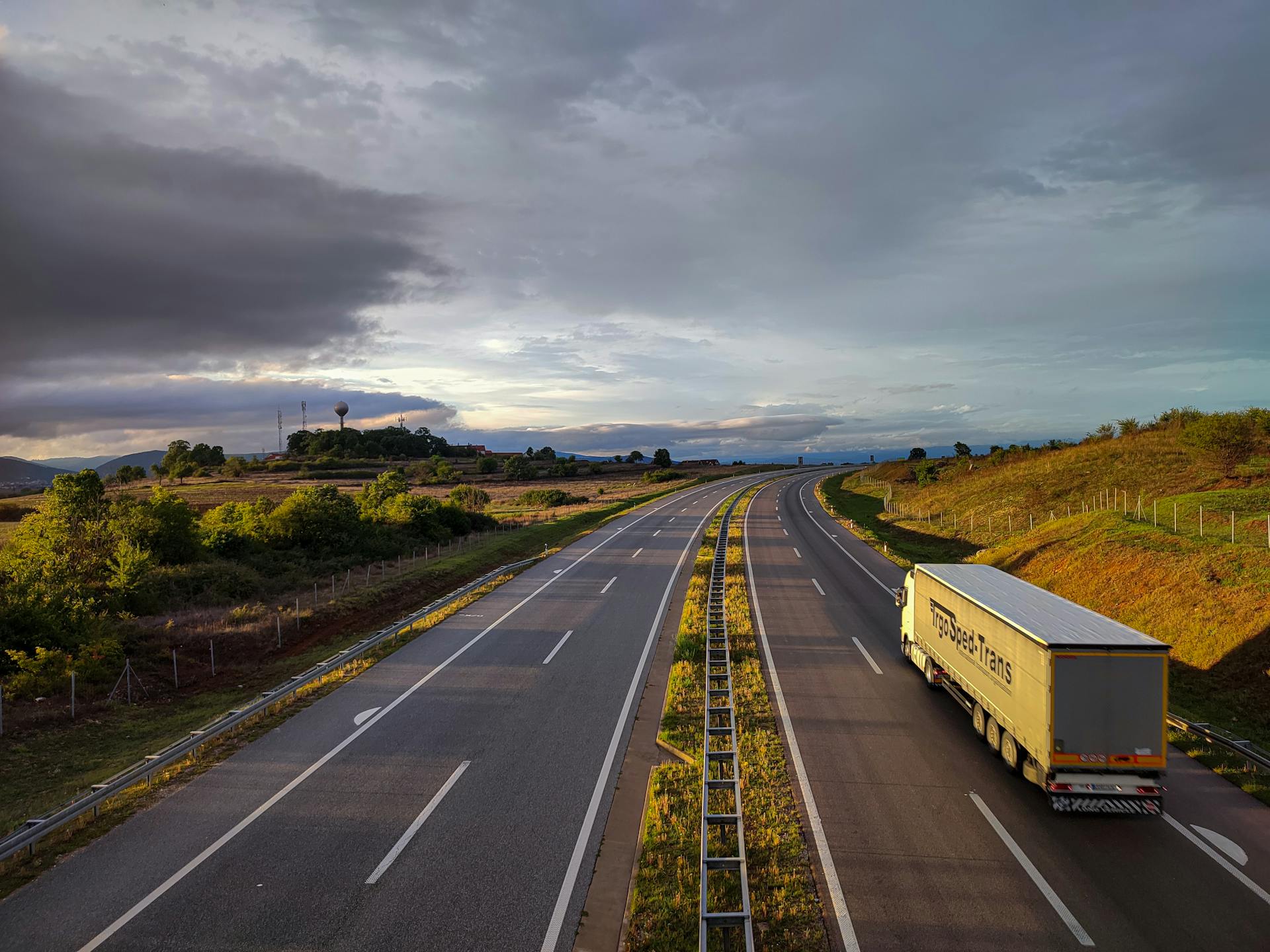
Wisconsin Truck Dispatch | Dairy Reefer & Fox Valley Paper
We dispatch trucks for Wisconsin's year-round dairy reefer freight and the Fox Valley's dense paper/packaging manufacturing cluster. We also haul heavy manufacturing freight from Oshkosh, Mercury Marine, and Harley-Davidson.
How much do truck dispatch rates run in Wisconsin?
Wisconsin-origin freight currently pays about $2.30-$2.70/mi for dry van, more for reefer and flatbed. Demand is driven by Dairy & Cheese Production, Paper & Packaging Manufacturing and Heavy Equipment Manufacturing. Grow Trucking dispatches Wisconsin owner-operators and small fleets across 15 tracked lanes on a transparent percentage-of-gross fee, disclosed upfront.
- Tracked lanes
- 15
- Major freight hubs
- Milwaukee, Madison and Green Bay
- Top industries
- Dairy & Cheese Production and Paper & Packaging Manufacturing
Wisconsin rate and market data reviewed September 2026. See our dispatch fee structure.
Wisconsin Truck Dispatch Services
Wisconsin is a manufacturing and farm powerhouse. As "America's Dairyland," the state makes more cheese than any other. It makes over 3.4 billion pounds a year at more than 1,200 dairy plants. Many are in Green Bay, Fond du Lac, and Monroe. All of it needs temperature-controlled transport year-round. That is unlike produce-based reefer markets, which are seasonal. The Fox Valley (Appleton, Oshkosh, Neenah, Green Bay) has the highest concentration of paper and packaging makers in the U.S. Heavy manufacturing creates steady flatbed demand year-round. That includes Oshkosh Corporation's specialty trucks, Mercury Marine's engines, and Caterpillar machinery. Harley-Davidson's Milwaukee operations add more specialized freight. The I-94 corridor from Milwaukee to Chicago is one of the busiest freight lanes in the Midwest. It carries over 30,000 trucks daily near the state line. I-43 and I-41 connect Green Bay's paper industry to distribution hubs.
Wisconsin offers a varied and reliable freight base. It is built on year-round dairy reefer freight, Fox Valley paper/packaging manufacturing, and heavy equipment manufacturing (Oshkosh, Mercury Marine, Harley-Davidson). Demand is strong for reefer and flatbed loads.
Dairy freight is steady 12 months a year, unlike produce-based reefer markets that see sharp seasonal swings. That is a real reliability edge for reefer carriers
The Fox Valley's paper/packaging concentration gives you dependable dry van capacity and freight volume
Heavy equipment manufacturing (Oshkosh, Caterpillar, Mercury Marine) creates steady flatbed demand all year
The I-94 Milwaukee-Chicago corridor offers exceptional load density and frequency for a fairly short haul
What is the Wisconsin freight market like?
As of 2026, Wisconsin's truckload market shows clear seasonal rate patterns. Rates tend to peak in summer (Jun-Aug) with construction activity. They peak again before the holidays (Oct-Nov). They soften in winter and early spring. That gives shippers a chance to lock in good contract rates during the softer months.
Average Rates
Wisconsin-origin rates (mid-2026): dry van runs roughly $2.30-$2.70/mile (Fox Valley paper/packaging, general manufacturing). Reefer runs $2.50-$2.90/mile (dairy, steady 12 months a year, unlike produce-based markets). Flatbed runs $2.55-$3.10/mile (Oshkosh, Mercury Marine, Caterpillar heavy equipment).
Market Trends
- •
Wisconsin's dairy industry (3.4+ billion lbs of cheese a year from 1,200+ plants) creates steady, non-seasonal reefer freight. That is a real edge over produce-based reefer markets, which see sharp seasonal swings
- •
The Fox Valley (Appleton, Oshkosh, Neenah, Green Bay) is still the densest concentration of paper and packaging makers in the U.S.
- •
The I-94 corridor from Milwaukee to Chicago carries over 30,000 trucks daily near the state line. It is one of the busiest freight lanes in the Midwest
- •
Dairy production peaks in spring/summer as cow output rises. That creates a modest reefer demand surge along the I-94 corridor to Chicago
- •
Wisconsin's truckload rates show a clear summer construction-season and pre-holiday peak. Softer winter/early-spring rates give you a chance to lock in contract rates
What are the busiest freight lanes out of Wisconsin?
Price these lanes with our free Trip Pre-Cost Calculator, Should I Take This Load? Calculator and Lane Profitability Analyzer.
Milwaukee to Chicago
Freight route connecting Milwaukee, WI to Chicago, IL (90 miles). A short, high-frequency corridor. One of the busiest freight lanes in the Midwest, carrying 30,000+ trucks daily near the state line.
Rate: $248 - $284
Distance: 90 miles
Milwaukee to Minneapolis
Freight route connecting Milwaukee, WI to Minneapolis, MN (340 miles). It reaches Minneapolis's food-processing and medical device manufacturing base via I-94.
Rate: $850 - $986
Distance: 340 miles
Milwaukee to Detroit
Freight route connecting Milwaukee, WI to Detroit, MI (360 miles). Detroit's auto-supplier base creates two-way freight with Wisconsin's own heavy manufacturing via I-94.
Rate: $900 - $1,044
Distance: 360 miles
Milwaukee to Green Bay
Freight route connecting Milwaukee, WI to Green Bay, WI (115 miles). Connects Milwaukee to the Fox Valley's dense paper/packaging manufacturing base via I-43.
Rate: $310 - $356
Distance: 115 miles
Milwaukee to Indianapolis
Freight route connecting Milwaukee, WI to Indianapolis, IN (285 miles). Indianapolis's crossroads position makes it a strong Midwest reload point via I-90/I-65.
Rate: $727 - $841
Distance: 285 miles
Milwaukee to St. Louis
Freight route connecting Milwaukee, WI to St. Louis, MO (370 miles). St. Louis's tri-modal hub status provides a dependable mid-distance lane via I-94/I-55.
Rate: $925 - $1,073
Distance: 370 miles
Milwaukee to Kansas City
Freight route connecting Milwaukee, WI to Kansas City, MO (566 miles). KC's rail hub status and agricultural freight base provide dependable backhaul.
Rate: $1,387 - $1,613
Distance: 566 miles
Milwaukee to Cleveland
Freight route connecting Milwaukee, WI to Cleveland, OH (433 miles). Cleveland's steel manufacturing base connects via I-94/I-80.
Rate: $1,083 - $1,256
Distance: 433 miles
Milwaukee to Nashville
Freight route connecting Milwaukee, WI to Nashville, TN (570 miles). Nashville's automotive and distribution base supports steady freight via I-94/I-65.
Rate: $1,340 - $1,568
Distance: 570 miles
Milwaukee to Atlanta
Freight route connecting Milwaukee, WI to Atlanta, GA (715 miles). Atlanta's distribution hub status extends Wisconsin's Southeast reach.
Rate: $1,644 - $1,931
Distance: 715 miles
Milwaukee to Columbus
Freight route connecting Milwaukee, WI to Columbus, OH (405 miles). Rickenbacker Inland Port and e-commerce DC growth make Columbus a strong reload market.
Rate: $992 - $1,154
Distance: 405 miles
Milwaukee to Des Moines
Freight route connecting Milwaukee, WI to Des Moines, IA (374 miles). Madison's US-151/I-80 connection to Iowa's agricultural distribution base.
Rate: $954 - $1,103
Distance: 374 miles
Milwaukee to Omaha
Freight route connecting Milwaukee, WI to Omaha, NE (460 miles). Connects Wisconsin's manufacturing base to Nebraska's ag/distribution corridor.
Rate: $1,127 - $1,311
Distance: 460 miles
Milwaukee to Pittsburgh
Freight route connecting Milwaukee, WI to Pittsburgh, PA (505 miles). Connects Wisconsin's manufacturing base to Western Pennsylvania's industrial freight via I-90/I-80.
Rate: $1,212 - $1,414
Distance: 505 miles
Milwaukee to Toronto
Freight route connecting Milwaukee, WI to Toronto, ON (609 miles). Cross-border freight connecting Wisconsin's manufacturing base to Canadian markets via I-94/Michigan.
Rate: $1,401 - $1,644
Distance: 609 miles
Search brokers & carriers in Wisconsin
Browse active freight brokers and for-hire carriers based in Wisconsin. The list comes live from FMCSA and updates weekly. Check bond, authority, and fleet size before you haul.
Freight Brokers
Active, FMCSA-bonded freight brokers based in Wisconsin.
Browse directoryDry Van Carriers
For-hire dry van carriers operating out of Wisconsin.
Browse directoryFlatbed Carriers
For-hire flatbed carriers operating out of Wisconsin.
Browse directoryReefer Carriers
For-hire reefer carriers operating out of Wisconsin.
Browse directoryTruck Parking
Official NHS rest stops and truck parking capacity across Wisconsin.
Browse directoryWhich industries drive freight demand in Wisconsin?
Dairy & Cheese Production (Green Bay, Fond du Lac, Monroe - #1 U.S. cheese producer)
Paper & Packaging Manufacturing (Fox Valley - Appleton, Oshkosh, Neenah, Green Bay)
Heavy Equipment Manufacturing (Oshkosh Corporation, Caterpillar, Mercury Marine)
Motorcycle & Specialty Manufacturing (Harley-Davidson - Milwaukee)
Defense Manufacturing (Oshkosh Defense)
Cranberry & Food Processing (#1 U.S. cranberry producer)
How does Wisconsin freight change by season?
Rates and weather change with the seasons. Here is a quarter-by-quarter look at rates, weather, and what to do in Wisconsin.
Q1 (Jan-Mar)
Rate Movement
Rates usually soften in winter/early spring. That gives shippers a chance to lock in contract rates
Weather Impact
Winter storms can badly disrupt freight statewide, especially in northern/central Wisconsin
Strategy
Use the softer winter rates to lock in good contract rates. Build weather buffer into schedules
Q2 (Apr-Jun)
Rate Movement
Rates start to strengthen as spring dairy production rises and construction season nears
Weather Impact
Generally favorable. Spring severe weather can cause short-lived disruptions
Strategy
Prioritize dairy reefer freight as spring cow output increases
Q3 (Jul-Sep)
Rate Movement
Rates peak in summer (Jun-Aug) as construction activity surges statewide
Weather Impact
Minimal. Wisconsin has low direct severe-weather exposure in summer
Strategy
Focus on Oshkosh/Mercury Marine/Caterpillar flatbed freight tied to construction-season demand
Q4 (Oct-Dec)
Rate Movement
Rates peak again in the pre-holiday season (Oct-Nov) alongside steady dairy volume
Weather Impact
Winter weather starts affecting Wisconsin freight by late November
Strategy
Book capacity early. The pre-holiday peak plus dairy volume makes this a tight window before rates soften in winter
Additional Seasonal Considerations
- •
Dairy/reefer freight runs steady year-round, a real edge over produce-seasonal markets
- •
Rates peak in summer (Jun-Aug, construction activity) and again before the holidays (Oct-Nov). They soften in winter/early spring
- •
Winter weather can badly disrupt freight statewide, especially in northern/central Wisconsin Dec-Feb
- •
Farm seasonal patterns (April-October) create predictable capacity limits that shippers must plan for early
Where are the major freight hubs in Wisconsin?
The ports, inland ports, intermodal terminals, and distribution cities that move freight across Wisconsin. See where most of the freight is.
Distribution Cities
- Milwaukee
- Madison
- Green Bay
- Appleton
- Oshkosh
Ports & Intermodal Terminals
Milwaukee Intermodal Station / Port of Milwaukee
Serves Milwaukee's varied manufacturing base (Harley-Davidson) with Great Lakes shipping access.
Fox Valley Rail/Paper Corridor
A dense rail and highway network serving the densest concentration of paper and packaging makers in the U.S.
I-94/Illinois State Line Corridor
One of the busiest freight lanes in the Midwest. It carries 30,000+ trucks daily, connecting Milwaukee to Chicago's intermodal complex.
Where can trucks park and fuel in Wisconsin?
Truck parking and fuel info to help you plan your routes through Wisconsin.
Estimate fuel, tolls, and fuel tax with our free Fuel Cost Calculator, IFTA Tax Calculator and Toll Cost Estimator with Route Comparison.
Major Truck Stops
Pilot Travel Center — Kenosha (I-94, Exit 344)
📍 10750 120th Avenue, Kenosha, WI 53144
240 truck parking spaces ($17/day fee), 24/7 fuel, Subway, WiFi. Southern Wisconsin location near the Illinois state line serving the I-94 Milwaukee-Chicago corridor. One of the busiest freight lanes in the Midwest with 30,000+ trucks daily. Reserve-It parking available.
Love's Travel Stop — Beloit (I-90/39, Exit 185A)
📍 3120 Milwaukee Road, Beloit, WI 53511
230 truck parking spaces ($16/day fee), Carl's Jr., tire service, 24/7 fuel. A southern Wisconsin spot on I-90/39 serving the Madison-to-Illinois corridor. It connects to Milwaukee dairy reefer freight.
TA Travel Center — Oakdale (I-90/94, Exit 92)
📍 605 Commerce Drive, Oakdale, WI 54649
220 truck parking spaces ($16/day fee), Iron Skillet restaurant, 24/7 repair, showers, CAT-certified service center. A western Wisconsin spot on I-90/94 serving the corridor that connects Madison to the Twin Cities and Fox Valley dairy/paper freight.
Petro Stopping Center — Kenosha (I-94, Exit 342)
📍 11650 75th Street, Kenosha, WI 53142
210 truck parking spaces ($18/day fee), Iron Skillet restaurant, 24/7 repair, showers. Premium location near the Illinois state line serving the I-94 corridor. Parking fills fast during peak hours (6-10 PM) due to high I-94 traffic volume.
Flying J Travel Plaza — DeForest (I-90/94, Exit 126)
📍 6102 US Highway 51, DeForest, WI 53532
200 truck parking spaces (free), 24/7 fuel, Denny's restaurant. A northern Madison metro spot serving the capital's distribution networks. It connects to Milwaukee, Green Bay, and Fox Valley paper/dairy freight.
Pilot Travel Center — Waukesha (I-94, Exit 294)
📍 2875 Saylesville Road, Waukesha, WI 53189
190 truck parking spaces ($17/day fee), 24/7 fuel, Wendy's. A western Milwaukee metro spot on I-94 serving Milwaukee manufacturing freight (Harley-Davidson) and the I-94 Chicago corridor.
Love's Travel Stop — Eau Claire (I-94, Exit 68)
📍 2810 Trillium Circle, Eau Claire, WI 54703
180 truck parking spaces ($16/day fee), 24/7 fuel, Arby's. A northwestern Wisconsin spot on I-94 serving the corridor that connects the Twin Cities to central Wisconsin and dairy/paper freight.
TA Express — Green Bay (I-41, Exit 167)
📍 2380 Holmgren Way, Green Bay, WI 54304
170 truck parking spaces ($15/day fee), 24/7 fuel, Popeyes, showers. A Green Bay spot serving Fox Valley paper/packaging manufacturing and year-round dairy reefer freight from the state's #1 cheese production region.
Parking Difficulty
Moderate. Milwaukee and the I-94 corridor near the Illinois state line see solid evening demand. It is highest at peak hours (6-10 PM) when 30,000+ daily trucks converge. Fox Valley and northern Wisconsin usually have better parking availability. Plan ahead during the Q4 holiday season (Nov-Dec).
- •Plan ahead for parking in metro areas
- •Use rest areas as a backup
- •Use parking apps to find available spots
Strategic Positioning Advice
Park where you can find loads fast and cut deadhead miles:
- •
Major Distribution Centers: Position near major distribution hubs in Milwaukee for quick access to outbound loads.
- •
Busy Freight Routes: Stay near busy freight corridors to catch backhaul loads.
- •
Timing: Arrive when booking is busiest (usually early morning) to get the best rates.
Fuel price trend
How has the diesel price changed in Wisconsin?
EIA does not publish a separate diesel price for Wisconsin, so this is the weekly average for the Midwest region that Wisconsin is part of, over the last 12 months.
- Price this week
- $6.35/gal
- Since last week
- Up 9 cents
- Versus a year ago
- Up 78%
- Versus the U.S. average
- 8 cents above
Week of October 19, 2026
+$2.79 a gallon
U.S. average $6.28
Source: U.S. Energy Information Administration weekly retail on-highway diesel prices. Averages, not the price at one pump.
What are Wisconsin's truck weight limits and regulations?
Weight limits, permits, and emission rules. Know these rules to stay legal. Also see what to expect at a DOT roadside inspection, the federal size and weight limits, and the full federal trucking regulations reference.
Check weights and permits with our free Scale / Weigh Station Guide, Weight & Axle Load Calculator and Oversize / Overweight Permit Estimator.
Weight Limits
Federal limits on the Interstate System (23 CFR 658.17):
- Single Axle: 20,000 lbs
- Tandem Axle: 34,000 lbs
- Gross Vehicle Weight: 80,000 lbs, or less where the bridge formula sets a lower total
Other highways follow Wisconsin law, and some states allow more on non-Interstate roads. Check with the state's size and weight office before you load.
Size Limits
Width is a federal limit. Height and trailer length depend on the state:
- Width: 8.5 feet (102 inches) on the National Network (23 CFR 658.15)
- Height: Set by each state. There is no federal height limit, and FHWA says most states are between 13 ft 6 in and 14 ft. Check Wisconsin's limit for your route.
- Length: 53 ft semitrailers are common, but a state can apply its own kingpin-to-rear-axle rule
State-Specific Rules
- •
Wisconsin State Patrol and WisDOT jointly enforce commercial vehicle safety at weigh stations and with roving patrols
- •
Federal weight limits on the Interstate System: 80,000 lbs gross vehicle weight, 20,000 lbs single axle, 34,000 lbs tandem axle. Other highways follow state law, so check the state's size and weight office
- •
Size limits: 8.5 ft (102 in) width. Legal height is set by each state, and FHWA says most are 13 ft 6 in to 14 ft, so check the state's size and weight office. A 53 ft semitrailer is common, but state kingpin-to-rear-axle rules apply
- •
WisDOT issues oversize/overweight permits
- •
Wisconsin's diesel fuel tax is about $0.33/gallon (verify the current rate with Wisconsin DOT, since it adjusts by a set formula)
Permits
Wisconsin may require special permits for:
- •Oversized/overweight loads
- •Hazardous materials
- •Special route rules
Wisconsin: freight facts a driver should know
Wisconsin's legal weight limits by axle group
Wisconsin caps trucks at 80,000 pounds gross, 34,000 pounds on a tandem axle, and 42,000 pounds on a tridem axle group spaced 9 feet apart.
Source: Wisconsin Statutes §348.15. Checked 30 Sep 2026.
A special Michigan-border permit allows 164,000 pounds
Wisconsin issues a specific permit for commodity transport across the Michigan border with a maximum gross vehicle weight of 164,000 pounds, well above the standard 80,000-pound limit.
Source: Wisconsin Department of Transportation, Michigan permit condition sheet. Checked 30 Sep 2026.
How have Wisconsin freight rates moved, and what's next?
How Wisconsin freight rates have moved through recent market cycles, and what owner-operators and fleets should expect next. Use this to time lane commitments and rate negotiations. Before you accept a load, check it against our free rate benchmarker.
Recent Rate Cycles
Rate cycles that shaped the current Wisconsin freight market:
2018-2019
Strong market. Rates hit their peak because trucks were in short supply
2020
Rates swung at first because of the pandemic. Freight demand then bounced back hard
2021-2022
Record-high rates. E-commerce demand surged and trucks were in short supply
2023-2024
Rates fell sharply as truck supply passed demand. Smaller carriers left the market
2025-2026
The national market is recovering. Wisconsin's non-seasonal dairy freight base and steady manufacturing demand have given a reliable floor through the wider freight cycle
Market Correction Periods
Knowing when corrections hit Wisconsin helps with strategic planning:
- •
Q1 2023: Rates fell hard as trucks were added faster than freight grew
- •
Mid-2024: The market is settling, with supply and demand more in balance
- •
Pattern: Rate drops usually last 6–12 months before rates recover
Wisconsin Market Outlook
As of mid-2026, Wisconsin's freight market gains from its non-seasonal dairy freight base and steady Fox Valley paper/heavy equipment manufacturing demand. Expect the usual summer/pre-holiday rate peaks and winter softening to continue through the rest of 2026.
What Drives Rates in Wisconsin
- •Freight volume and demand (dairy/reefer, paper/packaging, heavy equipment manufacturing)
- •Truck supply, which tightened a lot from last year across the nation
- •Fuel costs and Wisconsin's diesel fuel tax (~$0.33/gallon)
- •Seasonal construction activity (summer peak) and dairy production cycles
How do I cut deadhead miles running freight in Wisconsin?
How to cut empty miles when you haul in and out of Wisconsin. See the outbound and inbound freight balance, the best return lanes, and where to park your truck. Run your own numbers with our free deadhead miles calculator.
Outbound Freight
50%
Roughly 50% of Wisconsin freight moves outbound. Outbound loads from Wisconsin's production and distribution centers typically book fastest early in the week.
Inbound Freight
50%
About 50% of the freight balance is inbound. Book your return load before you deliver. It is the biggest way to raise your rate-per-mile on these lanes.
Best Backhaul Lanes into Wisconsin
The strongest return lanes for repositioning back toward Wisconsin:
Chicago to Milwaukee
A very short, high-frequency corridor and one of the busiest in the Midwest
Rate: $2.60 - $3.00/mile
Minneapolis to Milwaukee
I-94 corridor connecting two major Upper Midwest freight markets
Rate: $2.45 - $2.85/mile
Detroit to Green Bay
I-94/I-43 corridor with steady manufacturing freight
Rate: $2.45 - $2.85/mile
Positioning Strategies for Wisconsin
Where and when to stage to keep your next load close and your deadhead low:
- •
Position near Milwaukee for the fastest access to the dense I-94 Chicago corridor
- •
Track dairy processor pickup schedules if you run reefer freight out of Green Bay/Fond du Lac/Monroe
- •
Use load boards to pre-book backhaul before longer cross-country hauls
What do experienced dispatchers know about running Wisconsin?
Hands-on tips from years of dispatching in Wisconsin.
Wisconsin dairy freight is non-seasonal. Produce reefer markets swing hard by season, but cheese/dairy freight is dependable 12 months a year.
The Fox Valley's paper/packaging concentration means dry van capacity is usually plentiful there. If you want less competition, Milwaukee's more varied freight mix (including flatbed) may be a better fit.
Milwaukee manufacturing and Green Bay paper mill freight drive Tuesday-Wednesday rate premiums 10-12% above Friday. That happens when industrial production and weekly distribution schedules bunch up.
The I-94 Milwaukee-Chicago corridor is short but very high-volume. Several loads a day is realistic if you specialize in it.
Winter rate softening is a real, predictable pattern in Wisconsin. It's a good window to lock in contract rates instead of relying only on spot.
Oshkosh Corporation and Mercury Marine create steady flatbed freight with less competition. It's worth building direct relationships there.
Wisconsin makes 3.4+ billion pounds of cheese a year at 1,200+ dairy plants. That creates constant reefer freight volume 12 months a year. It is a real edge over produce-based reefer carriers.
I-94 near the Illinois state line sees 30,000+ trucks daily. Parking fills fast during peak hours (6-10 PM), arrive early or use reservation apps.
Fox Valley paper/packaging freight is dependable, but dry van capacity is plentiful. Rates are competitive. Build broker relationships instead of relying only on load boards.
Track winter weather forecasts closely Dec-Feb. Wisconsin storms can shut down I-94/I-43/I-90 corridors for 12-24 hours, creating rate spikes when they reopen.
Remember: These tips come from real dispatching work in Wisconsin. Markets change, but these basics still help you earn more and cut deadhead miles.
How have drivers near Wisconsin grown with Grow Trucking?
+$1,950/week after moving to $2.65/mi on produce / auto parts freight. Route optimization cut empty miles by 86%.
Read the case study+$3,745/week after moving to N/A/mi on midwest regional freight freight. From $4–5K/week to $9,250 with a Midwest lane strategy.
Read the case study+$3,170/week after moving to $2.90/mi on automotive parts / manufacturing freight. New authority veteran driver fast-tracked to premium rates.
Read the case studyWisconsin Freight FAQs
Comprehensive answers to common questions about trucking and dispatch in Wisconsin. State-specific regulations, costs, and operating strategies.
Yes. You need a USDOT number, an MC number for interstate for-hire carriage, and Wisconsin-specific IRP/IFTA registration through the Wisconsin DOT.
Federal minimum liability coverage usually runs $750,000-$1,000,000, based on cargo type. You also need cargo and physical damage coverage. Check current minimums with your insurance provider.
As of mid-2026, flatbed tied to heavy equipment manufacturing (Oshkosh, Mercury Marine, Caterpillar) runs $2.55-$3.10/mile. Dairy reefer freight runs $2.50-$2.90/mile and stays steady year-round. Standard dry van out of the Fox Valley runs $2.30-$2.70/mile.
Yes. Wisconsin's non-seasonal dairy freight base and steady manufacturing demand (paper, heavy equipment) give real stability. But plan around the state's predictable summer/pre-holiday rate peaks and winter softening.
Wisconsin diesel fuel tax is about $0.329 per gallon as of 2026. Add the federal tax ($0.244/gallon), and total diesel fuel tax is about $0.573 per gallon. Retail diesel in the Midwest region, which includes Wisconsin, averages $6.35/gallon as of October 19, 2026 (EIA weekly average), about 8 cents above the national average of $6.28. That price is up 9 cents from last week and 78% above a year ago. Wisconsin's spot in the Midwest manufacturing belt (Milwaukee, Madison hubs, Green Bay, farm corridors) creates steady freight volume. Winter driving conditions (November-March) are a critical factor. Expect severe cold, snow/ice, and Great Lakes weather effects. I-94, I-90, and I-43 are the primary corridors. Manufacturing (machinery, food processing) and farm freight dominate. Source: IFTA matrix, Wisconsin Department of Transportation, AAA, verified September 2026.
Wisconsin makes over 3.4 billion pounds of cheese a year at more than 1,200 dairy processing plants. Produce freight is highly seasonal (harvest-based). Cheese and dairy production runs 12 months a year, with only modest spring/summer volume gains as cows give more milk. That creates steady reefer freight demand all year. It is a real edge over produce-based reefer markets that see sharp seasonal swings.
The Fox Valley region (Appleton, Oshkosh, Neenah, Green Bay) has the highest concentration of paper and packaging makers in the United States. That creates plenty of dry van freight for paper rolls, packaging materials, and converted paper products. Freight volume is dependable. But dry van capacity is plentiful in the region, so rates are competitive. Build direct broker relationships instead of relying only on load boards.
Oshkosh Corporation makes specialty trucks, defense vehicles, and fire apparatus. Mercury Marine makes boat engines and marine equipment. Both create steady flatbed freight for heavy equipment, machinery parts, and finished products. Start by building ties with freight brokers who specialize in heavy equipment and already serve these makers. You need flatbed/step-deck equipment. Track production schedules. This freight is less cyclical than automotive JIT, so it is more stable.
Both have advantages. Milwaukee offers varied freight types (manufacturing, Harley-Davidson, distribution, access to the I-94 Chicago corridor) with moderate carrier competition and rates. Green Bay/Fox Valley offers plenty of dairy reefer and paper/packaging freight. But it has plentiful dry van capacity, so rates are more competitive. Many successful Wisconsin carriers build ties in both markets to balance volume and rates.
Wisconsin freight rates show clear seasonal patterns. Rates peak in summer (June-August) because of construction activity. They peak again before the holidays (October-November). They soften in winter and early spring (January-March). That gives shippers a chance to lock in good contract rates during the softer months. Winter weather (December-February) can cause short-term rate spikes during storms. Knowing these patterns helps you negotiate rates and plan capacity.
Keep exploring dispatch options
Tools, equipment guides and nearby states relevant to running freight in and out of Wisconsin.
By equipment
Free tools
- Trip Pre-Cost Calculator
- Toll Cost Estimator with Route Comparison
- Load Board Rate Benchmarker
- Deadhead Miles Calculator
- Fuel Cost Calculator
- IFTA Tax Calculator
- Scale / Weigh Station Guide
- Cost Per Mile Calculator
- Diesel prices today
- Diesel tax by state
- Truck idling laws by state
- Truck speed limits by state
- Truck chain laws by state
- Truck lane laws by state
- Truck height and length limits by state
- Rest area parking limits by state
- Midwest diesel prices
- DEF Cost Calculator
- Annual DOT Inspection Checklist
- All Free Tools
Services
More from Grow Trucking
Ready to Move Freight in Wisconsin?
Secure Your Strategy:
Apply for your FREE Custom 90-Day Growth Plan (a $1,500 value). It starts with a Business Audit that finds where you lose money and sets your profit goals.
Guarantee Your GROWTH:
Start your 90-day partnership to implement the plan. We back it with our "Growth or Your Money Back" Guarantee.