
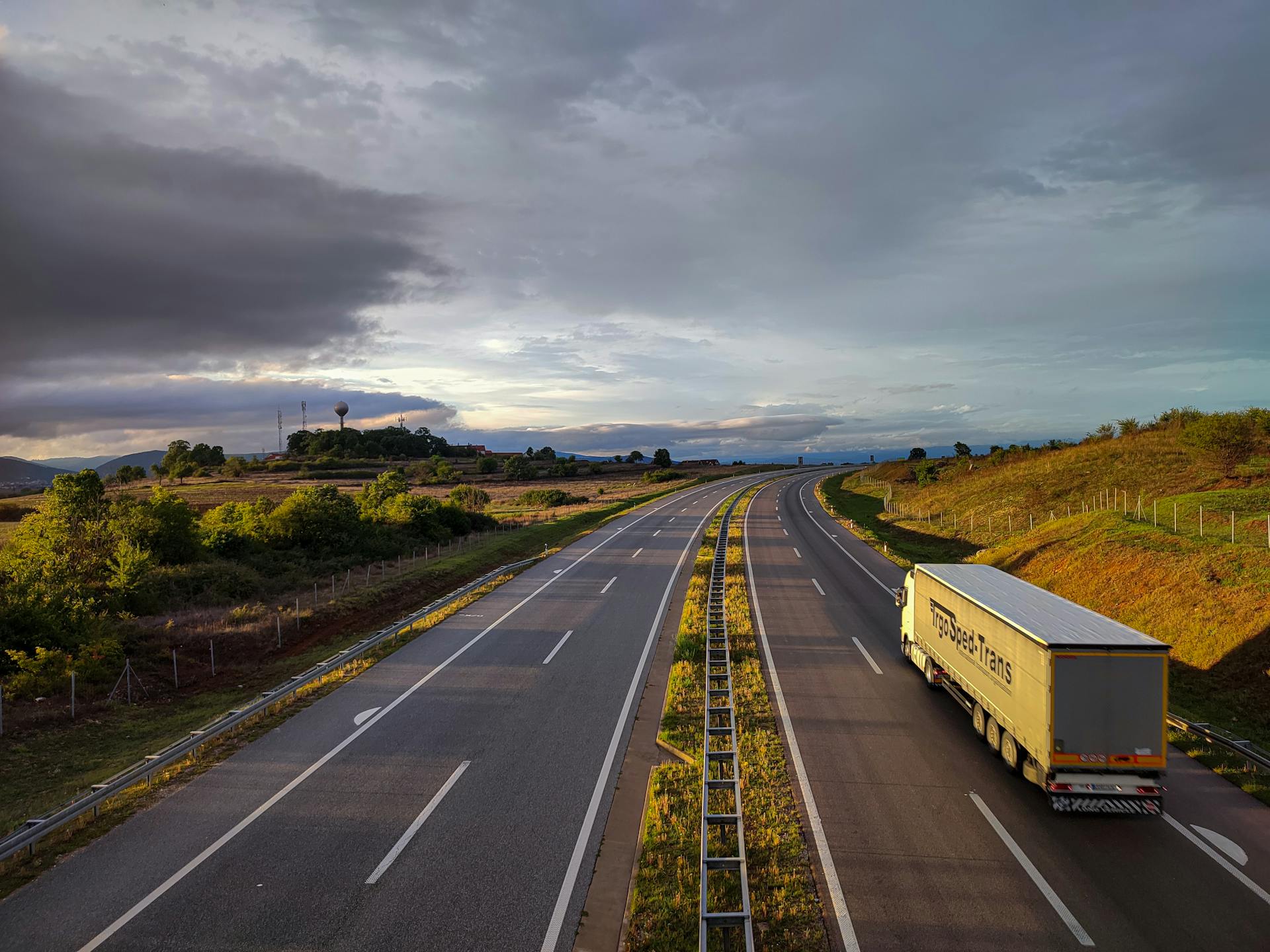
West Virginia Truck Dispatch | Chemical Valley & Coal Export
We dispatch trucks for West Virginia's Kanawha Valley 'Chemical Valley', one of the most concentrated chemical manufacturing areas in the eastern U.S. We also serve the state's coal export corridor and Toyota's Buffalo, WV engine plant.
How much do truck dispatch rates run in West Virginia?
West Virginia freight rates track the national spot market with a regional premium or discount by lane. Demand is driven by Coal Mining & Export, Chemical Manufacturing and Natural Gas & Petrochemicals. Grow Trucking dispatches West Virginia owner-operators and small fleets across 15 tracked lanes on a transparent percentage-of-gross fee, disclosed upfront.
- Tracked lanes
- 15
- Major freight hubs
- Charleston, Huntington and Morgantown
- Top industries
- Coal Mining & Export and Chemical Manufacturing
West Virginia rate and market data reviewed September 2026. See our dispatch fee structure.
West Virginia Truck Dispatch Services
Mountains and extraction industries define West Virginia's freight market. Coal has been the state's economic identity for over a century. Production has fallen from peak levels, but West Virginia still produces more coal than every state except Wyoming. It is the largest coal producer east of the Mississippi River. It supplies 28% of all U.S. coal exports and holds 55 billion tons of recoverable reserves (12% of the national total). Powder River Basin coal goes mostly to power plants. West Virginia's Appalachian coal is different. It includes a lot of metallurgical coal used in steel production. That coal sells for higher prices and creates more varied freight. The Kanawha Valley (Charleston-South Charleston-Institute corridor) is known as 'Chemical Valley'. It is one of the most concentrated chemical manufacturing areas in the eastern U.S. Dow, Chemours (DuPont legacy), Union Carbide, and Bayer CropScience run 20+ plants there. They make plastics, specialty chemicals, and industrial compounds. Natural gas from the Marcellus and Utica Shale is a major new freight source. It creates demand for hauling drilling rigs and compressor stations. Toyota's Buffalo, WV engine plant adds automotive JIT freight and its Tier 1 supplier network. Every route in West Virginia involves mountains. Truckers face steep grades, narrow curves, and winter weather that is harsh even by Rockies-adjacent standards. CSX/Norfolk Southern's Appalachian rail lines were built just to handle coal traffic.
West Virginia offers freight chances built on the Kanawha Valley's dense chemical manufacturing cluster, the state's coal export corridor, and Toyota's Buffalo engine plant. Demand is strong for tanker/hazmat, flatbed, and JIT automotive loads.
The Kanawha Valley's dense chemical manufacturing cluster creates steady, high-value tanker/hazmat freight. It is very different from standard dry van
West Virginia's coal export status (28% of U.S. exports) gives you a lasting, if shrinking, freight base. Metallurgical coal sells at premium prices
Toyota's Buffalo engine plant offers real JIT automotive freight in a state not usually linked with car making
Marcellus/Utica Shale natural gas activity keeps creating growing demand for specialized equipment hauls
What is the West Virginia freight market like?
As of December 2025, West Virginia's unemployment rate was 4.6%, with 713,800 non-farm jobs statewide. The state ranked fifth nationally in total energy production in 2024. It produced about 6% of the nation's total energy. Natural gas production rose 6% in recent years to 2.9 trillion cubic feet, ranking fourth nationally.
Average Rates
West Virginia-origin rates (mid-2026): dry van runs roughly $2.45/mile (driven largely by coal-adjacent freight demand). Reefer runs $2.94/mile, flatbed $2.58/mile, step deck $2.68/mile, and power only $2.55/mile. Energy-sector freight (coal, natural gas equipment) pays premium rates for specialized equipment.
Market Trends
- •
West Virginia is still the largest coal producer east of the Mississippi River and the second-largest nationally (behind Wyoming). It supplies 28% of all U.S. coal exports
- •
Natural gas production from the Marcellus and Utica Shale plays keeps growing. It rose 6% to 2.9 trillion cubic feet in a recent reporting year, ranking fourth nationally
- •
The Kanawha Valley 'Chemical Valley' is still one of the most concentrated chemical manufacturing areas in the eastern U.S. Dow, Chemours, Union Carbide, and Bayer CropScience run 20+ plants there
- •
Toyota's Buffalo, WV engine plant keeps creating JIT automotive freight for its Tier 1 supplier network
- •
West Virginia's mountain terrain means longer transit times and limits oversize freight routing. Mountain-state carrier experience is key
What are the busiest freight lanes out of West Virginia?
Price these lanes with our free Trip Pre-Cost Calculator, Should I Take This Load? Calculator and Lane Profitability Analyzer.
Charleston to Columbus
Freight route connecting Charleston, WV to Columbus, OH (170 miles). Connects Charleston's Chemical Valley to Ohio's logistics hub via I-77.
Rate: $442 - $510
Distance: 170 miles
Charleston to Cincinnati
Freight route connecting Charleston, WV to Cincinnati, OH (204 miles). Connects Huntington's river port to Cincinnati's consumer goods base via I-64.
Rate: $520 - $602
Distance: 204 miles
Charleston to Pittsburgh
Freight route connecting Charleston, WV to Pittsburgh, PA (225 miles). Runs I-79 north from Charleston through Morgantown into Pittsburgh's industrial and tech freight base.
Rate: $585 - $675
Distance: 225 miles
Charleston to Richmond
Freight route connecting Charleston, WV to Richmond, VA (290 miles). Richmond's distribution position connects West Virginia to the Mid-Atlantic via I-64.
Rate: $725 - $841
Distance: 290 miles
Charleston to Charlotte
Freight route connecting Charleston, WV to Charlotte, NC (264 miles). Charlotte's banking and distribution sector connects well via I-77.
Rate: $647 - $752
Distance: 264 miles
Charleston to Lexington
Freight route connecting Charleston, WV to Lexington, KY (175 miles). Runs I-64 west from Charleston through Huntington into Kentucky's Bluegrass region.
Rate: $464 - $534
Distance: 175 miles
Charleston to Washington
Freight route connecting Charleston, WV to Washington, DC (335 miles). The DC metro's government and consumer freight base via I-79/I-68.
Rate: $821 - $955
Distance: 335 miles
Charleston to Roanoke
Freight route connecting Charleston, WV to Roanoke, VA (171 miles). Connects southern West Virginia to Virginia's Blue Ridge corridor via I-77/I-81.
Rate: $436 - $504
Distance: 171 miles
Charleston to Baltimore
Freight route connecting Charleston, WV to Baltimore, MD (370 miles). The Port of Baltimore and Mid-Atlantic distribution network via I-68/I-70.
Rate: $907 - $1,054
Distance: 370 miles
Charleston to Louisville
Freight route connecting Charleston, WV to Louisville, KY (246 miles). UPS's Worldport air hub in Louisville makes this a strong time-sensitive freight corridor via I-64.
Rate: $615 - $713
Distance: 246 miles
Charleston to Atlanta
Freight route connecting Charleston, WV to Atlanta, GA (499 miles). Atlanta's distribution hub status extends West Virginia's Southeast reach via I-77/I-85.
Rate: $1,173 - $1,372
Distance: 499 miles
Charleston to Cleveland
Freight route connecting Charleston, WV to Cleveland, OH (265 miles). Cleveland's steel manufacturing base connects via I-77.
Rate: $662 - $768
Distance: 265 miles
Charleston to Knoxville
Freight route connecting Charleston, WV to Knoxville, TN (285 miles). Connects West Virginia to East Tennessee via I-77/I-81.
Rate: $712 - $826
Distance: 285 miles
Charleston to Philadelphia
Freight route connecting Charleston, WV to Philadelphia, PA (461 miles). Philadelphia's pharma corridor and port pair with West Virginia's chemical freight via I-70/I-76.
Rate: $1,129 - $1,314
Distance: 461 miles
Charleston to Buffalo
Freight route connecting Charleston, WV to Buffalo, WV (45 miles). Very short corridor serving Toyota's Buffalo, WV engine plant.
Rate: $128 - $148
Distance: 45 miles
Search brokers & carriers in West Virginia
Browse active freight brokers and for-hire carriers based in West Virginia. The list comes live from FMCSA and updates weekly. Check bond, authority, and fleet size before you haul.
Freight Brokers
Active, FMCSA-bonded freight brokers based in West Virginia.
Browse directoryDry Van Carriers
For-hire dry van carriers operating out of West Virginia.
Browse directoryFlatbed Carriers
For-hire flatbed carriers operating out of West Virginia.
Browse directoryReefer Carriers
For-hire reefer carriers operating out of West Virginia.
Browse directoryTruck Parking
Official NHS rest stops and truck parking capacity across West Virginia.
Browse directoryWhich industries drive freight demand in West Virginia?
Coal Mining & Export (second-largest producer nationally, 28% of U.S. coal exports)
Chemical Manufacturing ('Chemical Valley' - Kanawha Valley: Dow, Chemours, Union Carbide, Bayer CropScience)
Natural Gas & Petrochemicals (Marcellus/Utica Shale)
Automotive (Toyota - Buffalo engine plant and Tier 1 suppliers)
Steel Manufacturing (Northern Panhandle, Huntington)
Timber & Forest Products (79% of the state is timberland)
How does West Virginia freight change by season?
Rates and weather change with the seasons. Here is a quarter-by-quarter look at rates, weather, and what to do in West Virginia.
Q1 (Jan-Mar)
Rate Movement
Rates hold steady on chemical/coal freight. Winter weather can spike short-term demand
Weather Impact
Harsh mountain winter weather hits freight hard statewide
Strategy
Build big schedule buffer for all West Virginia freight. Monitor WVDOT conditions closely
Q2 (Apr-Jun)
Rate Movement
Rates get stronger as construction and energy-sector freight ramp up with the spring thaw
Weather Impact
Improving as mountain routes clear
Strategy
Focus on Toyota JIT automotive freight and Chemical Valley tanker/hazmat freight
Q3 (Jul-Sep)
Rate Movement
Rates hold steady on coal, chemical, and automotive freight
Weather Impact
Generally favorable statewide
Strategy
Focus on natural gas equipment hauls and Chemical Valley freight volume
Q4 (Oct-Dec)
Rate Movement
Rates rise with holiday retail freight and year-end coal/chemical shipment cycles
Weather Impact
Winter weather starts hitting mountain routes hard by late November
Strategy
Book capacity early and watch mountain-pass conditions as winter weather returns
Additional Seasonal Considerations
- •
Winter weather is harsh in West Virginia's mountains. It affects freight statewide Nov-Mar
- •
Coal, chemical, and Toyota JIT freight run steady year-round, in any season
- •
Natural gas drilling follows energy-market cycles rather than a fixed season
- •
Timber freight can shift a bit with logging conditions
Where are the major freight hubs in West Virginia?
The ports, inland ports, intermodal terminals, and distribution cities that move freight across West Virginia. See where most of the freight is.
Distribution Cities
- Charleston
- Huntington
- Morgantown
- Parkersburg
- Wheeling
Ports & Intermodal Terminals
Kanawha Valley 'Chemical Valley' (Charleston-South Charleston-Institute)
One of the most concentrated chemical manufacturing areas in the eastern U.S. It is home to Dow, Chemours, Union Carbide, and Bayer CropScience.
Huntington River Port
A big Ohio River port connecting West Virginia's chemical and coal freight to wider Ohio Valley distribution.
Toyota Buffalo Engine Plant
Creates JIT automotive freight for Toyota's Tier 1 supplier network in West Virginia.
Where can trucks park and fuel in West Virginia?
Truck parking and fuel info to help you plan your routes through West Virginia.
Estimate fuel, tolls, and fuel tax with our free Fuel Cost Calculator, IFTA Tax Calculator and Toll Cost Estimator with Route Comparison.
Major Truck Stops
TA Travel Center — Charleston (I-77, Exit 96)
📍 120 Alex Lane, Charleston, WV 25309
200 truck parking spaces ($14/day fee), Country Pride Restaurant, CAT scale, tire shop, diesel, and driver amenities. Near the I-77/I-64/I-79 interchange, serving Charleston's Chemical Valley and the Kanawha River corridor
Pilot Travel Center — Huntington (I-64, Exit 8)
📍 5551 U.S. Route 60 East, Huntington, WV 25705
170 truck parking spaces ($12/day fee), Subway/Wendy's, CAT scale, tire service, diesel, and showers. Serves Huntington's Ohio River port and the I-64 corridor to Kentucky
Flying J Travel Plaza — Beckley (I-77, Exit 42)
📍 2108 Harper Road, Beckley, WV 25801
180 truck parking spaces ($13/day fee), Denny's, CAT scale, tire service, diesel, and truck amenities. On I-77, serving the southern West Virginia coal corridor to Virginia/North Carolina
TA Travel Center — Morgantown (I-79, Exit 152)
📍 1328 Grafton Road, Morgantown, WV 26508
160 truck parking spaces ($12/day fee), Country Pride Restaurant, CAT scale, tire shop, diesel, and driver amenities. Serves Morgantown and the I-79 corridor to Pittsburgh and northern West Virginia
Love's Travel Stop — Weston (I-79, Exit 99)
📍 100 Market Place Mall, Weston, WV 26452
140 truck parking spaces ($10/day fee), Arby's, CAT scale, diesel, and convenience store. Serves Central West Virginia on I-79 between Charleston and Morgantown
Pilot Travel Center — Parkersburg (I-77, Exit 179)
📍 501 Grand Central Mall, Parkersburg, WV 26101
150 truck parking spaces ($12/day fee), Subway, CAT scale, tire service, diesel, and showers. On I-77, serving the Ohio River corridor and northern West Virginia industrial base
TA Travel Center — Princeton (I-77, Exit 9)
📍 1316 Ambrose Lane, Princeton, WV 24740
130 truck parking spaces ($10/day fee), Country Pride Restaurant, CAT scale, diesel, and driver amenities. Serves southern I-77 near the Virginia border
Flying J Travel Plaza — Ripley (I-77, Exit 138)
📍 1 Hospitality Drive, Ripley, WV 25271
120 truck parking spaces ($10/day fee), Denny's, CAT scale, diesel, and convenience store. Serves I-77 between Charleston and Parkersburg in central West Virginia
Parking Difficulty
Moderate to High. Charleston sees solid demand because of chemical corridor volume and the I-77/I-64/I-79 interchange concentration. Congestion peaks early in the week (Monday-Wednesday mornings), when carriers position for outbound Chemical Valley freight. Mountain routes have fewer services, so plan ahead. The US-119 and US-52 coal-haul corridors have few truck stops. Winter weather (Nov-Mar) and steep mountain grades create more parking demand at truck stops with chain-up areas. Best availability: Sunday evenings and early Monday mornings in Charleston. Mid-afternoons on mountain corridors.
- •Plan ahead for parking in metro areas
- •Use rest areas as a backup
- •Use parking apps to find available spots
Strategic Positioning Advice
Park where you can find loads fast and cut deadhead miles:
- •
Major Distribution Centers: Position near major distribution hubs in Charleston for quick access to outbound loads.
- •
Busy Freight Routes: Stay near busy freight corridors to catch backhaul loads.
- •
Timing: Arrive when booking is busiest (usually early morning) to get the best rates.
Fuel price trend
How has the diesel price changed in West Virginia?
EIA does not publish a separate diesel price for West Virginia, so this is the weekly average for the Lower Atlantic region that West Virginia is part of, over the last 12 months.
- Price this week
- $5.74/gal
- Since last week
- Up 10 cents
- Versus a year ago
- Up 60%
- Versus the U.S. average
- 54 cents below
Week of October 19, 2026
+$2.16 a gallon
U.S. average $6.28
Source: U.S. Energy Information Administration weekly retail on-highway diesel prices. Averages, not the price at one pump.
What are West Virginia's truck weight limits and regulations?
Weight limits, permits, and emission rules. Know these rules to stay legal. Also see what to expect at a DOT roadside inspection, the federal size and weight limits, and the full federal trucking regulations reference.
Check weights and permits with our free Scale / Weigh Station Guide, Weight & Axle Load Calculator and Oversize / Overweight Permit Estimator.
Weight Limits
Federal limits on the Interstate System (23 CFR 658.17):
- Single Axle: 20,000 lbs
- Tandem Axle: 34,000 lbs
- Gross Vehicle Weight: 80,000 lbs, or less where the bridge formula sets a lower total
Other highways follow West Virginia law, and some states allow more on non-Interstate roads. Check with the state's size and weight office before you load.
Size Limits
Width is a federal limit. Height and trailer length depend on the state:
- Width: 8.5 feet (102 inches) on the National Network (23 CFR 658.15)
- Height: Set by each state. There is no federal height limit, and FHWA says most states are between 13 ft 6 in and 14 ft. Check West Virginia's limit for your route.
- Length: 53 ft semitrailers are common, but a state can apply its own kingpin-to-rear-axle rule
State-Specific Rules
- •
West Virginia State Police and WVDOT jointly enforce commercial vehicle safety at weigh stations and with roving patrols
- •
Federal weight limits on the Interstate System: 80,000 lbs gross vehicle weight, 20,000 lbs single axle, 34,000 lbs tandem axle. Other highways follow state law, so check the state's size and weight office
- •
Size limits: 8.5 ft (102 in) width. Legal height is set by each state, and FHWA says most are 13 ft 6 in to 14 ft, so check the state's size and weight office. A 53 ft semitrailer is common, but state kingpin-to-rear-axle rules apply
- •
WVDOT issues oversize/overweight permits. Mountain terrain means you must plan oversize routes with care
- •
Kanawha Valley chemical corridor freight requires hazmat compliance (HAZMAT certification, proper placarding, emergency response plans)
- •
West Virginia's diesel fuel tax is about $0.357/gallon (verify the current rate with the West Virginia State Tax Department)
Permits
West Virginia may require special permits for:
- •Oversized/overweight loads
- •Hazardous materials
- •Special route rules
West Virginia: freight facts a driver should know
West Virginia's blanket permit weight cap depends on the road
West Virginia's blanket overweight/oversize permit allows up to 110,000 pounds gross on Interstate routes, but only 90,000 pounds on every other route in the state. Blanket permits also cap axle weights at 28,000 pounds single, 34,000 pounds tandem, and 50,000 pounds tridem.
Source: West Virginia Department of Transportation, permit types. Checked 30 Sep 2026.
Blanket permits set their own size limits, too
Under a West Virginia blanket permit on Interstates or divided highways, loads can run up to 14 feet 6 inches tall, 14 feet wide, and 95 feet long. An annual oversize blanket permit costs $200; an overweight-and-oversize blanket runs $500.
Source: West Virginia Department of Transportation, permit types. Checked 30 Sep 2026.
How have West Virginia freight rates moved, and what's next?
How West Virginia freight rates have moved through recent market cycles, and what owner-operators and fleets should expect next. Use this to time lane commitments and rate negotiations. Before you accept a load, check it against our free rate benchmarker.
Recent Rate Cycles
Rate cycles that shaped the current West Virginia freight market:
2018-2019
Strong market. Rates hit their peak because trucks were in short supply
2020
Rates swung at first because of the pandemic. Freight demand then bounced back hard
2021-2022
Record-high rates. E-commerce demand surged and trucks were in short supply
2023-2024
Rates fell sharply as truck supply passed demand. Smaller carriers left the market
2025-2026
The national market is recovering. West Virginia's Chemical Valley and continued coal export activity (28% of U.S. exports) have kept freight demand stable, despite the state's falling coal employment
Market Correction Periods
Knowing when corrections hit West Virginia helps with strategic planning:
- •
Q1 2023: Rates fell hard as trucks were added faster than freight grew
- •
Mid-2024: The market is settling, with supply and demand more in balance
- •
Pattern: Rate drops usually last 6–12 months before rates recover
West Virginia Market Outlook
As of mid-2026, West Virginia's freight market gains from the Kanawha Valley's dense chemical manufacturing cluster, continued coal exports, and Toyota's Buffalo plant JIT freight. Long-term coal job losses and tough mountain terrain hold it back.
What Drives Rates in West Virginia
- •Freight volume and demand (chemical manufacturing, coal export, natural gas, automotive JIT)
- •Truck supply, which tightened a lot from last year across the nation
- •Fuel costs and West Virginia's diesel fuel tax (~$0.357/gallon)
- •Coal export volume, Marcellus/Utica Shale drilling activity, and Toyota production schedules
How do I cut deadhead miles running freight in West Virginia?
How to cut empty miles when you haul in and out of West Virginia. See the outbound and inbound freight balance, the best return lanes, and where to park your truck. Run your own numbers with our free deadhead miles calculator.
Outbound Freight
50%
Roughly 50% of West Virginia freight moves outbound. Outbound loads from West Virginia's production and distribution centers typically book fastest early in the week.
Inbound Freight
50%
About 50% of the freight balance is inbound. Book your return load before you deliver. It is the biggest way to raise your rate-per-mile on these lanes.
Best Backhaul Lanes into West Virginia
The strongest return lanes for repositioning back toward West Virginia:
Columbus to Charleston
I-77 corridor connecting Chemical Valley to Ohio's logistics hub
Rate: $2.50 - $2.90/mile
Pittsburgh to Morgantown
Short I-79 corridor with steady industrial freight
Rate: $2.55 - $2.95/mile
Cincinnati to Huntington
I-64 corridor connecting West Virginia's river port to Ohio
Rate: $2.45 - $2.85/mile
Positioning Strategies for West Virginia
Where and when to stage to keep your next load close and your deadhead low:
- •
Position near Charleston's Kanawha Valley for the fastest access to chemical/hazmat freight
- •
Build a big schedule buffer for mountain-route freight because of West Virginia's tough terrain
- •
Use load boards to pre-book backhaul before longer cross-country hauls
What do experienced dispatchers know about running West Virginia?
Hands-on tips from years of dispatching in West Virginia.
Chemical Valley's tanker/hazmat freight is steady, high-value work ($2.70-$3.20/mile). A hazmat endorsement and tanker certification are valuable in this market. Dow, Chemours, Union Carbide, and Bayer CropScience run 20+ plants in the Kanawha Valley. They make plastics, specialty chemicals, and industrial compounds that need special handling.
West Virginia's mountain terrain takes real experience. I-77 at Fancy Gap has 6-7% grades for miles. Add narrow curves and harsh winter weather. These are not optional factors. They are the defining reality here. Runaway truck ramps are frequent and used regularly, not just for show.
Toyota's Buffalo engine plant is a real automotive JIT freight chance ($2.55-$2.95/mile) in a state most carriers don't link with car making. The plant makes four-cylinder and V6 engines for Toyota's North American assembly plants. That creates steady inbound parts and outbound engine volume.
Charleston chemical freight and I-77/I-64 corridor positioning create midweek rate premiums. That happens when coal, natural gas, and chemical plant production cycles line up with weekly shipment windows.
Metallurgical coal (used in steel production) commands higher prices ($80-$150/ton) than standard thermal coal ($40-$60/ton). Understand the distinction if you haul coal freight. Met coal is exported through East Coast ports (Baltimore, Norfolk) while thermal coal serves domestic power plants.
Marcellus/Utica Shale natural gas equipment is a growing, specialized freight category worth a look beyond traditional coal/chemical freight. Drilling rigs, compressor stations, and pipeline equipment create flatbed/heavy-haul demand in northern and eastern West Virginia.
The Huntington Ohio River port is a big freight hub most carriers overlook. It connects West Virginia's chemical and coal freight to wider Ohio Valley distribution by barge-to-truck transfer. Chemical products move downriver to the Louisiana Gulf Coast. Coal moves to Great Lakes steel mills. Both create drayage chances.
CSX and Norfolk Southern's Appalachian rail lines were built just for coal traffic. Rail-to-truck transload chances exist at several West Virginia rail yards for carriers willing to coordinate intermodal schedules.
West Virginia has 55 billion tons of recoverable coal reserves (12% of the national total). That makes it the largest coal reserve state east of Wyoming. Production has fallen from peak levels. But the state still produces enough coal to support a lasting, if shrinking, freight base.
Winter prep in West Virginia means carrying several sets of chains, not one. Mountain passes can make you chain and unchain more than once in a single trip when weather is active. Budget extra time (add 25-50% to baseline transit times) for winter mountain crossings Nov-Mar.
Remember: These tips come from real dispatching work in West Virginia. Markets change, but these basics still help you earn more and cut deadhead miles.
How have drivers near West Virginia grown with Grow Trucking?
West Virginia Freight FAQs
Comprehensive answers to common questions about trucking and dispatch in West Virginia. State-specific regulations, costs, and operating strategies.
Yes. You need a USDOT number and MC number for interstate for-hire hauling. You also need West Virginia-specific IRP (International Registration Plan) and IFTA (International Fuel Tax Agreement) registration through the West Virginia Division of Motor Vehicles. West Virginia does not require a separate intrastate motor carrier permit for interstate-authorized carriers. IRP/IFTA registration usually takes 7-10 business days once your federal authority is active.
Federal minimum liability coverage is $750,000 for general freight and $1,000,000 for hazardous materials. You also need cargo insurance (usually $100,000 minimum) and physical damage coverage for financed equipment. Chemical/hazmat freight from the Kanawha Valley needs more coverage and emergency response planning. Typical needs run $2,000,000-$5,000,000 liability for specialized chemical tankers. Coal hauling needs specialized coverage for dry bulk/dump work. Confirm current rules with your insurance provider. Check broker-specific rules before you accept Chemical Valley loads.
As of mid-2026, Chemical Valley tanker/hazmat freight pays premium rates ($2.70-$3.20/mile for specialized chemical transport). Reefer runs around $2.94/mile. Step deck runs around $2.68/mile for natural gas equipment and mining machinery. Flatbed runs around $2.58/mile, dry van around $2.45/mile, and power only around $2.55/mile. Energy-sector freight (coal, natural gas equipment) pays premium rates for specialized equipment and experienced mountain-route handling.
Yes, especially if you have real mountain-driving experience and hazmat/tanker endorsements. West Virginia's Chemical Valley, coal export activity, and Toyota JIT freight offer real chances. But the terrain demands real experience. Expect steep grades (6-7% for miles on major interstate sections). Expect harsh winter weather (50-100+ inches of snow a year at higher elevations). Expect runaway truck ramps. New operators should buy several sets of chains and plan longer winter transit times (add a 25-50% buffer). Check that your equipment can handle sustained mountain grades before you commit to West Virginia freight.
West Virginia diesel fuel tax is about $0.357 per gallon as of 2026, moderate for the Appalachian region. Add the federal tax ($0.244/gallon), and total diesel fuel tax is about $0.601 per gallon. Retail diesel in the Lower Atlantic region, which includes West Virginia, averages $5.74/gallon as of October 19, 2026 (EIA weekly average), about 54 cents below the national average of $6.28. That price is up 10 cents from last week and 60% above a year ago. Remote mountain areas can run $0.30-$0.50/gallon higher than Charleston/Huntington. West Virginia's Appalachian mountain location creates big operating challenges. They include steep grades, mountain routes (I-77, I-79, US-Route corridors), winter weather, weight limits, and energy/manufacturing freight (coal, natural gas, chemicals). Source: IFTA matrix, West Virginia State Tax Department, AAA, verified September 2026.
Kanawha Valley 'Chemical Valley' tanker/hazmat freight needs special credentials and equipment. Start by getting your hazmat endorsement (TSA background check, written exam). Add a tanker endorsement if you don't have one. Chemical tankers must meet DOT MC-306, MC-307, or MC-312 specs, depending on the product. Build ties with chemical logistics providers. Kenan Advantage Group, Quality Carriers, and Schneider Bulk specialize in Dow, Chemours, Union Carbide, and Bayer CropScience contracts. Liability insurance usually runs $2,000,000-$5,000,000 for specialized chemical transport. Emergency response planning and 24/7 CHEMTREC registration are mandatory. Rates carry premiums ($2.70-$3.20/mile) because of the special rules and hazmat risk. Common products include plastics resins, industrial solvents, specialty chemicals, and farm compounds. This freight runs steady year-round, in any season.
West Virginia's mountain terrain is among the toughest in the eastern U.S. I-77 at Fancy Gap (Virginia border) has 6-7% grades for miles. I-79 through central West Virginia has several steep grades. The US-119 and US-52 coal corridors are even worse, with 8-10% grades and tight curves. Runaway truck ramps are frequent and actively used. Know where they are before you go down a grade. Winter weather (Nov-Mar) brings 50-100+ inches of snow a year at higher elevations. Black ice is common on shaded north-facing slopes. Carry several sets of chains. You may need to chain and unchain again and again on one trip. Budget 25-50% extra transit time for winter mountain crossings. Check WVDOT 511 conditions before you enter mountain corridors. Your equipment must handle sustained mountain grades. Check brake fade resistance, transmission health, and cooling system capacity before you accept West Virginia freight. This isn't Kansas. Mountain driving experience is mandatory, not just recommended.
West Virginia produces both metallurgical (met) coal and thermal coal. They have different freight traits. Metallurgical coal is used in steel production (coke ovens). It sells for higher prices ($80-$150/ton) because of strict quality needs (low sulfur, high BTU, coking traits). It is mostly exported through East Coast ports (Baltimore, Norfolk) to international steel mills. Thermal coal is used to make electricity at power plants. It sells for lower prices ($40-$60/ton). It moves mostly to domestic power plants by rail or short-haul truck. For truckers, met coal freight usually pays 20-30% more than thermal coal. That is because of port-bound export logistics and tighter quality controls. Knowing the difference helps you negotiate better rates with coal brokers. It also helps you spot which mines and destinations pay premium rates.
Toyota's Buffalo, WV engine plant (Putnam County, I-64 corridor) is West Virginia's largest single manufacturing employer. It creates steady JIT (Just-In-Time) automotive freight, apart from the state's coal/chemical base. The plant makes four-cylinder and V6 engines for Toyota's North American assembly plants (Kentucky, Indiana, Texas, Mississippi). Inbound freight includes engine blocks, cylinder heads, camshafts, pistons, electronics, and Tier 1 supplier parts. These need precise delivery windows (usually 2-4 hour windows, not full-day). Outbound freight is finished engines moving to assembly plants. Rates run $2.55-$2.95/mile for JIT freight, with tighter-than-standard delivery rules. Build ties with automotive logistics providers. Penske, Ryder, and CEVA Logistics have Toyota contracts. This freight rewards carriers who know JIT discipline and keep on-time performance above 98%.
Natural gas production from the Marcellus and Utica Shale plays has grown a lot in West Virginia. It ranks fourth nationally at 2.9 trillion cubic feet a year (up 6% in recent reporting). This creates freight demand different from coal. It includes drilling rigs and parts (flatbed/heavy-haul, $2.80-$3.40/mile for permitted oversize loads). It includes compressor stations and pipeline equipment (step deck, $2.68/mile). It includes fracking sand and proppants (hopper/bulk, $2.50-$2.90/mile). It also includes water trucks for fracking work (tanker). Activity centers in northern West Virginia (Doddridge, Harrison, Marshall, Wetzel counties) and the eastern panhandle (Grant, Preston counties). This freight follows energy-market cycles and drilling rig counts, not seasons. Build ties with oilfield services logistics providers. Schlumberger, Halliburton, and Baker Hughes contractors are examples. You need special rigging for heavy-haul, tarps for pipeline equipment, and clean hoppers for proppants. WVDOT oversize/overweight permits are common for drilling equipment moves.
Keep exploring dispatch options
Tools, equipment guides and nearby states relevant to running freight in and out of West Virginia.
By equipment
Free tools
- Trip Pre-Cost Calculator
- Toll Cost Estimator with Route Comparison
- Load Board Rate Benchmarker
- Deadhead Miles Calculator
- Fuel Cost Calculator
- IFTA Tax Calculator
- Scale / Weigh Station Guide
- Cost Per Mile Calculator
- Diesel prices today
- Diesel tax by state
- Truck idling laws by state
- Truck speed limits by state
- Truck chain laws by state
- Truck lane laws by state
- Truck height and length limits by state
- Rest area parking limits by state
- Lower Atlantic diesel prices
- UCR Fee Calculator
- Per Diem Calculator
- All Free Tools
Services
More from Grow Trucking
Ready to Move Freight in West Virginia?
Secure Your Strategy:
Apply for your FREE Custom 90-Day Growth Plan (a $1,500 value). It starts with a Business Audit that finds where you lose money and sets your profit goals.
Guarantee Your GROWTH:
Start your 90-day partnership to implement the plan. We back it with our "Growth or Your Money Back" Guarantee.