
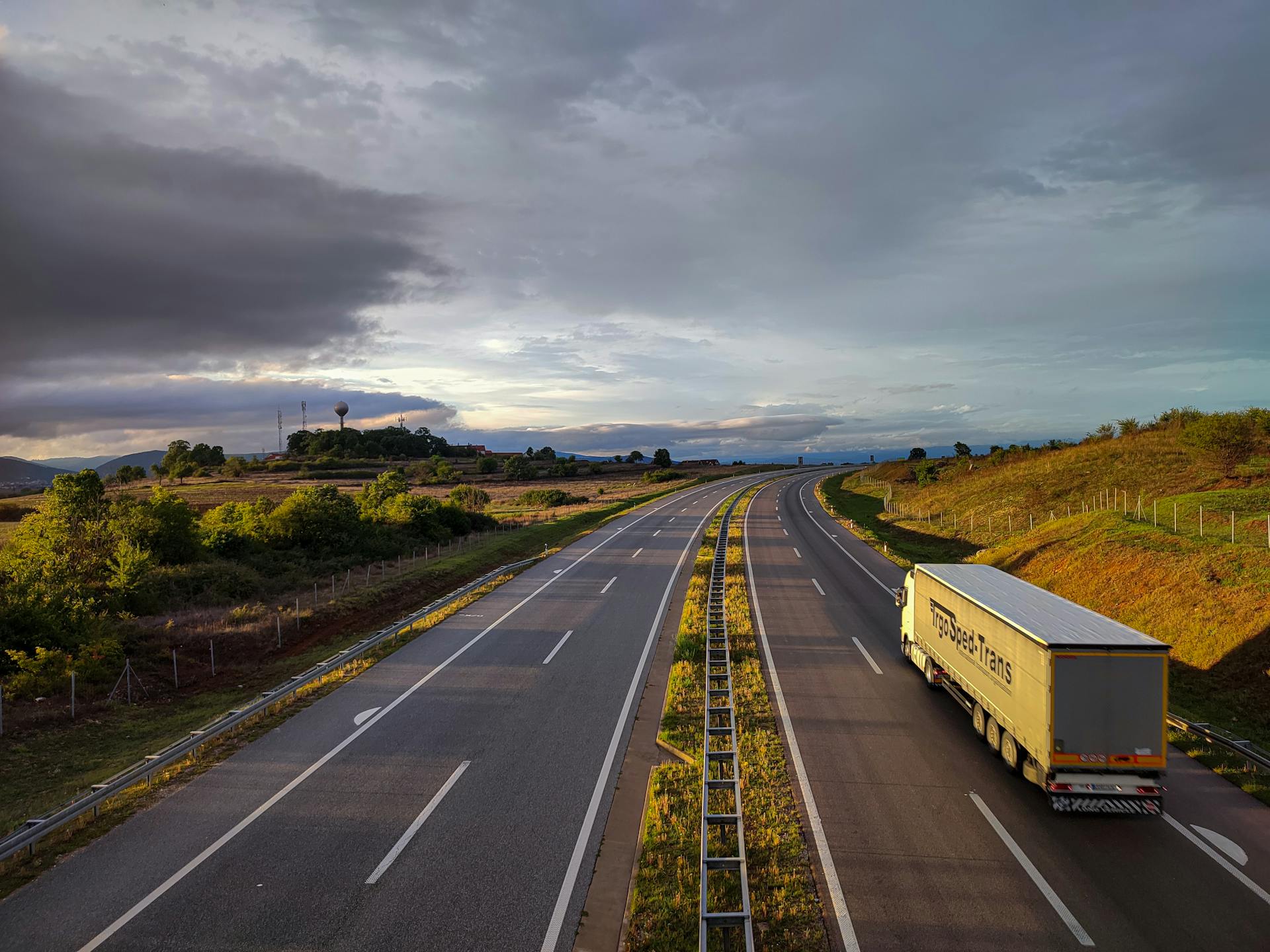
Kansas Truck Dispatch | Wichita Air Capital & Wheat Harvest
We dispatch trucks for Wichita's aerospace manufacturing. It is the Air Capital of the World, building 35% of all U.S. aircraft. We also cover Kansas's #1-in-the-nation wheat harvest and the beef processing corridor of southwest Kansas.
How much do truck dispatch rates run in Kansas?
Kansas-origin freight currently pays about $2.20-$2.65/mi for dry van, more for reefer and flatbed. Demand is driven by Aerospace Manufacturing, Agriculture & Grain and Beef Processing. Grow Trucking dispatches Kansas owner-operators and small fleets across 15 tracked lanes on a transparent percentage-of-gross fee, disclosed upfront.
- Tracked lanes
- 15
- Major freight hubs
- Wichita, Kansas City and Topeka
- Top industries
- Aerospace Manufacturing and Agriculture & Grain
Kansas rate and market data reviewed September 2026. See our dispatch fee structure.
Kansas Truck Dispatch Services
Kansas sits at the geographic center of the contiguous United States. It is a natural crossroads for east-west freight on I-70 and north-south traffic on I-35. Wichita is known as the Air Capital of the World. Spirit AeroSystems builds Boeing 737 fuselages that ship by oversized flatbed to Boeing's Renton, WA assembly plant. Textron Aviation (Cessna, Beechcraft) and Bombardier Learjet create constant inbound raw materials and outbound finished aircraft parts. Wichita makes roughly 35% of all U.S.-built aircraft. Kansas grows more wheat than any other state, over 300 million bushels a year, mostly hard red winter wheat. Wheat harvest (June-July) is the biggest freight event of the Kansas year. Millions of bushels must move from fields to grain elevators in a 3-4 week window, and truck demand far exceeds normal capacity. Southwest Kansas (Dodge City, Garden City, Liberal) is the beef processing capital of America. Tyson, Cargill, and National Beef plants create massive live-cattle-in, boxed-beef-out reefer freight. Kansas offers generous harvest permits that allow overweight grain trucks during wheat season. It also offers wind energy corridor permits for oversized wind turbine parts.
Kansas offers freight opportunities anchored by Wichita's aerospace manufacturing, the nation's #1 wheat harvest, and southwest Kansas's beef processing corridor. Demand is strong for flatbed, hopper, and reefer/cattle-hauler.
Wichita's aerospace manufacturing creates steady, year-round specialized flatbed demand, apart from harvest seasons
Kansas's central location makes it a natural distribution hub that reaches both U.S. coasts efficiently
The southwest Kansas beef corridor gives you dependable, high-volume reefer/cattle-hauler freight
Generous state harvest permits (overweight grain trucks) and wind energy corridor permits make specialized seasonal freight easier
What is the Kansas freight market like?
As of 2026, Kansas freight averages roughly $2.35/mile statewide. The state's central position makes it a natural distribution point that reaches both coasts. Wheat harvest (June-July) is still the biggest single freight event. Custom harvest crews and trucks follow the wheat line north through the state.
Average Rates
Kansas-origin rates (mid-2026): dry van roughly $2.20-$2.65/mile. Flatbed runs $2.55-$3.10/mile (Wichita aerospace parts, wind turbine equipment). Hopper/bulk rates spike sharply during wheat harvest (Jun-Jul). Reefer/cattle-hauler runs $2.50-$2.95/mile (Dodge City/Garden City/Liberal beef corridor).
Market Trends
- •
Wichita makes roughly 35% of all U.S.-built aircraft. Spirit AeroSystems, Textron Aviation, and Bombardier Learjet create steady year-round flatbed and specialized freight demand
- •
Kansas's wheat harvest (mid-June through July) is the biggest freight event of the year. It moves north across the state as custom harvest crews follow the wheat line. Truck demand far exceeds normal capacity
- •
Southwest Kansas's beef processing corridor (Dodge City, Garden City, Liberal) keeps anchoring massive live-cattle and boxed-beef freight volume for Tyson, Cargill, and National Beef
- •
Kansas offers generous harvest permits for overweight grain trucks during wheat season. It also offers wind energy corridor permits for oversized wind turbine part loads
- •
The Kansas City metro area (on the KS-MO border) is still one of the largest rail and trucking hubs in the Midwest
What are the busiest freight lanes out of Kansas?
Price these lanes with our free Trip Pre-Cost Calculator, Should I Take This Load? Calculator and Lane Profitability Analyzer.
Wichita to Kansas City
Freight route connecting Wichita, KS to Kansas City, MO (195 miles). Connects Wichita's aerospace corridor to Kansas's largest rail/intermodal hub via I-35.
Rate: $497 - $575
Distance: 195 miles
Wichita to Oklahoma City
Freight route connecting Wichita, KS to Oklahoma City, OK (165 miles). Connects Wichita's aerospace hub to Oklahoma's crossroads distribution center via I-35.
Rate: $429 - $495
Distance: 165 miles
Wichita to Denver
Freight route connecting Wichita, KS to Denver, CO (525 miles). Denver's Mountain West distribution hub connects via I-70.
Rate: $1,234 - $1,444
Distance: 525 miles
Wichita to Dallas
Freight route connecting Wichita, KS to Dallas, TX (375 miles). Cross-country freight connecting Kansas's aerospace/farm base to the Texas Triangle via I-35.
Rate: $919 - $1,069
Distance: 375 miles
Wichita to St. Louis
Freight route connecting Wichita, KS to St. Louis, MO (443 miles). St. Louis's tri-modal hub status provides a dependable mid-distance lane via I-70.
Rate: $1,108 - $1,285
Distance: 443 miles
Wichita to Omaha
Freight route connecting Wichita, KS to Omaha, NE (285 miles). Connects Wichita/Kansas City to Nebraska's beef/rail hub via I-35/I-29.
Rate: $712 - $826
Distance: 285 miles
Wichita to Chicago
Freight route connecting Wichita, KS to Chicago, IL (708 miles). Chicago's intermodal hub status extends Kansas's Midwest reach via I-70/I-55.
Rate: $1,664 - $1,947
Distance: 708 miles
Wichita to Little Rock
Freight route connecting Wichita, KS to Little Rock, AR (447 miles). Connects Kansas to Arkansas's Walmart/Tyson distribution corridor via I-35/I-40.
Rate: $1,095 - $1,274
Distance: 447 miles
Wichita to Amarillo
Freight route connecting Wichita, KS to Amarillo, TX (383 miles). Connects southwest Kansas's beef corridor to the Texas Panhandle's energy/farm base via US-83/I-40.
Rate: $938 - $1,092
Distance: 383 miles
Wichita to Albuquerque
Freight route connecting Wichita, KS to Albuquerque, NM (595 miles). Connects Wichita to New Mexico's distribution/energy base via I-40.
Rate: $1,398 - $1,636
Distance: 595 miles
Wichita to Minneapolis
Freight route connecting Wichita, KS to Minneapolis, MN (634 miles). It reaches Minneapolis's food-processing and medical device manufacturing base via I-35.
Rate: $1,522 - $1,775
Distance: 634 miles
Wichita to Nashville
Freight route connecting Wichita, KS to Nashville, TN (660 miles). Nashville's automotive and distribution base supports steady I-70/I-40 freight.
Rate: $1,518 - $1,782
Distance: 660 miles
Wichita to Wichita Aerospace Corridor
Freight route connecting Wichita, KS to Wichita, KS. Local Wichita-area aerospace supplier drayage moves.
Wichita to Salt Lake City
Freight route connecting Wichita, KS to Salt Lake City, UT (1028 miles). Connects Kansas to Utah's Mountain West crossroads via I-70.
Rate: $2,210 - $2,621
Distance: 1028 miles
Wichita to Louisville
Freight route connecting Wichita, KS to Louisville, KY (655 miles). UPS's Worldport air hub in Louisville makes this a strong time-sensitive freight corridor via I-70/I-64.
Rate: $1,506 - $1,769
Distance: 655 miles
Search brokers & carriers in Kansas
Browse active freight brokers and for-hire carriers based in Kansas. The list comes live from FMCSA and updates weekly. Check bond, authority, and fleet size before you haul.
Freight Brokers
Active, FMCSA-bonded freight brokers based in Kansas.
Browse directoryDry Van Carriers
For-hire dry van carriers operating out of Kansas.
Browse directoryFlatbed Carriers
For-hire flatbed carriers operating out of Kansas.
Browse directoryReefer Carriers
For-hire reefer carriers operating out of Kansas.
Browse directoryTruck Parking
Official NHS rest stops and truck parking capacity across Kansas.
Browse directoryWhich industries drive freight demand in Kansas?
Aerospace Manufacturing (Wichita: Spirit AeroSystems, Textron Aviation, Bombardier Learjet)
Agriculture & Grain (wheat #1 US, grain sorghum #1 US, corn, soybeans, sunflowers)
Beef Processing (Dodge City, Garden City, Liberal: Tyson, Cargill, National Beef)
Oil & Gas (western Kansas)
Cattle Ranching (#3 US)
Rail & Intermodal Logistics (Kansas City metro)
How does Kansas freight change by season?
Rates and weather change with the seasons. Here is a quarter-by-quarter look at rates, weather, and what to do in Kansas.
Q1 (Jan-Mar)
Rate Movement
Rates hold steady on aerospace and beef processing freight through winter
Weather Impact
Occasional winter storms can affect I-70/I-35, though less severe than in the northern Plains states
Strategy
Position near Wichita and the beef corridor early in the week for the best rates
Q2 (Apr-Jun)
Rate Movement
Rates begin climbing as wheat harvest approaches in June
Weather Impact
Tornado season (Apr-Jun) is the top operating variable. Supercell weather can develop fast
Strategy
Get hopper/bulk capacity ready for the coming wheat harvest surge. Watch severe weather closely
Q3 (Jul-Sep)
Rate Movement
Rates spike sharply during wheat harvest (Jun-Jul), then ease as the harvest window closes
Weather Impact
Generally favorable outside the tail of tornado season
Strategy
Prioritize wheat harvest hopper freight during the tight 3-4 week window
Q4 (Oct-Dec)
Rate Movement
Rates rise again with fall grain harvest (Sep-Nov) alongside holiday retail freight
Weather Impact
Winter weather starts hitting Kansas's interstate corridors by late November
Strategy
Book capacity early. Overlapping fall harvest and holiday freight make this a tight window
Additional Seasonal Considerations
- •
Wheat harvest (mid-June through July) is the biggest Kansas freight event. It moves north across the state with much higher hopper/bulk demand
- •
Tornado season (Apr-Jun) needs real route planning flexibility because supercell weather develops fast
- •
Fall harvest (corn, soybeans, sorghum) adds a second, milder hopper demand spike Sep-Nov
- •
Aerospace and beef processing freight run steady year-round, mostly apart from the farm calendar
Where are the major freight hubs in Kansas?
The ports, inland ports, intermodal terminals, and distribution cities that move freight across Kansas. See where most of the freight is.
Distribution Cities
- Wichita
- Kansas City
- Topeka
- Overland Park
- Dodge City
Ports & Intermodal Terminals
Wichita Aerospace Corridor
Home to Spirit AeroSystems, Textron Aviation, and Bombardier Learjet. They build roughly 35% of all U.S.-built aircraft.
Kansas City Rail/Intermodal Hub (KS side)
Part of one of the largest rail and trucking hubs in the Midwest, on the Kansas-Missouri border.
Dodge City/Garden City/Liberal Beef Corridor
America's beef processing capital, anchored by Tyson, Cargill, and National Beef plants.
Where can trucks park and fuel in Kansas?
Truck parking and fuel info to help you plan your routes through Kansas.
Estimate fuel, tolls, and fuel tax with our free Fuel Cost Calculator, IFTA Tax Calculator and Toll Cost Estimator with Route Comparison.
Major Truck Stops
Love's Travel Stop — Wichita/East (I-35, Exit 50)
📍 2828 South Hillside Street, Wichita, KS 67216
185 truck parking spaces ($14/day fee), McDonald's restaurant, 24/7 fuel, WiFi, showers, and tire services. A prime spot for Spirit AeroSystems and Textron Aviation aerospace freight.
TA Travel Center — Salina (I-70, Exit 252)
📍 1701 West Crawford Street, Salina, KS 67401
200 truck parking spaces ($15/day fee), Country Pride restaurant, full truck maintenance shop, WiFi. A central Kansas spot serving the wheat harvest corridor and I-70 transcontinental freight.
Petro Stopping Center — Colby (I-70, Exit 53)
📍 2015 Hornet Avenue, Colby, KS 67701
170 truck parking spaces ($14/day fee), Iron Skillet restaurant, truck service center. Critical western Kansas position. Last major truck stop before Colorado border.
Flying J Travel Plaza — Oakley (I-70, Exit 76)
📍 2601 Highway 40, Oakley, KS 67748
160 truck parking spaces ($14/day fee), Denny's restaurant, full fuel services, CAT scales. Western Kansas high plains position serving long-haul I-70 freight.
Love's Travel Stop — Kansas City/Bonner Springs (I-70, Exit 224)
📍 13051 Ridgeview Road, Bonner Springs, KS 66012
195 truck parking spaces ($15/day fee), Arby's restaurant, 24/7 fuel, WiFi, showers. An east Kansas gateway serving Kansas City intermodal rail terminals and distribution freight.
Pilot Travel Center — Emporia (I-35, Exit 128)
📍 2630 Graphic Arts Road, Emporia, KS 66801
150 truck parking spaces ($13/day fee), Subway restaurant, full fuel services. South-central Kansas position connecting Wichita to Kansas City freight.
TA Express — Russell (I-70, Exit 184)
📍 1535 South Fossil Street, Russell, KS 67665
140 truck parking spaces ($13/day fee), Popeyes restaurant, repair services. Central I-70 corridor serving wheat harvest and oil & gas freight.
Love's Travel Stop — Dodge City (US-50/US-283)
📍 2501 East Wyatt Earp Boulevard, Dodge City, KS 67801
130 truck parking spaces ($13/day fee), Carl's Jr. restaurant, 24/7 fuel. Southwest Kansas beef corridor position serving Tyson, Cargill, and National Beef plant freight.
Parking Difficulty
Moderate. Wichita and Kansas City metro areas see steady parking demand because of aerospace/intermodal volume. Western Kansas (west of Salina) has fewer services but lower demand, except during wheat harvest (June-July), when parking gets very tight. Peak demand is weekday evenings 6-9 PM, when cross-country I-70 drivers park after long hauls. Salina (I-70 central position) fills early during harvest season. Arrive before 6 PM during wheat harvest (Jun-Jul), tornado season (Apr-Jun), and the Q4 holiday freight surge (Oct-Dec), or use reservation apps.
- •Plan ahead for parking in metro areas
- •Use rest areas as a backup
- •Use parking apps to find available spots
Strategic Positioning Advice
Park where you can find loads fast and cut deadhead miles:
- •
Major Distribution Centers: Position near major distribution hubs in Wichita for quick access to outbound loads.
- •
Busy Freight Routes: Stay near busy freight corridors to catch backhaul loads.
- •
Timing: Arrive when booking is busiest (usually early morning) to get the best rates.
Fuel price trend
How has the diesel price changed in Kansas?
EIA does not publish a separate diesel price for Kansas, so this is the weekly average for the Midwest region that Kansas is part of, over the last 12 months.
- Price this week
- $6.35/gal
- Since last week
- Up 9 cents
- Versus a year ago
- Up 78%
- Versus the U.S. average
- 8 cents above
Week of October 19, 2026
+$2.79 a gallon
U.S. average $6.28
Source: U.S. Energy Information Administration weekly retail on-highway diesel prices. Averages, not the price at one pump.
What are Kansas's truck weight limits and regulations?
Weight limits, permits, and emission rules. Know these rules to stay legal. Also see what to expect at a DOT roadside inspection, the federal size and weight limits, and the full federal trucking regulations reference.
Check weights and permits with our free Scale / Weigh Station Guide, Weight & Axle Load Calculator and Oversize / Overweight Permit Estimator.
Weight Limits
Federal limits on the Interstate System (23 CFR 658.17):
- Single Axle: 20,000 lbs
- Tandem Axle: 34,000 lbs
- Gross Vehicle Weight: 80,000 lbs, or less where the bridge formula sets a lower total
Other highways follow Kansas law, and some states allow more on non-Interstate roads. Check with the state's size and weight office before you load.
Size Limits
Width is a federal limit. Height and trailer length depend on the state:
- Width: 8.5 feet (102 inches) on the National Network (23 CFR 658.15)
- Height: Set by each state. There is no federal height limit, and FHWA says most states are between 13 ft 6 in and 14 ft. Check Kansas's limit for your route.
- Length: 53 ft semitrailers are common, but a state can apply its own kingpin-to-rear-axle rule
State-Specific Rules
- •
Kansas Highway Patrol and KDOT jointly enforce commercial vehicle safety. They check trucks at weigh stations and with roving patrols
- •
Federal weight limits on the Interstate System: 80,000 lbs gross vehicle weight, 20,000 lbs single axle, 34,000 lbs tandem axle. Other highways follow state law, so check the state's size and weight office
- •
Size limits: 8.5 ft (102 in) width. Legal height is set by each state, and FHWA says most are 13 ft 6 in to 14 ft, so check the state's size and weight office. A 53 ft semitrailer is common, but state kingpin-to-rear-axle rules apply
- •
Oversize/overweight permits come through KDOT. Generous harvest permits allow overweight grain trucks during wheat season. Wind energy corridor permits are available for oversized turbine loads
- •
The Kansas Turnpike (I-35) charges tolls for commercial vehicles
- •
Kansas has no state vehicle inspection program
- •
Kansas's diesel fuel tax is about $0.26/gallon (verify the current rate with the Kansas Department of Revenue)
Permits
Kansas may require special permits for:
- •Oversized/overweight loads
- •Hazardous materials
- •Special route rules
Kansas: freight facts a driver should know
Kansas allows more weight than the federal formula at wide axle spacing
Kansas caps trucks at 80,000 pounds gross, 20,000 pounds on a single axle, and 34,000 pounds on a tandem axle. But Kansas runs its own bridge-formula table for wider axle groups, more generous than the standard federal formula, letting a 3-axle group spaced over 8 feet apart carry up to 42,000 pounds, climbing higher with more spacing.
Source: Kansas Statutes §8-1908 and §8-1909. Checked 30 Sep 2026.
An annual permit costs $200
Kansas's annual oversize/overweight permit costs $200 a year, a rate set in state law effective January 1, 2020, up from the $150 rate that applied before that date.
Source: Kansas Statutes §8-1911. Checked 30 Sep 2026.
How have Kansas freight rates moved, and what's next?
How Kansas freight rates have moved through recent market cycles, and what owner-operators and fleets should expect next. Use this to time lane commitments and rate negotiations. Before you accept a load, check it against our free rate benchmarker.
Recent Rate Cycles
Rate cycles that shaped the current Kansas freight market:
2018-2019
Strong market. Rates hit their peak because trucks were in short supply
2020
Rates swung at first because of the pandemic. Freight demand then bounced back hard
2021-2022
Record-high rates. E-commerce demand surged and trucks were in short supply
2023-2024
Rates fell sharply as truck supply passed demand. Smaller carriers left the market
2025-2026
The national market is recovering. Wichita's aerospace manufacturing base and Kansas's wheat/beef farm freight have kept demand well-balanced across specialized and bulk categories
Market Correction Periods
Knowing when corrections hit Kansas helps with strategic planning:
- •
Q1 2023: Rates fell hard as trucks were added faster than freight grew
- •
Mid-2024: The market is settling, with supply and demand more in balance
- •
Pattern: Rate drops usually last 6–12 months before rates recover
Kansas Market Outlook
As of mid-2026, Kansas's freight market gains from Wichita's continued aerospace manufacturing lead and the state's well-balanced farm base (wheat, cattle, grain). Wheat harvest is still the biggest yearly demand event.
What Drives Rates in Kansas
- •Freight volume and demand (aerospace manufacturing, wheat/grain harvest, beef processing, oil & gas)
- •Truck supply, which tightened a lot from last year across the nation
- •Fuel costs and Kansas's diesel fuel tax (~$0.26/gallon)
- •Wheat harvest timing (Jun-Jul) and Wichita aerospace production schedules
How do I cut deadhead miles running freight in Kansas?
How to cut empty miles when you haul in and out of Kansas. See the outbound and inbound freight balance, the best return lanes, and where to park your truck. Run your own numbers with our free deadhead miles calculator.
Outbound Freight
50%
Roughly 50% of Kansas freight moves outbound. Outbound loads from Kansas's production and distribution centers typically book fastest early in the week.
Inbound Freight
50%
About 50% of the freight balance is inbound. Book your return load before you deliver. It is the biggest way to raise your rate-per-mile on these lanes.
Best Backhaul Lanes into Kansas
The strongest return lanes for repositioning back toward Kansas:
Kansas City to Wichita
I-35 corridor connecting Kansas's two largest freight markets
Rate: $2.45 - $2.85/mile
Oklahoma City to Wichita
I-35 corridor with steady oil & gas and beef processing freight
Rate: $2.50 - $2.90/mile
Denver to Kansas City
I-70 corridor connecting the Mountain West to the Midwest rail hub
Rate: $2.35 - $2.75/mile
Positioning Strategies for Kansas
Where and when to stage to keep your next load close and your deadhead low:
- •
Position near Wichita's aerospace corridor for the fastest access to specialized flatbed freight
- •
Track wheat harvest timing (Jun-Jul) closely if you run hopper/bulk freight
- •
Use load boards to pre-book backhaul before longer cross-country hauls
What do experienced dispatchers know about running Kansas?
Hands-on tips from years of dispatching in Kansas.
Wichita's aerospace manufacturing is a real, less-competitive flatbed niche. Spirit AeroSystems' Boeing 737 fuselage freight alone creates steady year-round demand, paying $2.75-$3.25/mile for oversized loads. These fuselages ship by flatbed convoy to Boeing Renton, WA.
Wheat harvest (Jun-Jul) is Kansas's biggest freight event. Hopper/bulk demand far exceeds normal capacity in a tight 3-4 week window. Rates can spike 40-60% above baseline at peak harvest as custom crews follow the wheat line north through the state.
The Dodge City/Garden City/Liberal beef corridor rewards carriers who know both live-cattle-hauler and boxed-beef reefer logistics. Tyson, Cargill, and National Beef plants process 25,000+ head a day. It is steady two-way freight for specialized carriers.
Wichita aerospace freight (Spirit AeroSystems Boeing fuselage) and wheat harvest timing (Jun-Jul) drive Tuesday-Thursday premiums. Boeing production schedules demand JIT delivery precision.
Tornado season (Apr-Jun) shapes route planning. Build in flexibility for fast-developing supercell weather on the prairie. The I-70/I-135 intersection near Salina sits in the statistical center of Tornado Alley. Take extra care there.
Kansas's generous harvest permits (overweight grain trucks) and wind energy corridor permits make things easier for carriers who specialize in these seasonal/specialized categories. Many carriers overlook these permit perks and miss profitable niche freight.
Western Kansas (west of Salina on I-70) is remote, with 50-70 mile stretches between fuel stops. Plan fuel stops in advance. Carry emergency fuel/water in summer, when temperatures often top 100°F.
Spirit AeroSystems' 737 MAX production ramp-up (after the multi-year grounding) is driving 20-30% year-over-year increases in Wichita aerospace freight volume through 2026. Knowing Boeing's production schedule helps you forecast freight better.
Kansas City (straddling KS-MO border) is served by six of seven Class I railroads. More than any US city outside Chicago. Understanding Kansas City intermodal schedules opens rail-to-truck drayage freight paying $350-550 per move.
Fall harvest (corn, soybeans, sorghum) creates a second, milder hopper demand spike Sep-Nov that overlaps with Q4 holiday freight. This creates real capacity tightness. Book 5-7 days ahead in this window to lock in premium rates.
Remember: These tips come from real dispatching work in Kansas. Markets change, but these basics still help you earn more and cut deadhead miles.
How have drivers near Kansas grown with Grow Trucking?
+$1,950/week after moving to $2.65/mi on produce / auto parts freight. Route optimization cut empty miles by 86%.
Read the case study+$3,745/week after moving to N/A/mi on midwest regional freight freight. From $4–5K/week to $9,250 with a Midwest lane strategy.
Read the case study+$3,170/week after moving to $2.90/mi on automotive parts / manufacturing freight. New authority veteran driver fast-tracked to premium rates.
Read the case studyKansas Freight FAQs
Comprehensive answers to common questions about trucking and dispatch in Kansas. State-specific regulations, costs, and operating strategies.
Yes. You need a USDOT number, an MC number for interstate for-hire carriage, and Kansas-specific IRP/IFTA registration through the Kansas Department of Revenue. Kansas does not require separate intrastate authority for carriers that already hold federal interstate authority. Grain haulers should verify their authority covers farm commodities. Kansas City intermodal drayage needs TWIC cards for rail terminal access. It also needs SCAC code registration with BNSF, Union Pacific, or other rail carriers serving the Kansas City metro.
Federal minimum liability coverage usually runs $750,000 for general freight and $1,000,000 for hazmat cargo. You also need cargo insurance ($100,000+ depending on commodity) and physical damage coverage. Spirit AeroSystems aerospace freight often needs $500,000+ cargo coverage, with Boeing as a named insured, because of high fuselage and part values. Live cattle haulers need livestock endorsements and $250,000+ cargo coverage. Boxed beef reefer freight needs temperature-control endorsements and $100,000+ cargo coverage. Confirm current minimums with your insurance provider. Verify coverage meets specific customer rules before you haul aerospace, livestock, or food-grade freight.
As of mid-2026, flatbed tied to Wichita aerospace parts (Spirit AeroSystems Boeing 737 fuselages, Textron aircraft parts) and wind turbine equipment runs $2.55-$3.10/mile. Oversized aerospace loads pay $2.75-$3.25/mile. Hopper/bulk rates spike sharply during the June-July wheat harvest (40-60% above baseline), reaching $2.80-$3.40/mile for tight-window grain moves. Reefer/cattle-hauler freight in the southwest Kansas beef corridor runs $2.50-$2.95/mile. Standard dry van runs $2.20-$2.65/mile. Time-sensitive aerospace parts pay $0.20-$0.40/mile premiums when delivery windows are tight (same-day or next-morning rules to Boeing assembly plants).
Yes. Kansas's central location, well-balanced freight mix (aerospace, wheat, beef, oil & gas), and generous harvest/wind-energy permitting give new operators real opportunity. But new carriers should do five things. (1) Prepare for wheat harvest's capacity crunch (June-July). Hopper/bulk carriers can earn 30-40% of annual revenue in this 3-4 week window. (2) Build tornado-season route flexibility into commitments (April-June needs daily NOAA weather checks). (3) Know that western Kansas is remote west of Salina. Plan fuel stops and carry emergency supplies. (4) Factor Kansas Turnpike (I-35) toll costs into your rates ($8-15 per segment for trucks). (5) Build relationships with Wichita aerospace freight brokers if you target Spirit AeroSystems or Textron freight. Reliability rules are strict for Boeing production schedules.
Kansas diesel fuel tax is about $0.26 per gallon as of 2026, among the lower state rates. Add the federal tax ($0.244/gallon), and total diesel fuel tax is about $0.504 per gallon. Retail diesel in the Midwest region, which includes Kansas, averages $6.35/gallon as of October 19, 2026 (EIA weekly average), about 8 cents above the national average of $6.28. That price is up 9 cents from last week and 78% above a year ago. Kansas's central U.S. location makes it a smart fuel stop for IFTA tax planning, especially versus higher-tax neighbors like Colorado ($0.335/gal) or Missouri ($0.295/gal). The Kansas City metro area (shared with Missouri) and farm corridors create steady freight volume. Source: IFTA matrix, Kansas Department of Revenue, AAA, verified September 2026.
To haul wheat harvest freight in Kansas (mid-June through July), you need five things. (1) Hopper/grain trailer equipment (42-45 ft grain trailers with rollover tarp systems). (2) Knowledge of Kansas's generous harvest permits that allow overweight grain trucks during harvest (contact KDOT for current permit limits). (3) Relationships with grain elevators, co-ops, or custom harvest crews. Most harvest freight moves through direct relationships rather than load boards. (4) Flexible scheduling. Harvest timing depends on weather and crop maturity, which creates unpredictable 3-4 week windows. (5) Knowledge of grain load securement and moisture content rules. Harvest rates spike 40-60% above baseline in peak weeks as demand far exceeds hopper capacity. Custom harvest crews follow the wheat line north from Oklahoma through Kansas to Nebraska. Positioning ahead of the harvest wave gives you more consistent loads.
Tornado season (April-June, peak May) needs daily planning in Kansas. Here are six key steps. (1) Check the NOAA Storm Prediction Center (SPC) outlook every morning before you leave. 'Moderate Risk' or higher days call for serious route rethinking. (2) Download radar apps (RadarScope, NOAA Weather) for real-time storm tracking. (3) Identify safe spots along your route (truck stops with storm shelters, underground parking structures). Highway overpasses are NOT safe. (4) Tell dispatchers and shippers about weather delays early. Most Kansas-based shippers understand tornado season delays. (5) Never try to outrun a tornado. Park safely and take shelter right away if warned. (6) Build a 2-4 hour buffer into delivery commitments on high-risk days. The I-70/I-135 intersection near Salina sits in the statistical center of Tornado Alley. Kansas averages 96 tornadoes a year, with 45% in May alone.
Book outbound loads Monday-Wednesday, when Kansas spot rates usually run 10-15% higher than Friday/weekend postings. Wichita aerospace flatbed (Spirit AeroSystems, Textron) pays the most Tuesday-Thursday (15-20% premium over Friday rates), as parts must reach Boeing assembly plants before weekend shutdowns. Avoid Friday afternoon loads unless the rate covers weekend deadhead risk. Wheat harvest (June-July) and fall grain harvest (September-November) disrupt normal weekly patterns. Book 5-7 days ahead in these periods, as capacity tightens sharply. Tornado season (April-June) can spike rates 15-25% when severe weather disrupts normal freight flow. Watch NOAA forecasts and book early before major storms arrive.
Hauling Spirit AeroSystems' Boeing 737 fuselages from Wichita to Boeing's Renton, WA assembly plant takes seven things. (1) Specialized oversized flatbed equipment (53 ft extendable flatbed trailers with custom-designed fuselage cradles). (2) Pilot car escorts for the entire 1,500-mile trip, because fuselages exceed standard width/height limits. (3) Full route planning for bridge clearances and overhead obstacles. (4) $500,000+ cargo insurance with Boeing named as additional insured. (5) Carrier approval from Spirit AeroSystems and Boeing (initial approval can take 60-90 days). (6) Real-time GPS tracking and communication. (7) Experienced drivers with oversized load endorsements and clean safety records. Most 737 fuselage freight moves through dedicated carriers with long-term Spirit contracts, not the spot market. Rates run $2.75-$3.25/mile for the full convoy move, including pilot cars and permits. Contact Spirit AeroSystems' logistics department or specialized aerospace freight brokers (Pilot Freight Services, Chapman Freeborn) to explore this niche.
Kansas truck parking is moderately hard. Wichita and Kansas City metro areas see steady demand because of aerospace/intermodal volume. Salina (I-70, Exit 252) is Kansas's central I-70 hub and fills by 7-8 PM on weeknights. Peak demand is 6-9 PM, when cross-country drivers park after long I-70 hauls. Western Kansas (west of Salina) has fewer services but lower demand, except during wheat harvest (June-July), when grain haulers greatly raise parking competition. To secure parking, do four things. (1) Arrive before 6 PM, especially during wheat harvest and the Q4 holiday surge. (2) Use truck stop reservation apps (TruckSmart, Trucker Path Pro) in peak seasons. (3) Have backup parking spots picked out. Kansas has generous highway rest areas with truck parking (free, no posted time limits on most). (4) Plan fuel stops in advance west of Salina. 50-70 mile gaps between services are common. It is less crowded than coastal markets. But advance planning during wheat harvest (Jun-Jul), tornado season (Apr-Jun), and Q4 holiday freight (Oct-Dec) is wise.
Keep exploring dispatch options
Tools, equipment guides and nearby states relevant to running freight in and out of Kansas.
By equipment
Free tools
- Trip Pre-Cost Calculator
- Toll Cost Estimator with Route Comparison
- Load Board Rate Benchmarker
- Deadhead Miles Calculator
- Fuel Cost Calculator
- IFTA Tax Calculator
- Scale / Weigh Station Guide
- Cost Per Mile Calculator
- Diesel prices today
- Diesel tax by state
- Truck idling laws by state
- Truck speed limits by state
- Truck chain laws by state
- Truck lane laws by state
- Truck height and length limits by state
- Rest area parking limits by state
- Midwest diesel prices
- Pre-Trip / Post-Trip DVIR Checklist
- Profit & Loss Calculator
- All Free Tools
Services
More from Grow Trucking
Ready to Move Freight in Kansas?
Secure Your Strategy:
Apply for your FREE Custom 90-Day Growth Plan (a $1,500 value). It starts with a Business Audit that finds where you lose money and sets your profit goals.
Guarantee Your GROWTH:
Start your 90-day partnership to implement the plan. We back it with our "Growth or Your Money Back" Guarantee.