
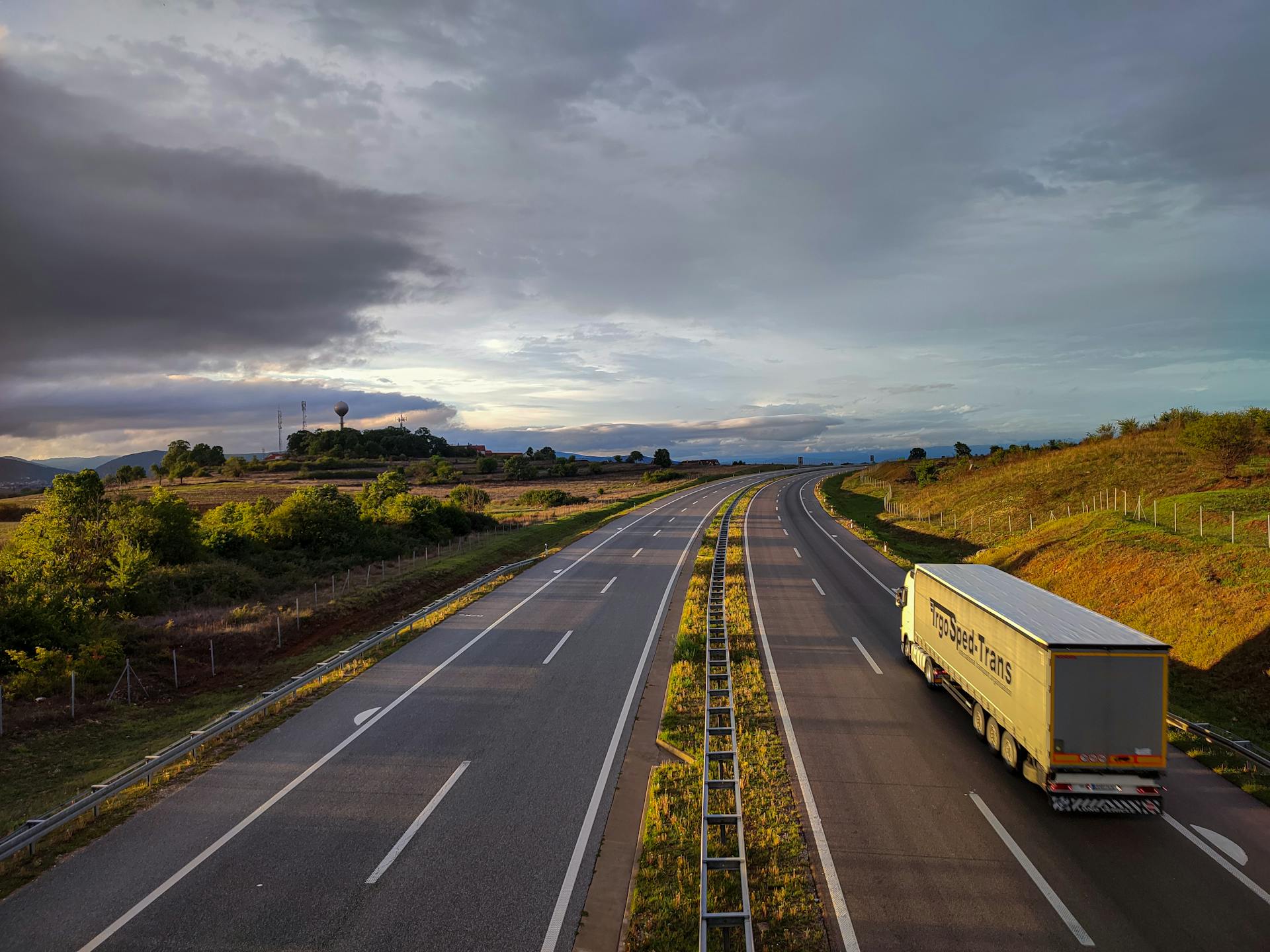
Nebraska Truck Dispatch | Beef Capital & Union Pacific Rail
We dispatch trucks for Omaha's beef processing legacy, Union Pacific Railroad's headquarters, and Bailey Yard, the world's largest rail classification yard. We also cover the I-80 corridor, one of the most important transcontinental freight routes in America.
How much do truck dispatch rates run in Nebraska?
Nebraska-origin freight currently pays about $2.20-$2.65/mi for dry van, more for reefer and flatbed. Demand is driven by Beef & Meat Processing, Rail & Intermodal Logistics and Agriculture & Grain. Grow Trucking dispatches Nebraska owner-operators and small fleets across 15 tracked lanes on a transparent percentage-of-gross fee, disclosed upfront.
- Tracked lanes
- 15
- Major freight hubs
- Omaha, Lincoln and Bellevue
- Top industries
- Beef & Meat Processing and Rail & Intermodal Logistics
Nebraska rate and market data reviewed September 2026. See our dispatch fee structure.
Nebraska Truck Dispatch Services
Nebraska's freight identity is built on beef and the I-80 corridor. Nebraska is the nation's top beef-producing state, and Omaha is a historic meatpacking center. The city's stockyards legacy continues through Greater Omaha Packing, Cargill, Tyson, and the Omaha Steaks brand. That brand put the city's name on premium meat nationwide. Boxed beef from Omaha, Lexington, and Dakota City to nationwide markets is Nebraska's #1 freight type by value. Omaha is the headquarters of Union Pacific Railroad, one of two major western rail networks. That makes Nebraska a critical node in transcontinental logistics. Bailey Yard in North Platte is the world's largest railroad classification yard. It processes over 14,000 railcars per day and routes traffic between UP's eastern and western divisions. I-80 crosses the entire state as one of the highest-volume transcontinental freight corridors in America, carrying 15,000+ trucks daily. Nebraska's corn production ranks #3 nationally, which creates massive hopper demand during fall harvest (Sep-Nov). The state's 20+ ethanol plants add year-round tanker freight. Corn moves in, ethanol moves out, and distillers grains move out to feedlots. Berkshire Hathaway and Mutual of Omaha anchor a financial services sector that creates steady corporate freight. A growing data center market (Facebook/Meta in Papillion) adds specialized construction freight demand.
Nebraska offers freight opportunities anchored by its status as the nation's top beef-producing state, Union Pacific's Bailey Yard rail hub, and the I-80 transcontinental corridor. Demand is strong for reefer, hopper/bulk, and cattle-hauler.
Nebraska's status as the nation's top beef-producing state creates dependable, high-value reefer and cattle-hauler freight
Omaha's position on I-80 means carriers can serve loads both ways along the nation's main east-west corridor. That cuts deadhead compared to states off the main interstate grid
Union Pacific's Bailey Yard and Omaha headquarters make Nebraska a critical, well-connected node in transcontinental rail-truck logistics
Nebraska's varied freight base (beef, grain, ethanol, financial services, data centers) lowers reliance on any single industry
What is the Nebraska freight market like?
As of January 2026, dry van spot rates in the Nebraska/Midwest region averaged $2.25/mile. Retail diesel in the Midwest region, which includes Nebraska, averages $6.35/gallon as of October 19, 2026 (EIA weekly average), about 8 cents above the national average of $6.28. That price is up 9 cents from last week and 78% above a year ago. Nebraska's trucking industry employs 1 in 12 state residents, making it the third-largest industry statewide. It operates within the Nebraska Trucking Association's network of over 860 companies.
Average Rates
Nebraska-origin rates (mid-2026): dry van roughly $2.20-$2.65/mile (I-80 transcontinental freight, consumer goods). Reefer runs $2.55-$3.05/mile (boxed beef from Omaha/Lexington/Dakota City, Nebraska's #1 freight type by value). Hopper/bulk premium rates spike during fall harvest (Sep-Nov) as corn/soybean hauling jumps. Cattle-hauler rates apply to live cattle from Nebraska's 6.8 million head of cattle.
Market Trends
- •
Nebraska's trucking industry employs 1 in 12 state residents, making it the third-largest industry statewide. It reflects the state's real freight-dependence
- •
Bailey Yard in North Platte processes over 14,000 railcars per day for Union Pacific. It is the main hub routing traffic between UP's eastern and western divisions
- •
The I-80 corridor from Omaha to Denver is still one of the most heavily traveled trucking routes in the Great Plains, carrying 15,000+ trucks daily
- •
Nebraska's 20+ ethanol plants keep creating year-round tanker freight (corn inbound, ethanol outbound, distillers grains to feedlots)
- •
A growing data center market, including Facebook/Meta's Papillion facility, is creating specialized construction freight demand beyond the state's traditional farm base
What are the busiest freight lanes out of Nebraska?
Price these lanes with our free Trip Pre-Cost Calculator, Should I Take This Load? Calculator and Lane Profitability Analyzer.
Omaha to Chicago
Freight route connecting Omaha, NE to Chicago, IL (460 miles). Chicago's intermodal hub status pairs naturally with Omaha's own rail hub via I-80.
Rate: $1,104 - $1,288
Distance: 460 miles
Omaha to Denver
Freight route connecting Omaha, NE to Denver, CO (540 miles). Denver's Mountain West distribution hub connects via I-80.
Rate: $1,269 - $1,485
Distance: 540 miles
Omaha to Kansas City
Freight route connecting Omaha, NE to Kansas City, MO (185 miles). Connects Omaha's beef processing base to Kansas City's rail/beef hub via I-29/I-35.
Rate: $472 - $546
Distance: 185 miles
Omaha to Des Moines
Freight route connecting Omaha, NE to Des Moines, IA (135 miles). Connects Omaha to Iowa's pork/agricultural distribution base via I-80/I-29.
Rate: $351 - $405
Distance: 135 miles
Omaha to Minneapolis
Freight route connecting Omaha, NE to Minneapolis, MN (378 miles). It reaches Minneapolis's food-processing and medical device manufacturing base via I-29/I-35.
Rate: $926 - $1,077
Distance: 378 miles
Omaha to Sioux Falls
Freight route connecting Omaha, NE to Sioux Falls, SD (175 miles). Connects Omaha to South Dakota's agricultural/distribution base via I-29.
Rate: $446 - $516
Distance: 175 miles
Omaha to Salt Lake City
Freight route connecting Omaha, NE to Salt Lake City, UT (940 miles). Connects Omaha to Utah's Mountain West crossroads via I-80.
Rate: $1,974 - $2,350
Distance: 940 miles
Omaha to St. Louis
Freight route connecting Omaha, NE to St. Louis, MO (445 miles). St. Louis's tri-modal hub status provides a dependable mid-distance lane via I-29/I-70.
Rate: $1,068 - $1,246
Distance: 445 miles
Omaha to Wichita
Freight route connecting Omaha, NE to Wichita, KS (285 miles). Connects Omaha's beef processing base to Wichita's aerospace hub via I-35.
Rate: $712 - $826
Distance: 285 miles
Omaha to North Platte
Freight route connecting Omaha, NE to North Platte, NE (285 miles). Connects Omaha to Bailey Yard, the world's largest rail classification yard, via I-80.
Rate: $712 - $826
Distance: 285 miles
Omaha to Cheyenne
Freight route connecting Omaha, NE to Cheyenne, WY (475 miles). Connects Omaha to Wyoming's energy freight base via I-80.
Rate: $1,116 - $1,306
Distance: 475 miles
Omaha to Lincoln
Freight route connecting Omaha, NE to Lincoln, NE (55 miles). A very short in-state corridor connecting Omaha to Nebraska's secondary distribution hub via I-80.
Rate: $154 - $179
Distance: 55 miles
Omaha to Dallas
Freight route connecting Omaha, NE to Dallas, TX (660 miles). Cross-country freight connecting Omaha's beef/rail base to the Texas Triangle via I-29/I-35.
Rate: $1,518 - $1,782
Distance: 660 miles
Omaha to Indianapolis
Freight route connecting Omaha, NE to Indianapolis, IN (585 miles). Indianapolis's crossroads position makes it a strong Midwest reload point via I-80.
Rate: $1,375 - $1,609
Distance: 585 miles
Omaha to Portland
Freight route connecting Omaha, NE to Portland, OR (1665 miles). Connects Omaha to Oregon's port/apparel sector via I-80, one of the longest hauls on this list.
Rate: $3,247 - $3,913
Distance: 1665 miles
Search brokers & carriers in Nebraska
Browse active freight brokers and for-hire carriers based in Nebraska. The list comes live from FMCSA and updates weekly. Check bond, authority, and fleet size before you haul.
Freight Brokers
Active, FMCSA-bonded freight brokers based in Nebraska.
Browse directoryDry Van Carriers
For-hire dry van carriers operating out of Nebraska.
Browse directoryFlatbed Carriers
For-hire flatbed carriers operating out of Nebraska.
Browse directoryReefer Carriers
For-hire reefer carriers operating out of Nebraska.
Browse directoryTruck Parking
Official NHS rest stops and truck parking capacity across Nebraska.
Browse directoryWhich industries drive freight demand in Nebraska?
Beef & Meat Processing (Omaha, Lexington, Dakota City: Tyson, JBS, Cargill, Smithfield, Greater Omaha Packing)
Rail & Intermodal Logistics (Union Pacific HQ in Omaha, Bailey Yard in North Platte, world's largest rail classification yard)
Agriculture & Grain (corn #3 US, soybeans, sorghum)
Ethanol & Biofuels (20+ plants statewide)
Financial Services (Mutual of Omaha, Berkshire Hathaway)
Data Centers (Meta in Papillion)
How does Nebraska freight change by season?
Rates and weather change with the seasons. Here is a quarter-by-quarter look at rates, weather, and what to do in Nebraska.
Q1 (Jan-Mar)
Rate Movement
Rates hold steady on beef processing and ethanol freight through winter
Weather Impact
Winter weather can greatly affect I-80 freight
Strategy
Position near Omaha's I-80 corridor early in the week, and build in a weather buffer
Q2 (Apr-Jun)
Rate Movement
Rates get stronger as construction and data-center freight ramp up ahead of harvest season
Weather Impact
Generally improving
Strategy
Focus on beef corridor freight and get ready for the coming fall harvest surge
Q3 (Jul-Sep)
Rate Movement
Rates hold steady, building toward the September harvest surge
Weather Impact
Generally favorable statewide
Strategy
Get hopper/bulk capacity ready in advance for the coming corn/soybean harvest
Q4 (Oct-Dec)
Rate Movement
Rates spike sharply September-November as fall grain harvest lifts hopper demand
Weather Impact
Winter weather begins affecting I-80 by late November
Strategy
Book capacity early. The fall harvest surge makes this the tightest window of the year in Nebraska
Additional Seasonal Considerations
- •
Fall grain harvest (Sep-Nov) is Nebraska's biggest seasonal freight event. It sharply raises corn/soybean hopper demand across the state
- •
Winter weather can greatly affect I-80 freight Nov-Mar
- •
Beef processing, ethanol, and financial services freight run steady year-round, mostly apart from season
- •
Expedited freight demand spikes without warning when meatpacking plant equipment fails (Tyson, JBS, Cargill, Smithfield facilities run 16-20 hours daily)
Where are the major freight hubs in Nebraska?
The ports, inland ports, intermodal terminals, and distribution cities that move freight across Nebraska. See where most of the freight is.
Distribution Cities
- Omaha
- Lincoln
- Bellevue
- Grand Island
- North Platte
Ports & Intermodal Terminals
Union Pacific Railroad Headquarters (Omaha)
One of two major western rail networks. It makes Nebraska a critical node in transcontinental freight logistics.
Bailey Yard (North Platte)
The world's largest railroad classification yard. It processes over 14,000 railcars per day for Union Pacific.
Omaha Meatpacking District
Home to Greater Omaha Packing, Cargill, Tyson, and the historic Omaha Steaks brand.
Where can trucks park and fuel in Nebraska?
Truck parking and fuel info to help you plan your routes through Nebraska.
Estimate fuel, tolls, and fuel tax with our free Fuel Cost Calculator, IFTA Tax Calculator and Toll Cost Estimator with Route Comparison.
Major Truck Stops
Sapp Bros. Truck Stop — Omaha (I-80, Exit 440)
📍 7302 South 125th Court, Omaha, NE 68137
240 truck parking spaces ($14/day fee), Sapp Bros. Restaurant (24-hour), CAT scale, tire shop, full-service diesel, truck wash, and driver amenities. Positioned near the I-80/I-680/US-75 interchange serving Omaha's rail hub and beef processing corridor
Flying J Travel Plaza — Grand Island (I-80, Exit 312)
📍 3404 Husker Highway, Grand Island, NE 68803
200 truck parking spaces ($13/day fee), Denny's, CAT scale, tire service, diesel, and convenience store. It serves the I-80 midpoint between Omaha and North Platte on the transcontinental corridor
Love's Travel Stop — North Platte (I-80, Exit 177)
📍 200 Eugene Avenue, North Platte, NE 69101
220 truck parking spaces ($15/day fee), Arby's/Hardee's, CAT scale, tire shop, diesel, and driver amenities. It sits near Bailey Yard (world's largest rail classification yard) and serves Union Pacific rail-to-truck transload chances
Pilot Travel Center — York (I-80, Exit 353)
📍 3902 South Lincoln Avenue, York, NE 68467
160 truck parking spaces ($12/day fee), Subway/Wendy's, CAT scale, tire service, diesel, and showers. Serves the I-80 corridor between Grand Island and Lincoln
TA Travel Center — Lexington (I-80, Exit 237)
📍 601 East River Road, Lexington, NE 68850
180 truck parking spaces ($13/day fee), Country Pride Restaurant, CAT scale, tire shop, diesel, and truck amenities. It sits near major beef processing facilities (Tyson, Smithfield) and serves reefer and cattle-hauler freight
Bosselman Travel Center — Grand Island West (I-80, Exit 300)
📍 5301 South Locust Street, Grand Island, NE 68801
190 truck parking spaces ($12/day fee), Pump & Pantry Restaurant (24-hour), CAT scale, tire service, diesel, and convenience store. It serves the I-80 corridor and ethanol/farm freight base
Flying J Travel Plaza — Sidney (I-80, Exit 59)
📍 2502 Silverberg Drive, Sidney, NE 69162
140 truck parking spaces ($10/day fee), Denny's, CAT scale, diesel, and driver amenities. Serves the I-80 western Nebraska corridor near the Colorado border
Sapp Bros. Truck Stop — Percival, IA (I-29, Exit 1, near Omaha)
📍 2601 Sapp Bros. Drive, Percival, IA 51648
200 truck parking spaces ($13/day fee), Sapp Bros. Restaurant (24-hour), CAT scale, tire shop, diesel, and truck wash. Serves the I-29 corridor connecting Omaha to the Upper Midwest and beef processing markets
Parking Difficulty
Moderate. Omaha metro sees solid demand because of its rail/beef processing status. Peak congestion is early in the week (Monday-Wednesday mornings), when carriers position for outbound I-80 freight. Rural I-80 stretches have enough services, but they are spaced far apart. Plan fuel stops for 120-150 mile segments between Grand Island, North Platte, and Sidney. Fall harvest season (Sep-Nov) sharply raises parking demand statewide as hopper/bulk carriers flood the market. Best availability: Sunday evenings and early Monday mornings in Omaha. Mid-afternoons on rural I-80 segments.
- •Plan ahead for parking in metro areas
- •Use rest areas as a backup
- •Use parking apps to find available spots
Strategic Positioning Advice
Park where you can find loads fast and cut deadhead miles:
- •
Major Distribution Centers: Position near major distribution hubs in Omaha for quick access to outbound loads.
- •
Busy Freight Routes: Stay near busy freight corridors to catch backhaul loads.
- •
Timing: Arrive when booking is busiest (usually early morning) to get the best rates.
Fuel price trend
How has the diesel price changed in Nebraska?
EIA does not publish a separate diesel price for Nebraska, so this is the weekly average for the Midwest region that Nebraska is part of, over the last 12 months.
- Price this week
- $6.35/gal
- Since last week
- Up 9 cents
- Versus a year ago
- Up 78%
- Versus the U.S. average
- 8 cents above
Week of October 19, 2026
+$2.79 a gallon
U.S. average $6.28
Source: U.S. Energy Information Administration weekly retail on-highway diesel prices. Averages, not the price at one pump.
What are Nebraska's truck weight limits and regulations?
Weight limits, permits, and emission rules. Know these rules to stay legal. Also see what to expect at a DOT roadside inspection, the federal size and weight limits, and the full federal trucking regulations reference.
Check weights and permits with our free Scale / Weigh Station Guide, Weight & Axle Load Calculator and Oversize / Overweight Permit Estimator.
Weight Limits
Federal limits on the Interstate System (23 CFR 658.17):
- Single Axle: 20,000 lbs
- Tandem Axle: 34,000 lbs
- Gross Vehicle Weight: 80,000 lbs, or less where the bridge formula sets a lower total
Other highways follow Nebraska law, and some states allow more on non-Interstate roads. Check with the state's size and weight office before you load.
Size Limits
Width is a federal limit. Height and trailer length depend on the state:
- Width: 8.5 feet (102 inches) on the National Network (23 CFR 658.15)
- Height: 14 ft 6 in legal height in Nebraska. There is no federal height limit.
- Length: 53 ft semitrailers are common, but a state can apply its own kingpin-to-rear-axle rule
State-Specific Rules
- •
Nebraska State Patrol and NDOT jointly enforce commercial vehicle safety. They check trucks at weigh stations and with roving patrols
- •
Federal weight limits on the Interstate System: 80,000 lbs gross vehicle weight, 20,000 lbs single axle, 34,000 lbs tandem axle. Other highways follow state law, so check the state's size and weight office
- •
Size limits: 8.5 ft (102 in) width, 14 ft 6 in legal height, and a 53 ft semitrailer (state kingpin-to-rear-axle rules apply)
- •
Oversize/overweight permits issued through NDOT
- •
Sealed-trailer chain of custody and HOS exemptions apply for certain expedited/emergency freight tied to meatpacking plant equipment failures
- •
Nebraska's diesel fuel tax is about $0.28/gallon (verify the current rate with the Nebraska Department of Revenue)
Permits
Nebraska may require special permits for:
- •Oversized/overweight loads
- •Hazardous materials
- •Special route rules
Nebraska: freight facts a driver should know
Nebraska allows more weight off the Interstate than on it
Nebraska caps gross weight at 80,000 pounds on Interstate-designated routes, but allows up to 94,000 pounds on US and state routes — more weight off the Interstate than on it, the opposite of what most states allow. Single axle stays at 20,000 pounds, tandem at 34,000 pounds either way.
Source: Nebraska Department of Transportation, Legal Sizes and Weights for Vehicles. Checked 30 Sep 2026.
Nebraska's legal height is a foot taller than most states
Nebraska allows trucks up to 14 feet 6 inches tall — a full foot above the 13-foot-6-inch limit most states use. Nebraska also caps its basic excess-size or excess-weight permit fee at just $10 by statute.
Source: Nebraska Department of Transportation, Legal Sizes and Weights for Vehicles. Checked 30 Sep 2026.
How have Nebraska freight rates moved, and what's next?
How Nebraska freight rates have moved through recent market cycles, and what owner-operators and fleets should expect next. Use this to time lane commitments and rate negotiations. Before you accept a load, check it against our free rate benchmarker.
Recent Rate Cycles
Rate cycles that shaped the current Nebraska freight market:
2018-2019
Strong market. Rates hit their peak because trucks were in short supply
2020
Rates swung at first because of the pandemic. Freight demand then bounced back hard
2021-2022
Record-high rates. E-commerce demand surged and trucks were in short supply
2023-2024
Rates fell sharply as truck supply passed demand. Smaller carriers left the market
2025-2026
The national market is recovering. Nebraska's dominant beef processing base and Union Pacific's continued rail investment have kept freight demand strong
Market Correction Periods
Knowing when corrections hit Nebraska helps with strategic planning:
- •
Q1 2023: Rates fell hard as trucks were added faster than freight grew
- •
Mid-2024: The market is settling, with supply and demand more in balance
- •
Pattern: Rate drops usually last 6–12 months before rates recover
Nebraska Market Outlook
As of mid-2026, Nebraska's freight market gains from being the nation's top beef-producing state. It also gains from Union Pacific's Omaha headquarters and Bailey Yard rail hub. The I-80 corridor is still one of the most important transcontinental freight routes in America.
What Drives Rates in Nebraska
- •Freight volume and demand (beef processing, grain/corn harvest, ethanol, rail/intermodal transload)
- •Truck supply, which tightened a lot from last year across the nation
- •Fuel costs and Nebraska's diesel fuel tax (~$0.28/gallon)
- •Fall harvest timing (Sep-Nov) and meatpacking plant production schedules
How do I cut deadhead miles running freight in Nebraska?
How to cut empty miles when you haul in and out of Nebraska. See the outbound and inbound freight balance, the best return lanes, and where to park your truck. Run your own numbers with our free deadhead miles calculator.
Outbound Freight
45%
Roughly 45% of Nebraska freight moves outbound. Outbound loads from Nebraska's production and distribution centers typically book fastest early in the week.
Inbound Freight
55%
About 55% of the freight balance is inbound. Book your return load before you deliver. It is the biggest way to raise your rate-per-mile on these lanes.
Best Backhaul Lanes into Nebraska
The strongest return lanes for repositioning back toward Nebraska:
Chicago to Omaha
I-80 corridor connecting two major Midwest freight markets
Rate: $2.35 - $2.75/mile
Denver to Omaha
I-80 corridor connecting the Mountain West to the Great Plains
Rate: $2.30 - $2.70/mile
Kansas City to Omaha
I-29/I-35 corridor connecting two major beef-processing/rail markets
Rate: $2.40 - $2.80/mile
Positioning Strategies for Nebraska
Where and when to stage to keep your next load close and your deadhead low:
- •
Position near Omaha's I-80 corridor for the fastest access to outbound loads in either direction
- •
Track fall harvest timing (Sep-Nov) closely if you run hopper/bulk freight
- •
Use load boards to pre-book backhaul before longer cross-country hauls
What do experienced dispatchers know about running Nebraska?
Hands-on tips from years of dispatching in Nebraska.
Omaha's I-80 position means balanced two-way freight. Unlike states off the main interstate grid, deadhead risk here is lower because the corridor has high volume (15,000+ trucks daily) both ways. Chicago, Denver, Des Moines, and Kansas City are all within a single day's drive of Omaha.
Boxed beef is Nebraska's #1 freight type by value. Reefer/cattle-hauler carriers who build relationships with Tyson/JBS/Cargill/Smithfield-adjacent brokers get dependable, high-volume work. Greater Omaha Packing, Cargill Meat Solutions, and Tyson Foods Lexington plant together process over 25,000 head of cattle daily.
Fall grain harvest (Sep-Nov) is a real capacity event. Hopper/bulk demand spikes as corn and soybean hauling ramps up statewide. Rates can rise 25-40% in peak harvest weeks, when every available hopper is moving grain from farm to elevator to ethanol plant.
Omaha positioning and corn/beef processing cycles drive Tuesday-Wednesday premiums. Farm and meatpacking freight line up with weekly distribution center receiving schedules.
Meatpacking plant equipment emergencies create real, if unpredictable, expedited freight chances. Tyson, JBS, Cargill, and Smithfield plants run 16-20 hours daily and can't tolerate downtime. Replacement parts, refrigeration equipment, and processing line parts often move as hot shots. They pay 50-100% premiums over standard dry van rates.
Bailey Yard's rail-to-truck transload volume in North Platte is a real, less obvious freight chance beyond the Omaha metro. Union Pacific processes over 14,000 railcars daily through Bailey Yard. That creates drayage and short-haul chances for carriers willing to coordinate intermodal schedules.
Nebraska's 20+ ethanol plants create year-round tanker freight that most carriers overlook. Corn moves in from farm elevators. Ethanol moves out to West Coast refineries (California, Washington). Distillers grains move to feedlots (Texas, Kansas, Colorado). This is steady, less-cyclical freight compared to grain harvest seasonality.
Omaha's Union Pacific Railroad headquarters and Bailey Yard rail hub make it the natural transload point for West Coast container traffic moving east. Los Angeles/Long Beach and Oakland port cargo arriving by rail often transfers to truck in Omaha for final-mile delivery to Midwest markets.
Nebraska's trucking industry employs 1 in 12 state residents, making it the third-largest industry statewide. That means local driver availability is fairly strong compared to states where trucking is a smaller employer. It gives staffing advantages to carriers expanding Omaha-based operations.
Winter weather on I-80 (Nov-Mar) needs real operating planning. Blizzards and black ice sometimes close sections of the corridor. That backs up freight and creates tight capacity windows when the weather clears. Carriers with flexible schedules and weather-delay buffers catch premium rates during post-storm freight surges.
Remember: These tips come from real dispatching work in Nebraska. Markets change, but these basics still help you earn more and cut deadhead miles.
How have drivers near Nebraska grown with Grow Trucking?
+$1,950/week after moving to $2.65/mi on produce / auto parts freight. Route optimization cut empty miles by 86%.
Read the case study+$3,745/week after moving to N/A/mi on midwest regional freight freight. From $4–5K/week to $9,250 with a Midwest lane strategy.
Read the case study+$3,170/week after moving to $2.90/mi on automotive parts / manufacturing freight. New authority veteran driver fast-tracked to premium rates.
Read the case studyNebraska Freight FAQs
Comprehensive answers to common questions about trucking and dispatch in Nebraska. State-specific regulations, costs, and operating strategies.
Yes. You need a USDOT number and an MC number for interstate for-hire carriage. You also need Nebraska-specific IRP (International Registration Plan) and IFTA (International Fuel Tax Agreement) registration through the Nebraska Department of Motor Vehicles. Nebraska does not require a separate intrastate motor carrier permit for interstate-authorized carriers. IRP/IFTA registration usually takes 5-7 business days once your federal authority is active. Cattle-hauler and livestock transport carriers must follow more USDA and Nebraska Department of Agriculture animal welfare rules.
Federal minimum liability coverage is $750,000 for general freight and $1,000,000 for hazardous materials. You also need cargo insurance (usually $100,000 minimum) and physical damage coverage for financed equipment. Nebraska adds no state insurance rules beyond federal minimums. But many shippers and brokers require $1,000,000 liability as standard. Reefer freight tied to beef processing often needs temperature-control equipment breakdown coverage and spoilage insurance. Livestock haulers need specialized animal mortality coverage. Confirm current rules with your insurance provider. Check broker-specific rules before you accept loads.
As of mid-2026, reefer/cattle-hauler freight tied to boxed beef runs $2.55-$3.05/mile and is Nebraska's #1 freight type by value. Meatpacking plant expedited freight (equipment emergencies, replacement parts) can spike 50-100% above baseline rates during plant downtime events. Hopper/bulk rates spike sharply during the Sep-Nov fall harvest ($2.40-$2.90/mile baseline, with 25-40% increases in peak weeks). Standard dry van I-80 transcontinental freight runs $2.20-$2.65/mile. Tanker freight for ethanol plants gives steady year-round volume at $2.45-$2.85/mile. Bailey Yard rail-to-truck transload drayage runs $2.30-$2.70/mile for short-haul moves.
Yes. Nebraska's position on I-80 gives balanced two-way freight (15,000+ trucks daily). The state's dominant beef processing industry and Union Pacific rail hub status give real stability compared to more cyclical freight markets. Omaha is within a day's drive of Chicago (460 miles), Denver (540 miles), Des Moines (140 miles), and Kansas City (185 miles). That makes it an excellent base for building varied lane networks. New operators should prepare for the fall harvest capacity crunch (Sep-Nov), when hopper/bulk demand swamps available trucks. Nebraska's trucking industry employs 1 in 12 state residents, which gives fairly strong local driver availability for carriers who need to hire.
Nebraska diesel fuel tax is about $0.318 per gallon as of 2026, moderate for the Central Plains. Add the federal tax ($0.244/gallon), and total diesel fuel tax is about $0.562 per gallon. Retail diesel in the Midwest region, which includes Nebraska, averages $6.35/gallon as of October 19, 2026 (EIA weekly average), about 8 cents above the national average of $6.28. That price is up 9 cents from last week and 78% above a year ago. Nebraska's central farm corridor location (I-80 transcontinental route, Omaha/Lincoln hubs) creates steady freight. Seasonal peaks come during planting (spring) and harvest (fall). Fuel tax is lower than Iowa ($0.325/gal) or Illinois ($0.558/gal) but similar to Kansas ($0.26/gal). Manufacturing and farm freight dominate. Source: IFTA matrix, Nebraska Department of Revenue, AAA, verified September 2026.
Nebraska's beef processing freight needs specialized equipment and relationships. For reefer freight (boxed beef from processing plants to distribution centers), start by building relationships with 3PLs who specialize in food-grade logistics. C.H. Robinson, Coyote Logistics, and Total Quality Logistics have Tyson/JBS/Cargill contracts. Reefer equipment must meet food-grade sanitation standards and temperature-monitoring rules (usually 28-32°F for boxed beef). For cattle-hauler freight (live cattle from feedlots to processing plants), you need specialized livestock trailers with proper ventilation, flooring, and animal welfare features. USDA and Nebraska Department of Agriculture rules require humane handling training and records. Build relationships with livestock brokers serving Nebraska's 6.8 million head of cattle: Kenwood Cattle, Lincoln Livestock, and Nebraska Cattle Company. Rates for cattle-hauler freight run $2.60-$3.00/mile for short-haul feedlot-to-plant moves.
Nebraska's fall grain harvest (Sep-Nov) is the biggest seasonal freight event in the state. It sharply raises hopper/bulk demand as corn (#3 US production) and soybean hauling ramps up. Rates can spike 25-40% in peak harvest weeks. Every available hopper is then moving grain from farm elevators to ethanol plants, livestock feedlots, and rail terminals. Hopper trailers must meet grain-hauling standards (smooth interiors, proper tarping, clean and dry). The harvest depends on weather. Track USDA crop reports and Nebraska Extension farm updates for timing. Peak demand usually runs late September through mid-October for corn, and early October through early November for soybeans. Pre-book capacity with grain elevators and ethanol plants 3-4 weeks ahead of harvest to catch premium rates. The 20+ ethanol plants statewide give year-round corn hauling after harvest season ends.
Bailey Yard in North Platte is the world's largest railroad classification yard. It processes over 14,000 railcars per day for Union Pacific Railroad. It sorts traffic between UP's eastern division (Chicago, Kansas City, St. Louis) and western division (Los Angeles, Oakland, Pacific Northwest). Rail-to-truck transload chances include West Coast container traffic that arrives by rail and moves to truck for final-mile delivery to Midwest markets. Start by building relationships with intermodal drayage providers and Union Pacific's logistics partners. Hub Group, J.B. Hunt Intermodal, and Schneider Intermodal operate at Bailey Yard. Drayage rates run $2.30-$2.70/mile for short-haul moves (usually 50-200 mile radius from North Platte). You need chassis for container transport. The yard operates 24/7 year-round, which gives steady volume apart from seasonal cycles.
Omaha and Kansas City are both historic meatpacking centers with distinct freight profiles. Omaha is still Nebraska's beef capital, with Greater Omaha Packing, Cargill Meat Solutions, and nearby Tyson/JBS plants in Lexington and Dakota City. Kansas City has shifted more toward mixed-use distribution beyond beef processing, with Amazon, FedEx, and retail DCs. Omaha's I-80 transcontinental position gives stronger east-west freight flow (Chicago to Denver corridor). Kansas City's I-35/I-70 junction gives better north-south reach (Texas to Minnesota). Omaha's Union Pacific headquarters and Bailey Yard make it the better pick for rail-to-truck transload. For pure beef processing volume, Omaha keeps the edge. For varied freight types, Kansas City offers broader options. Carrier density is lower in Omaha, which may give you better rate negotiations than in Kansas City's more competitive market.
Winter weather on I-80 through Nebraska (Nov-Mar) brings real operating challenges. Drivers from southern states should prepare. Blizzards and black ice sometimes close sections of the corridor. That backs up freight and creates capacity crunches when the weather clears. NDOT closes roads when visibility drops below 0.25 miles or when ice creates hazardous conditions. Closures can last 6-24 hours during severe storms. Carriers with flexible schedules and weather-delay buffers catch premium rates (15-30% spikes) during post-storm freight surges, when shippers scramble to move delayed loads. Plan extra transit time (add a 3-6 hour buffer for full state crossings) in winter months. Check 511.nebraska.gov for real-time road conditions. Most carriers keep extra chains, cold-weather gear, and emergency supplies at truck stops in Grand Island and North Platte in winter months. Reefer freight needs extra diesel fuel planning for auxiliary power units that hold temperature control during weather delays.
Keep exploring dispatch options
Tools, equipment guides and nearby states relevant to running freight in and out of Nebraska.
By equipment
Free tools
- Trip Pre-Cost Calculator
- Toll Cost Estimator with Route Comparison
- Load Board Rate Benchmarker
- Deadhead Miles Calculator
- Fuel Cost Calculator
- IFTA Tax Calculator
- Scale / Weigh Station Guide
- Cost Per Mile Calculator
- Diesel prices today
- Diesel tax by state
- Truck idling laws by state
- Truck speed limits by state
- Truck chain laws by state
- Truck lane laws by state
- Truck height and length limits by state
- Rest area parking limits by state
- Midwest diesel prices
- Fuel Card Savings Calculator
- MPG and Average Speed Calculator
- All Free Tools
Services
More from Grow Trucking
Ready to Move Freight in Nebraska?
Secure Your Strategy:
Apply for your FREE Custom 90-Day Growth Plan (a $1,500 value). It starts with a Business Audit that finds where you lose money and sets your profit goals.
Guarantee Your GROWTH:
Start your 90-day partnership to implement the plan. We back it with our "Growth or Your Money Back" Guarantee.