
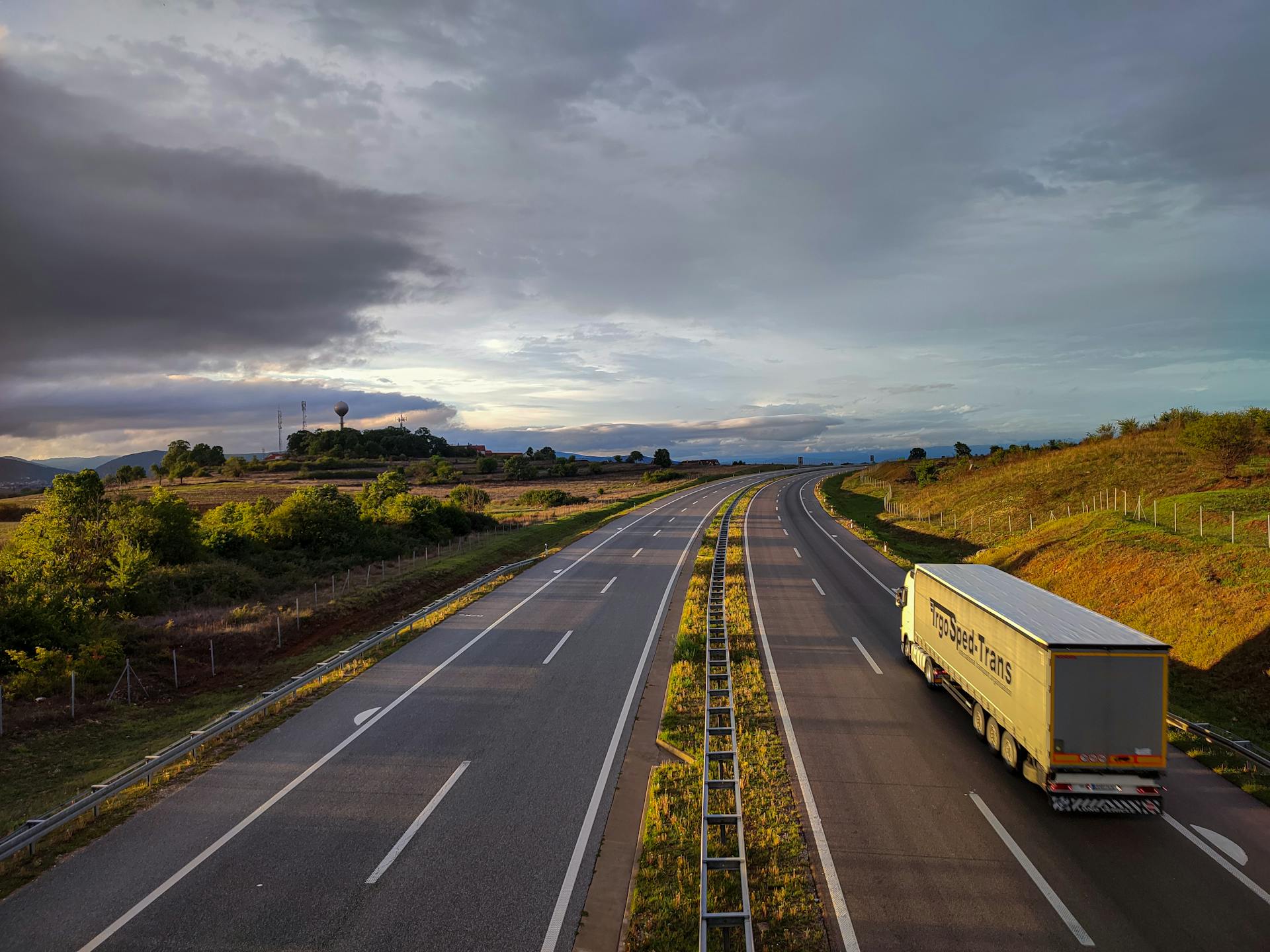
Nevada Truck Dispatch | Las Vegas Freight & I-15 Corridor
We dispatch trucks for Las Vegas's massive convention/hospitality freight base and Reno's fast-growing California-adjacent distribution hub. We also cover Nevada's built-in freight imbalance on the I-15 corridor from Los Angeles.
How much do truck dispatch rates run in Nevada?
Nevada-origin freight currently pays about $2.15-$2.55/mi for dry van, more for reefer and flatbed. Demand is driven by Hospitality & Convention Supply Chain, Distribution & Logistics and Construction Materials. Grow Trucking dispatches Nevada owner-operators and small fleets across 15 tracked lanes on a transparent percentage-of-gross fee, disclosed upfront.
- Tracked lanes
- 15
- Major freight hubs
- Las Vegas, Reno and Henderson
- Top industries
- Hospitality & Convention Supply Chain and Distribution & Logistics
Nevada rate and market data reviewed September 2026. See our dispatch fee structure.
Nevada Truck Dispatch Services
Nevada is home to two distinct freight markets. Las Vegas has one of the most concentrated hospitality supply chains in the world. It handles over $2.8 billion in freight a year and roughly 450,000 truck trips. But it has a real built-in imbalance. 67% of trips are inbound and only 33% outbound. I-15 from Los Angeles runs loaded with consumer goods and convention supplies, while outbound freight is comparatively thin. The city hosts 42 million visitors a year. That drives continuous demand for convention, trade show, and hospitality-supply logistics. Reno, by contrast, has become a top Western U.S. distribution hub. It offers California-adjacent economics without California's costs. There is no state income tax. Real estate and labor cost less. There are no CARB truck rules and no AB5 driver classification issues. It has one-day delivery access to 15 million Northern California consumers, and Sacramento is just 2 hours away. The Union Pacific mainline runs directly through Reno's Truckee Meadows. It connects to the Ports of Oakland and Los Angeles and extends east to Chicago.
Nevada offers two distinct freight markets. Las Vegas has a convention/hospitality-driven, inbound-heavy freight base. Reno is a fast-growing California-adjacent distribution hub. Outbound Las Vegas freight earns dependable rate premiums because backhaul is scarce.
Las Vegas's inbound/outbound imbalance means outbound freight earns real backhaul-scarcity premiums for carriers who position well
Reno offers California-adjacent distribution economics without California's costs. No state income tax, no CARB rules, no AB5 issues
The Union Pacific mainline through Reno connects directly to the Ports of Oakland and Los Angeles, plus east to Chicago
Nevada's freight-friendly tax structure and minimal regulatory barriers keep rates competitive versus neighboring California
What is the Nevada freight market like?
As of Q1 2026, the Reno-Sparks industrial market keeps attracting institutional investment. Over 1 million square feet of new logistics space is under development. The market is tighter than the national average, which keeps rates high but still well below comparable California markets. Nevada Department of Transportation data shows Las Vegas freight tonnage rose 18% from 2022 to 2025.
Average Rates
Nevada-origin rates (mid-2026): dry van roughly $2.15-$2.55/mile inbound to Las Vegas (kept competitive by strong inbound carrier flow from LA). Outbound Las Vegas freight earns a real premium because backhaul is scarce. Reno rates run 15-25% below Las Vegas/California markets for comparable service because of the market's cost advantages, roughly $2.10-$2.50/mile.
Market Trends
- •
Las Vegas freight tonnage rose 18% from 2022 to 2025. Construction materials, consumer goods, and convention supplies make up 73% of all shipments
- •
Nevada's freight-friendly tax structure and minimal regulatory barriers attract carriers offering rates 15-25% below California markets for similar services
- •
Reno-Sparks industrial market has over 1 million sq ft of new logistics space under development as of Q1 2026. It reflects continued institutional investment
- •
The lasting Las Vegas inbound/outbound imbalance (67% inbound, 33% outbound via I-15 from LA) means outbound freight earns real backhaul-scarcity premiums
- •
Reno-Tahoe International Airport's high-altitude, dry-climate setting means fewer weather delays than coastal California air cargo hubs for time-sensitive Western U.S. shipments
What are the busiest freight lanes out of Nevada?
Price these lanes with our free Trip Pre-Cost Calculator, Should I Take This Load? Calculator and Lane Profitability Analyzer.
Las Vegas to Los Angeles
Freight route connecting Las Vegas, NV to Los Angeles, CA (270 miles). The main I-15 corridor. It is inbound-heavy, with Los Angeles consumer goods flowing steadily into Las Vegas.
Rate: $594 - $702
Distance: 270 miles
Las Vegas to Phoenix
Freight route connecting Las Vegas, NV to Phoenix, AZ (300 miles). Connects Las Vegas to Phoenix's semiconductor/distribution base via US-93/I-11.
Rate: $705 - $825
Distance: 300 miles
Las Vegas to Salt Lake City
Freight route connecting Las Vegas, NV to Salt Lake City, UT (420 miles). Connects Las Vegas to Utah's distribution corridor via I-15.
Rate: $966 - $1,134
Distance: 420 miles
Las Vegas to Sacramento
Freight route connecting Las Vegas, NV to Sacramento, CA (570 miles). Connects Reno's distribution hub to Northern California via I-80 - just 2 hours from Reno.
Rate: $1,282 - $1,510
Distance: 570 miles
Las Vegas to San Francisco
Freight route connecting Las Vegas, NV to San Francisco, CA (566 miles). I-15 to US-95/US-6, or via Bakersfield on I-5, connecting Las Vegas's hospitality economy to the Bay Area's tech and port-connected freight market.
Rate: $1,217 - $1,443
Distance: 566 miles
Las Vegas to Reno
Freight route connecting Las Vegas, NV to Reno, NV (445 miles). Connects Nevada's two major freight markets via US-95.
Rate: $1,001 - $1,179
Distance: 445 miles
Las Vegas to Denver
Freight route connecting Las Vegas, NV to Denver, CO (750 miles). Denver's Mountain West distribution hub connects via I-15/I-70.
Rate: $1,612 - $1,912
Distance: 750 miles
Las Vegas to San Diego
Freight route connecting Las Vegas, NV to San Diego, CA (330 miles). Connects Las Vegas to Southern California's port and consumer market via I-15.
Rate: $742 - $874
Distance: 330 miles
Las Vegas to Portland
Freight route connecting Las Vegas, NV to Portland, OR (977 miles). I-15 to US-95/US-97, or via Sacramento on I-5, connecting Las Vegas to Portland's Silicon Forest tech sector and Port of Portland.
Rate: $2,149 - $2,540
Distance: 977 miles
Las Vegas to Seattle
Freight route connecting Las Vegas, NV to Seattle, WA (1111 miles). I-15 to US-95, then north through Oregon on US-97 to I-84/I-90, connecting Las Vegas to Seattle's tech sector and the Ports of Seattle/Tacoma.
Rate: $2,333 - $2,778
Distance: 1111 miles
Las Vegas to Albuquerque
Freight route connecting Las Vegas, NV to Albuquerque, NM (570 miles). Connects Las Vegas to New Mexico's distribution/manufacturing base via I-40.
Rate: $1,254 - $1,482
Distance: 570 miles
Las Vegas to Boise
Freight route connecting Las Vegas, NV to Boise, ID (624 miles). I-15 to US-93 north, or I-15 to I-84, connecting Las Vegas to Boise's growing tech and distribution sector across high-desert terrain.
Rate: $1,404 - $1,654
Distance: 624 miles
Las Vegas to Fresno
Freight route connecting Las Vegas, NV to Fresno, CA (355 miles). Connects Reno to California's Central Valley agricultural freight base via I-80/US-99.
Rate: $816 - $959
Distance: 355 miles
Las Vegas to Tucson
Freight route connecting Las Vegas, NV to Tucson, AZ (415 miles). Connects Las Vegas to Tucson's aerospace/defense freight base via I-11/I-10.
Rate: $954 - $1,120
Distance: 415 miles
Las Vegas to Bakersfield
Freight route connecting Las Vegas, NV to Bakersfield, CA (285 miles). Connects Las Vegas to California's Central Valley via I-15/CA-58.
Rate: $656 - $770
Distance: 285 miles
Search brokers & carriers in Nevada
Browse active freight brokers and for-hire carriers based in Nevada. The list comes live from FMCSA and updates weekly. Check bond, authority, and fleet size before you haul.
Freight Brokers
Active, FMCSA-bonded freight brokers based in Nevada.
Browse directoryDry Van Carriers
For-hire dry van carriers operating out of Nevada.
Browse directoryFlatbed Carriers
For-hire flatbed carriers operating out of Nevada.
Browse directoryReefer Carriers
For-hire reefer carriers operating out of Nevada.
Browse directoryTruck Parking
Official NHS rest stops and truck parking capacity across Nevada.
Browse directoryWhich industries drive freight demand in Nevada?
Hospitality & Convention Supply Chain (Las Vegas, 42 million annual visitors)
Distribution & Logistics (Reno: California-adjacent, lower-cost option to Sacramento/Stockton)
Construction Materials (both metros, tied to continued growth)
Data Centers & Technology (Reno-Sparks industrial corridor)
Mining (Nevada is a top U.S. gold producer, which creates specialized heavy-haul freight)
Retail Distribution (statewide, tied to explosive population growth)
How does Nevada freight change by season?
Rates and weather change with the seasons. Here is a quarter-by-quarter look at rates, weather, and what to do in Nevada.
Q1 (Jan-Mar)
Rate Movement
Rates can spike around major Las Vegas convention events (notably CES in January)
Weather Impact
Generally mild. Occasional winter weather can affect Reno-area mountain routes (I-80 Sierra passes)
Strategy
Check the Las Vegas convention calendar before you commit capacity. Major shows create sharp, predictable demand spikes
Q2 (Apr-Jun)
Rate Movement
Rates hold fairly steady as convention activity continues and Reno's distribution volume builds
Weather Impact
Generally favorable statewide
Strategy
Focus on Reno distribution freight, which offers more predictable, less event-driven volume than Las Vegas
Q3 (Jul-Sep)
Rate Movement
Rates hold steady. Extreme desert heat is the main operating factor
Weather Impact
Extreme heat (110°F+ in Las Vegas) needs equipment/timing planning for temperature-sensitive freight
Strategy
Adjust transit timing for temperature-sensitive Las Vegas freight during peak heat
Q4 (Oct-Dec)
Rate Movement
Highest rates of the year, as holiday retail freight stacks with fall convention season in Las Vegas
Weather Impact
Reno-area mountain routes can see early winter weather by late November
Strategy
Book capacity early. Overlapping convention season and holiday freight make this the tightest window of the year
Additional Seasonal Considerations
- •
The Las Vegas convention calendar (major shows year-round, with peaks in January and fall) drives predictable freight surges tied to specific events
- •
Extreme summer desert heat (Jun-Sep) needs equipment/timing planning for temperature-sensitive freight
- •
Reno's distribution-center hiring and shipping cycles tend to follow broader national e-commerce/retail patterns rather than a distinct local season
- •
The Q4 holiday freight surge (Nov-Dec) hits both metros and stacks with Vegas's convention calendar
Where are the major freight hubs in Nevada?
The ports, inland ports, intermodal terminals, and distribution cities that move freight across Nevada. See where most of the freight is.
Distribution Cities
- Las Vegas
- Reno
- Henderson
- North Las Vegas
- Sparks
Ports & Intermodal Terminals
Reno-Tahoe International Airport Cargo
A highly reliable air cargo center because of its high-altitude, dry-climate setting, which cuts weather delays versus coastal hubs.
Union Pacific Truckee Meadows Mainline (Reno)
Direct rail connection to the Ports of Oakland and Los Angeles, extending east to Chicago.
Las Vegas Convention Center District
One of the most concentrated hospitality/convention supply chains in the world. It drives continuous specialized logistics demand.
Where can trucks park and fuel in Nevada?
Truck parking and fuel info to help you plan your routes through Nevada.
Estimate fuel, tolls, and fuel tax with our free Fuel Cost Calculator, IFTA Tax Calculator and Toll Cost Estimator with Route Comparison.
Major Truck Stops
Love's Travel Stop — Las Vegas (I-15, Exit 42)
📍 7810 Dean Martin Drive, Las Vegas, NV 89139
240 truck parking spaces ($15/day fee), 24-hour restaurant, CAT scale, tire shop, full-service diesel, and RV dump. It sits near the I-15/215 interchange, serving Las Vegas's convention district and California corridor
Pilot Travel Center — North Las Vegas (I-15, Exit 50)
📍 2550 East Cheyenne Avenue, North Las Vegas, NV 89030
180 truck parking spaces ($12/day fee), Subway/Cinnabon, CAT scale, tire service, and full-service diesel. Serves the northern Las Vegas freight corridor toward Utah/Arizona
TA Travel Center — Sparks (I-80, Exit 23)
📍 1050 Vista Boulevard, Sparks, NV 89434
200 truck parking spaces ($14/day fee), Taco Bell Express, CAT scale, tire shop, diesel, and driver amenities. It sits near the Reno-Sparks industrial corridor and the I-80/US-395 junction
Petro Stopping Center — Fernley (I-80, Exit 46)
📍 365 Main Street, Fernley, NV 89408
160 truck parking spaces ($10/day fee), Iron Skillet restaurant, CAT scale, tire service, diesel, and showers. It serves the I-80 midpoint between Reno and Lovelock on the transcontinental corridor
Flying J Travel Plaza — Lovelock (I-80, Exit 107)
📍 1385 Cornell Avenue, Lovelock, NV 89419
150 truck parking spaces ($8/day fee), Denny's, CAT scale, diesel, and truck wash. Positioned on I-80 serving long-haul east-west freight between Reno and Winnemucca
Love's Travel Stop — Mesquite (I-15, Exit 122)
📍 750 West Mesquite Boulevard, Mesquite, NV 89027
130 truck parking spaces ($10/day fee), Arby's, CAT scale, tire service, diesel, and convenience store. It serves the I-15 corridor at the Nevada-Arizona-Utah tri-state border area
Petro Stopping Center — Verdi (I-80, Exit 2)
📍 255 Garson Road, Verdi, NV 89439
175 truck parking spaces ($12/day fee), Iron Skillet restaurant, CAT scale, tire shop, diesel, and RV services. It sits at the California-Nevada border on I-80, serving Reno and Truckee freight
TA Travel Center — Jean (I-15, Exit 12)
📍 1 Goodsprings Road, Jean, NV 89019
140 truck parking spaces ($10/day fee), Subway, CAT scale, diesel, and truck amenities. Serves the I-15 southern Nevada corridor between Las Vegas and Primm at the California border
Parking Difficulty
Moderate to High. Las Vegas sees big demand tied to convention/distribution volume. Peak congestion comes during major convention events like CES (January) and fall trade shows. Truck parking is at a premium in these periods, especially along I-15 near the Strip district. Reno is generally less crowded because it is a more traditional industrial market. But I-80 truck stops can fill up during transcontinental peak freight weeks. Best availability: Sunday evenings and early Monday mornings outside convention peak weeks.
- •Plan ahead for parking in metro areas
- •Use rest areas as a backup
- •Use parking apps to find available spots
Strategic Positioning Advice
Park where you can find loads fast and cut deadhead miles:
- •
Major Distribution Centers: Position near major distribution hubs in Las Vegas for quick access to outbound loads.
- •
Busy Freight Routes: Stay near busy freight corridors to catch backhaul loads.
- •
Timing: Arrive when booking is busiest (usually early morning) to get the best rates.
Fuel price trend
How has the diesel price changed in Nevada?
EIA does not publish a separate diesel price for Nevada, so this is the weekly average for the West Coast region that Nevada is part of, over the last 12 months.
- Price this week
- $7.39/gal
- Since last week
- Up 15 cents
- Versus a year ago
- Up 67%
- Versus the U.S. average
- $1.12 above
Week of October 19, 2026
+$2.97 a gallon
U.S. average $6.28
Source: U.S. Energy Information Administration weekly retail on-highway diesel prices. Averages, not the price at one pump.
What are Nevada's truck weight limits and regulations?
Weight limits, permits, and emission rules. Know these rules to stay legal. Also see what to expect at a DOT roadside inspection, the federal size and weight limits, and the full federal trucking regulations reference.
Check weights and permits with our free Scale / Weigh Station Guide, Weight & Axle Load Calculator and Oversize / Overweight Permit Estimator.
Weight Limits
Federal limits on the Interstate System (23 CFR 658.17):
- Single Axle: 20,000 lbs
- Tandem Axle: 34,000 lbs
- Gross Vehicle Weight: 80,000 lbs, or less where the bridge formula sets a lower total
Other highways follow Nevada law, and some states allow more on non-Interstate roads. Check with the state's size and weight office before you load.
Size Limits
Width is a federal limit. Height and trailer length depend on the state:
- Width: 8.5 feet (102 inches) on the National Network (23 CFR 658.15)
- Height: 14 ft legal height in Nevada. There is no federal height limit.
- Length: 53 ft semitrailers are common, but a state can apply its own kingpin-to-rear-axle rule
State-Specific Rules
- •
Nevada Highway Patrol and NDOT jointly enforce commercial vehicle safety. They check trucks at weigh stations and with roving patrols
- •
Federal weight limits on the Interstate System: 80,000 lbs gross vehicle weight, 20,000 lbs single axle, 34,000 lbs tandem axle. Other highways follow state law, so check the state's size and weight office
- •
Size limits: 8.5 ft (102 in) width, 14 ft legal height, and a 53 ft semitrailer (state kingpin-to-rear-axle rules apply)
- •
Oversize/overweight permits issued through NDOT
- •
Nevada has no state income tax and comparatively minimal regulatory barriers versus neighboring California. That is a meaningful cost edge for carriers and distribution operators alike
- •
Nevada's diesel fuel tax is about $0.27-0.29/gallon plus local option taxes that vary by county (verify the current combined rate with Nevada DMV)
Permits
Nevada may require special permits for:
- •Oversized/overweight loads
- •Hazardous materials
- •Special route rules
Nevada: freight facts a driver should know
Nevada allows a taller truck but a shorter combination
Nevada allows trucks up to 14 feet tall, 6 inches above the usual 13-foot-6-inch limit. But a combination of vehicles plus load caps at just 75 feet without a permit — shorter than the non-permit combination length many other states allow.
Source: Nevada Revised Statutes Chapter 484D. Checked 30 Sep 2026.
Nevada will permit divisible loads for overweight, not just non-divisible ones
Most states only issue overweight permits for loads that can't be broken down into smaller shipments. Nevada is an exception: it explicitly allows a divisible load up to 70 feet long and over 80,000 pounds to get an overweight permit anyway.
Source: Nevada Department of Transportation, commercial vehicle permits. Checked 30 Sep 2026.
How have Nevada freight rates moved, and what's next?
How Nevada freight rates have moved through recent market cycles, and what owner-operators and fleets should expect next. Use this to time lane commitments and rate negotiations. Before you accept a load, check it against our free rate benchmarker.
Recent Rate Cycles
Rate cycles that shaped the current Nevada freight market:
2018-2019
Strong market. Rates hit their peak because trucks were in short supply
2020
Rates swung at first because of the pandemic. Freight demand then bounced back hard
2021-2022
Record-high rates. E-commerce demand surged and trucks were in short supply
2023-2024
Rates fell sharply as truck supply passed demand. Smaller carriers left the market
2025-2026
The national market is recovering. Las Vegas freight tonnage grew 18% from 2022-2025, while Reno's distribution investment kept attracting institutional capital
Market Correction Periods
Knowing when corrections hit Nevada helps with strategic planning:
- •
Q1 2023: Rates fell hard as trucks were added faster than freight grew
- •
Mid-2024: The market is settling, with supply and demand more in balance
- •
Pattern: Rate drops usually last 6–12 months before rates recover
Nevada Market Outlook
As of mid-2026, Nevada's freight market reflects two distinct growth stories. Las Vegas keeps growing on convention/hospitality-driven tonnage (up 18% since 2022). Reno has become a real top Western U.S. distribution hub. Both benefit from Nevada's tax and regulatory advantages over California.
What Drives Rates in Nevada
- •Freight volume and demand (convention/hospitality supply chain, distribution, mining, construction)
- •Truck supply, which tightened a lot from last year across the nation
- •Fuel costs and Nevada's diesel fuel tax (~$0.27-0.29/gallon plus local option taxes)
- •Las Vegas convention calendar timing and Reno distribution-center investment cycles
How do I cut deadhead miles running freight in Nevada?
How to cut empty miles when you haul in and out of Nevada. See the outbound and inbound freight balance, the best return lanes, and where to park your truck. Run your own numbers with our free deadhead miles calculator.
Outbound Freight
67%
Roughly 67% of Nevada freight moves outbound. Outbound loads from Nevada's production and distribution centers typically book fastest early in the week.
Inbound Freight
33%
About 33% of the freight balance is inbound. Book your return load before you deliver. It is the biggest way to raise your rate-per-mile on these lanes.
Best Backhaul Lanes into Nevada
The strongest return lanes for repositioning back toward Nevada:
Phoenix to Las Vegas
An alternative inbound corridor that gives some backhaul relief beyond the LA-heavy I-15 flow
Rate: $2.30 - $2.70/mile
Salt Lake City to Las Vegas
I-15 corridor connecting Utah's distribution base to Las Vegas
Rate: $2.25 - $2.65/mile
Sacramento to Reno
A short I-80 corridor with dependable two-way freight because Reno's market is more balanced
Rate: $2.40 - $2.80/mile
Positioning Strategies for Nevada
Where and when to stage to keep your next load close and your deadhead low:
- •
Plan Las Vegas outbound freight early because of the 67/33 inbound-outbound imbalance. It won't be waiting on the load board
- •
Use Reno as a more balanced base if Las Vegas's backhaul scarcity is limiting your route options
- •
Track the Las Vegas convention calendar to predict inbound freight surges tied to specific events
What do experienced dispatchers know about running Nevada?
Hands-on tips from years of dispatching in Nevada.
Las Vegas's inbound/outbound imbalance is the most important fact about that market. If you can find outbound freight, it's worth real money because most carriers arrive empty-handed for the return trip. Outbound Las Vegas freight can earn 15-20% premiums during convention peaks.
Reno offers a real cost edge over California-based distribution without giving up much reach. Sacramento is 2 hours away, San Francisco 3-4. There are no CARB rules, no AB5 issues, and no California income tax. These savings turn directly into competitive rate advantages.
Las Vegas casino supply and Reno distribution freight create Monday-Tuesday rate peaks. Hospitality and warehouse shipments bunch up at the start of the week to avoid weekend receiving closures.
The Las Vegas convention calendar (especially CES in January and major fall trade shows) creates sharp, predictable freight surges. Check it before you commit capacity elsewhere. Pre-positioning 3-5 days ahead of major shows can catch event-driven premium rates before they level off.
Extreme desert heat in Las Vegas needs real equipment and timing planning for temperature-sensitive freight, not just driver comfort. June-September temperatures over 110°F mean perishable and electronics shipments need refrigerated trailers or climate-controlled staging, not just insulation.
Reno's Union Pacific mainline link to Oakland and LA ports makes it a real intermodal option worth understanding, not just a trucking-only market. Rail-to-truck transload chances can give steady volume to carriers willing to coordinate drayage schedules.
The I-15 corridor from LA to Las Vegas moves 67% inbound and only 33% outbound. That makes backhaul strategy the key operating variable for Vegas-based carriers. Plan it before the inbound delivery, not after.
Reno-Sparks industrial market has over 1 million sq ft of new logistics space under development as of Q1 2026. That creates construction freight chances beyond standard distribution work. Flatbed carriers should track project timelines with developers like Panattoni and Dermody Properties.
Nevada has no state income tax, which matters for owner-operators weighing where to base their trucks. It's a real cost edge versus California-based registration, possibly saving $5,000-$15,000 a year depending on gross revenue.
Las Vegas truck parking gets scarce during major convention weeks (CES in January, World of Concrete in February, SEMA in November). Advance reservations at truck stops near the I-15/215 interchange are worth the effort. They save you from circling for hours.
Remember: These tips come from real dispatching work in Nevada. Markets change, but these basics still help you earn more and cut deadhead miles.
How have drivers near Nevada grown with Grow Trucking?
+$2,550/week after moving to $2.80/mi on oversize machinery / wind energy freight. Oversize machinery loads optimized for maximum revenue.
Read the case study+$2,010/week after moving to $2.62/mi on general freight / consumer goods freight. Language barriers removed, unfair lease terms renegotiated.
Read the case study+$1,950/week after moving to $2.70/mi on chemical / industrial hazmat freight. Hazmat premium rates recovered and CSA violations cleared.
Read the case studyNevada Freight FAQs
Comprehensive answers to common questions about trucking and dispatch in Nevada. State-specific regulations, costs, and operating strategies.
Yes. You need a USDOT number and an MC number for interstate for-hire carriage. You also need Nevada-specific IRP (International Registration Plan) and IFTA (International Fuel Tax Agreement) registration through the Nevada Department of Motor Vehicles. Nevada does not require a separate intrastate motor carrier permit for interstate-authorized carriers. That makes compliance simpler than in states like California. IRP/IFTA registration usually takes 5-7 business days once your federal authority is active.
Federal minimum liability coverage is $750,000 for general freight and $1,000,000 for hazardous materials. You also need cargo insurance (usually $100,000 minimum) and physical damage coverage for financed equipment. Nevada adds no state insurance rules beyond federal minimums. But many shippers and brokers require $1,000,000 liability as standard. High-value convention freight (trade show equipment, electronics, hospitality supplies) often needs cargo coverage of $250,000-$500,000. Confirm current rules with your insurance provider. Check broker-specific rules before you accept loads.
As of mid-2026, outbound Las Vegas freight earns the strongest premiums ($2.40-$2.85/mile). Backhaul is scarce there (67% inbound vs. 33% outbound on the I-15 corridor from LA). Convention-driven expedited freight during major events like CES (January), World of Concrete (February), and SEMA (November) can spike 15-25% above baseline rates. Inbound Las Vegas freight and general Reno distribution freight run more competitively, around $2.15-$2.55/mile. Flatbed freight tied to Reno's distribution-center construction runs $2.50-$3.00/mile. The Utah Inland Port drayage and Reno-Sparks industrial corridor offer steady volume for carriers who build relationships with 3PLs and developers.
Yes, especially for carriers who understand the Las Vegas freight imbalance and plan for it. New operators do best when they secure outbound Las Vegas freight early (rather than expecting to find it easily on load boards). They also do best when they base operations out of the more balanced Reno market. Nevada's lack of state income tax gives owner-operators a real cost edge when choosing a base (possibly saving $5,000-$15,000 a year versus California-based registration). Reno's California-adjacent position offers one-day delivery to 15 million Northern California consumers. It avoids California's CARB truck rules and AB5 driver classification rules. That makes it an attractive base for small carriers. New operators should budget for truck parking fees during major Las Vegas convention weeks. They should also plan fuel stops carefully on long rural stretches of I-80 and US-95.
Nevada diesel fuel tax is about $0.27 per gallon as of 2026 (state level; local option taxes may apply in Clark/Washoe counties). Add the federal tax ($0.244/gallon), and total diesel fuel tax is about $0.514 per gallon. Retail diesel in the West Coast region, which includes Nevada, averages $7.39/gallon as of October 19, 2026 (EIA weekly average), about $1.12 above the national average of $6.28. That price is up 15 cents from last week and 67% above a year ago. Nevada's desert location creates operating challenges (extreme heat that strains tires and cooling systems). But major hubs (Las Vegas distribution, Reno near Northern California, I-15/I-80 corridors) create strong freight. A lower fuel tax than California ($0.979/gal IFTA) gives a competitive edge. Source: IFTA matrix, Nevada Department of Motor Vehicles, AAA, verified September 2026.
Finding outbound Las Vegas freight takes planning, not just load boards. Here are four strategies. (1) Pre-book outbound freight before you deliver inbound loads by working with brokers who handle both directions. (2) Track the Las Vegas convention calendar. Pre-position 3-5 days ahead of major shows like CES, World of Concrete, and SEMA. That catches event-driven outbound freight, such as trade show teardown and equipment returns. (3) Build relationships with hospitality-supply 3PLs who coordinate regular outbound shipments to distribution centers in Phoenix, Salt Lake City, and Southern California. (4) Consider partial loads or LTL consolidation to neighboring markets. Phoenix is 290 miles away and Salt Lake City 420 miles. That beats waiting for full truckload chances. Outbound freight premiums (15-20% above inbound rates) justify the extra effort.
Nevada's legal limits on the Interstate are 80,000 lbs gross vehicle weight, 20,000 lbs single axle, and 34,000 lbs tandem axle. Size limits are 8.5 ft width and 14 ft legal height, with a 53 ft semitrailer common (state kingpin-to-rear-axle rules apply). NDOT (Nevada Department of Transportation) issues oversize/overweight permits for loads above these limits. Mining equipment and specialized heavy-haul freight may need route surveys and pilot car escorts. Nevada has no commodity-specific weight allowances like some farm states. So standard federal limits apply statewide.
Reno offers California-adjacent distribution economics without California's costs. There is no state income tax (versus California's 13.3% top rate). There are no CARB truck emissions rules, which avoids costly engine retrofits or newer equipment rules. There are no AB5 driver classification issues. Real estate/labor costs run 30-40% below Sacramento and Bay Area markets. Reno provides one-day delivery access to 15 million Northern California consumers. Sacramento is just 2 hours away and San Francisco 3-4 hours. The Union Pacific mainline runs directly through Reno. It connects to the Ports of Oakland and Los Angeles and extends east to Chicago, which gives intermodal options. As of Q1 2026, over 1 million sq ft of new logistics space is under development in Reno-Sparks. It reflects continued institutional investment in the market's cost advantages.
Las Vegas convention freight is highly event-driven. It is predictable if you track the convention calendar. Major shows include CES (January, 170,000+ attendees), World of Concrete (February, 60,000+ attendees), NAB Show (April, 65,000+ attendees), and SEMA (November, 160,000+ attendees). These events create sharp inbound freight surges 5-7 days before the show (trade show equipment, exhibits, hospitality supplies). They create outbound freight during teardown (2-3 days post-show). Pre-positioning near Las Vegas 3-5 days ahead of major shows can catch premium rates (15-25% above baseline) for inbound deliveries. It can also lock in outbound backhaul during teardown. Freight types include specialized trade show equipment (high-value, needs cargo insurance of $250,000-$500,000), consumer electronics, hospitality supplies, and construction materials. Truck parking gets scarce during convention peaks. Advance reservations at truck stops near the I-15/215 interchange are critical.
Nevada's desert climate creates real operating variables beyond driver comfort. Las Vegas temperatures often top 110°F June-September. Temperature-sensitive freight (perishables, electronics, pharmaceuticals, hospitality supplies) needs refrigerated trailers or climate-controlled staging. Extreme heat speeds up tire wear and raises blowout risk. Pre-trip tire pressure checks and proper inflation are critical. Diesel fuel can gel in winter at high elevations (Reno area, I-80 mountain passes). Use winterized fuel blends October-April. Long rural stretches need careful fuel and rest planning. That includes I-80 (Fernley to Winnemucca is 110 miles). It also includes US-95 (Las Vegas to Reno is 450 miles with limited services). Dust storms and high winds are common in open desert areas. They cut visibility and require speed changes. Plan extra transit time for temperature-sensitive loads in peak summer heat to avoid product damage claims.
Keep exploring dispatch options
Tools, equipment guides and nearby states relevant to running freight in and out of Nevada.
By equipment
Free tools
- Trip Pre-Cost Calculator
- Toll Cost Estimator with Route Comparison
- Load Board Rate Benchmarker
- Deadhead Miles Calculator
- Fuel Cost Calculator
- IFTA Tax Calculator
- Scale / Weigh Station Guide
- Cost Per Mile Calculator
- Diesel prices today
- Diesel tax by state
- Truck idling laws by state
- Truck speed limits by state
- Truck chain laws by state
- Truck lane laws by state
- Truck height and length limits by state
- Rest area parking limits by state
- West Coast diesel prices
- Accident Documentation Kit
- ELD Buyer's and Compliance Checklist
- All Free Tools
Services
More from Grow Trucking
Ready to Move Freight in Nevada?
Secure Your Strategy:
Apply for your FREE Custom 90-Day Growth Plan (a $1,500 value). It starts with a Business Audit that finds where you lose money and sets your profit goals.
Guarantee Your GROWTH:
Start your 90-day partnership to implement the plan. We back it with our "Growth or Your Money Back" Guarantee.