
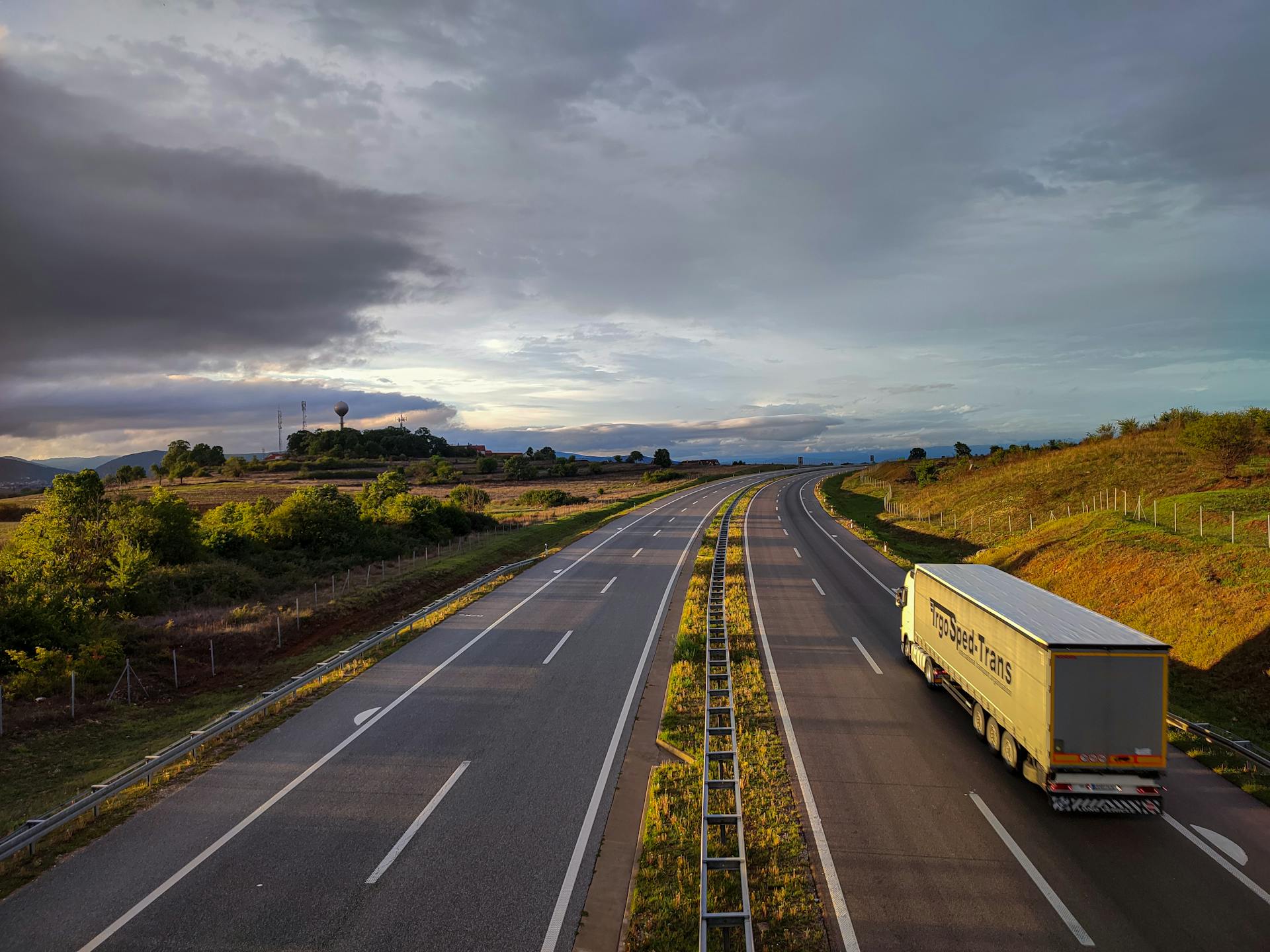
Flatbed Dispatch Services for Owner-Operators
Secure Loads, Secure Profits
Any type of flatbed trailer
Flatbed Dispatch
Master the specialized world of flatbed freight with expert dispatch built for the unique challenges of heavy, oversize, and construction materials. Our flatbed team delivers an average $2.45 per mile. We connect you with steel hauling, construction equipment, building materials, and oversize loads that pay premium rates and need special know-how. With 15+ years of flatbed-specific experience, we handle permits, securement rules, and regional limits to keep your earnings high.
Expert securement and load matching
Permit coordination for oversize loads
24/7 support from flatbed specialists
Access to premium construction and industrial freight
Flatbed Dispatch Specifications & Requirements
Flatbed trailer specifications vary by type:
- Standard Flatbed:Length: 48-53 feet (most common: 48' and 53'). Width: 8.5 feet (102 inches). Height: no federal limit. Most states cap total height at 13 ft 6 in to 14 ft, which leaves about 8.5 ft of load on a 5 ft deck. Weight Capacity: 48,000 lbs typical payload. Deck Height: 5 feet (60 inches) from ground. Ideal For: steel coils, lumber, building materials, machinery, pipes
- Step Deck (Stepdeck/Drop Deck):Upper Deck: 11 feet. Lower Deck: 37-42 feet. Well Height: 3-3.5 feet (allows taller freight without permits). Legal Height: set by each state, usually 13 ft 6 in to 14 ft in total, which leaves about 10 to 11 ft of load on a lower deck 3 to 3.5 ft high. Weight Capacity: 48,000 lbs. Rate Premium: +$0.15-$0.35/mile vs. standard flatbed. Ideal For: construction equipment, tractors, tall machinery
- Removable Gooseneck (RGN):Deck Length: 29-34 feet. Well Depth: 18-24 inches (ultra-low loading angle). Weight Capacity: 40,000-150,000 lbs (depending on axle setup). Rate Premium: +$0.60-$1.20/mile vs. standard flatbed. Ideal For: heavy equipment, bulldozers, excavators, oversize machinery
Flatbed Dispatch Market Rate Ranges
Typical flatbed market rate ranges by load type:
| Route Type | Rate Per Mile | Average Load Value |
|---|---|---|
| Steel Coils | $2.30 - $2.90 | $1,400 - $2,900 |
| Lumber/Building Materials | $2.10 - $2.70 | $1,200 - $2,400 |
| Construction Equipment | $2.60 - $3.40 | $1,800 - $3,800 |
| Machinery | $2.40 - $3.20 | $1,600 - $3,200 |
| Oversize/Overweight | $2.80 - $4.50 | $2,200 - $5,500 |
| Oil/Gas Equipment | $2.90 - $3.80 | $2,400 - $4,200 |
Ranges last reviewed February 2026. Rates move with season, fuel and demand, so check the current rate on your lane before you negotiate, for example with the rate benchmarker.
High-Demand Flatbed Dispatch Lanes
High-demand flatbed lanes and markets:
Steel Hauling (Rust Belt)
The backbone of flatbed freight, centered in the Great Lakes region. Major Mills: Gary (IN), Cleveland (OH), Pittsburgh (PA), Detroit (MI). Destinations: Manufacturing plants, fabrication shops, construction sites nationwide. Average Rates: $2.40-$3.00/mile
Rate: $2.40-$3.00/mile
Distance: 1,150 miles (Gary, IN to Houston, TX)
Building Materials (Lumber Belt)
Major Markets: Pacific Northwest, Southeast, Northeast. Products: dimensional lumber, plywood, OSB, shingles, roofing materials. Peak Season: March-October (construction season)
Rate: $2.20-$2.80/mile
Distance: Varies by route
Construction Equipment
Major Hubs: Texas, California, Florida, Arizona. Equipment: Excavators, loaders, dozers, cranes, generators. Rate Range: $2.80-$3.60/mile (step deck/RGN command premiums)
Rate: $2.80-$3.60/mile
Distance: 375 miles (Los Angeles to Phoenix)
KEY FEATURES
Flatbed trucking takes special knowledge of oversize, heavy, and unusual freight. Our dispatchers excel at finding premium flatbed loads that match your equipment and raise your earnings. We understand securement rules, permits, and the unique challenges of flatbed logistics.
Permit Expertise
Our in-house permit team handles oversize/overweight permits in all 48 states
Securement Guidance
Load-specific tie-down rules, tarping steps, and weight distribution coaching
Steel Market Intelligence
Real-time mill production data, pricing trends, and seasonal demand forecasts
Equipment-Specific Matching
Plans built for your trailer type (flatbed, step deck, RGN, conestoga)
Flatbed Dispatch Process
Equipment Assessment
Verify trailer type, dimensions, weight capacity, securement equipment, tarping ability, and willingness to haul oversize loads.
Market Positioning
Based on your home base and equipment: steel hauling, building materials, construction equipment, or a general flatbed freight mix.
Load Sourcing
Watch specialized flatbed load boards and direct relationships with steel mills, lumber yards, equipment dealers, and construction companies.
Permit Acquisition
For oversize/overweight loads: apply for permits right away, route around restrictions, and arrange a pilot car if required.
Securement Instructions
Give commodity-specific securement instructions: chain placement for coils, strap setup for lumber, and weight distribution for machinery.
Delivery & Documentation
Weather monitoring, route changes for wind/ice that affect flatbeds, delivery coordination, and detention paperwork.
Flatbed Dispatch vs. Other Trailer Types
Flatbed vs. Dry Van Operations comparison:
| Feature | Flatbed | Dry Van |
|---|---|---|
| Average Rate/Mile | $2.30 - $2.90 | $1.85 - $2.35 |
| Physical Labor Required | High (tarping, securing) | Low (minimal securing) |
| Weather Impact | Significant | Minimal |
| Permit Requirements | Common for oversize | Rare |
| Loading/Unloading Time | 1-3 hours typical | 30 min - 2 hours |
| Detention Pay Opportunities | Very high | Moderate |
| Load Availability | High | Very high |
| Seasonal Fluctuation | Moderate | Low |
| Weekly Revenue Potential | $3,400-$5,200 | $2,700-$4,800 |
Equipment Requirements & Recommendations
Critical flatbed equipment and skills:
Essential Equipment
Chains & Binders
Grade 70 minimum, 4-8 chains (5/16" - 3/8" diameter), and lever or ratchet binders
Straps
Winch and ratchet straps, 8-16 total, 4" width, 5,400 lbs working load minimum
Edge Protectors
Prevent cargo damage and strap cutting, 12-20 protectors
Tarps
8'×24', 8'×27', 8'×32' sizes, 18 oz vinyl minimum, 3-6 tarps depending on freight
Bungee Cords
Tarp securing, 20-30 cords, heavy-duty
Glad Hands (Air Hoses)
For pneumatic tarping systems (if equipped)
Dunnage
2x4 or 4x4 lumber for load separation and blocking
Premium Add-Ons (Higher Rates)
Conestoga Trailer
Retractable tarp system, reduces tarping time 90%
+$0.30-$0.60/mile
Step Deck
Allows taller freight
+$0.15-$0.35/mile
RGN (Removable Gooseneck)
Heavy equipment hauling
+$0.60-$1.20/mile
Coil Racks
Dedicated steel coil hauling equipment
+$0.20-$0.40/mile
Sliding Axle
Flexibility for weight distribution
+$0.10-$0.20/mile
Common Flatbed Dispatch Challenges We Solve
Challenge: Weather Delays & Cargo Exposure
Solution: Advanced weather monitoring, rerouting advice, and load coverage steps. Average delay cut by 45% vs. self-dispatched flatbedders.
Challenge: Securement Compliance & Cargo Damage
Solution: Load-specific securement diagrams, FMCSA compliance coaching, and video tutorials for specialized commodities. Cargo damage claims cut by 62%.
Challenge: Oversize/Overweight Permit Delays
Solution: Our in-house permit team gets all the permits you need in 24-72 hours vs. 5-10 days when you do it yourself. That ends permit-related load cancellations.
Challenge: Excessive Detention at Loading/Unloading
Solution: We pre-screen shippers for loading speed, put clear detention terms in contracts, and push hard for detention pay. Detention alone adds an average $320/week in revenue.
Regional Flatbed Dispatch Hotspots
These areas offer exceptional flatbed opportunities:
Gary/Chicago, IL
Steel hauling capital
$3,800-$5,400/week average
Houston, TX
Energy equipment, construction, manufacturing hub
$3,600-$5,200/week
Charlotte, NC
Distribution hub, building materials, machinery
$3,400-$4,900/week
Portland, OR
Lumber, construction equipment, farm machinery
$3,500-$5,000/week
Pittsburgh, PA
Steel production, manufacturing
$3,700-$5,300/week
Flatbed Dispatch Pricing
Transparent, performance-based pricing with no hidden fees:
Standard Dispatch:
4–6% of linehaul revenue per load. Owner-operator rate; fleet pricing is custom and comes down as the fleet grows.
Setup Fee:
$0
What's Included:
Load sourcing
Rate negotiation
Permit acquisition
Securement guidance
Routing
Detention advocacy
24/7 support
Quick-pay options
Success Stories
"I've been flatbedding for 9 years. Tried dispatching myself, tried 2 other dispatch services. These guys are the real deal. They understand flatbed freight and they're not afraid to fight for detention pay. Up 31% in gross revenue year-over-year."
Robert Williams
2021 Peterbilt 389 + 48' flatbed
Charlotte NC
"The permit coordination alone is worth the dispatch fee. I used to lose 2-3 days waiting on permits. Now it's handled before I even pick up the load. More loads per month = more money."
Maria Gonzalez
2019 Kenworth W900 + step deck
Houston TX
Why Choose Us
Higher Rates
Premium rates for specialized flatbed freight that commands top dollar.
Expert Guidance
Dispatchers who understand flatbed logistics, securement, and permit rules.
Reduced Liability
Proper load matching and securement guidance to lower cargo damage risk.
Steady Work
Steady access to flatbed loads across construction, manufacturing, and industrial sectors.
Flatbed rules and costs, answered
Frequently Asked Questions - Flatbed Dispatch
How strong do my tiedowns have to be?
How many tiedowns does a load need?
Do the tiedown counts apply to every flatbed load?
How often do I have to check my load?
How wide, tall and heavy can a flatbed load be without a permit?
What do I need to run flatbed under my own authority?
How much does flatbed dispatch cost?
Facts checked October 15, 2026. Sources: 49 CFR 393.100; 49 CFR 393.106; 49 CFR 393.110; 49 CFR 392.9; 23 CFR 658.15; 23 CFR 658.17; FHWA: Federal size regulations; 49 CFR 383.5; 49 CFR 387.9; FMCSA: Do I need a USDOT number?; FMCSA: Get operating authority.
Free tools for Flatbed carriers
Price a load, check weights and compare rates with free calculators built for this equipment.
- Weight & Axle Load CalculatorCheck axle weights before a heavy flatbed load hits the scale.
- Cargo Securement CalculatorCount the tiedowns your load needs and check they are strong enough.
- Oversize / Overweight Permit EstimatorKnow when a load needs oversize or overweight permits.
- Low Bridge LookupTall flatbed loads meet low bridges. Check the route against your load's height.
Trucking terms for Flatbed carriers
Short, plain answers to words you will meet when you book and haul this freight.
Want to drive a flatbed?
We take driver applications, with a CDL or without one. It takes about two minutes and needs no documents.
Ready to Secure Premium Flatbed Loads?
Partner with Grow Trucking for expert flatbed dispatch. Get premium loads and expert securement guidance, and raise your flatbed revenue.