
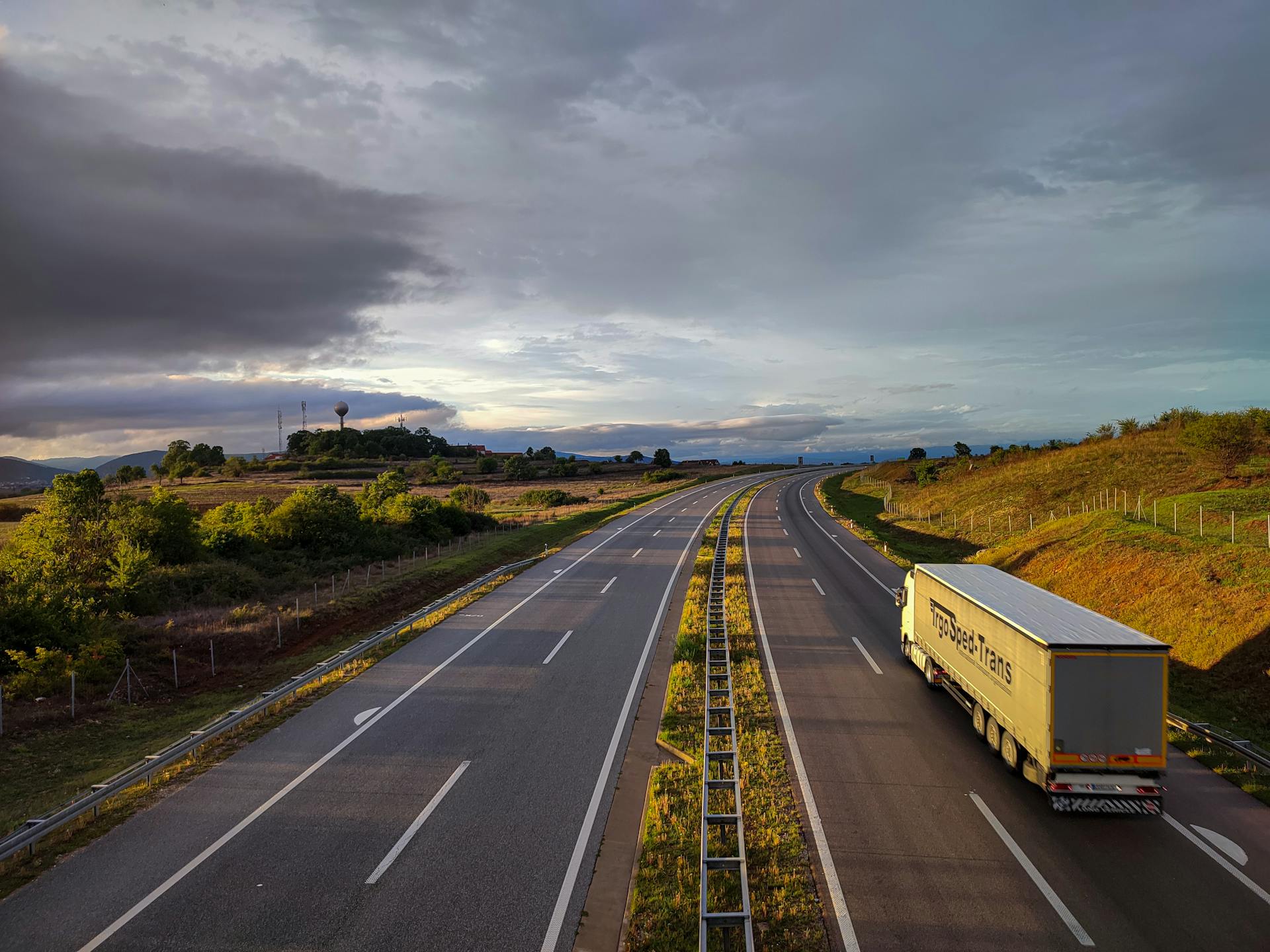
Oklahoma Truck Dispatch | Crossroads of America & Tinker AFB
Dispatch services for Oklahoma City's position at the junction of I-35, I-40, and I-44. The geographic center of North America. Tinker Air Force Base's aerospace logistics, and Oklahoma's oil & gas energy corridor.
How much do truck dispatch rates run in Oklahoma?
Oklahoma-origin freight currently pays about $2.25-$2.70/mi for dry van, more for reefer and flatbed. Demand is driven by Oil & Gas, Aviation & Aerospace and Agriculture & Livestock. Grow Trucking dispatches Oklahoma owner-operators and small fleets across 15 tracked lanes on a transparent percentage-of-gross fee, disclosed upfront.
- Tracked lanes
- 15
- Major freight hubs
- Oklahoma City, Tulsa and Norman
- Top industries
- Oil & Gas and Aviation & Aerospace
Oklahoma rate and market data reviewed September 2026. See our dispatch fee structure.
Oklahoma Truck Dispatch Services
Oklahoma City sits at the crossroads of three of the nation's major interstates (I-35, I-40, I-44). It is in the geographic center of North America, the United States, and the growing south-central region. It is equally far from the east and west coasts and from major trade partners Canada and Mexico. All major U.S. trade hubs and more than 411 million residents are within 1,800 miles of Oklahoma City. 4+ million people live within a 2.5-hour drive. Most of the U.S. is reachable within a two-day trucking distance. Tinker Air Force Base anchors big aviation/aerospace logistics, alongside American Airlines' Tulsa maintenance base and the FAA's Mike Monroney Aeronautical Center. Love's Travel Stops is one of the largest truck stop chains in America. It is headquartered in Oklahoma City, alongside Hobby Lobby, one of the nation's largest retailers. Oklahoma's oil & gas sector creates constant hotshot and specialized freight demand. When a drilling rig breaks down, operators call hotshot carriers for oilfield wellhead equipment, drilling pipe sections, and emergency rig repair parts. BNSF's 195-acre Logistics Center in Oklahoma City offers shovel-ready rail-connected industrial sites. The Tornado Alley location means severe storm risk March-June. Damaging winds, hail, and tornadoes shape route planning each spring.
Oklahoma offers freight opportunities anchored by Oklahoma City's crossroads position at the geographic center of North America and Tinker AFB aerospace logistics. The state's oil & gas hotshot/energy freight base adds more. Demand is strong for dry van, flatbed, and specialized hotshot.
Oklahoma City's position at the geographic center of North America gives unmatched reach. Most of the U.S. is within a two-day trucking distance
The oil & gas sector creates dependable, premium-paying hotshot and specialized freight, apart from the broader consumer freight cycle
Love's Travel Stops' Oklahoma City headquarters reflects the state's deep trucking-industry infrastructure and expertise
Tinker AFB and American Airlines' Tulsa base give you a real, less-competitive aerospace logistics niche
What is the Oklahoma freight market like?
As of January 2026, Oklahoma freight load volumes surged 33% from December. That created new chances for competitive pricing and better service reliability after one of the industry's longest downturns in recent history. LTL contract rates average $46.40 per hundredweight, a 14.3% increase year-over-year.
Average Rates
Oklahoma-origin rates (mid-2026): dry van roughly $2.25-$2.70/mile (Oklahoma City crossroads distribution). Flatbed runs $2.55-$3.05/mile (energy equipment, Tinker AFB-adjacent aerospace). Hotshot rates for oilfield emergency freight run $2.58-$3.16/mile. Energy/oilfield regions pay the highest premiums for urgent parts delivery.
Market Trends
- •
Oklahoma freight load volumes surged 33% from December 2025 to January 2026. That signals a real recovery after one of the trucking industry's longest recent downturns
- •
Oklahoma City's position at the geographic center of North America keeps attracting logistics investment. BNSF's 195-acre Logistics Center offers shovel-ready rail-connected sites
- •
Love's Travel Stops, headquartered in Oklahoma City, keeps expanding its network of 630+ truck stops nationwide. It reflects the state's deep trucking-industry roots
- •
Tinker Air Force Base and American Airlines' Tulsa maintenance base keep anchoring big aviation/aerospace logistics demand
- •
The Oklahoma Turnpike system adds big costs ($5-15 per segment for trucks). Carriers must factor them into lane profit
What are the busiest freight lanes out of Oklahoma?
Price these lanes with our free Trip Pre-Cost Calculator, Should I Take This Load? Calculator and Lane Profitability Analyzer.
Oklahoma City to Dallas
Freight route connecting Oklahoma City, OK to Dallas, TX (205 miles). Connects Oklahoma City's crossroads position to the Texas Triangle via I-35.
Rate: $533 - $615
Distance: 205 miles
Oklahoma City to Wichita
Freight route connecting Oklahoma City, OK to Wichita, KS (165 miles). Connects Oklahoma City to Wichita's aerospace hub via I-35.
Rate: $437 - $503
Distance: 165 miles
Oklahoma City to Tulsa
Freight route connecting Oklahoma City, OK to Tulsa, OK (105 miles). Connects Oklahoma's two largest metros via I-44, tolled Oklahoma Turnpike.
Rate: $289 - $331
Distance: 105 miles
Oklahoma City to Kansas City
Freight route connecting Oklahoma City, OK to Kansas City, MO (350 miles). KC's rail hub status and agricultural freight base connect via I-35/I-44.
Rate: $875 - $1,015
Distance: 350 miles
Oklahoma City to Little Rock
Freight route connecting Oklahoma City, OK to Little Rock, AR (340 miles). Connects Oklahoma to Arkansas's Walmart/Tyson distribution corridor via I-40.
Rate: $850 - $986
Distance: 340 miles
Oklahoma City to Houston
Freight route connecting Oklahoma City, OK to Houston, TX (420 miles). Houston's petrochemical and port sector creates steady freight demand via I-35/I-45.
Rate: $1,008 - $1,176
Distance: 420 miles
Oklahoma City to Amarillo
Freight route connecting Oklahoma City, OK to Amarillo, TX (260 miles). Connects Oklahoma City to the Texas Panhandle's energy and agricultural freight base via I-40.
Rate: $663 - $767
Distance: 260 miles
Oklahoma City to Albuquerque
Freight route connecting Oklahoma City, OK to Albuquerque, NM (545 miles). Connects Oklahoma City to New Mexico's distribution/energy base via I-40.
Rate: $1,281 - $1,499
Distance: 545 miles
Oklahoma City to St. Louis
Freight route connecting Oklahoma City, OK to St. Louis, MO (465 miles). St. Louis's tri-modal hub status provides a dependable mid-distance lane via I-44.
Rate: $1,116 - $1,302
Distance: 465 miles
Oklahoma City to Nashville
Freight route connecting Oklahoma City, OK to Nashville, TN (630 miles). Nashville's automotive and distribution base supports steady I-40 freight.
Rate: $1,449 - $1,701
Distance: 630 miles
Oklahoma City to Memphis
Freight route connecting Oklahoma City, OK to Memphis, TN (470 miles). Memphis's FedEx hub and inland port make this a dependable time-sensitive freight lane via I-40.
Rate: $1,104 - $1,292
Distance: 470 miles
Oklahoma City to Denver
Freight route connecting Oklahoma City, OK to Denver, CO (685 miles). Denver's Mountain West distribution hub connects via I-40/I-25.
Rate: $1,575 - $1,850
Distance: 685 miles
Oklahoma City to San Antonio
Freight route connecting Oklahoma City, OK to San Antonio, TX (460 miles). San Antonio's manufacturing and military logistics base connects via I-35.
Rate: $1,081 - $1,265
Distance: 460 miles
Oklahoma City to Phoenix
Freight route connecting Oklahoma City, OK to Phoenix, AZ (900 miles). Connects Oklahoma City to Phoenix's semiconductor/consumer market via I-40.
Rate: $1,935 - $2,295
Distance: 900 miles
Oklahoma City to Springfield
Freight route connecting Oklahoma City, OK to Springfield, MO (305 miles). Connects Oklahoma City to southwest Missouri's distribution base via I-44.
Rate: $762 - $884
Distance: 305 miles
Search brokers & carriers in Oklahoma
Browse active freight brokers and for-hire carriers based in Oklahoma. The list comes live from FMCSA and updates weekly. Check bond, authority, and fleet size before you haul.
Freight Brokers
Active, FMCSA-bonded freight brokers based in Oklahoma.
Browse directoryDry Van Carriers
For-hire dry van carriers operating out of Oklahoma.
Browse directoryFlatbed Carriers
For-hire flatbed carriers operating out of Oklahoma.
Browse directoryReefer Carriers
For-hire reefer carriers operating out of Oklahoma.
Browse directoryTruck Parking
Official NHS rest stops and truck parking capacity across Oklahoma.
Browse directoryWhich industries drive freight demand in Oklahoma?
Oil & Gas (headquarters and field operations statewide)
Aviation & Aerospace (Tinker AFB, FAA Mike Monroney Aeronautical Center, American Airlines in Tulsa)
Agriculture & Livestock (cattle, wheat)
Retail Distribution & Logistics (Love's Travel Stops HQ, Hobby Lobby HQ, Amazon OKC1)
Trucking Industry (headquarters for major carriers and Love's)
Rail & Intermodal (BNSF Logistics Center in Oklahoma City)
How does Oklahoma freight change by season?
Rates and weather change with the seasons. Here is a quarter-by-quarter look at rates, weather, and what to do in Oklahoma.
Q1 (Jan-Mar)
Rate Movement
Rates ease after the Q4 holiday surge, though January 2026 saw a notable 33% volume surge from December
Weather Impact
Occasional winter weather is possible but generally less severe than in northern Plains states
Strategy
Position near Oklahoma City's I-35/I-40/I-44 interchange early in the week for the best rates
Q2 (Apr-Jun)
Rate Movement
Rates hold steady, though tornado season disruptions can cause local spikes
Weather Impact
Peak tornado season (Mar-Jun) is the biggest weather risk factor
Strategy
Build in real route flexibility for fast-developing severe weather. Watch conditions closely
Q3 (Jul-Sep)
Rate Movement
Rates hold steady on oil & gas hotshot freight and retail restocking ahead of Q4
Weather Impact
Generally favorable outside the tail of tornado season
Strategy
Focus on Tinker AFB-adjacent aerospace freight and oil & gas hotshot demand
Q4 (Oct-Dec)
Rate Movement
Highest rates of the year, peaking in November-December on holiday retail freight
Weather Impact
Occasional winter weather starts affecting the state by late November
Strategy
Book capacity early. Oklahoma City's crossroads distribution volume makes this the tightest window of the year
Additional Seasonal Considerations
- •
Tornado season (Mar-Jun) is the highest-risk operating variable. Damaging winds, hail, and tornadoes call for real route flexibility
- •
Wheat harvest (Jun-Jul) in northern/central Oklahoma adds hopper/bulk freight demand alongside Kansas's harvest window
- •
Oil & gas hotshot freight runs steady year-round, tied to drilling/well-service activity rather than season
- •
The Q4 holiday freight surge (Nov-Dec) hits Oklahoma City's retail distribution network
Where are the major freight hubs in Oklahoma?
The ports, inland ports, intermodal terminals, and distribution cities that move freight across Oklahoma. See where most of the freight is.
Distribution Cities
- Oklahoma City
- Tulsa
- Norman
- Broken Arrow
- Edmond
Ports & Intermodal Terminals
BNSF Logistics Center (Oklahoma City)
A 195-acre shovel-ready industrial site with rail infrastructure, including mainline turnouts and industry common track.
Tinker Air Force Base
A major aerospace/defense logistics hub in Oklahoma City. It creates specialized military aviation freight.
Will Rogers World Airport / Tulsa International Airport
Together they offer 25 non-stop flights, which supports time-sensitive air-to-ground cargo conversion.
Where can trucks park and fuel in Oklahoma?
Truck parking and fuel info to help you plan your routes through Oklahoma.
Estimate fuel, tolls, and fuel tax with our free Fuel Cost Calculator, IFTA Tax Calculator and Toll Cost Estimator with Route Comparison.
Major Truck Stops
Love's Travel Stop — Oklahoma City/I-40 East (Exit 166)
📍 7901 Southeast 15th Street, Midwest City, OK 73110
190 truck parking spaces ($14/day fee), Arby's restaurant, 24/7 fuel, WiFi, showers, and tire services. Prime east-side positioning for cross-country I-40 freight.
Flying J Travel Plaza — Tulsa (I-44, Exit 231)
📍 10809 East 11th Street, Tulsa, OK 74128
175 truck parking spaces ($15/day fee), Denny's restaurant, full truck maintenance shop, CAT scales. Next to American Airlines Tulsa maintenance base. It serves aerospace logistics freight.
Petro Stopping Center — Oklahoma City/West (I-40, Exit 140)
📍 7500 South Service Road, Oklahoma City, OK 73128
210 truck parking spaces ($15/day fee), Iron Skillet restaurant, truck service center, driver lounge. The closest major truck stop to Will Rogers World Airport cargo operations.
TA Travel Center — Stroud (I-44, Exit 179)
📍 924168 South Highway 99, Stroud, OK 74079
160 truck parking spaces ($14/day fee), Popeyes restaurant, laundry facilities, WiFi. A midpoint between Oklahoma City and Tulsa on the I-44 Oklahoma Turnpike corridor.
Love's Travel Stop — Weatherford (I-40, Exit 82)
📍 2501 East Main Street, Weatherford, OK 73096
145 truck parking spaces ($13/day fee), McDonald's, 24/7 fuel, showers. Serves western Oklahoma oil & gas hotshot freight and Texas border traffic.
Pilot Travel Center — El Reno (I-40, Exit 123)
📍 2201 Parkview Drive, El Reno, OK 73036
155 truck parking spaces ($14/day fee), Subway restaurant, full fuel services. West-side Oklahoma City metro access for I-40/I-35 junction freight.
TA Express — Vinita (I-44, Exit 283)
📍 26801 South Highway 69, Vinita, OK 74301
120 truck parking spaces ($12/day fee), Country Pride restaurant, repair services. Northeast Oklahoma gateway serving Joplin, MO and Tulsa freight connections.
Love's Travel Stop — Sayre (I-40, Exit 20)
📍 215 NE Highway 152, Sayre, OK 73662
110 truck parking spaces ($12/day fee), Carl's Jr. restaurant, 24/7 fuel. Serves far western Oklahoma panhandle and Texas border freight.
Parking Difficulty
Moderate. Oklahoma City and Tulsa see steady parking demand because of crossroads/distribution volume and American Airlines maintenance base operations. The I-35/I-40/I-44 interchange area (Oklahoma City) carries extreme truck volumes and fills early. Peak demand is weekday evenings 6-9 PM, when cross-country drivers park after long hauls. Western Oklahoma (oil & gas regions) has fewer services but lower demand. Arrive before 6 PM during tornado season (March-June) and the Q4 holiday freight surge (Oct-Dec), or use reservation apps.
- •Plan ahead for parking in metro areas
- •Use rest areas as a backup
- •Use parking apps to find available spots
Strategic Positioning Advice
Park where you can find loads fast and cut deadhead miles:
- •
Major Distribution Centers: Position near major distribution hubs in Oklahoma City for quick access to outbound loads.
- •
Busy Freight Routes: Stay near busy freight corridors to catch backhaul loads.
- •
Timing: Arrive when booking is busiest (usually early morning) to get the best rates.
Fuel price trend
How has the diesel price changed in Oklahoma?
EIA does not publish a separate diesel price for Oklahoma, so this is the weekly average for the Midwest region that Oklahoma is part of, over the last 12 months.
- Price this week
- $6.35/gal
- Since last week
- Up 9 cents
- Versus a year ago
- Up 78%
- Versus the U.S. average
- 8 cents above
Week of October 19, 2026
+$2.79 a gallon
U.S. average $6.28
Source: U.S. Energy Information Administration weekly retail on-highway diesel prices. Averages, not the price at one pump.
What are Oklahoma's truck weight limits and regulations?
Weight limits, permits, and emission rules. Know these rules to stay legal. Also see what to expect at a DOT roadside inspection, the federal size and weight limits, and the full federal trucking regulations reference.
Check weights and permits with our free Scale / Weigh Station Guide, Weight & Axle Load Calculator and Oversize / Overweight Permit Estimator.
Weight Limits
Federal limits on the Interstate System (23 CFR 658.17):
- Single Axle: 20,000 lbs
- Tandem Axle: 34,000 lbs
- Gross Vehicle Weight: 80,000 lbs, or less where the bridge formula sets a lower total
Other highways follow Oklahoma law, and some states allow more on non-Interstate roads. Check with the state's size and weight office before you load.
Size Limits
Width is a federal limit. Height and trailer length depend on the state:
- Width: 8.5 feet (102 inches) on the National Network (23 CFR 658.15)
- Height: Set by each state. There is no federal height limit, and FHWA says most states are between 13 ft 6 in and 14 ft. Check Oklahoma's limit for your route.
- Length: 53 ft semitrailers are common, but a state can apply its own kingpin-to-rear-axle rule
State-Specific Rules
- •
Oklahoma Highway Patrol and ODOT jointly enforce commercial vehicle safety. They check trucks at weigh stations and with roving patrols
- •
Federal weight limits on the Interstate System: 80,000 lbs gross vehicle weight, 20,000 lbs single axle, 34,000 lbs tandem axle. Other highways follow state law, so check the state's size and weight office
- •
Size limits: 8.5 ft (102 in) width. Legal height is set by each state, and FHWA says most are 13 ft 6 in to 14 ft, so check the state's size and weight office. A 53 ft semitrailer is common, but state kingpin-to-rear-axle rules apply
- •
Oversize/overweight permits come from ODOT
- •
The Oklahoma Turnpike system charges tolls that add up fast for commercial vehicles. A PIKEPASS account cuts per-segment costs
- •
Oklahoma's diesel fuel tax is about $0.20/gallon, among the lower state rates (verify the current rate with the Oklahoma Tax Commission)
Permits
Oklahoma may require special permits for:
- •Oversized/overweight loads
- •Hazardous materials
- •Special route rules
Oklahoma: freight facts a driver should know
Oklahoma's escort rules depend on the type of highway
Oklahoma's escort requirements differ by road type: on two-lane highways, widths over 12 feet up to 14 feet require one front escort, and widths over 14 feet require two escorts. On multi-lane highways, widths over 12 feet up to 16 feet require one rear escort.
Source: Oklahoma Department of Transportation, Size and Weight Permit regulations. Checked 30 Sep 2026.
Oklahoma's standard legal weight limits follow the national baseline
Oklahoma's standard legal weight limits follow the federal bridge formula used nationally: 20,000 pounds on a single axle, 34,000 pounds on a tandem axle, and an 80,000-pound gross vehicle weight cap, with permits required above those thresholds.
Source: Federal Highway Administration, Bridge Formula Weights. Checked 30 Sep 2026.
How have Oklahoma freight rates moved, and what's next?
How Oklahoma freight rates have moved through recent market cycles, and what owner-operators and fleets should expect next. Use this to time lane commitments and rate negotiations. Before you accept a load, check it against our free rate benchmarker.
Recent Rate Cycles
Rate cycles that shaped the current Oklahoma freight market:
2018-2019
Strong market. Rates hit their peak because trucks were in short supply
2020
Rates swung at first because of the pandemic. Freight demand then bounced back hard
2021-2022
Record-high rates. E-commerce demand surged and trucks were in short supply
2023-2024
Rates fell sharply as truck supply passed demand. Smaller carriers left the market
2025-2026
The national market is recovering. Oklahoma freight volumes surged 33% from December 2025 to January 2026. That signals real momentum after one of the industry's longest recent downturns
Market Correction Periods
Knowing when corrections hit Oklahoma helps with strategic planning:
- •
Q1 2023: Rates fell hard as trucks were added faster than freight grew
- •
Mid-2024: The market is settling, with supply and demand more in balance
- •
Pattern: Rate drops usually last 6–12 months before rates recover
Oklahoma Market Outlook
As of mid-2026, Oklahoma's freight market shows real recovery momentum. January 2026 load volumes were up 33% from December. Oklahoma City's crossroads position and Tinker AFB's aerospace logistics keep anchoring steady demand. The state's oil & gas hotshot freight base adds to it.
What Drives Rates in Oklahoma
- •Freight volume and demand (crossroads distribution, aerospace/defense, oil & gas, agriculture)
- •Truck supply, which tightened a lot from last year across the nation
- •Fuel costs, Oklahoma's diesel fuel tax (~$0.20/gallon), and Oklahoma Turnpike toll costs
- •Oil & gas drilling activity and Oklahoma City's continued logistics investment
How do I cut deadhead miles running freight in Oklahoma?
How to cut empty miles when you haul in and out of Oklahoma. See the outbound and inbound freight balance, the best return lanes, and where to park your truck. Run your own numbers with our free deadhead miles calculator.
Outbound Freight
50%
Roughly 50% of Oklahoma freight moves outbound. Outbound loads from Oklahoma's production and distribution centers typically book fastest early in the week.
Inbound Freight
50%
About 50% of the freight balance is inbound. Book your return load before you deliver. It is the biggest way to raise your rate-per-mile on these lanes.
Best Backhaul Lanes into Oklahoma
The strongest return lanes for repositioning back toward Oklahoma:
Dallas to Oklahoma City
I-35 corridor connecting Oklahoma's crossroads to the Texas Triangle
Rate: $2.50 - $2.90/mile
Wichita to Oklahoma City
I-35 corridor connecting two major aerospace/energy markets
Rate: $2.55 - $2.95/mile
Tulsa to Oklahoma City
Short I-44 corridor connecting Oklahoma's two largest metros
Rate: $2.65 - $3.05/mile
Positioning Strategies for Oklahoma
Where and when to stage to keep your next load close and your deadhead low:
- •
Position near Oklahoma City's I-35/I-40/I-44 interchange for the fastest access to outbound loads
- •
Track oil & gas drilling activity if you run hotshot/energy equipment freight
- •
Use load boards to pre-book backhaul before longer cross-country hauls
What do experienced dispatchers know about running Oklahoma?
Hands-on tips from years of dispatching in Oklahoma.
Oklahoma's oil & gas hotshot freight pays real premiums for urgent parts delivery. When a rig goes down, operators call hotshot carriers paying $2.58-$3.16/mile, not standard trucking companies. Wellhead equipment and drilling pipe sections move under emergency priority.
Oklahoma City's position at the geographic center of North America is a real edge. Most of the U.S. is within a two-day trucking distance. That makes OKC ideal for carriers targeting multi-regional freight networks.
The Oklahoma Turnpike system's per-segment tolls ($5-15 for trucks) add up fast. Get a PIKEPASS account and factor toll costs into every rate calculation. The I-44 corridor (OKC-Tulsa) alone can run $20-30 in tolls round-trip.
Oklahoma City crossroads and Cushing oil hub positioning drive midweek rate strength. Energy sector and transcontinental I-40/I-35 freight line up with weekly shipper commitments.
Tinker AFB and American Airlines' Tulsa base give you a real aerospace logistics niche that most carriers overlook in favor of standard I-35/I-40 freight. Military and commercial aerospace parts need time-sensitive handling and security clearances. Premium rates make up for it.
Tornado season (Mar-Jun) shapes route planning. Build in real flexibility for fast-developing supercell weather on the prairie. Check NOAA SPC (Storm Prediction Center) outlooks daily during this period.
Love's Travel Stops headquarters in Oklahoma City reflects the state's deep trucking-industry infrastructure. Love's operates 630+ locations nationwide. Oklahoma-based carriers often get corporate fleet fuel discounts that are not advertised publicly.
The I-35/I-40 interchange ('Crossroads of America') carries 18,000+ trucks daily. It creates real congestion 7-9 AM and 4-6 PM on weekdays. Route around this junction at peak hours when you can.
Hobby Lobby's Oklahoma City headquarters creates steady retail distribution freight, apart from oil & gas swings. Knowing both energy and retail freight cycles improves load consistency by 30-40%.
January 2026's 33% freight volume surge from December signals real market recovery momentum. Oklahoma's crossroads position and oil & gas base position the state to gain more than most from continued national freight growth through 2026.
Remember: These tips come from real dispatching work in Oklahoma. Markets change, but these basics still help you earn more and cut deadhead miles.
How have drivers near Oklahoma grown with Grow Trucking?
+$1,950/week after moving to $2.65/mi on produce / auto parts freight. Route optimization cut empty miles by 86%.
Read the case study+$3,745/week after moving to N/A/mi on midwest regional freight freight. From $4–5K/week to $9,250 with a Midwest lane strategy.
Read the case study+$3,170/week after moving to $2.90/mi on automotive parts / manufacturing freight. New authority veteran driver fast-tracked to premium rates.
Read the case studyOklahoma Freight FAQs
Comprehensive answers to common questions about trucking and dispatch in Oklahoma. State-specific regulations, costs, and operating strategies.
Yes. You need a USDOT number, an MC number for interstate for-hire carriage, and Oklahoma-specific IRP/IFTA registration through the Oklahoma Tax Commission. Oklahoma does not require separate intrastate authority for carriers that already hold federal interstate authority. Hotshot carriers hauling oil & gas equipment should check their authority. It must cover the equipment types they plan to haul (drilling pipe, wellhead equipment, rig components). It must also cover the weight classes.
Federal minimum liability coverage usually runs $750,000 for general freight and $1,000,000 for hazmat/energy equipment. You also need cargo insurance ($100,000+ depending on commodity) and physical damage coverage. Oil & gas hotshot freight often needs $250,000-$500,000 cargo coverage because of high equipment values (wellhead valves, drilling pipe sections, rig repair parts). Tinker AFB and aerospace freight may need more security and handling certifications. Confirm current minimums with your insurance provider. Verify coverage meets specific customer rules before you haul energy or aerospace freight.
As of mid-2026, oil & gas hotshot freight for urgent parts delivery runs $2.58-$3.16/mile and earns the highest premiums. Wellhead equipment, drilling pipe, and emergency rig repairs pay top rates. Flatbed tied to Tinker AFB aerospace and energy equipment runs $2.55-$3.05/mile. Standard dry van runs $2.25-$2.70/mile. Hotshot freight needs specialized equipment (dually pickup with gooseneck or hotshot trailer, usually under 26,000 lbs GVWR) and 24/7 availability for emergency calls. Time-sensitive aerospace parts from Tinker AFB or American Airlines Tulsa pay $0.20-$0.40/mile premiums over standard rates when delivery windows are tight.
Yes. Oklahoma City's crossroads position and the oil & gas sector's premium hotshot freight point to an improving market for new operators. So does January 2026's 33% volume surge. But new carriers should do four things. (1) Factor Oklahoma Turnpike tolls into every rate (I-44 OKC-Tulsa can run $20-30 round-trip). Get a PIKEPASS account for discounted rates. (2) Prepare for tornado-season route flexibility (March-June needs daily NOAA weather checks and backup routing plans). (3) Know that hotshot freight needs specialized equipment (dually pickup with gooseneck trailer) and 24/7 availability. (4) Build 7-10 day cash reserves for possible tornado-season downtime or routing delays.
Oklahoma diesel fuel tax is about $0.19 per gallon as of 2026, among the lowest state rates in the nation. Add the federal tax ($0.244/gallon), and total diesel fuel tax is about $0.434 per gallon. Retail diesel in the Midwest region, which includes Oklahoma, averages $6.35/gallon as of October 19, 2026 (EIA weekly average), about 8 cents above the national average of $6.28. That price is up 9 cents from last week and 78% above a year ago. Oklahoma's central location and energy-related freight (oil/gas, Oklahoma City and Tulsa hubs, manufacturing) create big competitive advantages for Oklahoma-based carriers. So do the lowest-in-nation fuel costs. It is a smart spot for IFTA tax planning. Source: IFTA matrix, Oklahoma Tax Commission, AAA, verified September 2026.
To haul oil & gas hotshot freight in Oklahoma's western regions (Woodward, Elk City, Clinton, Weatherford), you need five things. (1) Hotshot-spec equipment (Class 3-5 dually pickup with 25,000-40,000 lbs GVWR gooseneck or flatbed trailer). (2) 24/7 availability for emergency calls (drilling rigs operate around-the-clock). (3) Cargo insurance with $250,000-$500,000 coverage for high-value wellhead and rig equipment. (4) Relationships with oilfield service companies (Baker Hughes, Halliburton, Schlumberger) or direct rig operators. (5) Knowledge of oilfield equipment load securement. Drilling pipe, wellhead valves, and BOP components need specialized tie-down knowledge. Most hotshot freight moves through dedicated oilfield freight brokers or direct relationships with service companies. Expect premium rates ($2.58-$3.16/mile) but highly variable volume tied to drilling activity and commodity prices.
Oklahoma Turnpike Authority runs toll roads on I-44 (OKC-Tulsa), parts of I-40, and several state highways. Commercial truck tolls run $5-15 per segment, depending on vehicle class and distance. The I-44 corridor between Oklahoma City and Tulsa costs about $20-30 round-trip for Class 8 trucks. PIKEPASS accounts give 10-15% discounted toll rates versus cash. They also get you through toll plazas faster. Factor toll costs into every rate. A $0.10-0.15/mile toll surcharge is typical on turnpike routes. Don't try to bypass tolls via other routes. The mileage and time penalties usually exceed the toll savings.
Book outbound loads Monday-Wednesday, when Oklahoma spot rates usually run 10-15% higher than Friday/weekend postings. Tulsa aerospace freight (Tinker AFB, American Airlines) pays the most Tuesday-Thursday (15-20% premium over Friday rates), as shippers clear time-sensitive aerospace parts before the weekend. Avoid Friday afternoon loads unless the rate covers weekend deadhead risk. Tornado season (March-June) disrupts this pattern. Watch NOAA Storm Prediction Center daily outlooks. Book 3-5 days ahead when severe weather is forecast. Post-tornado freight (rebuilding materials, emergency supplies) can pay 15-25% premiums during recovery periods of 1-3 weeks after major storm events.
Tornado season (March-June, peak April-May) needs daily planning in Oklahoma. Here are six key steps. (1) Check the NOAA Storm Prediction Center (SPC) outlook every morning before you leave. 'Moderate Risk' or higher days call for serious route rethinking. (2) Download radar apps (RadarScope, NOAA Weather) for real-time storm tracking. (3) Identify safe spots along your route (truck stops with storm shelters). Highway overpasses are NOT safe. (4) Tell dispatchers and shippers about weather delays early. Most Oklahoma-based shippers understand tornado season delays. (5) Never try to outrun a tornado. Park safely and take shelter right away if warned. (6) Build a 2-4 hour buffer into delivery commitments on high-risk days. Supercell thunderstorms can develop within 1-2 hours on the Oklahoma prairie. The I-35/I-40 intersection near Oklahoma City sits in the statistical center of Tornado Alley. Take extra care in this region.
Oklahoma truck parking is moderately hard. Oklahoma City and Tulsa see steady demand because of crossroads/distribution volume and aerospace operations. The I-35/I-40/I-44 interchange area (Oklahoma City) carries 18,000+ trucks daily, and parking fills by 7-8 PM on weeknights. Peak demand is 6-9 PM, when cross-country drivers park after long I-40 hauls. Western Oklahoma (oil & gas regions) has fewer services but lower demand, except during drilling booms. To secure parking, do four things. (1) Arrive before 6 PM, especially near Oklahoma City. (2) Use truck stop reservation apps (TruckSmart, Trucker Path Pro) during tornado season and the Q4 holiday surge. (3) Have backup parking spots picked out. Oklahoma has generous highway rest areas with truck parking (free, 10-hour max stay). (4) Love's Travel Stops (headquartered in OKC) often have better parking capacity than competing chains. It is less crowded than coastal markets. But advance planning in peak seasons (March-June tornado season, Oct-Dec holiday surge) is wise.
Keep exploring dispatch options
Tools, equipment guides and nearby states relevant to running freight in and out of Oklahoma.
By equipment
Free tools
- Trip Pre-Cost Calculator
- Toll Cost Estimator with Route Comparison
- Load Board Rate Benchmarker
- Deadhead Miles Calculator
- Fuel Cost Calculator
- IFTA Tax Calculator
- Scale / Weigh Station Guide
- Cost Per Mile Calculator
- Diesel prices today
- Diesel tax by state
- Truck idling laws by state
- Truck speed limits by state
- Truck chain laws by state
- Truck lane laws by state
- Truck height and length limits by state
- Rest area parking limits by state
- Midwest diesel prices
- Accessorial Charges Calculator
- Repair vs Replace Calculator
- All Free Tools
Nearby states
Services
More from Grow Trucking
Ready to Move Freight in Oklahoma?
Secure Your Strategy:
Apply for your FREE Custom 90-Day Growth Plan (a $1,500 value). It starts with a Business Audit that finds where you lose money and sets your profit goals.
Guarantee Your GROWTH:
Start your 90-day partnership to implement the plan. We back it with our "Growth or Your Money Back" Guarantee.