
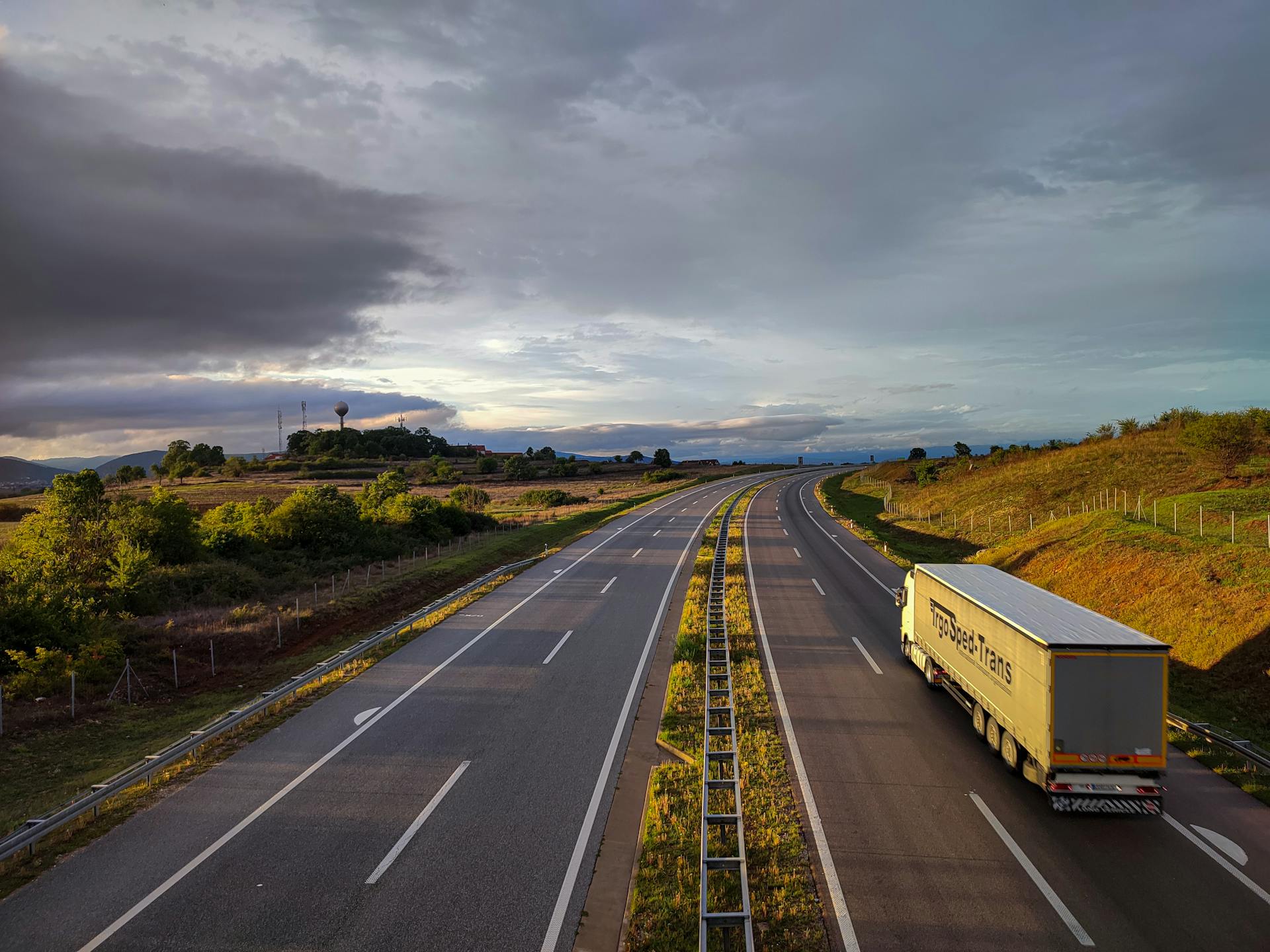
Missouri Truck Dispatch | St. Louis/KC Intermodal & Ford/GM Freight
Dispatch services for Missouri's dual intermodal hubs. St. Louis's tri-modal river/rail/road position and Kansas City's massive rail convergence. Plus Ford and GM assembly plant freight.
How much do truck dispatch rates run in Missouri?
Missouri-origin freight currently pays about $2.30-$2.70/mi for dry van, more for reefer and flatbed. Demand is driven by Intermodal & Rail, Automotive Assembly and Aerospace & Defense. Grow Trucking dispatches Missouri owner-operators and small fleets across 15 tracked lanes on a transparent percentage-of-gross fee, disclosed upfront.
- Tracked lanes
- 15
- Major freight hubs
- St. Louis, Kansas City and Springfield
- Top industries
- Intermodal & Rail and Automotive Assembly
Missouri rate and market data reviewed September 2026. See our dispatch fee structure.
Missouri Truck Dispatch Services
Missouri sits at the crossroads of America's freight network. St. Louis and Kansas City are major logistics hubs on opposite sides of the state. That creates a balanced east/west freight axis. Missouri carriers often have to pick a side of it because of the deadhead miles between the two. Kansas City sits at the geographic center of the U.S. Six of the seven Class I railroads serve it (more than any city outside Chicago). It is anchored by BNSF's Logistics Park Kansas City and Union Pacific's Global IV, among the largest intermodal terminals in the country. St. Louis is the eastern counterpart. It sits where the Mississippi and Missouri Rivers meet, with a strong manufacturing and logistics base (Boeing, Emerson, Bunge). Missouri has two major automotive assembly plants. One is Ford's Kansas City Assembly Plant in Claycomo, which builds the F-150, America's best-selling vehicle. The other is GM's Wentzville Assembly. Both create constant JIT parts freight. Missouri is also the only state with two Federal Reserve Banks (St. Louis and Kansas City). That reflects its historic dual-hub economic structure.
Missouri offers freight opportunities across two distinct major hubs. St. Louis has a tri-modal river/rail position. Kansas City has a massive rail intermodal complex. Steady Ford/GM automotive assembly freight and a strong farm/grain base add to it.
Two major intermodal/logistics hubs (St. Louis, Kansas City) give you real east-west balance and load availability
Kansas City's rail convergence (six of seven Class I railroads) makes it exceptionally cost-competitive for long-haul intermodal freight
Ford and GM assembly plants create dependable, high-reliability JIT automotive freight
Missouri's central U.S. position and 132,000-mile highway network give efficient access to most major national markets
What is the Missouri freight market like?
As of 2026, Missouri truck shipments average 153 miles to destination. The state's total truck shipment value runs roughly $276 billion. Kansas City's intermodal capacity makes it notably cost-competitive with FTL on lanes over 1,500 miles. That matters for shippers moving freight coast-to-coast through the state.
Average Rates
Missouri-origin rates (mid-2026): dry van roughly $2.30-$2.70/mile (KC/STL intermodal-adjacent freight). Flatbed runs $2.55-$3.10/mile (automotive, Boeing aerospace). Reefer runs $2.50-$2.90/mile (farm/food processing). Kansas City intermodal offers a real cost option to FTL on very long lanes.
Market Trends
- •
Kansas City is served by six of the seven Class I railroads. More than any U.S. city outside Chicago. Anchored by BNSF's Logistics Park Kansas City and Union Pacific's Global IV terminal
- •
Ford's Kansas City Assembly Plant in Claycomo builds the F-150, America's best-selling vehicle. It creates constant JIT parts freight demand
- •
St. Louis's tri-modal position (Mississippi/Missouri River confluence, rail, highway) keeps attracting manufacturing and logistics investment. That includes a growing AgTech/biotech innovation cluster
- •
Missouri is a top-10 state for corn, soybean, and grain production. The Mississippi River system gives low-cost barge access to export markets via New Orleans
- •
Northwest Arkansas's growing distribution corridor (Walmart, Tyson, J.B. Hunt headquarters) is extending Kansas City's freight reach southward
What are the busiest freight lanes out of Missouri?
Price these lanes with our free Trip Pre-Cost Calculator, Should I Take This Load? Calculator and Lane Profitability Analyzer.
St. Louis to Kansas City
Freight route connecting St. Louis, MO to Kansas City, MO (250 miles). Missouri's own east-west axis, connecting the state's two major intermodal/logistics hubs via I-70.
Rate: $625 - $725
Distance: 250 miles
St. Louis to Chicago
Freight route connecting St. Louis, MO to Chicago, IL (300 miles). Chicago's intermodal hub pairs well with St. Louis's own tri-modal position via I-55.
Rate: $735 - $855
Distance: 300 miles
St. Louis to Dallas
Freight route connecting St. Louis, MO to Dallas, TX (630 miles). Cross-country freight connecting Missouri's dual hubs to the Texas Triangle via I-44.
Rate: $1,449 - $1,701
Distance: 630 miles
St. Louis to Atlanta
Freight route connecting St. Louis, MO to Atlanta, GA (555 miles). Atlanta's distribution hub status extends Missouri's Southeast reach.
Rate: $1,304 - $1,526
Distance: 555 miles
St. Louis to Denver
Freight route connecting St. Louis, MO to Denver, CO (853 miles). Denver's distribution and energy-sector freight supports a solid I-70 connection.
Rate: $1,962 - $2,303
Distance: 853 miles
St. Louis to Memphis
Freight route connecting St. Louis, MO to Memphis, TN (285 miles). Memphis's FedEx hub and inland port make this a dependable time-sensitive freight lane via I-55.
Rate: $698 - $812
Distance: 285 miles
St. Louis to Indianapolis
Freight route connecting St. Louis, MO to Indianapolis, IN (245 miles). Indianapolis's crossroads position makes it a strong Midwest reload point via I-70.
Rate: $612 - $710
Distance: 245 miles
St. Louis to Nashville
Freight route connecting St. Louis, MO to Nashville, TN (300 miles). Nashville's automotive and distribution base supports steady I-64/I-40 freight.
Rate: $735 - $855
Distance: 300 miles
St. Louis to Oklahoma City
Freight route connecting St. Louis, MO to Oklahoma City, OK (499 miles). Direct I-44 corridor southwest through Springfield and Tulsa into Oklahoma's Southern Plains freight base.
Rate: $1,223 - $1,422
Distance: 499 miles
St. Louis to Omaha
Freight route connecting St. Louis, MO to Omaha, NE (436 miles). I-70 west to Kansas City, then I-29 north into Nebraska's farm and food-processing distribution base.
Rate: $1,112 - $1,286
Distance: 436 miles
St. Louis to Little Rock
Freight route connecting St. Louis, MO to Little Rock, AR (320 miles). Connects Missouri's freight base to Northwest Arkansas's Walmart/Tyson/J.B. Hunt distribution corridor.
Rate: $784 - $912
Distance: 320 miles
St. Louis to New Orleans
Freight route connecting St. Louis, MO to New Orleans, LA (675 miles). The Mississippi River corridor and Port of New Orleans support this I-55 freight lane.
Rate: $1,552 - $1,823
Distance: 675 miles
St. Louis to Louisville
Freight route connecting St. Louis, MO to Louisville, KY (265 miles). UPS's Worldport air hub in Louisville makes this a strong time-sensitive freight corridor via I-64.
Rate: $662 - $768
Distance: 265 miles
St. Louis to Minneapolis
Freight route connecting St. Louis, MO to Minneapolis, MN (559 miles). It reaches Minneapolis's food-processing and medical device manufacturing base via I-35.
Rate: $1,342 - $1,565
Distance: 559 miles
St. Louis to Wichita
Freight route connecting St. Louis, MO to Wichita, KS (445 miles). It links Kansas City's I-35 route to Wichita's aerospace manufacturing base (Textron, Spirit AeroSystems).
Rate: $1,068 - $1,246
Distance: 445 miles
Search brokers & carriers in Missouri
Browse active freight brokers and for-hire carriers based in Missouri. The list comes live from FMCSA and updates weekly. Check bond, authority, and fleet size before you haul.
Freight Brokers
Active, FMCSA-bonded freight brokers based in Missouri.
Browse directoryDry Van Carriers
For-hire dry van carriers operating out of Missouri.
Browse directoryFlatbed Carriers
For-hire flatbed carriers operating out of Missouri.
Browse directoryReefer Carriers
For-hire reefer carriers operating out of Missouri.
Browse directoryTruck Parking
Official NHS rest stops and truck parking capacity across Missouri.
Browse directoryWhich industries drive freight demand in Missouri?
Intermodal & Rail-to-Truck Logistics (Kansas City, six of seven Class I railroads)
Automotive Assembly (Ford in Claycomo/Kansas City, GM in Wentzville)
Aerospace & Defense (Boeing - St. Louis)
Agriculture & Grain (statewide - #2 U.S. farm count after Texas)
Consumer Goods & Distribution (both St. Louis and Kansas City metros)
Food & Beverage Processing
How does Missouri freight change by season?
Rates and weather change with the seasons. Here is a quarter-by-quarter look at rates, weather, and what to do in Missouri.
Q1 (Jan-Mar)
Rate Movement
Rates ease 5-10% in January-February after the Q4 holiday surge
Weather Impact
Winter storms can disrupt I-70/I-44 corridor freight
Strategy
Position near St. Louis or Kansas City early in the week for the best rates, and build in weather buffer
Q2 (Apr-Jun)
Rate Movement
Rates get stronger as automotive production and construction freight ramp up
Weather Impact
Generally favorable. Spring severe weather (tornado risk) can cause short disruptions
Strategy
Focus on Ford/GM automotive JIT freight and St. Louis/Kansas City distribution volume
Q3 (Jul-Sep)
Rate Movement
Rates hold near seasonal highs on retail restocking ahead of harvest and Q4
Weather Impact
Minimal. Missouri has low direct severe-weather exposure in summer
Strategy
Focus on Kansas City intermodal drayage and get ready for harvest-season grain freight
Q4 (Oct-Dec)
Rate Movement
Highest rates of the year, peaking in November-December as harvest-season grain freight overlaps with holiday retail volume
Weather Impact
Winter weather starts hitting Missouri's interstate corridors by late November
Strategy
Book capacity early. Overlapping harvest and holiday freight make this the tightest capacity window of the year
Additional Seasonal Considerations
- •
Harvest season (Sep-Nov) drives big statewide grain/farm freight volume
- •
Scheduled automotive-plant shutdown weeks (Ford Claycomo, GM Wentzville) temporarily cut JIT parts freight
- •
Winter weather can disrupt I-70/I-44 corridors Dec-Feb
- •
The Q4 holiday freight surge (Nov-Dec) hits both St. Louis and Kansas City distribution markets
Where are the major freight hubs in Missouri?
The ports, inland ports, intermodal terminals, and distribution cities that move freight across Missouri. See where most of the freight is.
Distribution Cities
- St. Louis
- Kansas City
- Springfield
- Columbia
- Independence
Ports & Intermodal Terminals
BNSF Logistics Park Kansas City
One of the largest intermodal terminals in the country. It anchors Kansas City's status as a top rail-to-truck hub.
Union Pacific Global IV Terminal (Kansas City)
A major intermodal terminal serving Kansas City's coast-to-coast freight conversion.
St. Louis Regional Freightway
Coordinates river, rail, and highway freight sites at the confluence of the Mississippi and Missouri Rivers.
Where can trucks park and fuel in Missouri?
Truck parking and fuel info to help you plan your routes through Missouri.
Estimate fuel, tolls, and fuel tax with our free Fuel Cost Calculator, IFTA Tax Calculator and Toll Cost Estimator with Route Comparison.
Major Truck Stops
Love's Travel Stop — Wentzville (I-70, Exit 208)
📍 1901 Technology Drive, Wentzville, MO 63385
180 truck parking spaces ($15/day fee), Arby's restaurant, 24/7 fuel service, WiFi, showers, and CAT scales. Next to GM Wentzville Assembly Plant. A prime spot for JIT automotive parts freight.
Flying J Travel Plaza — Kingdom City (I-70, Exit 148)
📍 175 Comfort Lane, Kingdom City, MO 65262
200 truck parking spaces ($15/day fee), Denny's restaurant, full truck maintenance shop, WiFi, and showers. Midpoint between St. Louis and Kansas City on Missouri's busiest freight corridor.
TA Travel Center — Columbia (I-70, Exit 121)
📍 4000 Rangeline Street, Columbia, MO 65202
165 truck parking spaces ($14/day fee), Popeyes restaurant, UPS drop box, laundry facilities, and WiFi. It serves University of Missouri freight and central Missouri distribution.
Petro Stopping Center — Oak Grove (I-70, Exit 28)
📍 601 SE 1st Street, Oak Grove, MO 64075
190 truck parking spaces ($15/day fee), Iron Skillet restaurant, truck service center, driver lounge. A prime east-side Kansas City spot for intermodal drayage.
Pilot Travel Center — St. Louis/Hazelwood (I-270, Exit 30)
📍 5641 Seaport Drive, Hazelwood, MO 63042
155 truck parking spaces ($14/day fee), Subway restaurant, full fuel services, WiFi. A key I-270 belt spot for St. Louis manufacturing and Boeing aerospace freight.
Love's Travel Stop — Joplin (I-44, Exit 8)
📍 5302 South Range Line Road, Joplin, MO 64804
140 truck parking spaces ($13/day fee), McDonald's, 24/7 fuel, showers. Southwest Missouri gateway serving I-44 Route 66 corridor and Northwest Arkansas freight connections.
TA Express — Springfield (I-44, Exit 77)
📍 3150 North Glenstone Avenue, Springfield, MO 65803
150 truck parking spaces ($13/day fee), Country Pride restaurant, truck repair services. Serves southwest Missouri freight and connects to Arkansas/Oklahoma routes.
Boomtown Travel Plaza — Kansas City/North (I-435, Exit 18)
📍 777 NW Argosy Parkway, Riverside, MO 64150
130 truck parking spaces (free overnight with fuel purchase), casino access, restaurant. A unique north Kansas City spot serving intermodal rail terminals.
Parking Difficulty
Moderate. Both St. Louis and Kansas City see steady parking demand because of intermodal/distribution volume. They are less crowded than coastal metro markets like LA or Newark. Peak demand is weekday evenings 6-9 PM, when drivers park after I-70 corridor runs. Kingdom City (I-70 midpoint) often fills to capacity by 7 PM. Arrive before 6 PM or use reservation apps during the Q4 holiday freight surge (Oct-Dec) and fall grain harvest (Sep-Nov).
- •Plan ahead for parking in metro areas
- •Use rest areas as a backup
- •Use parking apps to find available spots
Strategic Positioning Advice
Park where you can find loads fast and cut deadhead miles:
- •
Major Distribution Centers: Position near major distribution hubs in St. Louis for quick access to outbound loads.
- •
Busy Freight Routes: Stay near busy freight corridors to catch backhaul loads.
- •
Timing: Arrive when booking is busiest (usually early morning) to get the best rates.
Fuel price trend
How has the diesel price changed in Missouri?
EIA does not publish a separate diesel price for Missouri, so this is the weekly average for the Midwest region that Missouri is part of, over the last 12 months.
- Price this week
- $6.35/gal
- Since last week
- Up 9 cents
- Versus a year ago
- Up 78%
- Versus the U.S. average
- 8 cents above
Week of October 19, 2026
+$2.79 a gallon
U.S. average $6.28
Source: U.S. Energy Information Administration weekly retail on-highway diesel prices. Averages, not the price at one pump.
What are Missouri's truck weight limits and regulations?
Weight limits, permits, and emission rules. Know these rules to stay legal. Also see what to expect at a DOT roadside inspection, the federal size and weight limits, and the full federal trucking regulations reference.
Check weights and permits with our free Scale / Weigh Station Guide, Weight & Axle Load Calculator and Oversize / Overweight Permit Estimator.
Weight Limits
Federal limits on the Interstate System (23 CFR 658.17):
- Single Axle: 20,000 lbs
- Tandem Axle: 34,000 lbs
- Gross Vehicle Weight: 80,000 lbs, or less where the bridge formula sets a lower total
Other highways follow Missouri law, and some states allow more on non-Interstate roads. Check with the state's size and weight office before you load.
Size Limits
Width is a federal limit. Height and trailer length depend on the state:
- Width: 8.5 feet (102 inches) on the National Network (23 CFR 658.15)
- Height: Set by each state. There is no federal height limit, and FHWA says most states are between 13 ft 6 in and 14 ft. Check Missouri's limit for your route.
- Length: 53 ft semitrailers are common, but a state can apply its own kingpin-to-rear-axle rule
State-Specific Rules
- •
Missouri State Highway Patrol and MoDOT jointly enforce commercial vehicle safety. They check trucks at weigh stations and with roving patrols
- •
Federal weight limits on the Interstate System: 80,000 lbs gross vehicle weight, 20,000 lbs single axle, 34,000 lbs tandem axle. Other highways follow state law, so check the state's size and weight office
- •
Size limits: 8.5 ft (102 in) width. Legal height is set by each state, and FHWA says most are 13 ft 6 in to 14 ft, so check the state's size and weight office. A 53 ft semitrailer is common, but state kingpin-to-rear-axle rules apply
- •
Oversize/overweight permits come from MoDOT
- •
Missouri's diesel fuel tax is about $0.29-0.31/gallon, among the lower state rates. It has risen gradually under a multi-year phase-in (verify the current rate with Missouri DOR)
Permits
Missouri may require special permits for:
- •Oversized/overweight loads
- •Hazardous materials
- •Special route rules
Missouri: freight facts a driver should know
Missouri's overweight permits raise axle limits above the federal baseline
Missouri's standard legal limit is 20,000 pounds on a single axle and 34,000 pounds on a tandem group. Under an overweight permit, MoDOT allows up to 22,400 pounds on a lone single axle and 46,000 pounds for a tandem group overall, codified under RSMo 304.180.
Source: Missouri Department of Transportation, Legal Size & Weight / OSOW Statutes. Checked 30 Sep 2026.
Very heavy loads trigger a mandatory bridge-analysis fee in Missouri
Missouri's single-trip overweight permit costs $15 plus $20 for every 10,000 pounds over the legal gross weight. For loads exceeding 160,000 pounds gross, MoDOT adds a mandatory bridge-and-roadway analysis fee that scales with trip distance, from $425 for short hauls up to $925 for moves over 200 miles.
Source: Missouri Department of Transportation, Motor Carrier Services permit fee schedule. Checked 30 Sep 2026.
How have Missouri freight rates moved, and what's next?
How Missouri freight rates have moved through recent market cycles, and what owner-operators and fleets should expect next. Use this to time lane commitments and rate negotiations. Before you accept a load, check it against our free rate benchmarker.
Recent Rate Cycles
Rate cycles that shaped the current Missouri freight market:
2018-2019
Strong market. Rates hit their peak because trucks were in short supply
2020
Rates swung at first because of the pandemic. Freight demand then bounced back hard
2021-2022
Record-high rates. E-commerce demand surged and trucks were in short supply
2023-2024
Rates fell sharply as truck supply passed demand. Smaller carriers left the market
2025-2026
The national market is recovering. Missouri's dual intermodal hubs and steady Ford/GM automotive freight have kept the state's freight demand balanced
Market Correction Periods
Knowing when corrections hit Missouri helps with strategic planning:
- •
Q1 2023: Rates fell hard as trucks were added faster than freight grew
- •
Mid-2024: The market is settling, with supply and demand more in balance
- •
Pattern: Rate drops usually last 6–12 months before rates recover
Missouri Market Outlook
As of mid-2026, Missouri's freight market gains from its dual-hub structure (St. Louis, Kansas City) and Ford/GM automotive assembly freight. Kansas City's intermodal cost edge on long-haul lanes helps too. Expect continued balanced east-west freight flow through the rest of 2026.
What Drives Rates in Missouri
- •Freight volume and demand (intermodal drayage, automotive JIT, aerospace, agriculture/grain)
- •Truck supply, which tightened a lot from last year across the nation
- •Fuel costs and Missouri's diesel fuel tax (~$0.29-0.31/gallon)
- •Kansas City intermodal rail volume trends and harvest-season grain freight timing
How do I cut deadhead miles running freight in Missouri?
How to cut empty miles when you haul in and out of Missouri. See the outbound and inbound freight balance, the best return lanes, and where to park your truck. Run your own numbers with our free deadhead miles calculator.
Outbound Freight
50%
Roughly 50% of Missouri freight moves outbound. Outbound loads from Missouri's production and distribution centers typically book fastest early in the week.
Inbound Freight
50%
About 50% of the freight balance is inbound. Book your return load before you deliver. It is the biggest way to raise your rate-per-mile on these lanes.
Best Backhaul Lanes into Missouri
The strongest return lanes for repositioning back toward Missouri:
Kansas City to St. Louis
Missouri's own east-west axis, connecting the state's two major freight hubs
Rate: $2.45 - $2.85/mile
Chicago to St. Louis
Dense Midwest corridor with steady two-way freight
Rate: $2.40 - $2.80/mile
Denver to Kansas City
I-70 corridor connecting the Plains to Missouri's rail hub
Rate: $2.35 - $2.75/mile
Positioning Strategies for Missouri
Where and when to stage to keep your next load close and your deadhead low:
- •
Pick St. Louis or Kansas City as a primary base and build relationships there rather than splitting your focus
- •
Track Kansas City intermodal rail schedules if you run drayage freight
- •
Use load boards to pre-book backhaul before longer cross-country hauls
What do experienced dispatchers know about running Missouri?
Hands-on tips from years of dispatching in Missouri.
St. Louis and Kansas City are two different markets serving opposite halves of the country. Pick a side rather than trying to run both without a plan for the deadhead miles between them. The I-70 corridor between them is 250 miles of largely rural freight.
Kansas City intermodal is a real cost option to FTL for coast-to-coast freight over 1,500 miles. It is worth understanding even if you run truck-only. BNSF's Logistics Park and UP's Global IV terminal handle over 1 million containers a year.
Ford's Claycomo plant (F-150 production) and GM's Wentzville plant both create dependable, repeat JIT freight for reliable carriers. Ford ships outbound F-150 units by auto-hauler six days a week. Steady inbound parts freight mirrors this schedule.
Kansas City rail hub and St. Louis distribution positioning create Tuesday-Wednesday rate premiums 10-15% above Friday. Intermodal transload and DC freight bunch up midweek.
Farm/grain freight margins are thin. Good rate tools and harvest-season timing matter more here than in higher-margin categories. September-November fall harvest overlaps with Q4 holiday freight, which creates real capacity tightness.
Boeing's St. Louis aerospace operations create a distinct, less-competitive flatbed/specialized freight niche. It is worth exploring beyond standard automotive freight. Military aerospace parts move on time-sensitive schedules. Premium rates make up for the urgency.
Kingdom City (I-70, Exit 148) is Missouri's single busiest truck stop. The exact midpoint between St. Louis and Kansas City. Parking fills to capacity by 7 PM weeknights. Arrive before 6 PM or have a backup plan.
The I-70 corridor carries 12,000-15,000 trucks a day between St. Louis and Kansas City. That makes it one of the densest freight corridors in the Midwest. Congestion peaks 7-9 AM and 4-6 PM on weekdays.
Missouri's diesel fuel tax (~$0.29-0.31/gallon) is among the lower state rates. It rose gradually under a multi-year legislative phase-in that finished in 2025. That makes Missouri fuel stops smart for IFTA tax planning.
St. Louis's Mississippi River port handles over 35 million tons a year. That creates barge-to-truck conversion freight that most OTR carriers overlook. Knowing river-port logistics opens a less-competitive niche paying $2.50-$3.00/mile for short-haul moves.
Remember: These tips come from real dispatching work in Missouri. Markets change, but these basics still help you earn more and cut deadhead miles.
How have drivers near Missouri grown with Grow Trucking?
+$1,950/week after moving to $2.65/mi on produce / auto parts freight. Route optimization cut empty miles by 86%.
Read the case study+$3,745/week after moving to N/A/mi on midwest regional freight freight. From $4–5K/week to $9,250 with a Midwest lane strategy.
Read the case study+$3,170/week after moving to $2.90/mi on automotive parts / manufacturing freight. New authority veteran driver fast-tracked to premium rates.
Read the case studyMissouri Freight FAQs
Comprehensive answers to common questions about trucking and dispatch in Missouri. State-specific regulations, costs, and operating strategies.
Yes. You need a USDOT number, an MC number for interstate for-hire carriage, and Missouri-specific IRP/IFTA registration through the Missouri Department of Revenue. Missouri does not require separate intrastate authority for carriers that already hold federal interstate authority. Kansas City intermodal drayage needs TWIC cards for terminal access. It also needs SCAC code registration with BNSF, Union Pacific, or other rail carriers.
Federal minimum liability coverage usually runs $750,000 for general freight and $1,000,000 for hazmat cargo. You also need cargo insurance ($100,000+ depending on commodity) and physical damage coverage. Ford and GM JIT automotive freight often needs $250,000+ cargo coverage with named insured status for the manufacturer. Boeing aerospace parts may need $500,000+ cargo coverage and specialized handling certifications. Confirm current minimums with your insurance provider. Verify coverage meets specific customer rules before you haul automotive or aerospace freight.
As of mid-2026, flatbed tied to automotive (Ford, GM) and Boeing aerospace parts runs $2.55-$3.10/mile. Reefer tied to farm/food processing runs $2.50-$2.90/mile. Standard dry van runs $2.30-$2.70/mile. Kansas City intermodal drayage (rail terminal to warehouse) averages $300-$550 per move, depending on distance. JIT automotive parts freight pays time-sensitive premiums of $0.15-$0.30/mile above standard rates when delivery windows are tight (same-day or next-morning rules).
Yes. Missouri's dual-hub structure (St. Louis, Kansas City) and dependable Ford/GM automotive freight give new operators good stability. But new carriers should do four things. (1) Pick a primary base (St. Louis OR Kansas City). Don't try to serve both hubs without a clear plan for the 250-mile deadhead between them. (2) Build relationships with automotive freight brokers if you target JIT freight. Reliability rules are strict. (3) Learn Kansas City intermodal drayage rules if you pursue rail-to-truck freight. (4) Factor Missouri's diesel fuel tax (~$0.29-0.31/gallon) into IFTA planning. The state's central US position gives efficient access to most national markets within 1-2 day transit.
Missouri diesel fuel tax is about $0.295 per gallon as of 2026, among the lower state rates. Add the federal tax ($0.244/gallon), and total diesel fuel tax is about $0.539 per gallon. Retail diesel in the Midwest region, which includes Missouri, averages $6.35/gallon as of October 19, 2026 (EIA weekly average), about 8 cents above the national average of $6.28. That price is up 9 cents from last week and 78% above a year ago. Missouri's central U.S. location and major hubs (Kansas City, St. Louis) make it a strategic crossroads for Midwest/Southeast freight. The low fuel tax gives you IFTA planning chances. Strong manufacturing and distribution corridors run along I-70, I-44, and I-55. The rate is indexed to inflation, so verify the current rate each year. Source: IFTA matrix, Missouri Department of Revenue, AAA, verified September 2026.
To haul JIT automotive freight from Ford's Claycomo plant (Kansas City) or GM's Wentzville plant (St. Louis), you need five things. (1) A strong on-time delivery record (98%+ on-time required). (2) Cargo insurance with $250,000+ coverage and the manufacturer named as additional insured. (3) Carrier approval/onboarding with the plant's logistics department (can take 30-60 days). (4) Real-time GPS tracking. (5) Fast communication. Plants require immediate notice of any delays. Most automotive freight moves through dedicated freight brokers or 3PLs rather than direct plant relationships. Contact Coyote Logistics, C.H. Robinson, or XPO Logistics to get approved for automotive freight. JIT freight pays premiums but tolerates zero transit delays.
The I-70 corridor between St. Louis and Kansas City is 250 miles of mostly rural freight with limited mid-route load chances. Deadhead risk runs 25-35% depending on timing and equipment type. Here is how to cut deadhead. (1) Use load boards to pre-book backhaul before you accept a one-way haul. (2) Target Tuesday-Wednesday loads, when rates run 10-15% higher than Friday. (3) Consider positioning in Kingdom City (I-70 midpoint) for the fastest access to loads in either direction. (4) Build relationships with brokers who regularly move two-way freight on this corridor. Most successful Missouri carriers pick one hub (STL or KC) as their primary base. They don't keep running the full 250-mile corridor.
Book outbound loads Monday-Wednesday, when Missouri spot rates usually run 10-15% higher than Friday/weekend postings. Kansas City intermodal drayage pays the most Tuesday-Thursday (15-20% premium over Friday rates), as shippers clear containers before weekend terminal closures. St. Louis manufacturing freight peaks Monday-Wednesday for same-week delivery. Avoid Friday afternoon loads unless the rate covers weekend deadhead risk. Harvest season (September-November) and Q4 holiday freight (October-December) create real capacity tightness. Book 3-5 days ahead in these periods to lock in premium rates.
Missouri's standard weight limits (80,000 lbs GVW, 20,000 lbs single axle, 34,000 lbs tandem axle) apply to farm freight with no special harvest-season exemptions. Some neighboring states (Kansas, Iowa) do offer them. Overweight farm loads need standard overweight permits from MoDOT. Grain haulers should do three things. (1) Use bridge formula calculators to verify axle weight distribution. (2) Get overweight permits before loading if gross weight exceeds 80,000 lbs. (3) Keep IFTA registration current, as farm freight often crosses state lines. Missouri Highway Patrol strictly enforces weight limits at farm weigh stations during harvest season (September-November).
Missouri truck parking is moderately hard. Both St. Louis and Kansas City see steady demand because of intermodal/distribution volume. Kingdom City (I-70, Exit 148) is the exact midpoint between the two metros. It is Missouri's busiest truck stop and fills to capacity by 7 PM on weeknights. Peak demand is 6-9 PM, when drivers park after I-70 corridor runs. To secure parking, do four things. (1) Arrive before 6 PM. (2) Use truck stop reservation apps (TruckSmart, Trucker Path Pro) during the Q4 holiday surge and fall harvest. (3) Have backup parking spots picked out along your route. (4) Consider Missouri rest areas (free, 10-hour max stay) as an emergency fallback. It is less crowded than coastal markets. But advance planning in peak seasons (Sep-Dec) is key.
Keep exploring dispatch options
Tools, equipment guides and nearby states relevant to running freight in and out of Missouri.
By equipment
Free tools
- Trip Pre-Cost Calculator
- Toll Cost Estimator with Route Comparison
- Load Board Rate Benchmarker
- Deadhead Miles Calculator
- Fuel Cost Calculator
- IFTA Tax Calculator
- Scale / Weigh Station Guide
- Cost Per Mile Calculator
- Diesel prices today
- Diesel tax by state
- Truck idling laws by state
- Truck speed limits by state
- Truck chain laws by state
- Truck lane laws by state
- Truck height and length limits by state
- Rest area parking limits by state
- Midwest diesel prices
- Driver Hiring and Onboarding Checklist
- Reefer Set-Point Guide
- All Free Tools
Services
More from Grow Trucking
Ready to Move Freight in Missouri?
Secure Your Strategy:
Apply for your FREE Custom 90-Day Growth Plan (a $1,500 value). It starts with a Business Audit that finds where you lose money and sets your profit goals.
Guarantee Your GROWTH:
Start your 90-day partnership to implement the plan. We back it with our "Growth or Your Money Back" Guarantee.