
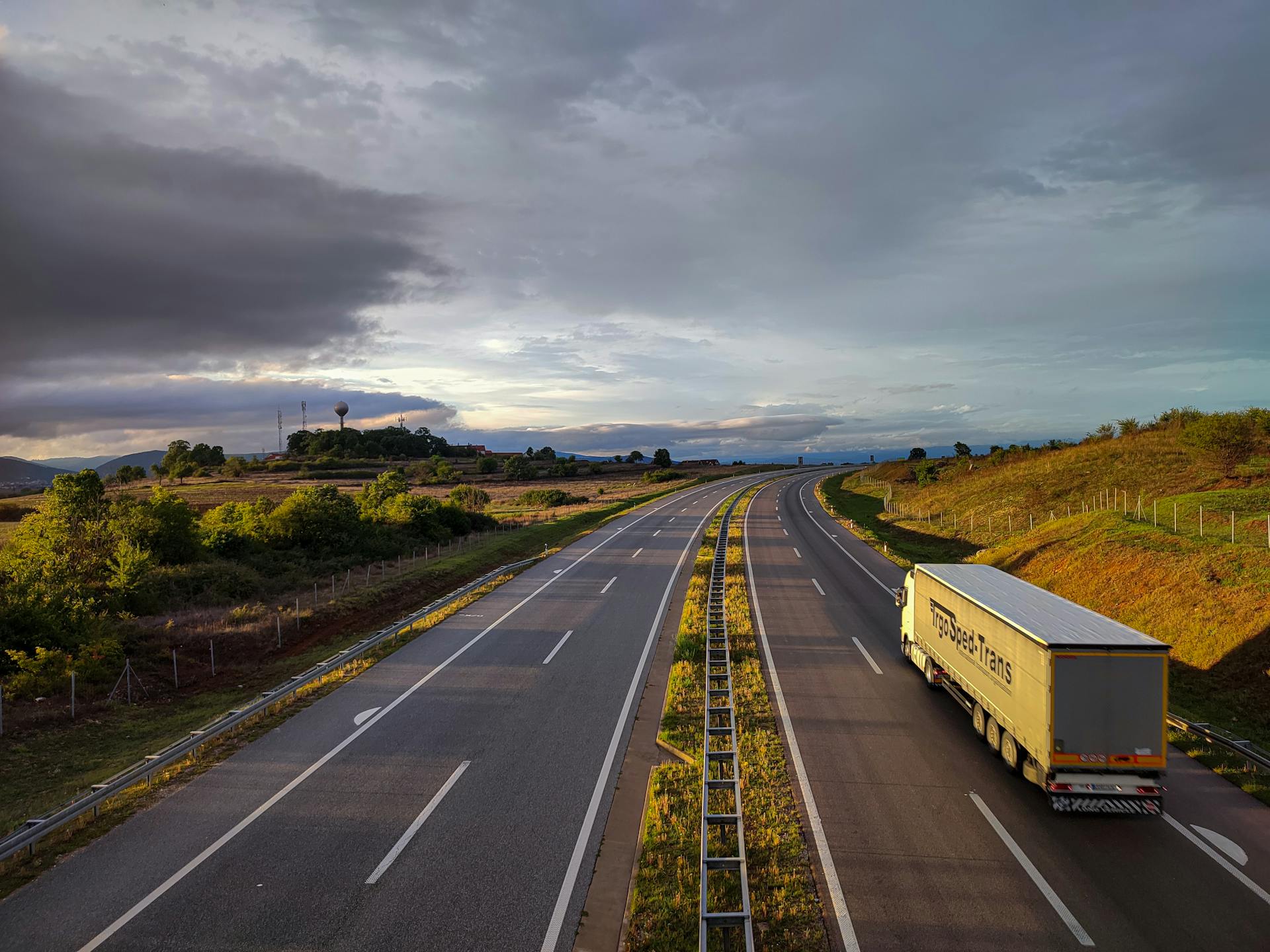
New Mexico Truck Dispatch | Permian Basin Oil & Santa Teresa Border
We dispatch trucks for New Mexico's Permian Basin oil & gas tanker/flatbed freight and the Santa Teresa cross-border trade hub. We also cover the specialized logistics demand of Sandia and Los Alamos National Labs.
How much do truck dispatch rates run in New Mexico?
New Mexico-origin freight currently pays about $2.20-$2.60/mi for dry van, more for reefer and flatbed. Demand is driven by Oil & Gas, Cross and Military & National Labs. Grow Trucking dispatches New Mexico owner-operators and small fleets across 15 tracked lanes on a transparent percentage-of-gross fee, disclosed upfront.
- Tracked lanes
- 15
- Major freight hubs
- Albuquerque, Santa Fe and Las Cruces
- Top industries
- Oil & Gas and Cross
New Mexico rate and market data reviewed September 2026. See our dispatch fee structure.
New Mexico Truck Dispatch Services
New Mexico's trucking market runs on two forces. One is the transcontinental I-40 corridor connecting California to the East Coast. The other is the Permian Basin oil and gas industry in the state's southeast corner. Albuquerque sits at the I-25/I-40 junction. It is the state's freight crossroads and main distribution hub. Oil field trucking near Carlsbad and Hobbs earns premium tanker and hazmat pay. It works closely with well service crews, drilling contractors, and energy producers. Santa Teresa, near the Texas/Mexico border, is a growing cross-border logistics hub. Maquiladora manufacturing, auto parts, electronics, and produce move north there. The state's military and research installations create freight that needs specialized handling. They include Sandia National Labs, Los Alamos National Lab, White Sands Missile Range, Kirtland AFB, and Holloman AFB. They create classified materials, research equipment, and defense systems freight. Carlsbad's potash mining and the Hatch Valley's chile pepper harvest (Aug-Oct) round out a varied freight base.
New Mexico offers freight opportunities anchored by Permian Basin oil & gas tanker/flatbed demand, Santa Teresa's growing cross-border trade, and specialized National Labs logistics. Tanker, hazmat, and heavy-haul freight earn premium rates.
Permian Basin tanker and hazmat freight earns real premium pay. It is tied to drilling activity rather than the broader seasonal freight cycle
Albuquerque's I-25/I-40 junction makes it a dependable transcontinental crossroads for dry van and flatbed freight
Santa Teresa's growing cross-border trade hub gives you a distinct, expanding freight base tied to Mexico's maquiladora manufacturing sector
A varied economy (energy, cross-border trade, defense/research, agriculture) lowers reliance on any single industry
What is the New Mexico freight market like?
As of 2026, two forces shape New Mexico's freight economy, and they move mostly on their own. One is Permian Basin oil and gas activity (tied to drilling cycles, not season). The other is the I-40/I-25 transcontinental distribution corridor through Albuquerque. Company driver pay in New Mexico ranges from roughly $62,000-$68,000 a year. Owner-operators and specialized (tanker, hazmat) drivers earn much more.
Average Rates
New Mexico-origin rates (mid-2026): dry van roughly $2.20-$2.60/mile (Albuquerque distribution, cross-border consumer goods). Flatbed runs $2.60-$3.20/mile (Permian Basin oil/gas equipment, wind/solar farm materials, among the highest-paying categories in the state). Tanker rates for Permian crude oil and produced water earn real premiums. Reefer runs $2.50-$2.90/mile (Hatch Valley chile peppers, dairy, pecans).
Market Trends
- •
The Permian Basin oil and gas industry in southeastern New Mexico (Carlsbad, Hobbs) keeps creating premium tanker and hazmat freight. Drilling activity drives it, not season
- •
Santa Teresa's industrial park and port of entry keep growing as a cross-border logistics hub. Maquiladora manufacturing, auto parts, and electronics move north
- •
Carlsbad's potash mining (fertilizer production) adds heavy industrial freight to the southeastern New Mexico oil corridor
- •
New Mexico's National Labs (Sandia in Albuquerque, Los Alamos) create steady, specialized research/classified-materials logistics demand that differs from standard freight
- •
The Hatch Valley chile pepper harvest (Aug-Oct) drives a concentrated, high-profile reefer freight spike unique to New Mexico's farm identity
What are the busiest freight lanes out of New Mexico?
Price these lanes with our free Trip Pre-Cost Calculator, Should I Take This Load? Calculator and Lane Profitability Analyzer.
Albuquerque to El Paso
Freight route connecting Albuquerque, NM to El Paso, TX (265 miles). Connects Albuquerque to another major Southwest cross-border trade hub via I-25/I-10.
Rate: $636 - $742
Distance: 265 miles
Albuquerque to Denver
Freight route connecting Albuquerque, NM to Denver, CO (450 miles). Connects Albuquerque to Colorado's Mountain West distribution hub via I-25.
Rate: $1,058 - $1,238
Distance: 450 miles
Albuquerque to Phoenix
Freight route connecting Albuquerque, NM to Phoenix, AZ (418 miles). Connects Albuquerque to Phoenix's semiconductor/distribution base via I-40.
Rate: $961 - $1,129
Distance: 418 miles
Albuquerque to Amarillo
Freight route connecting Albuquerque, NM to Amarillo, TX (285 miles). Connects Albuquerque to the Texas Panhandle's energy and agricultural freight base via I-40.
Rate: $698 - $812
Distance: 285 miles
Albuquerque to Salt Lake City
Freight route connecting Albuquerque, NM to Salt Lake City, UT (605 miles). Connects Albuquerque to Utah's Mountain West crossroads via I-40/I-15.
Rate: $1,361 - $1,603
Distance: 605 miles
Albuquerque to Dallas
Freight route connecting Albuquerque, NM to Dallas, TX (630 miles). Cross-country freight connecting Albuquerque to the Texas Triangle via I-40/I-20.
Rate: $1,418 - $1,670
Distance: 630 miles
Albuquerque to Tucson
Freight route connecting Albuquerque, NM to Tucson, AZ (450 miles). Connects Albuquerque to Tucson's aerospace/defense freight base via I-25/I-10.
Rate: $1,035 - $1,215
Distance: 450 miles
Albuquerque to Las Vegas
Freight route connecting Albuquerque, NM to Las Vegas, NV (570 miles). Connects Albuquerque to Las Vegas's convention/hospitality freight base via I-40.
Rate: $1,254 - $1,482
Distance: 570 miles
Albuquerque to Santa Teresa
Freight route connecting Albuquerque, NM to Santa Teresa, NM (265 miles). New Mexico's main cross-border trade hub, growing steadily for maquiladora manufacturing freight.
Rate: $649 - $755
Distance: 265 miles
Albuquerque to Carlsbad
Freight route connecting Albuquerque, NM to Carlsbad, NM (275 miles). Anchors the southeastern New Mexico Permian Basin oil & gas corridor.
Rate: $715 - $852
Distance: 275 miles
Albuquerque to Oklahoma City
Freight route connecting Albuquerque, NM to Oklahoma City, OK (545 miles). Connects Albuquerque to the Southern Plains via I-40.
Rate: $1,254 - $1,472
Distance: 545 miles
Albuquerque to Colorado Springs
Freight route connecting Albuquerque, NM to Colorado Springs, CO (385 miles). Connects Albuquerque to Colorado's aerospace/defense cluster via I-25.
Rate: $905 - $1,059
Distance: 385 miles
Albuquerque to San Antonio
Freight route connecting Albuquerque, NM to San Antonio, TX (655 miles). San Antonio's manufacturing and military logistics base connects via I-10.
Rate: $1,441 - $1,703
Distance: 655 miles
Albuquerque to Flagstaff
Freight route connecting Albuquerque, NM to Flagstaff, AZ (325 miles). Connects Albuquerque to northern Arizona via I-40.
Rate: $780 - $910
Distance: 325 miles
Albuquerque to Los Angeles
Freight route connecting Albuquerque, NM to Los Angeles, CA (800 miles). Connects Albuquerque's transcontinental corridor to Southern California's massive consumer market via I-40.
Rate: $1,680 - $2,000
Distance: 800 miles
Search brokers & carriers in New Mexico
Browse active freight brokers and for-hire carriers based in New Mexico. The list comes live from FMCSA and updates weekly. Check bond, authority, and fleet size before you haul.
Freight Brokers
Active, FMCSA-bonded freight brokers based in New Mexico.
Browse directoryDry Van Carriers
For-hire dry van carriers operating out of New Mexico.
Browse directoryFlatbed Carriers
For-hire flatbed carriers operating out of New Mexico.
Browse directoryReefer Carriers
For-hire reefer carriers operating out of New Mexico.
Browse directoryTruck Parking
Official NHS rest stops and truck parking capacity across New Mexico.
Browse directoryWhich industries drive freight demand in New Mexico?
Oil & Gas (Permian Basin - Carlsbad, Hobbs)
Cross-Border Trade & Logistics (Santa Teresa port of entry)
Military & National Labs (Sandia, Los Alamos, White Sands, Kirtland AFB, Holloman AFB)
Potash & Mining (Carlsbad)
Agriculture (Hatch Valley chile peppers, dairy in southeastern NM, pecans)
Retail Distribution (Albuquerque, Amazon fulfillment center)
How does New Mexico freight change by season?
Rates and weather change with the seasons. Here is a quarter-by-quarter look at rates, weather, and what to do in New Mexico.
Q1 (Jan-Mar)
Rate Movement
Rates ease after the Q4 holiday surge. Permian Basin freight holds steady based on drilling activity
Weather Impact
Occasional winter weather can affect I-25/I-40 mountain sections and northern New Mexico
Strategy
Position near Albuquerque's I-25/I-40 interchange early in the week for the best rates
Q2 (Apr-Jun)
Rate Movement
Rates strengthen as construction and cross-border freight ramp up
Weather Impact
Generally favorable statewide
Strategy
Focus on Santa Teresa cross-border freight and Permian Basin flatbed/tanker freight
Q3 (Jul-Sep)
Rate Movement
Rates hold steady, building toward the Hatch Valley chile harvest
Weather Impact
Monsoon season (Jul-Sep) can bring brief but intense storms that affect southern routes
Strategy
Get capacity ready for the coming Hatch Valley chile pepper harvest
Q4 (Oct-Dec)
Rate Movement
Rates stay high as chile harvest freight overlaps with holiday retail volume
Weather Impact
Winter weather starts hitting northern New Mexico and I-40 mountain sections by late November
Strategy
Book capacity early. Overlapping harvest and holiday freight make this a tight window
Additional Seasonal Considerations
- •
Hatch Valley chile pepper harvest (Aug-Oct) drives a concentrated, high-profile reefer freight spike
- •
Permian Basin oil & gas freight is cyclical, tied to drilling activity rather than season
- •
The Q4 holiday freight surge (Nov-Dec) hits Albuquerque's retail distribution network
- •
Winter weather can affect I-40 mountain sections and northern New Mexico routes Dec-Feb
Where are the major freight hubs in New Mexico?
The ports, inland ports, intermodal terminals, and distribution cities that move freight across New Mexico. See where most of the freight is.
Distribution Cities
- Albuquerque
- Santa Fe
- Las Cruces
- Carlsbad
- Hobbs
Ports & Intermodal Terminals
Santa Teresa Industrial Park / Port of Entry
A growing cross-border logistics hub with maquiladora manufacturing, auto parts, and electronics trade with Mexico.
Albuquerque Rail Yard (BNSF)
Serves Albuquerque's role as the state's freight crossroads at the I-25/I-40 junction.
Sandia National Labs Logistics
A secure research facility in Albuquerque with specialized logistics rules for classified materials and research equipment.
Where can trucks park and fuel in New Mexico?
Truck parking and fuel info to help you plan your routes through New Mexico.
Estimate fuel, tolls, and fuel tax with our free Fuel Cost Calculator, IFTA Tax Calculator and Toll Cost Estimator with Route Comparison.
Major Truck Stops
Love's Travel Stop — Albuquerque West (I-40, Exit 140)
📍 6000 Iliff Road NW, Albuquerque, NM 87121
220 truck parking spaces ($14/day fee), Arby's/Godfather's Pizza, CAT scale, tire shop, full-service diesel, and convenience store. It sits at the I-40/I-25 interchange, serving Albuquerque's crossroads freight base
Pilot Travel Center — Santa Rosa (I-40, Exit 275)
📍 2801 Historic Route 66, Santa Rosa, NM 88435
160 truck parking spaces ($12/day fee), Subway/Wendy's, CAT scale, tire service, diesel, and showers. It serves the I-40 midpoint between Albuquerque and the Texas Panhandle on the transcontinental corridor
TA Travel Center — Gallup (I-40, Exit 22)
📍 1650 West Maloney Avenue, Gallup, NM 87301
180 truck parking spaces ($13/day fee), Country Pride Restaurant, CAT scale, tire shop, diesel, and truck wash. It sits on I-40 near the Arizona border, serving transcontinental freight to Flagstaff and Phoenix
Flying J Travel Plaza — Las Cruces (I-10, Exit 140)
📍 1670 Hickory Drive, Las Cruces, NM 88005
200 truck parking spaces ($15/day fee), Denny's, CAT scale, tire service, diesel, and driver amenities. It serves the I-10/I-25 junction connecting southern New Mexico to El Paso and Santa Teresa cross-border trade
Love's Travel Stop — Carlsbad (US-285, Exit 17)
📍 2920 National Parks Highway, Carlsbad, NM 88220
150 truck parking spaces ($10/day fee), Carl's Jr., CAT scale, diesel, and convenience store. It serves the Permian Basin oil corridor connecting Carlsbad to Hobbs and the southeastern New Mexico energy sector
Petro Stopping Center — Santa Fe (I-25, Exit 271)
📍 3650 Cerrillos Road, Santa Fe, NM 87507
140 truck parking spaces ($12/day fee), Iron Skillet restaurant, CAT scale, tire service, diesel, and showers. It sits on I-25, serving the Albuquerque-Santa Fe-Colorado corridor
TA Travel Center — Tucumcari (I-40, Exit 329)
📍 5001 Quay Road AR, Tucumcari, NM 88401
130 truck parking spaces ($10/day fee), Country Pride Restaurant, CAT scale, diesel, and truck amenities. Serves the I-40 eastern New Mexico corridor near the Texas border
Pilot Travel Center — Lordsburg (I-10, Exit 22)
📍 1409 Main Street, Lordsburg, NM 88045
120 truck parking spaces ($8/day fee), Subway, CAT scale, diesel, and convenience store. Serves the I-10 corridor in southwestern New Mexico connecting to Arizona and the boot heel region
Parking Difficulty
Moderate. Albuquerque sees solid demand because of its crossroads/distribution status. Peak congestion comes early in the week (Monday-Wednesday mornings), when carriers position for outbound loads. Remote southeastern oil-corridor routes (Carlsbad, Hobbs) have limited services and need advance fuel/rest planning. The nearest major truck stops are 110 miles apart (Carlsbad to Artesia to Roswell). Best availability: Sunday evenings and early Monday mornings in Albuquerque. Late afternoons in the Permian Basin oil corridor.
- •Plan ahead for parking in metro areas
- •Use rest areas as a backup
- •Use parking apps to find available spots
Strategic Positioning Advice
Park where you can find loads fast and cut deadhead miles:
- •
Major Distribution Centers: Position near major distribution hubs in Albuquerque for quick access to outbound loads.
- •
Busy Freight Routes: Stay near busy freight corridors to catch backhaul loads.
- •
Timing: Arrive when booking is busiest (usually early morning) to get the best rates.
Fuel price trend
How has the diesel price changed in New Mexico?
EIA does not publish a separate diesel price for New Mexico, so this is the weekly average for the Gulf Coast region that New Mexico is part of, over the last 12 months.
- Price this week
- $5.90/gal
- Since last week
- Up 9 cents
- Versus a year ago
- Up 81%
- Versus the U.S. average
- 37 cents below
Week of October 19, 2026
+$2.65 a gallon
U.S. average $6.28
Source: U.S. Energy Information Administration weekly retail on-highway diesel prices. Averages, not the price at one pump.
What are New Mexico's truck weight limits and regulations?
Weight limits, permits, and emission rules. Know these rules to stay legal. Also see what to expect at a DOT roadside inspection, the federal size and weight limits, and the full federal trucking regulations reference.
Check weights and permits with our free Scale / Weigh Station Guide, Weight & Axle Load Calculator and Oversize / Overweight Permit Estimator.
Weight Limits
Federal limits on the Interstate System (23 CFR 658.17):
- Single Axle: 20,000 lbs
- Tandem Axle: 34,000 lbs
- Gross Vehicle Weight: 80,000 lbs, or less where the bridge formula sets a lower total
Other highways follow New Mexico law, and some states allow more on non-Interstate roads. Check with the state's size and weight office before you load.
Size Limits
Width is a federal limit. Height and trailer length depend on the state:
- Width: 8.5 feet (102 inches) on the National Network (23 CFR 658.15)
- Height: Set by each state. There is no federal height limit, and FHWA says most states are between 13 ft 6 in and 14 ft. Check New Mexico's limit for your route.
- Length: 53 ft semitrailers are common, but a state can apply its own kingpin-to-rear-axle rule
State-Specific Rules
- •
New Mexico State Police and NMDOT jointly enforce commercial vehicle safety. They check trucks at weigh stations and with roving patrols
- •
Federal weight limits on the Interstate System: 80,000 lbs gross vehicle weight, 20,000 lbs single axle, 34,000 lbs tandem axle. Other highways follow state law, so check the state's size and weight office
- •
Size limits: 8.5 ft (102 in) width. Legal height is set by each state, and FHWA says most are 13 ft 6 in to 14 ft, so check the state's size and weight office. A 53 ft semitrailer is common, but state kingpin-to-rear-axle rules apply
- •
Oversize/overweight permits issued through NMDOT
- •
Cross-border freight through Santa Teresa needs customs paperwork. It usually involves a customs broker on top of standard trucking authority
- •
Freight moving directly to or from National Labs (Sandia, Los Alamos) or military installations may need more security clearance
- •
New Mexico's diesel fuel tax is about $0.21/gallon, among the lower state rates (verify the current rate with New Mexico MVD)
Permits
New Mexico may require special permits for:
- •Oversized/overweight loads
- •Hazardous materials
- •Special route rules
New Mexico: freight facts a driver should know
New Mexico requires an escort at just 14 feet wide
New Mexico's administrative code requires an escort vehicle for any oversize load reaching 14 feet in width, a lower trigger point than many neighboring states use.
Source: New Mexico Department of Transportation regulation 18.19.8.81 NMAC. Checked 30 Sep 2026.
New Mexico scales escort count by load length
Under the same New Mexico code, one escort vehicle is required for loads between 110 feet 1 inch and 120 feet 1 inch long, and two escorts are required for anything longer than 120 feet 1 inch.
Source: New Mexico Department of Transportation regulation 18.19.8.82 NMAC. Checked 30 Sep 2026.
Active weather alerts for New Mexico freight routes
Flood Watch
Far Northwest Highlands; Northwest Highlands; West Central Highlands; Tusas Mountains Including Chama; Jemez Mountains; Upper Rio Grande Valley; Espanola Valley; Santa Fe Metro Area
Active until Oct 25, 6:00 PM UTC
Flood Warning
San Juan, NM
Active until Oct 25, 6:00 PM UTC
Flood Warning
San Juan, NM
Active until Oct 25, 6:00 PM UTC
Flood Warning
San Juan, NM
Active until Oct 25, 6:15 PM UTC
Source: National Weather Service. Refreshes with this page.
How have New Mexico freight rates moved, and what's next?
How New Mexico freight rates have moved through recent market cycles, and what owner-operators and fleets should expect next. Use this to time lane commitments and rate negotiations. Before you accept a load, check it against our free rate benchmarker.
Recent Rate Cycles
Rate cycles that shaped the current New Mexico freight market:
2018-2019
Strong market. Rates hit their peak because trucks were in short supply
2020
Rates swung at first because of the pandemic. Freight demand then bounced back hard
2021-2022
Record-high rates. E-commerce demand surged and trucks were in short supply
2023-2024
Rates fell sharply as truck supply passed demand. Smaller carriers left the market
2025-2026
The national market is recovering. New Mexico's Permian Basin oil & gas activity and growing Santa Teresa cross-border trade have given you distinct, non-cyclical freight drivers
Market Correction Periods
Knowing when corrections hit New Mexico helps with strategic planning:
- •
Q1 2023: Rates fell hard as trucks were added faster than freight grew
- •
Mid-2024: The market is settling, with supply and demand more in balance
- •
Pattern: Rate drops usually last 6–12 months before rates recover
New Mexico Market Outlook
As of mid-2026, New Mexico's freight market gains from Permian Basin oil & gas activity (tied to drilling cycles rather than season). It also gains from Santa Teresa's continued growth as a cross-border logistics hub. Steady National Labs and military freight demand adds to it.
What Drives Rates in New Mexico
- •Freight volume and demand (oil & gas, cross-border trade, military/research, agriculture)
- •Truck supply, which tightened a lot from last year across the nation
- •Fuel costs and New Mexico's diesel fuel tax (~$0.21/gallon)
- •Permian Basin drilling activity and Santa Teresa cross-border trade volume
How do I cut deadhead miles running freight in New Mexico?
How to cut empty miles when you haul in and out of New Mexico. See the outbound and inbound freight balance, the best return lanes, and where to park your truck. Run your own numbers with our free deadhead miles calculator.
Outbound Freight
50%
Roughly 50% of New Mexico freight moves outbound. Outbound loads from New Mexico's production and distribution centers typically book fastest early in the week.
Inbound Freight
50%
About 50% of the freight balance is inbound. Book your return load before you deliver. It is the biggest way to raise your rate-per-mile on these lanes.
Best Backhaul Lanes into New Mexico
The strongest return lanes for repositioning back toward New Mexico:
El Paso to Albuquerque
I-25 corridor connecting two major Southwest cross-border trade hubs
Rate: $2.35 - $2.75/mile
Denver to Albuquerque
I-25 corridor connecting Colorado's Mountain West hub to New Mexico
Rate: $2.35 - $2.75/mile
Amarillo to Albuquerque
I-40 corridor with steady energy-sector and farm freight
Rate: $2.40 - $2.80/mile
Positioning Strategies for New Mexico
Where and when to stage to keep your next load close and your deadhead low:
- •
Position near Albuquerque's I-25/I-40 interchange for the fastest access to outbound loads
- •
Track Permian Basin drilling activity if you run tanker/hazmat freight in the Carlsbad/Hobbs area
- •
Use load boards to pre-book backhaul before longer cross-country hauls
What do experienced dispatchers know about running New Mexico?
Hands-on tips from years of dispatching in New Mexico.
Permian Basin tanker and hazmat freight pays real premiums ($2.80-$3.50/mile for crude oil, $2.60-$3.20/mile for produced water). But the Carlsbad/Hobbs corridor is remote. Plan fuel and rest stops carefully. The nearest major services are 110 miles apart (Carlsbad to Artesia to Roswell).
Santa Teresa's cross-border trade hub is still growing. Early relationships there could pay off as the infrastructure matures. The industrial park has over 60 businesses. The Union Pacific rail spur gives direct Mexico connectivity. That makes it a distinct freight chance beyond traditional El Paso cross-border volume.
National Labs and military freight reward carriers who understand security clearance rules. It's a distinct, less-competitive niche. Sandia National Labs in Albuquerque and Los Alamos National Lab create steady research equipment and classified materials logistics that most carriers overlook.
Albuquerque positioning and Permian Basin oil services create midweek rate premiums. Energy sector freight and transcontinental I-40 corridor loads line up with weekly demand.
The Hatch Valley chile pepper harvest (Aug-Oct) is a unique, high-profile New Mexico freight event. It is worth planning reefer capacity around. Rates can spike 20-30% in peak harvest weeks. The Hatch Chile Festival in early September creates concentrated demand.
Albuquerque's I-25/I-40 crossroads position makes it the natural staging point for the state. Don't overlook it in favor of chasing Permian Basin rates alone. SLC positions near the I-25/I-40 interchange give the fastest access to freight moving in any direction (Denver, El Paso, Phoenix, Dallas).
New Mexico's 20+ ethanol plants create year-round tanker freight that most carriers miss. Corn moves in from Great Plains states. Ethanol moves out to West Coast refineries. Distillers grains move to feedlots. This is steady, less-cyclical freight compared to oil and gas drilling activity.
Carlsbad's potash mining (world's largest potash deposit) adds heavy industrial flatbed freight to the southeastern New Mexico oil corridor. Fertilizer products move to farm markets year-round, not just during spring planting season.
Cross-border freight through Santa Teresa needs customs paperwork and usually involves a customs broker. Factor broker fees ($100-$300 per shipment) into rate negotiations. Knowing USMCA/NAFTA paperwork rules gives carriers an edge in this growing market.
White Sands Missile Range and Holloman AFB create specialized defense logistics demand that needs DOD clearances and background checks. Carriers who invest in clearances can reach a steady, high-value freight base with limited competition and premium rates.
Remember: These tips come from real dispatching work in New Mexico. Markets change, but these basics still help you earn more and cut deadhead miles.
How have drivers near New Mexico grown with Grow Trucking?
+$2,550/week after moving to $2.80/mi on oversize machinery / wind energy freight. Oversize machinery loads optimized for maximum revenue.
Read the case study+$2,010/week after moving to $2.62/mi on general freight / consumer goods freight. Language barriers removed, unfair lease terms renegotiated.
Read the case study+$1,950/week after moving to $2.70/mi on chemical / industrial hazmat freight. Hazmat premium rates recovered and CSA violations cleared.
Read the case studyNew Mexico Freight FAQs
Comprehensive answers to common questions about trucking and dispatch in New Mexico. State-specific regulations, costs, and operating strategies.
Yes. You need a USDOT number and an MC number for interstate for-hire carriage. You also need New Mexico-specific IRP (International Registration Plan) and IFTA (International Fuel Tax Agreement) registration through the New Mexico Motor Vehicle Division. New Mexico does not require a separate intrastate motor carrier permit for interstate-authorized carriers. IRP/IFTA registration usually takes 7-10 business days once your federal authority is active. Cross-border freight through Santa Teresa needs more customs paperwork and usually involves a customs broker.
Federal minimum liability coverage is $750,000 for general freight and $1,000,000 for hazardous materials. You also need cargo insurance (usually $100,000 minimum) and physical damage coverage for financed equipment. Tanker/hazmat freight tied to the Permian Basin oil corridor needs specialized endorsements and higher liability limits ($2,000,000-$5,000,000 for crude oil transport). Military and National Labs freight may need more coverage for classified materials and government contract compliance. Cross-border freight through Santa Teresa usually needs cargo insurance of $250,000-$500,000 minimum. Confirm current rules with your insurance provider. Check broker-specific rules before you accept loads.
As of mid-2026, flatbed and tanker freight tied to Permian Basin oil & gas equipment and crude oil earns the highest rates. Crude oil tanker pays $2.80-$3.50/mile. Produced water and flatbed equipment pay $2.60-$3.20/mile. Reefer tied to the Hatch Valley chile pepper harvest (Aug-Oct) runs $2.50-$2.90/mile, with 20-30% rate spikes in peak harvest weeks. Standard dry van out of Albuquerque runs $2.20-$2.60/mile. Specialized National Labs and military freight offers premium rates with limited competition for carriers who invest in DOD clearances and background checks. Santa Teresa cross-border trade gives steady volume but at more competitive rates because broker networks are established.
Yes, especially for carriers who specialize in tanker/hazmat work for the Permian Basin or reefer work tied to the Hatch Valley farm market. New Mexico's varied freight base (energy, cross-border trade, National Labs, agriculture, transcontinental I-40 corridor) lowers single-industry risk and gives real opportunity. New operators should know that the remote southeastern oil corridor (Carlsbad, Hobbs) needs careful route and fuel planning. The nearest major truck stops are 110 miles apart. Albuquerque's I-25/I-40 crossroads position gives excellent access to freight moving in any direction. That makes it a good base for carriers still building their lane networks. New Mexico's lower diesel fuel tax (~$0.21/gallon) versus neighboring states gives a cost edge.
New Mexico diesel fuel tax is about $0.21 per gallon as of 2026, among the lower state rates. Add the federal tax ($0.244/gallon), and total diesel fuel tax is about $0.454 per gallon. Retail diesel in the Gulf Coast region, which includes New Mexico, averages $5.90/gallon as of October 19, 2026 (EIA weekly average), about 37 cents below the national average of $6.28. That price is up 9 cents from last week and 81% above a year ago. Remote areas (Permian Basin oil corridor, border regions) can be $0.30-$0.50/gallon higher because of limited competition. New Mexico's Southwest location brings desert heat challenges, energy-related freight (oil/gas), the Albuquerque distribution hub, and border factors. I-40 and I-25 are the primary corridors. Source: IFTA matrix, New Mexico Motor Vehicle Division, AAA, verified September 2026.
Permian Basin oil and gas trucking in southeastern New Mexico (Carlsbad, Hobbs) earns premium rates. Crude oil tanker pays $2.80-$3.50/mile. Produced water and equipment pay $2.60-$3.20/mile. But the work needs specialized equipment, endorsements, and operating planning. Tanker/hazmat endorsements are mandatory, along with higher liability insurance ($2,000,000-$5,000,000 for crude oil). The corridor is remote. Fuel and rest stops are 110 miles apart (Carlsbad to Artesia to Roswell), so plan ahead. Drilling activity drives freight volume, not seasonal cycles. Rates stay steady year-round but move with oil prices and rig counts. Carlsbad's potash mining adds heavy industrial flatbed freight year-round. Weather is generally favorable (minimal winter closures). But summer heat over 105°F needs equipment checks and hydration planning.
Santa Teresa cross-border freight needs customs paperwork and usually involves a customs broker to handle USMCA/NAFTA papers. Start by getting your FAST (Free and Secure Trade) card through CBP. It speeds border crossings and shippers increasingly require it. Factor broker fees ($100-$300 per shipment) into rate negotiations. The Santa Teresa industrial park has over 60 businesses with maquiladora manufacturing (auto parts, electronics, consumer goods). That gives steady northbound freight. The Union Pacific rail spur gives direct Mexico connectivity. Pre-clearance and advance manifests speed crossing times. Cargo insurance rules are usually $250,000-$500,000 minimum. Build relationships with established cross-border 3PLs and brokers who specialize in the Santa Teresa corridor. Don't try to source loads on your own at first.
New Mexico's legal limits on the Interstate are 80,000 lbs gross vehicle weight, 20,000 lbs single axle, and 34,000 lbs tandem axle. Size limits are 8.5 ft width, with legal height set by the state (FHWA says most states are 13 ft 6 in to 14 ft) and a 53 ft semitrailer common. NMDOT (New Mexico Department of Transportation) issues oversize/overweight permits for loads above these limits. Permian Basin oil field equipment and potash mining freight often need oversize/overweight permits. Route surveys and pilot car escorts may be required for loads over 12 ft width or 16 ft height. New Mexico has no commodity-specific weight allowances, so standard federal limits apply statewide.
The Hatch Valley chile pepper harvest runs from mid-August through October. Peak volume comes in September during the Hatch Chile Festival (Labor Day weekend). This is a unique, high-profile New Mexico freight event. Hatch chile peppers are a premium farm product with national brand recognition. Reefer rates can spike 20-30% in peak harvest weeks ($2.70-$3.20/mile versus baseline $2.50-$2.90/mile). Loads move mostly from Hatch (I-25 south of Las Cruces) to distribution centers in Albuquerque, Phoenix, Denver, and Southern California. Pre-book capacity 2-3 weeks ahead of Labor Day weekend to catch premium rates before they level off. Temperature control is critical (34-38°F) to keep product quality. The harvest depends on weather. Track USDA crop reports and New Mexico State University farm extension updates for timing.
New Mexico's National Labs (Sandia in Albuquerque, Los Alamos) create steady, specialized research equipment and classified materials logistics. So do its military installations (White Sands Missile Range, Kirtland AFB, Holloman AFB). Most carriers overlook this freight. It needs security clearances and background checks. Start with a DOD background check and Secret clearance if you target this niche. Specialized handling rules include sealed trailers, chain-of-custody records, and sometimes escort vehicles. Rates are premium with limited competition. But access barriers (clearances, insurance, paperwork) keep this a distinct niche. Freight types include research equipment, defense systems, classified materials, and aerospace parts. Relationships with government contract logistics providers (Battelle, Honeywell, Lockheed Martin contractors) are critical to reaching this work. Security clearances can take 3-6 months. So this is a long-term strategic investment rather than quick market entry.
Keep exploring dispatch options
Tools, equipment guides and nearby states relevant to running freight in and out of New Mexico.
By equipment
Free tools
- Trip Pre-Cost Calculator
- Toll Cost Estimator with Route Comparison
- Load Board Rate Benchmarker
- Deadhead Miles Calculator
- Fuel Cost Calculator
- IFTA Tax Calculator
- Scale / Weigh Station Guide
- Cost Per Mile Calculator
- Diesel prices today
- Diesel tax by state
- Truck idling laws by state
- Truck speed limits by state
- Truck chain laws by state
- Truck lane laws by state
- Truck height and length limits by state
- Rest area parking limits by state
- Gulf Coast diesel prices
- Low Bridge Lookup
- Truck Driver Pay by State
- All Free Tools
Nearby states
Services
More from Grow Trucking
Ready to Move Freight in New Mexico?
Secure Your Strategy:
Apply for your FREE Custom 90-Day Growth Plan (a $1,500 value). It starts with a Business Audit that finds where you lose money and sets your profit goals.
Guarantee Your GROWTH:
Start your 90-day partnership to implement the plan. We back it with our "Growth or Your Money Back" Guarantee.