
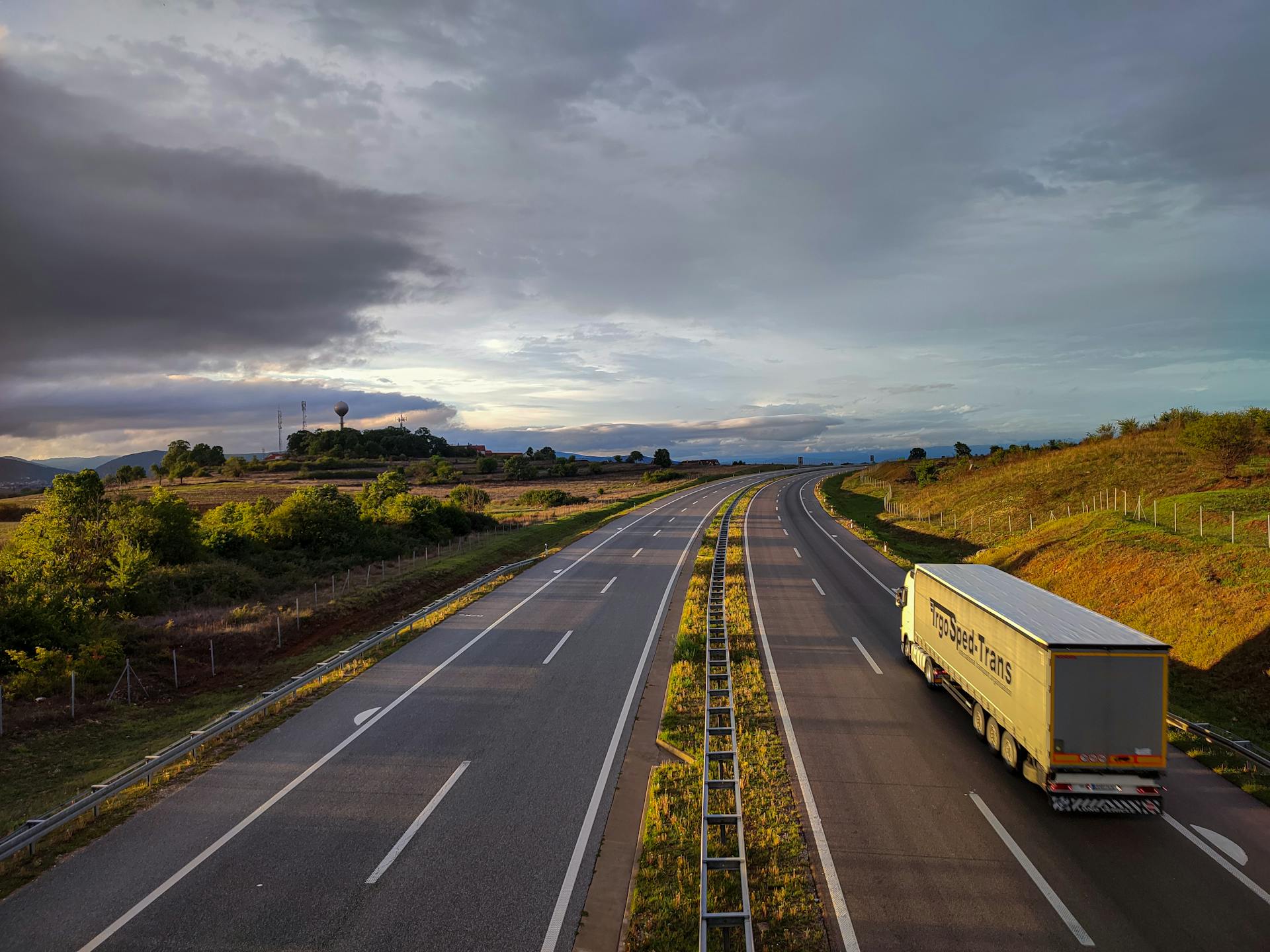
Idaho Truck Dispatch | Potato Country Reefer & Micron Semiconductors
We dispatch trucks for Idaho's #1-in-the-nation potato processing industry, Micron's semiconductor plant in Boise, and the phosphate mining freight of southeastern Idaho.
How much do truck dispatch rates run in Idaho?
Idaho-origin freight currently pays about $2.20-$2.65/mi for dry van, more for reefer and flatbed. Demand is driven by Potato Processing, Semiconductor Manufacturing and Dairy. Grow Trucking dispatches Idaho owner-operators and small fleets across 18 tracked lanes on a transparent percentage-of-gross fee, disclosed upfront.
- Tracked lanes
- 18
- Major freight hubs
- Boise, Meridian and Nampa
- Top industries
- Potato Processing and Semiconductor Manufacturing
Idaho rate and market data reviewed September 2026. See our dispatch fee structure.
Idaho Truck Dispatch Services
Idaho grows roughly 30% of all U.S. potatoes. Simplot, Lamb Weston, and McCain Foods run huge processing plants in the Twin Falls and Boise areas. They ship frozen french fries and potato products nationwide. It is Idaho's #1 outbound freight type. Harvest runs September-October. It creates a big reefer freight spike as fresh and processing potatoes move to cold storage and processing plants. Idaho ranks #3 in U.S. dairy production, with major processing plants in Jerome, Twin Falls, and Nampa. Boise's fast-growing tech sector has turned the Treasure Valley into one of the fastest-growing metros in the U.S. It is anchored by Micron Technology (the only U.S.-owned DRAM maker), along with HP and Clearwater Analytics. Southeastern Idaho (Pocatello, Soda Springs) sits on one of the world's largest phosphate rock deposits. Mosaic, Simplot, and Nutrien run mines and processing plants that make phosphate fertilizer for U.S. and export farming. Boise is the largest city within a 350-mile radius in every direction except Portland and Salt Lake City. That makes it the natural distribution hub for a large part of the Pacific Northwest interior.
Idaho has freight built around its #1-in-the-nation potato processing industry, Micron's semiconductor plant, and southeastern Idaho's phosphate mining. Demand is strong for reefer, hopper/bulk, and high-value technology freight.
Idaho's #1-in-the-nation potato processing industry creates dependable, high-volume reefer freight nationwide
Micron's semiconductor plants add a high-value freight piece that most mountain-state economies lack
Boise is the largest city within a 350-mile radius in every direction except Portland and Salt Lake City. That makes it a natural interior Pacific Northwest distribution hub
A varied freight base (potatoes, dairy, semiconductors, phosphate, timber) means less reliance on any one industry
What is the Idaho freight market like?
As of 2026, Idaho's Treasure Valley (Boise metro) grew roughly 3% a year from 2015-2022. It has drawn Amazon, PetIQ, and more manufacturing investment. Micron's semiconductor plants add a high-value freight piece that most mountain-state cities lack. That creates special shipping security needs.
Average Rates
Idaho-origin rates (mid-2026): dry van roughly $2.20-$2.65/mile (Boise distribution, Micron/tech freight). Reefer $2.55-$3.10/mile (frozen potato products, dairy, Idaho's #1 outbound freight type). Hopper/bulk premium rates for raw potatoes, grain, and sugar beets during harvest season (Sep-Nov), when trucks get swamped.
Market Trends
- •
Idaho's Treasure Valley (Boise metro) population growth of roughly 3% a year (2015-2022) keeps drawing Amazon, PetIQ, and manufacturing investment
- •
Micron Technology's Boise semiconductor plants, the only U.S.-owned DRAM maker, create high-value freight that needs special security. Most mountain-state cities lack this
- •
Idaho grows roughly 30% of all U.S. potatoes. Harvest (Sep-Oct) creates a big reefer freight spike that swamps regional trucks
- •
Southeastern Idaho's phosphate deposits (Pocatello, Soda Springs) keep supporting Mosaic, Simplot, and Nutrien fertilizer production for both U.S. and export farm markets
- •
Idaho ranks #3 in U.S. dairy production. Major processing plants in Jerome, Twin Falls, and Nampa add steady reefer freight beyond potato season
What are the busiest freight lanes out of Idaho?
Price these lanes with our free Trip Pre-Cost Calculator, Should I Take This Load? Calculator and Lane Profitability Analyzer.
Boise to Portland
Freight route from Boise, ID to Portland, OR (435 miles). Connects Boise to Oregon's port/apparel sector via I-84, a critical Pacific Northwest distribution stretch.
Rate: $1,022 - $1,196
Distance: 435 miles
Boise to Salt Lake City
Freight route connecting Boise, ID to Salt Lake City, UT (340 miles). Connects Boise to Utah's Mountain West crossroads via I-84.
Rate: $799 - $935
Distance: 340 miles
Boise to Seattle
Freight route connecting Boise, ID to Seattle, WA (495 miles). Connects Boise to the Pacific Northwest's port/tech sector via I-84/I-90.
Rate: $1,138 - $1,336
Distance: 495 miles
Boise to Twin Falls
Freight route connecting Boise, ID to Twin Falls, ID (130 miles). Connects Boise to the Magic Valley's potato/dairy processing corridor via I-84.
Rate: $344 - $396
Distance: 130 miles
Boise to Reno
Freight route connecting Boise, ID to Reno, NV (430 miles). Connects Boise to Northern Nevada's growing distribution hub via I-84/US-95.
Rate: $989 - $1,161
Distance: 430 miles
Boise to Las Vegas
Freight route connecting Boise, ID to Las Vegas, NV (570 miles). Connects Boise's potato/reefer freight base to Las Vegas via US-93.
Rate: $1,254 - $1,482
Distance: 570 miles
Boise to Denver
Freight route connecting Boise, ID to Denver, CO (830 miles). Denver's Mountain West distribution hub connects via I-84/I-80.
Rate: $1,784 - $2,116
Distance: 830 miles
Boise to Spokane
Freight route connecting Boise, ID to Spokane, WA (420 miles). Connects Boise to Eastern Washington's agricultural base via US-95.
Rate: $1,008 - $1,176
Distance: 420 miles
Boise to Pocatello
Freight route connecting Boise, ID to Pocatello, ID (235 miles). Connects Boise to southeastern Idaho's phosphate mining corridor via I-84/I-86.
Rate: $599 - $693
Distance: 235 miles
Boise to Sacramento
Freight route connecting Boise, ID to Sacramento, CA (520 miles). Connects Boise to Northern California's growing distribution market via I-80.
Rate: $1,170 - $1,378
Distance: 520 miles
Boise to Idaho Falls
Freight route connecting Boise, ID to Idaho Falls, ID (285 miles). Connects Boise to eastern Idaho's agricultural/nuclear research freight base via I-84/I-15.
Rate: $712 - $826
Distance: 285 miles
Boise to Missoula
Freight route connecting Boise, ID to Missoula, MT (400 miles). Connects Boise to Western Montana's timber/agricultural base via US-95/I-90.
Rate: $960 - $1,120
Distance: 400 miles
Boise to Phoenix
Freight route from Boise, ID to Phoenix, AZ (985 miles). Connects Boise's semiconductor/potato freight base to Phoenix's semiconductor market via I-84/I-15.
Rate: $2,019 - $2,413
Distance: 985 miles
Boise to Chicago
Freight route connecting Boise, ID to Chicago, IL (1635 miles). Chicago's intermodal hub status extends Boise's Midwest reach via I-84/I-80.
Rate: $3,106 - $3,760
Distance: 1635 miles
Boise to San Francisco
Freight route connecting Boise, ID to San Francisco, CA (660 miles). Connects Boise's tech sector to the Bay Area's tech/consumer market via I-80.
Rate: $1,452 - $1,716
Distance: 660 miles
Boise to Ogden
Freight route from Boise, ID to Ogden, UT (320 miles). Direct I-84 route the whole way southeast. A simple single-interstate corridor.
Rate: $752 - $880
Distance: 320 miles
Boise to Bend
Freight route connecting Boise, ID to Bend, OR (330 miles). Direct US-20/US-26 route west through Idaho and central Oregon high desert. A more remote, two-lane-highway-heavy alternative to the I-84 corridor.
Rate: $776 - $908
Distance: 330 miles
Boise to Sun Valley
Freight route connecting Boise, ID to Sun Valley, ID (155 miles). Direct US-20/ID-75 route northeast through the Wood River Valley.
Rate: $364 - $426
Distance: 155 miles
Search brokers & carriers in Idaho
Browse active freight brokers and for-hire carriers based in Idaho. The list comes live from FMCSA and updates weekly. Check bond, authority, and fleet size before you haul.
Freight Brokers
Active, FMCSA-bonded freight brokers based in Idaho.
Browse directoryDry Van Carriers
For-hire dry van carriers operating out of Idaho.
Browse directoryFlatbed Carriers
For-hire flatbed carriers operating out of Idaho.
Browse directoryReefer Carriers
For-hire reefer carriers operating out of Idaho.
Browse directoryTruck Parking
Official NHS rest stops and truck parking capacity across Idaho.
Browse directoryWhich industries drive freight demand in Idaho?
Potato Processing (Simplot, Lamb Weston, McCain Foods - Twin Falls, Idaho Falls)
Semiconductor Manufacturing (Micron Technology - Boise, only U.S.-owned DRAM manufacturer)
Dairy (#3 U.S. dairy state - Jerome, Twin Falls, Nampa)
Phosphate Mining & Fertilizer (Mosaic, Simplot, Nutrien - Pocatello, Soda Springs)
Timber & Forest Products (Potlatch Deltic, Boise Cascade)
Agriculture (sugar beets, wheat, barley, seed crops, hops, mint)
How does Idaho freight change by season?
Rates and weather change with the seasons. Here is a quarter-by-quarter look at rates, weather, and what to do in Idaho.
Q1 (Jan-Mar)
Rate Movement
Rates ease after the fall harvest surge, though winter mountain conditions can cause local spikes
Weather Impact
Mountain passes (Lookout Pass, Fourth of July Pass, Route 55) can close during heavy snow
Strategy
Build a big schedule buffer for mountain-route freight. Watch ITD conditions closely
Q2 (Apr-Jun)
Rate Movement
Rates get stronger as construction and tech-sector freight ramp up ahead of summer
Weather Impact
Improving as mountain passes clear
Strategy
Put Micron-related tech freight first, and get ready for the coming harvest season
Q3 (Jul-Sep)
Rate Movement
Rates hold steady, building toward the September harvest surge
Weather Impact
Generally favorable statewide
Strategy
Get trucks ready in advance for the coming potato/grain/sugar beet harvest overlap
Q4 (Oct-Dec)
Rate Movement
Rates spike sharply in September-October as potato, sugar beet, and grain harvests overlap and swamp trucks
Weather Impact
Winter weather and mountain-pass closures start returning by November
Strategy
Book trucks early. The harvest overlap is the single tightest truck window of the year in Idaho
Additional Seasonal Considerations
- •
Potato harvest (Sep-Oct) creates a massive reefer/hopper freight spike as fresh and processing potatoes move to cold storage
- •
Winter mountain-pass closures (Lookout Pass, Fourth of July Pass, Route 55) are a real risk Nov-Mar
- •
Micron/tech-sector freight runs steady all year, mostly apart from the season
- •
Sugar beet and grain harvest (Sep-Nov) adds to potato harvest and tightens regional trucks sharply
Where are the major freight hubs in Idaho?
The ports, inland ports, intermodal terminals, and distribution cities that move freight across Idaho. See where most of the freight is.
Distribution Cities
- Boise
- Meridian
- Nampa
- Idaho Falls
- Twin Falls
Ports & Intermodal Terminals
Micron Technology Boise Campus
The only U.S.-owned DRAM semiconductor maker. It creates high-value freight that needs special security and handling.
Twin Falls / Magic Valley Processing Corridor
A concentration of potato processing (Lamb Weston, Simplot) and dairy processing plants.
Pocatello Phosphate Processing Complex
Serves southeastern Idaho's phosphate mining and fertilizer production for Mosaic, Simplot, and Nutrien.
Where can trucks park and fuel in Idaho?
Truck parking and fuel info to help you plan your routes through Idaho.
Estimate fuel, tolls, and fuel tax with our free Fuel Cost Calculator, IFTA Tax Calculator and Toll Cost Estimator with Route Comparison.
Major Truck Stops
Flying J Travel Plaza — Boise (I-84, Exit 52)
📍 8322 Overland Road, Boise, ID 83709
220 truck parking spaces ($14/day fee), Denny's, CAT scale, tire shop, full-service diesel, and driver amenities. Near the I-84/I-184/US-20 interchange. It serves Boise's Treasure Valley distribution hub and Micron semiconductor corridor
Pilot Travel Center — Twin Falls (I-84, Exit 168)
📍 1601 Blue Lakes Boulevard North, Twin Falls, ID 83301
200 truck parking spaces ($13/day fee), Subway/Wendy's, CAT scale, tire service, diesel, and showers. Serves the Magic Valley potato processing corridor (Lamb Weston, Simplot) and dairy processing plants
TA Travel Center — Nampa (I-84, Exit 38)
📍 16576 North Marketplace Boulevard, Nampa, ID 83687
180 truck parking spaces ($12/day fee), Country Pride Restaurant, CAT scale, tire shop, diesel, and truck amenities. In the Treasure Valley, serving Boise metro distribution and dairy processing freight
Love's Travel Stop — Pocatello (I-15, Exit 71)
📍 3585 South 5th Avenue, Pocatello, ID 83204
190 truck parking spaces ($13/day fee), Arby's/Hardee's, CAT scale, tire service, diesel, and convenience store. Serves southeastern Idaho's phosphate mining corridor (Mosaic, Simplot, Nutrien) and the I-15/I-86 interchange
Flying J Travel Plaza — Coeur d'Alene (I-90, Exit 12)
📍 4601 East Seltice Way, Post Falls, ID 83854
150 truck parking spaces ($12/day fee), Denny's, CAT scale, diesel, and driver amenities. Serves Idaho's panhandle and the I-90 corridor that links Spokane to Montana via Lookout Pass and Fourth of July Pass
Pilot Travel Center — Idaho Falls (I-15, Exit 118)
📍 2745 South 25th East, Idaho Falls, ID 83404
170 truck parking spaces ($12/day fee), Subway, CAT scale, tire service, diesel, and showers. On I-15, serving the Idaho Falls potato processing corridor and Yellowstone-area tourism supply chain
Love's Travel Stop — Mountain Home (I-84, Exit 95)
📍 750 North 3rd East, Mountain Home, ID 83647
140 truck parking spaces ($10/day fee), Carl's Jr., CAT scale, diesel, and convenience store. Serves the I-84 midpoint between Boise and Twin Falls on the Snake River freight corridor
Maverik Adventure's First Stop — Burley (I-84, Exit 208)
📍 2120 Overland Avenue, Burley, ID 83318
110 truck parking spaces ($10/day fee), deli/restaurant, CAT scale, diesel, and convenience store. On I-84, serving the Magic Valley farm corridor between Twin Falls and Pocatello
Parking Difficulty
Moderate to High - Boise metro sees solid demand given growing Treasure Valley distribution volume and Micron tech freight. Peak congestion occurs Monday-Wednesday mornings when carriers position for outbound loads. Harvest season (Sep-Nov) creates temporary bottlenecks and scarce parking near processing plants in the Magic Valley (Twin Falls, Idaho Falls) Reefer/hopper carriers flood the region. Best availability: Sunday evenings and early Monday mornings in Boise. Late afternoons in Twin Falls outside harvest season.
- •Plan ahead for parking in metro areas
- •Use rest areas as a backup
- •Use parking apps to find available spots
Strategic Positioning Advice
Park where you can find loads fast and cut deadhead miles:
- •
Major Distribution Centers: Position near major distribution hubs in Boise for quick access to outbound loads.
- •
Busy Freight Routes: Stay near busy freight corridors to catch backhaul loads.
- •
Timing: Arrive when booking is busiest (usually early morning) to get the best rates.
Fuel price trend
How has the diesel price changed in Idaho?
EIA does not publish a separate diesel price for Idaho, so this is the weekly average for the Rocky Mountain region that Idaho is part of, over the last 12 months.
- Price this week
- $6.42/gal
- Since last week
- Up 12 cents
- Versus a year ago
- Up 79%
- Versus the U.S. average
- 15 cents above
Week of October 19, 2026
+$2.84 a gallon
U.S. average $6.28
Source: U.S. Energy Information Administration weekly retail on-highway diesel prices. Averages, not the price at one pump.
What are Idaho's truck weight limits and regulations?
Weight limits, permits, and emission rules. Know these rules to stay legal. Also see what to expect at a DOT roadside inspection, the federal size and weight limits, and the full federal trucking regulations reference.
Check weights and permits with our free Scale / Weigh Station Guide, Weight & Axle Load Calculator and Oversize / Overweight Permit Estimator.
Weight Limits
Federal limits on the Interstate System (23 CFR 658.17):
- Single Axle: 20,000 lbs
- Tandem Axle: 34,000 lbs
- Gross Vehicle Weight: 80,000 lbs, or less where the bridge formula sets a lower total
Other highways follow Idaho law, and some states allow more on non-Interstate roads. Check with the state's size and weight office before you load.
Size Limits
Width is a federal limit. Height and trailer length depend on the state:
- Width: 8.5 feet (102 inches) on the National Network (23 CFR 658.15)
- Height: Set by each state. There is no federal height limit, and FHWA says most states are between 13 ft 6 in and 14 ft. Check Idaho's limit for your route.
- Length: 53 ft semitrailers are common, but a state can apply its own kingpin-to-rear-axle rule
State-Specific Rules
- •
Idaho State Police and ITD work together on truck safety rules. They check trucks at weigh stations and with roving patrols
- •
Federal weight limits on the Interstate System: 80,000 lbs gross vehicle weight, 20,000 lbs single axle, 34,000 lbs tandem axle. Other highways follow state law, so check the state's size and weight office
- •
Size limits: 8.5 ft (102 in) width. Legal height is set by each state, and FHWA says most are 13 ft 6 in to 14 ft, so check the state's size and weight office. A 53 ft semitrailer is common, but state kingpin-to-rear-axle rules apply
- •
Oversize/overweight permits come from the Idaho Transportation Department
- •
Chain rules are common November through March on mountain passes (Lookout Pass, Fourth of July Pass, Route 55 Boise-McCall corridor)
- •
Idaho's diesel fuel tax is about $0.32/gallon (check the current rate with the Idaho State Tax Commission)
Permits
Idaho may require special permits for:
- •Oversized/overweight loads
- •Hazardous materials
- •Special route rules
Idaho: freight facts a driver should know
Idaho's colored permit levels let trucks run heavier by route
Idaho sorts oversize/overweight permits into color-coded route levels, each with its own weight cap. The lightest, Yellow, allows up to 22,500 pounds on a single axle; the heaviest, Black, allows up to 33,000 pounds single, 56,000 tandem, and 70,500 on a tridem axle group.
Source: Idaho Administrative Rules, IDAPA 39.03.01. Checked 30 Sep 2026.
A special permit allows up to 129,000 pounds on designated routes
Idaho's Extra Length/Excess Weight Permit allows trucks up to 129,000 pounds gross, but only on state-designated 'up to 129,000 pound' routes. Off those specific routes, this higher weight isn't available.
Source: Idaho Administrative Rules, IDAPA 39.03.01. Checked 30 Sep 2026.
How have Idaho freight rates moved, and what's next?
How Idaho freight rates have moved through recent market cycles, and what owner-operators and fleets should expect next. Use this to time lane commitments and rate negotiations. Before you accept a load, check it against our free rate benchmarker.
Recent Rate Cycles
Rate cycles that shaped the current Idaho freight market:
2018-2019
Strong market. Rates hit their peak because trucks were in short supply
2020
Rates swung at first because of the pandemic. Freight demand then bounced back hard
2021-2022
Record-high rates. E-commerce demand surged and trucks were in short supply
2023-2024
Rates fell sharply as truck supply passed demand. Smaller carriers left the market
2025-2026
The national market is recovering. Idaho's continued Treasure Valley population growth and Micron's semiconductor investment have kept freight demand strong
Market Correction Periods
Knowing when corrections hit Idaho helps with strategic planning:
- •
Q1 2023: Rates fell hard as trucks were added faster than freight grew
- •
Mid-2024: The market is settling, with supply and demand more in balance
- •
Pattern: Rate drops usually last 6–12 months before rates recover
Idaho Market Outlook
As of mid-2026, Idaho's freight market gains from three things. They are continued Treasure Valley population growth (roughly 3% annually), Micron's ongoing semiconductor investment, and the state's dependable potato/dairy processing base. Together they give a varied freight profile for a smaller state.
What Drives Rates in Idaho
- •Freight volume and demand (potato/dairy processing, semiconductor manufacturing, phosphate mining)
- •Truck supply, which tightened a lot from last year across the nation
- •Fuel costs and Idaho's diesel fuel tax (~$0.32/gallon)
- •Harvest-season timing (Sep-Nov) and Micron/tech-sector expansion cycles
How do I cut deadhead miles running freight in Idaho?
How to cut empty miles when you haul in and out of Idaho. See the outbound and inbound freight balance, the best return lanes, and where to park your truck. Run your own numbers with our free deadhead miles calculator.
Outbound Freight
50%
Roughly 50% of Idaho freight moves outbound. Outbound loads from Idaho's production and distribution centers typically book fastest early in the week.
Inbound Freight
50%
About 50% of the freight balance is inbound. Book your return load before you deliver. It is the biggest way to raise your rate-per-mile on these lanes.
Best Backhaul Lanes into Idaho
The strongest return lanes for repositioning back toward Idaho:
Portland to Boise
I-84 corridor that links two major Pacific Northwest freight markets
Rate: $2.35 - $2.75/mile
Salt Lake City to Boise
I-84/I-15 corridor connecting two Mountain West distribution/tech hubs
Rate: $2.35 - $2.75/mile
Las Vegas to Twin Falls
A high-volume produce corridor that moves Idaho reefer freight south
Rate: $2.50 - $2.90/mile
Positioning Strategies for Idaho
Where and when to stage to keep your next load close and your deadhead low:
- •
Park near Boise's I-84 corridor for the fastest access to outbound loads
- •
Track harvest timing (Sep-Nov) closely if you run reefer/hopper freight in the Magic Valley
- •
Use load boards to pre-book backhaul before longer cross-country hauls
What do experienced dispatchers know about running Idaho?
Hands-on tips from years of dispatching in Idaho.
Idaho's potato harvest (Sep-Oct) swamps regional trucks. Reefer and hopper/bulk demand spikes 40-60% above baseline as fresh and processing potatoes move from field to cold storage. Book ahead. Or expect real premium rates ($2.80-$3.40/mile reefer) if you can move into it.
Micron's semiconductor freight is high-value ($3.00-$3.50/mile). It takes real security and handling discipline: serialized tracking, temperature control for some parts, and white-glove handling. It is a distinct, less-competitive category from standard Boise distribution freight. It rewards carriers who invest in compliance.
Boise is the largest city within 350 miles (except Portland at 400 miles and Salt Lake City at 340 miles). That makes it a real interior Pacific Northwest distribution hub, not just a regional market. Amazon, PetIQ, and Walmart DCs all work in the Treasure Valley, giving steady dry van volume.
Boise's location and potato harvest timing (Sep-Nov) create Tuesday-Thursday rate premiums. Processors rush weekly shipments to distribution centers before weekend closures.
Mountain passes need real winter-driving prep. They include I-90 (Lookout Pass at the Montana border, Fourth of July Pass near Coeur d'Alene) and Route 55 (Boise-McCall corridor). Chain rules are common Nov-Mar, not occasional. Idaho State Police ticket aggressively for carriers without chains during activated chain-law periods.
Southeastern Idaho's phosphate freight (Pocatello, Soda Springs) is a dependable, less seasonal option to the potato-harvest freight rush. Mosaic, Simplot, and Nutrien fertilizer plants run all year. They create steady flatbed and hopper/bulk volume for DAP (diammonium phosphate) and MAP (monoammonium phosphate) shipments.
Simplot and Lamb Weston frozen french fries are Idaho's signature outbound reefer freight. They move to McDonald's, Burger King, and Wendy's distribution centers nationwide. These are high-volume, repeat freight relationships worth building broker connections around.
Idaho ranks #3 in U.S. dairy production (behind California and Wisconsin). Major processing plants sit in Jerome, Twin Falls, and Nampa. Dairy reefer freight gives steady year-round volume beyond potato season. That includes cheese, milk powder, and butter shipments to West Coast and Midwest markets.
Toyota's Buffalo, WV engine plant may be across the country. But Idaho's timber sector has reinvented itself around mass timber engineered wood products (cross-laminated timber, glulam beams) for modern building. This is a growing flatbed freight category. It differs from traditional lumber, with higher value and tighter handling rules.
Natural gas from the Marcellus and Utica Shale... wait, that's West Virginia. Idaho's natural gas activity is minimal. However, the state's 79% timberland coverage (mostly privately owned) creates steady timber and forest products flatbed freight. This is especially true of Potlatch Deltic and Boise Cascade operations in northern Idaho.
Remember: These tips come from real dispatching work in Idaho. Markets change, but these basics still help you earn more and cut deadhead miles.
How have drivers near Idaho grown with Grow Trucking?
+$2,550/week after moving to $2.80/mi on oversize machinery / wind energy freight. Oversize machinery loads optimized for maximum revenue.
Read the case study+$2,010/week after moving to $2.62/mi on general freight / consumer goods freight. Language barriers removed, unfair lease terms renegotiated.
Read the case study+$1,950/week after moving to $2.70/mi on chemical / industrial hazmat freight. Hazmat premium rates recovered and CSA violations cleared.
Read the case studyIdaho Freight FAQs
Comprehensive answers to common questions about trucking and dispatch in Idaho. State-specific regulations, costs, and operating strategies.
Yes. You need a USDOT number and an MC number for interstate for-hire hauling. You also need Idaho IRP (International Registration Plan) and IFTA (International Fuel Tax Agreement) registration through the Idaho Transportation Department. Idaho does not require a separate intrastate motor carrier permit for interstate-authorized carriers. IRP/IFTA registration usually takes 7-10 business days once your federal authority is active.
Federal minimum liability coverage is $750,000 for general freight and $1,000,000 for hazardous materials. You also need cargo insurance (usually $100,000 minimum) and physical damage coverage for financed equipment. Idaho adds no state insurance rules beyond federal minimums. But many shippers and brokers require $1,000,000 liability as standard. Micron/tech-sector freight may need more security-related coverage and higher cargo limits ($500,000-$1,000,000 for high-value electronics). Phosphate mining and chemical freight may need specialized hazmat coverage. Confirm current rules with your insurance provider, and check broker-specific rules before you accept loads.
As of mid-2026, reefer and hopper/bulk rates spike sharply during the Sep-Oct potato/sugar beet/grain harvest overlap. Reefer for frozen potato products pays $2.80-$3.40/mile. Hopper for raw potatoes pays $2.60-$3.00/mile. Micron semiconductor freight pays premium rates all year ($3.00-$3.50/mile for high-value, specialized handling). Frozen potato product reefer freight (Simplot, Lamb Weston) runs $2.55-$3.10/mile all year to McDonald's and Burger King DCs nationwide. Phosphate fertilizer flatbed/hopper runs $2.50-$2.95/mile. Standard dry van out of Boise runs $2.20-$2.65/mile.
Yes. Idaho has a dependable potato/dairy processing base (30% of all U.S. potatoes, #3 in dairy). It also has a growing Treasure Valley tech sector (Micron, Amazon, PetIQ) and phosphate mining freight. Together they give a smaller state real variety. Boise's position as the largest city within 350 miles makes it an excellent interior Pacific Northwest distribution hub for building balanced lane networks. New operators should prepare for the Sep-Nov harvest capacity crunch. That is when reefer/hopper demand overwhelms available trucks. They should also prepare for winter mountain-pass conditions (chain rules are common Nov-Mar on I-90 and Route 55). Idaho's diesel fuel tax (~$0.32/gallon) is moderate compared to neighboring states.
Idaho diesel fuel tax is about $0.32 per gallon as of 2026. Add the federal tax ($0.244/gallon) and the total is about $0.564 per gallon. Retail diesel in the Rocky Mountain region, which includes Idaho, averages $6.42/gallon as of October 19, 2026 (EIA weekly average), about 15 cents above the national average of $6.28. That price is up 12 cents from last week and 79% above a year ago. Idaho's Mountain West location brings operating points to watch. There are winter chain rules on mountain passes (I-84, I-15), farm freight seasons (potatoes, grains), and Boise area distribution corridors. Idaho's fuel tax is moderate compared to neighbors. It is lower than Washington ($0.595/gal) and Oregon's weight-mile system, but higher than Utah ($0.379/gal). Source: IFTA matrix, Idaho State Tax Commission, AAA, verified September 2026.
Idaho's potato harvest (Sep-Oct) is a massive freight event that needs advance planning. For reefer freight (frozen french fries, tots, hash browns), build relationships with 3PLs that specialize in food-grade logistics. C.H. Robinson, Coyote Logistics, and Total Quality Logistics have Simplot and Lamb Weston contracts. Reefer equipment must meet food-grade sanitation standards and hold 0-10°F for frozen products. For hopper/bulk freight (raw potatoes from field to processing plant), hopper trailers must be clean, dry, and properly tarped. Peak demand runs late September through mid-October for processing potatoes. Rates spike 40-60% above baseline ($2.80-$3.40/mile reefer, $2.60-$3.00/mile hopper). Pre-book trucks with processors and brokers 3-4 weeks ahead of harvest to get premium rates. After harvest, cold storage facilities in Twin Falls and Idaho Falls create steady reefer volume November-August.
Micron Technology's Boise semiconductor operations create high-value, specialized freight distinct from standard distribution. This includes inbound raw materials (silicon wafers, photoresist chemicals, ultra-pure gases) and manufacturing equipment (lithography machines, etchers, deposition tools). It also includes outbound DRAM chips for data centers, smartphones, and automotive applications. Rates carry premiums ($3.00-$3.50/mile) because of specialized rules. These include serialized tracking for inventory control, temperature/humidity monitoring for some components, and white-glove handling to prevent damage. They also include security protocols for high-value loads (often $1M+ per truckload). Build relationships with tech-sector logistics providers: DB Schenker, Kuehne + Nagel, and XPO Logistics have Micron contracts. Cargo insurance rules are usually $500,000-$1,000,000 minimum. Micron freight runs steady year-round, independent of harvest seasonality, providing steady volume for carriers who invest in compliance.
Idaho's mountain passes need serious winter prep. Lookout Pass on I-90 (Montana border, elevation 4,725 ft) and Fourth of July Pass near Coeur d'Alene (elevation 3,081 ft) are notoriously dangerous November-March. Chain laws turn on during snow/ice conditions. Route 55 (Boise-McCall corridor) is even harder for commercial vehicles. When chain laws are on, commercial vehicles MUST carry chains and be ready to put them on. Idaho State Police ticket aggressively ($150-$500) for breaking the rule. Check 511.idaho.gov for real-time conditions before you enter mountain corridors. Most carriers stage extra chains at truck stops in Coeur d'Alene (I-90) and Boise (Route 55) during winter months. Snow tires alone do not exempt carriers from chain rules. Plan extra transit time (add a 2-4 hour buffer) for mountain crossings in winter. Think about other routing via I-84 (southern Idaho, lower elevation) if weather is severe on I-90.
Boise and Salt Lake City are both important Mountain West distribution hubs, each with its own strengths. Boise is the largest city within 350 miles in every direction except Portland (400 miles) and Salt Lake City (340 miles). That makes it the natural interior Pacific Northwest distribution point. It serves eastern Oregon, southern Idaho, eastern Washington, and western Montana. SLC has a larger population (1.3M metro vs Boise's 730K) and better interstate links (I-15/I-80/I-84 junction versus Boise's I-84 only). Boise has lower real estate costs (industrial space runs 15-25% below SLC rates). It has faster access to Portland and Seattle markets (I-84 west). It also has the Micron semiconductor cluster, which gives high-value tech freight that differs from standard consumer distribution. SLC offers next-day reach to Las Vegas, Reno, and Denver at once. That means wider Mountain West coverage from a single DC. For Pacific Northwest-focused operations, Boise is the smarter pick. For wider Mountain West reach, SLC wins.
Southeastern Idaho (Pocatello, Soda Springs) sits on one of the world's largest phosphate rock deposits. Mosaic, Simplot, and Nutrien run mines and processing plants there. This creates year-round flatbed and hopper/bulk freight for phosphate fertilizer products. They include DAP (diammonium phosphate), MAP (monoammonium phosphate), and phosphoric acid. Rates run $2.50-$2.95/mile for flatbed/hopper. Oversize/overweight mining equipment earns higher premiums. This freight is dependable and less seasonal than potato harvest. Fertilizer plants run year-round for U.S. and export farm markets. Phosphate rock mining can need specialized heavy-haul equipment and permits for oversize loads. Build relationships with farm chemical logistics providers and mining-equipment brokers. A hazmat endorsement is required for phosphoric acid tanker freight. The Pocatello rail hub (Union Pacific) gives intermodal options for long-haul phosphate shipments. That creates drayage chances for short-haul carriers.
Keep exploring dispatch options
Tools, equipment guides and nearby states relevant to running freight in and out of Idaho.
By equipment
Free tools
- Trip Pre-Cost Calculator
- Toll Cost Estimator with Route Comparison
- Load Board Rate Benchmarker
- Deadhead Miles Calculator
- Fuel Cost Calculator
- IFTA Tax Calculator
- Scale / Weigh Station Guide
- Cost Per Mile Calculator
- Diesel prices today
- Diesel tax by state
- Truck idling laws by state
- Truck speed limits by state
- Truck chain laws by state
- Truck lane laws by state
- Truck height and length limits by state
- Rest area parking limits by state
- Rocky Mountain diesel prices
- Startup Cost Calculator
- Fuel Surcharge Calculator
- All Free Tools
Services
More from Grow Trucking
Ready to Move Freight in Idaho?
Secure Your Strategy:
Apply for your FREE Custom 90-Day Growth Plan (a $1,500 value). It starts with a Business Audit that finds where you lose money and sets your profit goals.
Guarantee Your GROWTH:
Start your 90-day partnership to implement the plan. We back it with our "Growth or Your Money Back" Guarantee.