
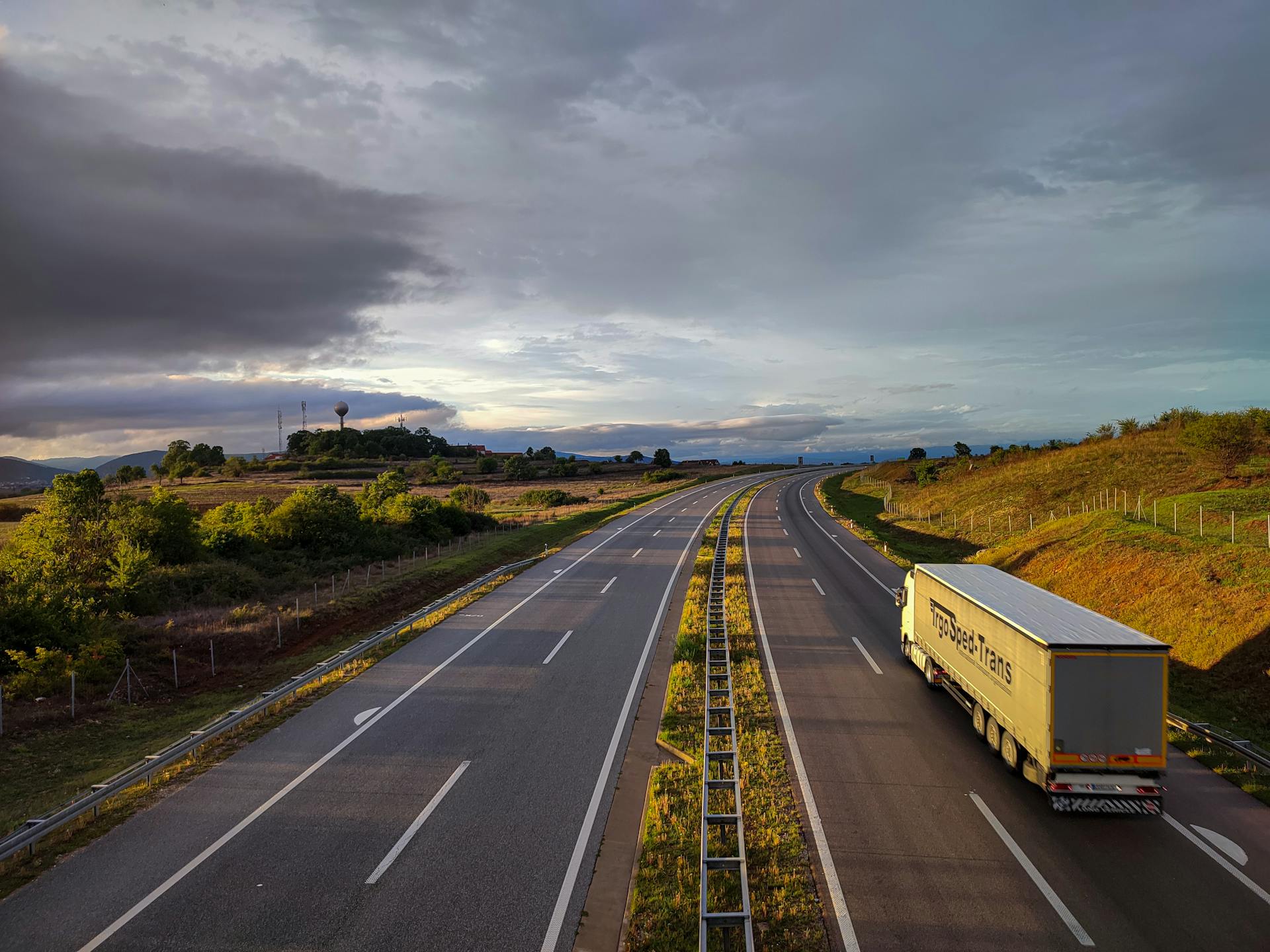
Utah Truck Dispatch | Salt Lake City & Silicon Slopes Freight
We dispatch trucks for Salt Lake City's unmatched Mountain West crossroads position and the Silicon Slopes tech corridor. We also cover the 16,000-acre Utah Inland Port, the largest inland port development in America.
How much do truck dispatch rates run in Utah?
Utah-origin freight currently pays about $2.20-$2.65/mi for dry van, more for reefer and flatbed. Demand is driven by Technology, Retail Distribution and Mining. Grow Trucking dispatches Utah owner-operators and small fleets across 15 tracked lanes on a transparent percentage-of-gross fee, disclosed upfront.
- Tracked lanes
- 15
- Major freight hubs
- Salt Lake City, Provo and Ogden
- Top industries
- Technology and Retail Distribution
Utah rate and market data reviewed September 2026. See our dispatch fee structure.
Utah Truck Dispatch Services
Salt Lake City sits at the intersection of I-15 and I-80. I-15 is the main north-south artery connecting Las Vegas, LA, Boise, and Idaho Falls. I-80 is the main east-west transcontinental corridor. Rail access from both BNSF (Northern Transcon) and Union Pacific (Overland Route) adds to it. That makes it an unmatched distribution hub for the Mountain West. SLC is the only Mountain West city where a single distribution center can reach Las Vegas, Boise, Reno, and Denver next day. The Utah Inland Port Authority manages a 16,000-acre development zone near Salt Lake City International Airport. It is designed to be the largest inland port in America, sorting and distributing West Coast container traffic. Silicon Slopes is the tech corridor from Salt Lake City to Provo (Lehi, Draper, American Fork). It hosts Adobe, Qualtrics, Domo, Pluralsight, and the NSA's Utah Data Center. That creates high-value expedited freight for server deployments and data center builds. Kennecott's Bingham Canyon Mine, the world's largest open-pit mine, adds copper/molybdenum freight. Hill Air Force Base's Ogden Air Logistics Complex maintains F-35 fighters and ICBM systems.
Utah offers freight opportunities anchored by Salt Lake City's unmatched Mountain West crossroads position, the Silicon Slopes tech corridor, and the developing Utah Inland Port. Demand is strong for dry van, expedited, and specialized mining/defense freight.
SLC is the only Mountain West city where a single DC reaches Las Vegas, Boise, Reno, and Denver next day
The Utah Inland Port (16,000 acres) is designed to be the largest inland port in America. It creates enormous drayage and distribution chances as it develops
Silicon Slopes' tech density creates dependable, high-value expedited freight that differs from standard dry van
Utah's fastest-in-the-nation GDP growth turns directly into growing freight volume across nearly every category
What is the Utah freight market like?
As of 2026, Utah has among the fastest GDP growth in the nation. Silicon Slopes tech expansion, population growth (1.5%+ annually), and continued Utah Inland Port development drive it. Expedited freight tied to data center builds and server deployments often needs booking 5-7 days out. Spot rates spike 15-25% in peak weeks.
Average Rates
Utah-origin rates (mid-2026): dry van roughly $2.20-$2.65/mile (Salt Lake City distribution). Flatbed runs $2.55-$3.10/mile (mining equipment, construction, defense/aerospace). Reefer runs $2.45-$2.85/mile. Expedited/high-security tech freight (data center builds, server deployments) earns real premiums and needs advance booking.
Market Trends
- •
The Utah Inland Port Authority's 16,000-acre development zone near Salt Lake City International Airport is designed to be the largest inland port in America. It sorts West Coast container traffic for rail/air/truck distribution
- •
Silicon Slopes (Lehi, Draper, Provo) keeps attracting software, SaaS, and biotech investment. It has a density of tech employers that is unusual for a market this size
- •
Utah's population growth (1.5%+ annually) keeps driving massive warehouse expansion in Salt Lake City's western suburbs. Amazon, UPS, and major retailers are behind it
- •
Data center builds and server deployments in Silicon Slopes create high-value expedited freight demand. It often needs 5-7 day advance booking, with 15-25% spot rate spikes in peak weeks
- •
Utah has the fastest GDP growth in the nation. Tech-sector expansion, population growth, and its unmatched I-15/I-80 crossroads position drive it
What are the busiest freight lanes out of Utah?
Price these lanes with our free Trip Pre-Cost Calculator, Should I Take This Load? Calculator and Lane Profitability Analyzer.
Salt Lake City to Denver
Freight route connecting Salt Lake City, UT to Denver, CO (525 miles). Denver's Mountain West distribution hub connects via I-80/I-70, crossing the Continental Divide.
Rate: $1,208 - $1,418
Distance: 525 miles
Salt Lake City to Las Vegas
Freight route connecting Salt Lake City, UT to Las Vegas, NV (420 miles). Connects Salt Lake City to Las Vegas's convention/hospitality freight base via I-15.
Rate: $966 - $1,134
Distance: 420 miles
Salt Lake City to Boise
Freight route connecting Salt Lake City, UT to Boise, ID (340 miles). Connects Salt Lake City to Idaho's agricultural/tech distribution base via I-84.
Rate: $799 - $935
Distance: 340 miles
Salt Lake City to Los Angeles
Freight route connecting Salt Lake City, UT to Los Angeles, CA (715 miles). Connects Salt Lake City's crossroads position to Southern California's massive consumer market via I-15.
Rate: $1,537 - $1,823
Distance: 715 miles
Salt Lake City to Phoenix
Freight route connecting Salt Lake City, UT to Phoenix, AZ (655 miles). Connects Salt Lake City to Phoenix's semiconductor/consumer market via I-15/US-93.
Rate: $1,441 - $1,703
Distance: 655 miles
Salt Lake City to Reno
Freight route connecting Salt Lake City, UT to Reno, NV (520 miles). Connects Salt Lake City to Northern Nevada's growing distribution hub via I-80.
Rate: $1,170 - $1,378
Distance: 520 miles
Salt Lake City to Albuquerque
Freight route connecting Salt Lake City, UT to Albuquerque, NM (605 miles). Connects Salt Lake City to New Mexico's distribution/energy base via I-15/I-40.
Rate: $1,361 - $1,603
Distance: 605 miles
Salt Lake City to Chicago
Freight route connecting Salt Lake City, UT to Chicago, IL (1385 miles). Chicago's intermodal hub status extends Salt Lake City's Midwest reach via I-80.
Rate: $2,701 - $3,255
Distance: 1385 miles
Salt Lake City to Portland
Freight route connecting Salt Lake City, UT to Portland, OR (765 miles). Connects Salt Lake City to Oregon's port/apparel sector via I-84.
Rate: $1,645 - $1,951
Distance: 765 miles
Salt Lake City to Seattle
Freight route connecting Salt Lake City, UT to Seattle, WA (840 miles). Connects Salt Lake City to the Pacific Northwest's port/tech sector via I-84/I-90.
Rate: $1,806 - $2,142
Distance: 840 miles
Salt Lake City to Provo
Freight route connecting Salt Lake City, UT to Provo, UT (45 miles). Connects Salt Lake City to the Silicon Slopes tech corridor's southern end.
Rate: $126 - $148
Distance: 45 miles
Salt Lake City to Idaho Falls
Freight route connecting Salt Lake City, UT to Idaho Falls, ID (205 miles). Connects Salt Lake City to eastern Idaho's agricultural freight base via I-15.
Rate: $523 - $605
Distance: 205 miles
Salt Lake City to Ogden
Freight route connecting Salt Lake City, UT to Ogden, UT (40 miles). Connects Salt Lake City to Hill Air Force Base's defense/aerospace freight base.
Rate: $112 - $132
Distance: 40 miles
Salt Lake City to Cheyenne
Freight route connecting Salt Lake City, UT to Cheyenne, WY (435 miles). Connects Salt Lake City to Wyoming's energy freight base via I-80.
Rate: $1,022 - $1,196
Distance: 435 miles
Salt Lake City to San Francisco
Freight route connecting Salt Lake City, UT to San Francisco, CA (735 miles). Connects Salt Lake City's tech corridor to the Bay Area's tech/consumer market via I-80.
Rate: $1,580 - $1,874
Distance: 735 miles
Search brokers & carriers in Utah
Browse active freight brokers and for-hire carriers based in Utah. The list comes live from FMCSA and updates weekly. Check bond, authority, and fleet size before you haul.
Freight Brokers
Active, FMCSA-bonded freight brokers based in Utah.
Browse directoryDry Van Carriers
For-hire dry van carriers operating out of Utah.
Browse directoryFlatbed Carriers
For-hire flatbed carriers operating out of Utah.
Browse directoryReefer Carriers
For-hire reefer carriers operating out of Utah.
Browse directoryTruck Parking
Official NHS rest stops and truck parking capacity across Utah.
Browse directoryWhich industries drive freight demand in Utah?
Technology (Silicon Slopes: Adobe, Qualtrics, Domo, Pluralsight, NSA Utah Data Center)
Retail Distribution (Amazon, Walmart, Home Depot, Target DCs in Salt Lake Valley)
Mining (Kennecott Bingham Canyon Mine, world's largest open-pit copper mine; molybdenum, gold, salt)
Aerospace & Defense (Hill Air Force Base/Ogden Air Logistics Complex: F-35 and ICBM maintenance)
Life Sciences & Biotech (growing Utah County cluster)
Outdoor Gear Manufacturing
How does Utah freight change by season?
Rates and weather change with the seasons. Here is a quarter-by-quarter look at rates, weather, and what to do in Utah.
Q1 (Jan-Mar)
Rate Movement
Rates ease after the Q4 holiday surge, though ski-season consumer freight adds some volume
Weather Impact
Mountain pass chain laws are actively in effect. Parleys Canyon and the Wasatch corridor need real winter planning
Strategy
Build a schedule buffer for mountain-pass freight. Watch UDOT conditions closely
Q2 (Apr-Jun)
Rate Movement
Rates get stronger as construction and tech-sector freight ramp up ahead of summer
Weather Impact
Improving as mountain passes clear
Strategy
Focus on Silicon Slopes expedited tech freight and mining/construction flatbed freight
Q3 (Jul-Sep)
Rate Movement
Rates hold near seasonal highs on retail restocking and continued tech-sector demand
Weather Impact
Generally favorable statewide
Strategy
Focus on Salt Lake City distribution volume and Utah Inland Port drayage as it develops
Q4 (Oct-Dec)
Rate Movement
The highest rates of the year, peaking in November on holiday retail freight
Weather Impact
Winter weather and chain-law rules return by late November
Strategy
Book capacity early and watch mountain-pass conditions as winter weather returns
Additional Seasonal Considerations
- •
Winter chain-law rules apply on mountain passes Oct 1-Apr 30, turned on as needed during storms
- •
Data center/tech expedited freight runs steady year-round, mostly apart from season
- •
Ski season (Dec-Mar) raises Park City/Wasatch Front consumer and hospitality freight
- •
The Q4 holiday freight surge (Nov-Dec) hits Salt Lake City's distribution network
Where are the major freight hubs in Utah?
The ports, inland ports, intermodal terminals, and distribution cities that move freight across Utah. See where most of the freight is.
Distribution Cities
- Salt Lake City
- Provo
- Ogden
- West Valley City
- Lehi
Ports & Intermodal Terminals
Utah Inland Port (16,000 acres)
Designed to be the largest inland port in America, connecting rail, air, and truck freight near Salt Lake City International Airport. It sorts West Coast container traffic (LA/Long Beach, Oakland) for distribution.
Salt Lake City International Airport (rebuilt 2020-2024)
A newly rebuilt airport supporting growing cargo operations, especially for Silicon Slopes tech-sector expedited freight.
BNSF/Union Pacific Rail Junction (Salt Lake City)
Dual Class I rail access (BNSF Northern Transcon, Union Pacific Overland Route) supporting rail-to-truck transfer.
Where can trucks park and fuel in Utah?
Truck parking and fuel info to help you plan your routes through Utah.
Estimate fuel, tolls, and fuel tax with our free Fuel Cost Calculator, IFTA Tax Calculator and Toll Cost Estimator with Route Comparison.
Major Truck Stops
Flying J Travel Plaza — North Salt Lake (I-15, Exit 315)
📍 1075 North Redwood Road, North Salt Lake, UT 84054
250 truck parking spaces ($15/day fee), Denny's, CAT scale, tire shop, full-service diesel, truck wash, and driver amenities. It sits near the I-15/I-80/I-215 interchange, serving Salt Lake City's crossroads distribution hub
Love's Travel Stop — Salt Lake City West (I-80, Exit 104)
📍 2005 South 9200 West, West Valley City, UT 84088
220 truck parking spaces ($14/day fee), Arby's/Hardee's, CAT scale, tire service, diesel, and convenience store. It serves the I-80 corridor and Utah Inland Port development zone
Pilot Travel Center — Brigham City (I-15, Exit 363)
📍 1 North 1100 West, Brigham City, UT 84302
180 truck parking spaces ($12/day fee), Subway/Wendy's, CAT scale, tire service, diesel, and showers. Positioned on I-15 serving the corridor between Salt Lake City and Idaho
TA Travel Center — Lehi (I-15, Exit 284)
📍 2901 West Main Street, Lehi, UT 84043
200 truck parking spaces ($14/day fee), Country Pride Restaurant, CAT scale, tire shop, diesel, and truck amenities. It serves the Silicon Slopes tech corridor (Lehi, Draper, American Fork)
Maverik Adventure's First Stop — Parleys Summit (I-80, Exit 133)
📍 6751 Parleys Canyon Road, Salt Lake City, UT 84121
100 truck parking spaces ($10/day fee), deli/restaurant, CAT scale, diesel, and convenience store. It sits at Parleys Canyon summit on I-80, serving the mountain pass between Salt Lake City and Park City
Flying J Travel Plaza — Ogden (I-15, Exit 347)
📍 3950 West 2100 South, West Haven, UT 84401
190 truck parking spaces ($13/day fee), Denny's, CAT scale, tire service, diesel, and driver amenities. Serves Ogden and Hill Air Force Base logistics corridor
Love's Travel Stop — Beaver (I-15, Exit 112)
📍 1451 North Main Street, Beaver, UT 84713
140 truck parking spaces ($10/day fee), Carl's Jr., CAT scale, diesel, and convenience store. Serves the I-15 southern Utah corridor between Salt Lake City and Las Vegas
Pilot Travel Center — Spanish Fork (I-15, Exit 258)
📍 2155 North Main Street, Spanish Fork, UT 84660
150 truck parking spaces ($12/day fee), Subway, CAT scale, tire service, diesel, and showers. Positioned on I-15 serving the corridor between Salt Lake City and Provo
Parking Difficulty
Moderate to High. Salt Lake City metro sees big demand because of its crossroads/distribution status. 25,000+ trucks a day run through the I-15 corridor. Peak congestion comes Monday-Wednesday mornings, when carriers position for outbound loads. Mountain-pass parking (Parleys Canyon on I-80, Wasatch corridor on I-15) can be tight during winter storm chain-law activations (Oct 1-Apr 30). Best availability: Sunday evenings and early Monday mornings outside of winter storm events. Late afternoons on the I-15 southern Utah corridor.
- •Plan ahead for parking in metro areas
- •Use rest areas as a backup
- •Use parking apps to find available spots
Strategic Positioning Advice
Park where you can find loads fast and cut deadhead miles:
- •
Major Distribution Centers: Position near major distribution hubs in Salt Lake City for quick access to outbound loads.
- •
Busy Freight Routes: Stay near busy freight corridors to catch backhaul loads.
- •
Timing: Arrive when booking is busiest (usually early morning) to get the best rates.
Fuel price trend
How has the diesel price changed in Utah?
EIA does not publish a separate diesel price for Utah, so this is the weekly average for the Rocky Mountain region that Utah is part of, over the last 12 months.
- Price this week
- $6.42/gal
- Since last week
- Up 12 cents
- Versus a year ago
- Up 79%
- Versus the U.S. average
- 15 cents above
Week of October 19, 2026
+$2.84 a gallon
U.S. average $6.28
Source: U.S. Energy Information Administration weekly retail on-highway diesel prices. Averages, not the price at one pump.
What are Utah's truck weight limits and regulations?
Weight limits, permits, and emission rules. Know these rules to stay legal. Also see what to expect at a DOT roadside inspection, the federal size and weight limits, and the full federal trucking regulations reference.
Check weights and permits with our free Scale / Weigh Station Guide, Weight & Axle Load Calculator and Oversize / Overweight Permit Estimator.
Weight Limits
Federal limits on the Interstate System (23 CFR 658.17):
- Single Axle: 20,000 lbs
- Tandem Axle: 34,000 lbs
- Gross Vehicle Weight: 80,000 lbs, or less where the bridge formula sets a lower total
Other highways follow Utah law, and some states allow more on non-Interstate roads. Check with the state's size and weight office before you load.
Size Limits
Width is a federal limit. Height and trailer length depend on the state:
- Width: 8.5 feet (102 inches) on the National Network (23 CFR 658.15)
- Height: Set by each state. There is no federal height limit, and FHWA says most states are between 13 ft 6 in and 14 ft. Check Utah's limit for your route.
- Length: 53 ft semitrailers are common, but a state can apply its own kingpin-to-rear-axle rule
State-Specific Rules
- •
Utah Highway Patrol and UDOT jointly enforce commercial vehicle safety. They check trucks at weigh stations and with roving patrols
- •
Federal weight limits on the Interstate System: 80,000 lbs gross vehicle weight, 20,000 lbs single axle, 34,000 lbs tandem axle. Other highways follow state law, so check the state's size and weight office
- •
Size limits: 8.5 ft (102 in) width. Legal height is set by each state, and FHWA says most are 13 ft 6 in to 14 ft, so check the state's size and weight office. A 53 ft semitrailer is common, but state kingpin-to-rear-axle rules apply
- •
Oversize/overweight permits come from UDOT
- •
Utah's chain laws apply on most mountain passes (I-80 Parleys Canyon, I-15 Wasatch corridor) from October 1 through April 30. UDOT turns them on as needed during storms
- •
Utah has unusually strict CDL drug-testing and reporting rules beyond federal minimums. Verify current rules if you relocate from elsewhere
- •
Utah's diesel fuel tax is about $0.365/gallon and is indexed to inflation (verify the current rate with the Utah State Tax Commission)
Permits
Utah may require special permits for:
- •Oversized/overweight loads
- •Hazardous materials
- •Special route rules
Utah: freight facts a driver should know
Utah's permit weight maximums scale by axle group
Utah's overweight permit tables allow up to 29,500 pounds on a single axle, 50,000 pounds on a tandem axle, and 61,750 pounds on a tridem axle for non-divisible loads. Loads over 125,000 pounds gross only qualify for single-trip permits, not semi-annual or annual ones.
Source: Utah Administrative Code R909-2-25. Checked 30 Sep 2026.
You can only enter Utah without a permit at three ports
If you're hauling an oversize or overweight load into Utah without a permit already in hand, you can only enter at three specific ports of entry: St. George on I-15 from Arizona, Echo on westbound I-80 from Wyoming, or Wendover on eastbound I-80 from Nevada. Anywhere else, get the permit before you cross the line.
Source: Utah Department of Transportation, motor carriers oversize/overweight provisions. Checked 30 Sep 2026.
Active weather alerts for Utah freight routes
Flood Watch
Uncompahgre Plateau/Dallas Divide; Northwestern San Juan Mountains; Southwest San Juan Mountains; Paradox Valley/Lower Dolores River; Four Corners/Upper Dolores River; Animas River Basin; San Juan River Basin; Southeast Utah; Arches/Grand Flat; La Sal and Abajo Mountains; Canyonlands/Natural Bridges
Active until Oct 26, 12:00 AM UTC
Flood Warning
Montezuma, CO; San Juan, UT
Active until Oct 26, 7:00 PM UTC
Flood Warning
Kane, UT; San Juan, UT
Active until Oct 26, 5:00 PM UTC
Flood Warning
Mesa, CO; Montrose, CO; Grand, UT
Active until Oct 25, 4:00 PM UTC
Source: National Weather Service. Refreshes with this page.
How have Utah freight rates moved, and what's next?
How Utah freight rates have moved through recent market cycles, and what owner-operators and fleets should expect next. Use this to time lane commitments and rate negotiations. Before you accept a load, check it against our free rate benchmarker.
Recent Rate Cycles
Rate cycles that shaped the current Utah freight market:
2018-2019
Strong market. Rates hit their peak because trucks were in short supply
2020
Rates swung at first because of the pandemic. Freight demand then bounced back hard
2021-2022
Record-high rates. E-commerce demand surged and trucks were in short supply
2023-2024
Rates fell sharply as truck supply passed demand. Smaller carriers left the market
2025-2026
The national market is recovering. Utah's fastest-in-the-nation GDP growth and Silicon Slopes tech expansion have kept freight demand strong
Market Correction Periods
Knowing when corrections hit Utah helps with strategic planning:
- •
Q1 2023: Rates fell hard as trucks were added faster than freight grew
- •
Mid-2024: The market is settling, with supply and demand more in balance
- •
Pattern: Rate drops usually last 6–12 months before rates recover
Utah Market Outlook
As of mid-2026, Utah's freight market gains from the fastest GDP growth in the nation and continued Utah Inland Port development. Silicon Slopes' expanding tech/data-center freight base adds to it. That makes Salt Lake City an increasingly important Mountain West distribution hub.
What Drives Rates in Utah
- •Freight volume and demand (retail distribution, tech/data center, mining, aerospace/defense)
- •Truck supply, which tightened a lot from last year across the nation
- •Fuel costs and Utah's diesel fuel tax (~$0.365/gallon, indexed to inflation)
- •Utah Inland Port development progress and Silicon Slopes tech-sector expansion
How do I cut deadhead miles running freight in Utah?
How to cut empty miles when you haul in and out of Utah. See the outbound and inbound freight balance, the best return lanes, and where to park your truck. Run your own numbers with our free deadhead miles calculator.
Outbound Freight
50%
Roughly 50% of Utah freight moves outbound. Outbound loads from Utah's production and distribution centers typically book fastest early in the week.
Inbound Freight
50%
About 50% of the freight balance is inbound. Book your return load before you deliver. It is the biggest way to raise your rate-per-mile on these lanes.
Best Backhaul Lanes into Utah
The strongest return lanes for repositioning back toward Utah:
Denver to Salt Lake City
I-70/I-80 corridor connecting two major Mountain West distribution hubs
Rate: $2.30 - $2.70/mile
Las Vegas to Salt Lake City
I-15 corridor with steady two-way consumer freight
Rate: $2.25 - $2.65/mile
Boise to Salt Lake City
I-84 corridor connecting two Mountain West farm/tech markets
Rate: $2.35 - $2.75/mile
Positioning Strategies for Utah
Where and when to stage to keep your next load close and your deadhead low:
- •
Position near Salt Lake City's I-15/I-80 interchange for the fastest access to outbound loads
- •
Track Silicon Slopes data-center build schedules if you run expedited tech freight
- •
Use load boards to pre-book backhaul before longer cross-country hauls
What do experienced dispatchers know about running Utah?
Hands-on tips from years of dispatching in Utah.
SLC's unmatched single-DC coverage of Las Vegas, Boise, Reno, and Denver is worth building a business plan around. Few Mountain West cities offer that reach. This geographic edge means carriers based in Salt Lake City can reach 11 million consumers across four major markets next day. They don't need overnight positioning moves.
Silicon Slopes expedited freight (server deployments, data center builds) pays real premiums ($2.70-$3.20/mile) but needs advance booking (5-7 days out). Don't expect to find it same-day on the load board. Adobe, Qualtrics, Domo, and Pluralsight data center projects drive steady high-value freight demand.
The Utah Inland Port is still developing, but early positioning there could pay off as it grows into the largest inland port in America. The 16,000-acre development zone near Salt Lake City International Airport will sort West Coast container traffic. It comes from the LA/Long Beach and Oakland ports. It moves on by rail and truck.
Salt Lake City distribution hub and I-15/I-80 crossroads positioning create midweek rate premiums 8-12% above Friday. Regional freight bunches up around Intermountain West delivery windows.
Utah's strict CDL drug-testing rules are worth verifying if you relocate drivers from another state. Compliance gaps here get caught. Utah requires pre-employment hair follicle testing on top of federal urine testing minimums. Failure to comply means immediate CDL suspension.
Chain-law rules on Parleys Canyon and the Wasatch corridor (Oct 1-Apr 30) need real winter-driving preparation, not just awareness. UDOT turns on chain laws when snow buildup or black ice creates hazardous conditions. Carriers without chains face citations and delays.
Hill Air Force Base's Ogden Air Logistics Complex maintains F-35 fighters and ICBM systems. That creates specialized aerospace/defense freight that needs DOD clearances. It is a distinct, high-value niche with limited competition for carriers who invest in security clearances.
Kennecott's Bingham Canyon Mine (world's largest open-pit copper mine) creates heavy-haul flatbed freight year-round. Copper concentrate goes to smelters, molybdenum to specialty markets, and mining equipment to suppliers. Rates run $2.80-$3.40/mile for permitted oversize/overweight loads.
Reno-Sparks industrial market has over 1 million sq ft of new logistics space under development as of Q1 2026. That creates construction freight chances beyond standard distribution work. Flatbed carriers should track project timelines with developers like Panattoni, Dermody Properties, and Bridge Development.
Utah's fastest-in-the-nation GDP growth (4.2% annually 2024-2026) turns directly into growing freight volume across nearly every category. That includes retail distribution, tech/data center, construction, mining, and aerospace. This structural growth supports rate stability even during national freight downturns.
Remember: These tips come from real dispatching work in Utah. Markets change, but these basics still help you earn more and cut deadhead miles.
How have drivers near Utah grown with Grow Trucking?
+$2,550/week after moving to $2.80/mi on oversize machinery / wind energy freight. Oversize machinery loads optimized for maximum revenue.
Read the case study+$2,010/week after moving to $2.62/mi on general freight / consumer goods freight. Language barriers removed, unfair lease terms renegotiated.
Read the case study+$1,950/week after moving to $2.70/mi on chemical / industrial hazmat freight. Hazmat premium rates recovered and CSA violations cleared.
Read the case studyUtah Freight FAQs
Comprehensive answers to common questions about trucking and dispatch in Utah. State-specific regulations, costs, and operating strategies.
Yes. You need a USDOT number and an MC number for interstate for-hire carriage. You also need Utah-specific IRP (International Registration Plan) and IFTA (International Fuel Tax Agreement) registration through the Utah State Tax Commission. Utah does not require a separate intrastate motor carrier permit for interstate-authorized carriers. IRP/IFTA registration usually takes 7-10 business days once your federal authority is active. Utah has stricter-than-federal CDL drug-testing rules, including mandatory pre-employment hair follicle testing. Verify compliance before you hire drivers.
Federal minimum liability coverage is $750,000 for general freight and $1,000,000 for hazardous materials. You also need cargo insurance (usually $100,000 minimum) and physical damage coverage for financed equipment. Utah adds no state insurance rules beyond federal minimums. But many shippers and brokers require $1,000,000 liability as standard. High-value Silicon Slopes tech freight (data center equipment, server deployments) often needs cargo coverage of $500,000-$1,000,000. Aerospace/defense freight tied to Hill AFB may need more coverage for government contracts. Confirm current rules with your insurance provider. Check broker-specific rules before you accept loads.
As of mid-2026, Silicon Slopes expedited tech/data-center freight earns the strongest premiums ($2.70-$3.20/mile). Spot rates spike 15-25% in peak weeks for server deployments and data center builds. Flatbed tied to mining (Kennecott copper/molybdenum) and aerospace/defense (Hill AFB) runs $2.80-$3.40/mile for permitted oversize/overweight loads. Construction flatbed tied to the Reno-Sparks industrial market development runs $2.55-$3.10/mile. Standard dry van distribution freight out of Salt Lake City runs $2.20-$2.65/mile. Utah Inland Port drayage chances are still emerging as the 16,000-acre development builds out.
Yes. Utah's fastest-in-the-nation GDP growth (4.2% annually 2024-2026) and Salt Lake City's unmatched Mountain West crossroads position give real opportunity for new carriers. SLC is the only Mountain West city where a single distribution center can reach Las Vegas, Boise, Reno, and Denver next day. That makes it an exceptional base for building balanced lane networks. New operators should verify Utah's stricter-than-federal CDL drug-testing rules (mandatory pre-employment hair follicle testing beyond federal urine testing minimums). They should also prepare well for winter mountain-pass chain laws (Oct 1-Apr 30). Silicon Slopes tech freight and Utah Inland Port development give high-value niches for carriers willing to specialize.
Utah diesel fuel tax is about $0.379 per gallon as of 2026 (indexed to inflation, adjusts each year). Add the federal tax ($0.244/gallon), and total diesel fuel tax is about $0.623 per gallon. Retail diesel in the Rocky Mountain region, which includes Utah, averages $6.42/gallon as of October 19, 2026 (EIA weekly average), about 15 cents above the national average of $6.28. That price is up 12 cents from last week and 79% above a year ago. Utah's Mountain West location brings operating factors. They include winter/mountain chain law rules (I-80, I-15 mountain passes), desert heat challenges, and the Salt Lake City hub for regional distribution. The fuel tax is lower than California ($0.979/gal) but higher than Wyoming ($0.24/gal) or Nevada ($0.27/gal). The rate adjusts each year, so verify the current rate with Utah State Tax Commission. Source: IFTA matrix, Utah State Tax Commission, AAA, verified September 2026.
Utah's chain laws apply on most mountain passes from October 1 through April 30. They include Parleys Canyon on I-80, the Wasatch corridor on I-15, and other designated routes. UDOT turns them on as needed during winter storms. When chain laws are on, commercial vehicles must carry chains and be ready to install them on drive axles. Snow tires alone do not exempt carriers from chain rules during active periods. UDOT posts real-time chain law status at udottraffic.utah.gov. Check before you enter mountain pass corridors. Carriers without chains when required face citations ($750-$1,500) and possible towing. Most carriers keep extra chains at truck stops near Parleys Summit (I-80 Exit 133) and Brigham City (I-15 Exit 363) in winter months.
Silicon Slopes tech freight (Lehi, Draper, American Fork, Provo) includes data center equipment, server deployments, specialized electronics, and construction materials for tech campuses. This freight needs advance booking (5-7 days out) rather than same-day load board sourcing. Start by building relationships with 3PLs who specialize in tech-sector logistics. DB Schenker, Kuehne + Nagel, and XPO Logistics have Silicon Slopes contracts. Cargo insurance rules are usually $500,000-$1,000,000 for high-value electronics. White-glove handling and inside delivery are often required, not just dock-to-dock. Rates earn premiums ($2.70-$3.20/mile baseline, with 15-25% spikes at project deadlines) because of specialized rules and insurance costs. Major tech employers include Adobe, Qualtrics, Domo, Pluralsight, and the NSA Utah Data Center.
The Utah Inland Port is a 16,000-acre development zone near Salt Lake City International Airport. It is designed to be the largest inland port in America. It will sort West Coast container traffic from LA/Long Beach and Oakland ports for rail/air/truck distribution to the Mountain West. As of mid-2026, the port is in active development, with rail infrastructure build-out and warehouse construction underway. Early freight chances include construction materials and equipment for the port development itself (flatbed, $2.55-$3.10/mile). Once operational (phased opening expected 2027-2030), it will create steady drayage, transload, and distribution freight. That is like Alliance Global Logistics Hub in Fort Worth or CenterPoint Intermodal Center in Joliet. Carriers who build relationships with port developers and anchor tenants now can catch early volume before the market gets saturated.
Salt Lake City and Denver are the two dominant Mountain West distribution hubs, each with distinct advantages. SLC is the only city where a single DC can reach Las Vegas, Boise, Reno, and Denver next day, covering 11 million consumers. Denver has a larger population (3 million metro versus SLC's 1.3 million). It also has direct access to Front Range markets (Colorado Springs, Fort Collins). SLC offers lower real estate costs (industrial space runs 20-30% below Denver rates). It also has less I-15 congestion than Denver's I-25/I-70, and dual Class I rail access (BNSF + Union Pacific). Denver has a stronger e-commerce presence (Amazon, Target, Walmart DCs) but more competitive carrier density. For balanced two-way freight, SLC's crossroads position gives more geographic coverage. For single-market depth, Denver has more volume concentration.
Kennecott's Bingham Canyon Mine is the world's largest open-pit copper mine. It creates year-round heavy-haul flatbed freight. That includes copper concentrate to smelters, molybdenum to specialty markets, mining equipment to suppliers, and waste rock/tailings to disposal sites. Flatbed rates run $2.80-$3.40/mile for permitted oversize/overweight loads. This freight needs specialized heavy-haul equipment and oversize/overweight permits through UDOT. It sometimes needs pilot car escorts for extreme dimensions. The mine operates 24/7 year-round, which gives steady volume apart from seasonal cycles. Build relationships with Rio Tinto (Kennecott's parent company) logistics contractors and heavy-haul brokers who specialize in mining equipment. The mine is in the Oquirrh Mountains southwest of Salt Lake City, with access via UT-111 and local haul roads. Verify route limits before you accept loads.
Keep exploring dispatch options
Tools, equipment guides and nearby states relevant to running freight in and out of Utah.
By equipment
Free tools
- Trip Pre-Cost Calculator
- Toll Cost Estimator with Route Comparison
- Load Board Rate Benchmarker
- Deadhead Miles Calculator
- Fuel Cost Calculator
- IFTA Tax Calculator
- Scale / Weigh Station Guide
- Cost Per Mile Calculator
- Diesel prices today
- Diesel tax by state
- Truck idling laws by state
- Truck speed limits by state
- Truck chain laws by state
- Truck lane laws by state
- Truck height and length limits by state
- Rest area parking limits by state
- Rocky Mountain diesel prices
- Accident Documentation Kit
- ELD Buyer's and Compliance Checklist
- All Free Tools
Services
More from Grow Trucking
Ready to Move Freight in Utah?
Secure Your Strategy:
Apply for your FREE Custom 90-Day Growth Plan (a $1,500 value). It starts with a Business Audit that finds where you lose money and sets your profit goals.
Guarantee Your GROWTH:
Start your 90-day partnership to implement the plan. We back it with our "Growth or Your Money Back" Guarantee.