
Hotshot Dispatch Services for Owner-Operators
Speed Meets Profit
Any type of 40'L+ (15K lbs+) trucks
Hotshot Dispatch
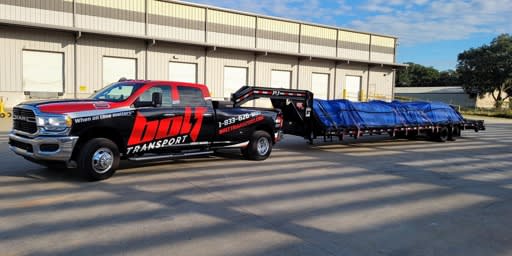
Take the lead in the expedited freight market with hotshot dispatch that connects you with time-critical, high-paying loads. Do you run a dually pickup with a gooseneck, or a one-ton with a hotshot trailer? Our expert team delivers an average $3.10 per loaded mile. We put you in position for the best chances in oil field equipment, construction machinery, and urgent freight. That freight can't wait for standard transport.
Access to high-priority, time-critical loads
Premium rates for expedited freight
Quick response dispatch coordination
Load management for 40'+ hotshot trucks
Hotshot Dispatch Specifications & Requirements
Hotshot equipment specs and requirements:
- Truck Requirements:Dually Pickup (DRW): Ford F-350/450, Ram 3500/4500, Chevy 3500 (most common)
- GVWR:10,001-26,000 lbs for the truck. A Class A CDL is required when the truck and trailer together are rated 26,001 lbs or more and the trailer is rated over 10,000 lbs (49 CFR 383.5). A USDOT number is required at 10,001 lbs or more in interstate commerce.
- Towing Capacity:15,000-35,000 lbs depending on configuration
- Trailer Options:Gooseneck Flatbed: 32-40 feet, 15,000-25,000 lbs capacity (most flexible). Bumper Pull Flatbed: 20-32 feet, 7,000-14,000 lbs capacity. Dovetail Trailer: hydraulic tilt for heavy equipment loading. Hot Shot Reefer: insulated/refrigerated for temperature-controlled freight. Step Deck: for taller equipment within height limits
Hotshot Dispatch Market Rate Ranges
Typical hotshot market rate ranges vary by load type and urgency:
| Route Type | Rate Per Mile | Average Load Value |
|---|---|---|
| Oil Field Equipment | $2.80 - $4.20 | $1,800 - $4,500 |
| Construction Machinery | $2.50 - $3.80 | $1,400 - $3,800 |
| Agricultural Equipment | $2.30 - $3.50 | $1,200 - $2,900 |
| Automotive (Vehicles) | $1.80 - $2.60 | $900 - $1,800 |
| General Expedited Freight | $2.20 - $3.20 | $1,100 - $2,400 |
| Government/Military Contract | $3.00 - $4.50 | $2,000 - $5,200 |
Ranges last reviewed February 2026. Rates move with season, fuel and demand, so check the current rate on your lane before you negotiate, for example with the rate benchmarker.
High-Demand Hotshot Dispatch Lanes
High-demand hotshot lanes and markets:
Oil Field Services (Permian Basin)
The most lucrative hotshot market, centered in West Texas and Southeast New Mexico. Midland/Odessa, TX Hub: Pumps, valves, drill bits, wellhead equipment. Average Rates: $3.50-$5.00 per mile (including return to base). Typical Haul: Houston-Midland (550 miles) = $1,925-$2,750
Rate: $3.50-$5.00 per mile
Distance: 550 miles (Houston-Midland)
Construction Equipment Corridor
Major Markets: Texas Triangle, California, Florida, Arizona. Equipment Types: excavators, skid steers, backhoes, generators, compressors. Peak Seasons: March-October (construction season). Typical Rates: $2.80-$3.90/mile for machinery
Rate: $2.80-$3.90/mile
Distance: Varies by route
Agricultural Equipment
Midwest Dominance: Iowa, Illinois, Nebraska, Kansas, Wisconsin. Seasonal Peak: February-April (pre-planting) and August-October (harvest prep). Equipment: tractors, planters, combines, irrigation systems
Rate: $2.40-$3.60/mile
Distance: Regional routes
KEY FEATURES
Hotshot trucking demands agility and quick response. Grow Trucking excels at finding high-priority, time-critical loads that pay a premium. That keeps your smaller rig as profitable as the big fleets.
Oil Field Network
Direct relationships with 180+ oil/gas service companies in Permian Basin
Expedited Load Priority
First access to time-critical freight (average 15% rate premium over posted rates)
Equipment Specialization
Match your trailer type with the best freight (gooseneck, dovetail, step deck)
Permit Coordination
Oversize/overweight permits for heavy machinery hauls
Hotshot Dispatch Process
Equipment Verification
Confirm truck/trailer specs, payload capacity, size limits, and insurance coverage (federal minimum $750,000 liability; many brokers ask for more).
Market Identification
Find your best market: oil field (highest rates), construction (steady volume), agriculture (seasonal), or automotive (balanced mix).
Load Sourcing
Watch expedited load boards, direct shipper contracts, oil field service companies, construction equipment dealers, and ag dealerships.
Rate Negotiation
Use urgency and limited carrier capacity to negotiate premium rates. Lock in detention/layover terms upfront (critical for oil field).
Permit & Routing
For oversize/overweight loads: get permits, plan routing to avoid restrictions, and coordinate pilot cars if required.
Securement Guidance
Give loading instructions, securement standards, and weight distribution guidance. Photo documentation is required.
Delivery Coordination
GPS tracking, status updates to the shipper, delivery coordination, and instant handling of any en route issues.
Hotshot Dispatch vs. Other Trailer Types
Hotshot vs. Traditional Semi OTR comparison:
| Feature | Hotshot | Semi OTR (Dry Van) |
|---|---|---|
| Startup Cost | $45K-$85K | $120K-$180K |
| CDL Required | Not if the truck and trailer are rated under 26,001 lbs together, or the trailer is rated 10,000 lbs or less | Yes (Class A) |
| Average Weekly Revenue | $3,200-$5,500 | $3,800-$6,200 |
| Fuel Economy | 10-14 MPG | 6-8 MPG |
| Operating Cost/Mile | $1.10-$1.50 | $1.45-$1.85 |
| Load Flexibility | High (urgent, small loads) | Medium (scheduled freight) |
| Rate Premium | +35% vs. standard freight | Baseline market rates |
| Home Time | Flexible (shorter trips) | Weekly or bi-weekly |
| Market Entry Barrier | Lower | Higher |
Equipment Requirements & Recommendations
Key hotshot equipment and requirements:
Essential Equipment
DOT Registration
Required at 10,001 lbs or more (vehicle or combination rating) in interstate commerce
MC Authority
Motor Carrier authority for direct shipper contracts (or run under a dispatch MC)
Commercial Insurance
$750,000 federal minimum liability for for-hire interstate freight; many brokers ask for $1M and cargo coverage
Heavy-Duty Chains & Binders
Grade 70 minimum, 4-6 sets for machinery securement
Straps (Winch & Ratchet)
20,000+ lbs working load, 8-12 straps minimum
Tarps
Heavy-duty 18-20 oz vinyl, 3-4 tarps (8'×24', 8'×32')
Edge Protectors
Prevent load damage and strap wear
Wheel Chocks
Required for machinery loading/unloading
Premium Add-Ons (Higher Rates)
Winch
Hydraulic or electric, 12,000-20,000 lbs capacity
+$0.30-$0.60/mile for self-loading
Gooseneck vs. Bumper Pull
A gooseneck allows heavier loads and better stability
+$0.25-$0.50/mile
Dovetail Hydraulic Tilt
Equipment loading without ramps
+$0.40-$0.80/mile
Team Operation
Expedited cross-country runs
+$0.60-$1.00/mile total
Common Hotshot Dispatch Challenges We Solve
Challenge: Limited Premium Load Access
Solution: Direct relationships with oil field service companies and construction equipment dealers give you 'first call' access to premium freight. Average 3.8 load offers per week per truck.
Challenge: High Deadhead Miles
Solution: Smart market positioning in oil field regions (Permian Basin, Bakken, Marcellus) where round-trip loads are available. Average deadhead cut to 18% vs. 35% industry average.
Challenge: Oversize/Overweight Permit Complexity
Solution: We handle all oversize/overweight permits, routing limits, and pilot car coordination. Turn-around time: 24-48 hours vs. 5-7 days when you do it yourself.
Challenge: Cargo Damage & Liability
Solution: Pre-loading inspection steps, photo/video documentation, and clear securement standards. Damage claims cut by 73% vs. industry average.
Regional Hotshot Dispatch Hotspots
These areas offer exceptional hotshot opportunities:
Midland/Odessa, TX
Oil field capital
$4,200-$6,800/week gross
Houston, TX
Port access, oil/gas equipment, construction hub
$3,800-$5,500/week
Oklahoma City, OK
Energy sector, farm equipment
$3,400-$4,900/week
Denver, CO
Oil/gas, construction, outdoor recreation equipment
$3,600-$5,200/week
Williston, ND
Bakken oil field, premium rates due to limited carriers
$4,000-$6,500/week
Hotshot Dispatch Pricing
Transparent, performance-based pricing with no hidden fees:
Standard Dispatch:
7–10% of linehaul revenue per load. Owner-operator rate; fleet pricing is custom and comes down as the fleet grows.
Setup Fee:
$0
What's Included:
Load sourcing
Rate negotiation
Permit acquisition
Routing
Securement guidance
Insurance coordination
24/7 support
Quick-pay options
Success Stories
"Switched from general freight to oil field hotshot using this dispatch service. First 90 days averaged $5,200/week vs. my previous $3,400. The oil field contacts alone are worth 10x the dispatch fee."
Tom Davidson
2022 Ram 3500 + 40' gooseneck
Midland TX
"I was skeptical about using a dispatcher for hotshot, but these guys know the market inside out. They've got me positioned in the right lanes, negotiating rates I never would've gotten myself. Up 38% in quarterly revenue."
Lisa Chen
2020 Ford F-450 + dovetail
Oklahoma City OK
Why Choose Us
Maximum Profitability
Premium rates for time-critical freight keep your hotshot operation highly profitable.
Fast Turnaround
Quick load-to-load changes cut downtime and raise your earning potential.
Competitive Edge
Access to loads that larger fleets can't handle gives you an edge.
Diverse Cargo
A variety of freight types, from auto parts to construction materials and equipment.
Hotshot rules and costs, answered
Frequently Asked Questions - Hotshot Dispatch
Do I need a CDL for hotshot trucking?
Do I need a USDOT number for a hotshot rig?
What insurance does a hotshot carrier need?
Do hotshot drivers have to keep a logbook or use an ELD?
How wide and heavy can a hotshot load be before it needs a permit?
What are the cargo securement rules for a hotshot trailer?
How much does hotshot dispatch cost?
Facts checked October 15, 2026. Sources: 49 CFR 383.5; FMCSA: Do I need a USDOT number?; 49 CFR 387.9; 49 CFR 395.1; 49 CFR 395.3; 49 CFR 395.8; 23 CFR 658.15; 23 CFR 658.17; FHWA: Federal size regulations; 49 CFR 392.9; 49 CFR 393.106.
Free tools for Hotshot carriers
Price a load, check weights and compare rates with free calculators built for this equipment.
- Cost Per Mile CalculatorKnow your exact CPM — fixed, variable, and break-even rate.
- Weight & Axle Load CalculatorHotshot trailers hit weight limits fast — check the numbers before loading.
- Oversize / Overweight Permit EstimatorCheck whether your load goes past the usual legal height, width, trailer length and weight, and when escorts often start.
- Truck Payment CalculatorWork out what a hotshot truck and trailer payment does to your margins.
Trucking terms for Hotshot carriers
Short, plain answers to words you will meet when you book and haul this freight.
Want to drive a hotshot?
We take driver applications, with a CDL or without one. It takes about two minutes and needs no documents.
Ready to Maximize Your Hotshot Revenue?
Partner with Grow Trucking for premium time-critical loads. Keep your hotshot rig active with high-paying expedited freight.