
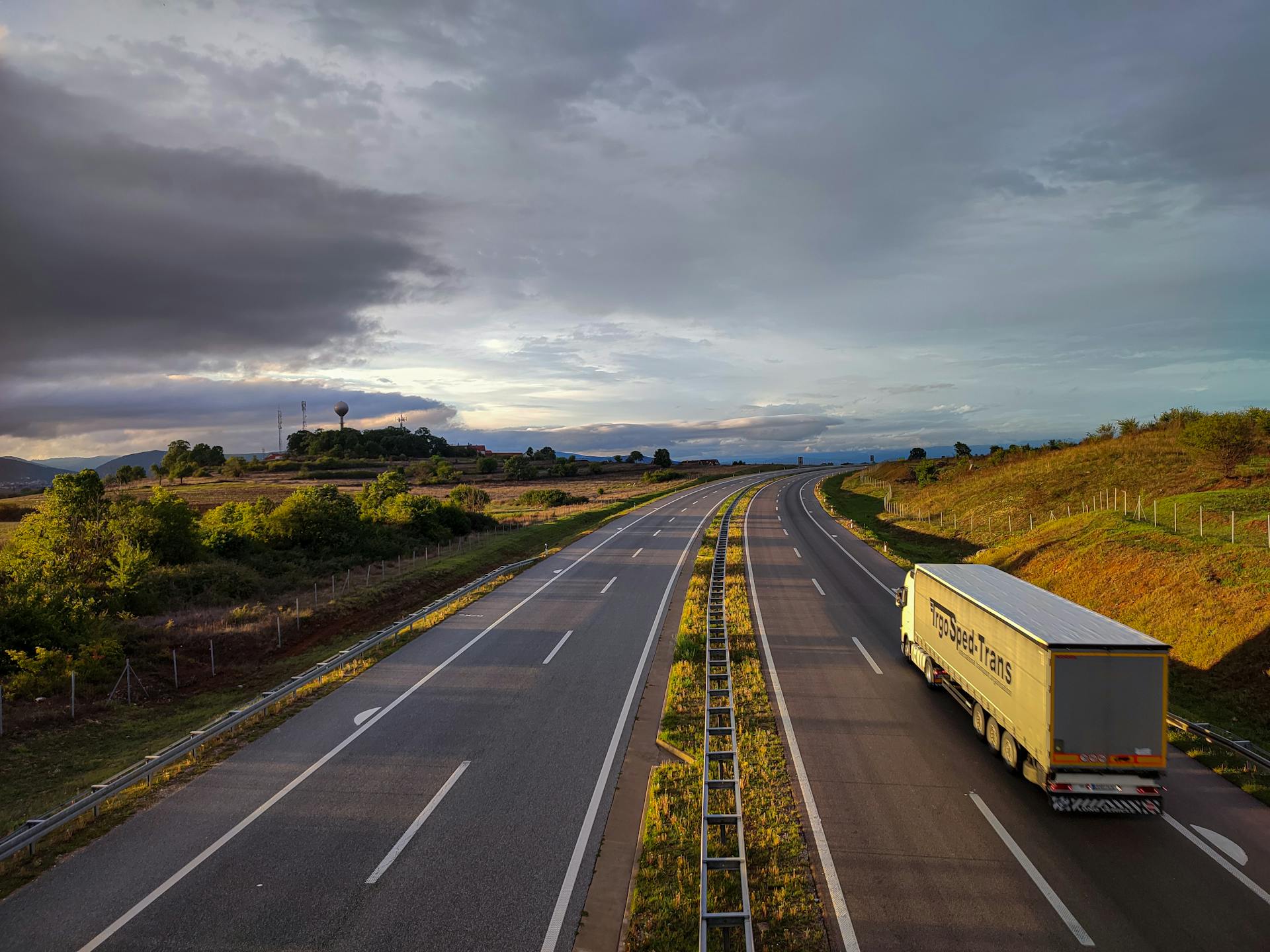
Alabama Truck Dispatch | Port of Mobile & Mercedes-Benz Freight
We dispatch trucks for Alabama's Port of Mobile (the fastest-growing Gulf Coast container port) and Mercedes-Benz Tuscaloosa production. We also cover the state's dense auto-supplier corridor.
How much do truck dispatch rates run in Alabama?
Alabama-origin freight currently pays about $2.30-$2.70/mi for dry van, more for reefer and flatbed. Demand is driven by Automotive Manufacturing, Port & Container Logistics and Aerospace & Defense. Grow Trucking dispatches Alabama owner-operators and small fleets across 15 tracked lanes on a transparent percentage-of-gross fee, disclosed upfront.
- Tracked lanes
- 15
- Major freight hubs
- Birmingham, Mobile and Huntsville
- Top industries
- Automotive Manufacturing and Port & Container Logistics
Alabama rate and market data reviewed September 2026. See our dispatch fee structure.
Alabama Truck Dispatch Services
Alabama anchors the Gulf Coast auto and logistics network. The Port of Mobile is the fastest-growing container port on the U.S. Gulf Coast. It handles over 600,000 TEUs a year, and the Alabama Port Authority is spending billions on upgrades. Mercedes-Benz's Tuscaloosa plant builds roughly 300,000 vehicles a year (GLE, GLS, and Maybach models). Hyundai's Montgomery plant adds another 370,000. That makes Alabama the #5 auto-producing state in the nation. The Tennessee Valley has an aerospace cluster (Boeing, Lockheed Martin, Blue Origin). ThyssenKrupp runs a steel mill in Mobile. Birmingham sits at the I-20/I-59 crossroads, a historic distribution center. Together, Alabama has a freight base unlike any other Gulf Coast state.
Alabama offers freight opportunities built on three things. They are the Port of Mobile's container growth, Mercedes-Benz and Hyundai automotive JIT freight, and the Tennessee Valley's aerospace manufacturing. Demand is strong for dry van, flatbed, and steel freight.
Port of Mobile is the fastest-growing container port on the U.S. Gulf Coast, creating dependable drayage volume
Mercedes-Benz and Hyundai together build 670,000+ vehicles a year. That creates huge just-in-time (JIT) auto freight demand
The Tennessee Valley aerospace cluster (Huntsville) works close to NASA and defense. It brings specialized, premium-rate freight
Birmingham's I-20/I-59 crossroads offers real advantages as a distribution stop for Southeast-to-Midwest freight
What is the Alabama freight market like?
As of mid-2026, the Port of Mobile is the fastest-growing container port on the U.S. Gulf Coast. Expansion projects aim for 1 million+ TEU capacity by 2030. Mercedes-Benz and Hyundai keep steady production. But swings in global auto trade are a near-term risk for export volume.
Average Rates
Alabama-origin rates (mid-2026): dry van roughly $2.30-$2.70/mile (distribution, port drayage). Flatbed $2.65-$3.25/mile (auto parts, steel, aerospace parts; some of the strongest demand in the state). Reefer $2.55-$2.95/mile (poultry, perishables).
Market Trends
- •
The Port of Mobile is the fastest-growing container port on the U.S. Gulf Coast. Ongoing expansion aims for 1 million+ TEU capacity by 2030
- •
Alabama is the #5 auto-producing state in the nation. Mercedes-Benz (Tuscaloosa) and Hyundai (Montgomery) together build 670,000+ vehicles a year
- •
The Tennessee Valley aerospace cluster (Huntsville) is home to Boeing, Lockheed Martin, Blue Origin, and Redstone Arsenal. It creates large flatbed and specialized freight
- •
ThyssenKrupp's steel mill in Mobile is one of the most advanced in North America. It creates steady steel-coil and metal-products flatbed freight
- •
Birmingham sits at the I-20/I-59 crossroads. That makes it a favorite distribution stop for Southeast-to-Midwest freight
What are the busiest freight lanes out of Alabama?
Price these lanes with our free Trip Pre-Cost Calculator, Should I Take This Load? Calculator and Lane Profitability Analyzer.
Birmingham to Chicago
High-demand freight route connecting Birmingham to Chicago. One of the busiest lanes with steady freight volumes.
Rate: $1,518 - $1,980
Distance: 660 miles
Birmingham to Dallas
High-demand freight route connecting Birmingham to Dallas. One of the busiest lanes with steady freight volumes.
Rate: $1,484 - $1,935
Distance: 645 miles
Birmingham to Atlanta
High-demand freight route connecting Birmingham to Atlanta. One of the busiest lanes with steady freight volumes.
Rate: $340 - $444
Distance: 148 miles
Birmingham to Houston
High-demand freight route connecting Birmingham to Houston. One of the busiest lanes with steady freight volumes.
Rate: $1,553 - $2,025
Distance: 675 miles
Birmingham to Charlotte
High-demand freight route connecting Birmingham to Charlotte. One of the busiest lanes with steady freight volumes.
Rate: $886 - $1,155
Distance: 385 miles
Birmingham to Memphis
High-demand freight route connecting Birmingham to Memphis. One of the busiest lanes with steady freight volumes.
Rate: $552 - $720
Distance: 240 miles
Birmingham to Nashville
High-demand freight route connecting Birmingham to Nashville. One of the busiest lanes with steady freight volumes.
Rate: $439 - $573
Distance: 191 miles
Birmingham to Indianapolis
High-demand freight route connecting Birmingham to Indianapolis. One of the busiest lanes with steady freight volumes.
Rate: $1,070 - $1,395
Distance: 465 miles
Birmingham to Kansas City
High-demand freight route connecting Birmingham to Kansas City. One of the busiest lanes with steady freight volumes.
Rate: $1,495 - $1,950
Distance: 650 miles
Birmingham to Detroit
High-demand freight route connecting Birmingham to Detroit. One of the busiest lanes with steady freight volumes.
Rate: $1,691 - $2,205
Distance: 735 miles
Birmingham to Columbus
High-demand freight route connecting Birmingham to Columbus. One of the busiest lanes with steady freight volumes.
Rate: $1,219 - $1,590
Distance: 530 miles
Birmingham to Philadelphia
High-demand freight route connecting Birmingham to Philadelphia. One of the busiest lanes with steady freight volumes.
Rate: $2,001 - $2,610
Distance: 870 miles
Birmingham to Minneapolis
High-demand freight route connecting Birmingham to Minneapolis. One of the busiest lanes with steady freight volumes.
Rate: $2,424 - $3,162
Distance: 1054 miles
Birmingham to St. Louis
High-demand freight route connecting Birmingham to St. Louis. One of the busiest lanes with steady freight volumes.
Rate: $1,150 - $1,500
Distance: 500 miles
Birmingham to Phoenix
High-demand freight route connecting Birmingham to Phoenix. One of the busiest lanes with steady freight volumes.
Rate: $3,823 - $4,986
Distance: 1662 miles
Search brokers & carriers in Alabama
Browse active freight brokers and for-hire carriers based in Alabama. The list comes live from FMCSA and updates weekly. Check bond, authority, and fleet size before you haul.
Freight Brokers
Active, FMCSA-bonded freight brokers based in Alabama.
Browse directoryDry Van Carriers
For-hire dry van carriers operating out of Alabama.
Browse directoryFlatbed Carriers
For-hire flatbed carriers operating out of Alabama.
Browse directoryReefer Carriers
For-hire reefer carriers operating out of Alabama.
Browse directoryTruck Parking
Official NHS rest stops and truck parking capacity across Alabama.
Browse directoryWhich industries drive freight demand in Alabama?
Automotive Manufacturing (Mercedes-Benz - Tuscaloosa, Hyundai - Montgomery)
Port & Container Logistics (Port of Mobile - fastest-growing Gulf Coast container port)
Aerospace & Defense (Boeing, Lockheed Martin, Blue Origin - Huntsville/Tennessee Valley)
Steel Manufacturing (ThyssenKrupp - Mobile)
Poultry & Agriculture (Tyson Foods, Pilgrim's Pride)
Distribution & Logistics (Birmingham I-20/I-59 crossroads)
How does Alabama freight change by season?
Rates and weather change with the seasons. Here is a quarter-by-quarter look at rates, weather, and what to do in Alabama.
Q1 (Jan-Mar)
Rate Movement
Rates usually drop 5-10% in Alabama as the market recovers from the holiday season
Weather Impact
Winter weather can create rate spikes during storms
Strategy
Position near distribution hubs early in the week for best rates
Q2 (Apr-Jun)
Rate Movement
Strong rate increases as freight volume picks up
Weather Impact
Spring weather is usually good, with few disruptions
Strategy
Focus on farm and retail freight during peak season
Q3 (Jul-Sep)
Rate Movement
Peak rates during summer months
Weather Impact
Heat can impact certain freight types
Strategy
Maximize outbound loads, plan for backhaul opportunities
Q4 (Oct-Dec)
Rate Movement
Highest rates during holiday shipping season
Weather Impact
Winter weather begins to impact northern routes
Strategy
Book early, rates peak in November-December
Additional Seasonal Considerations
- •
Peak shipping season: Fall and Winter
- •
Holiday shipping surge: November-December
- •
Weather impacts during winter months
- •
Agricultural season variations
Where are the major freight hubs in Alabama?
The ports, inland ports, intermodal terminals, and distribution cities that move freight across Alabama. See where most of the freight is.
Distribution Cities
- Birmingham
- Mobile
- Huntsville
- Montgomery
- Tuscaloosa
Ports & Intermodal Terminals
Norfolk Southern Birmingham Regional Intermodal Facility (McCalla)
Rail-to-truck intermodal terminal southwest of Birmingham. It serves Southeast-to-Midwest and port-linked container traffic
Where can trucks park and fuel in Alabama?
Truck parking and fuel info to help you plan your routes through Alabama.
Estimate fuel, tolls, and fuel tax with our free Fuel Cost Calculator, IFTA Tax Calculator and Toll Cost Estimator with Route Comparison.
Major Truck Stops
TA Travel Center — Birmingham (I-20/59, Exit 108)
📍 5520 Beacon Drive, Irondale, AL 35210
240 truck parking spaces ($16/day fee), Iron Skillet restaurant, 24/7 repair, showers, CAT-certified service center. Strong Birmingham spot at the I-20/I-59 crossroads. It serves Southeast-to-Midwest distribution freight and connects to Mercedes-Benz Tuscaloosa (60 miles west).
Pilot Travel Center — Mobile (I-10, Exit 15B)
📍 5245 Rangeline Service Road North, Mobile, AL 36619
230 truck parking spaces ($18/day fee), 24/7 fuel, Subway, WiFi. Port-adjacent location serving Port of Mobile drayage freight and ThyssenKrupp steel mill deliveries. Reserve-It parking available. Parking fills fast during port peak hours (4-8 PM).
Love's Travel Stop — Tuscaloosa (I-20/59, Exit 71)
📍 11501 Spring Valley Drive, Cottondale, AL 35453
220 truck parking spaces ($17/day fee), Carl's Jr., tire service, 24/7 fuel. Western Alabama location near Mercedes-Benz Tuscaloosa plant serving automotive JIT parts freight. Track Mercedes delivery windows for peak demand periods.
Petro Stopping Center — Montgomery (I-85, Exit 6)
📍 4730 Mobile Highway, Montgomery, AL 36108
210 truck parking spaces ($16/day fee), Iron Skillet restaurant, 24/7 repair, showers. State capital spot that serves Hyundai Montgomery plant auto freight and I-85 corridor Atlanta-to-Mobile freight.
Flying J Travel Plaza — Athens (I-65, Exit 351)
📍 16387 Blackburn Road, Athens, AL 35611
200 truck parking spaces (free), 24/7 fuel, Denny's restaurant. Northern Alabama spot on I-65. It serves Huntsville aerospace freight and the Nashville-to-Birmingham corridor.
Pilot Travel Center — Leeds (I-20, Exit 140)
📍 1950 Ashville Road, Leeds, AL 35094
190 truck parking spaces ($16/day fee), 24/7 fuel, Wendy's. Eastern Birmingham metro spot on I-20. It serves the Atlanta-to-Birmingham freight corridor and gives quick access to I-59.
Love's Travel Stop — Loxley (I-10, Exit 38)
📍 19875 Highway 59, Loxley, AL 36551
180 truck parking spaces ($17/day fee), 24/7 fuel, Arby's. Coastal Alabama spot on I-10. It serves the Mobile-to-Pensacola corridor and Gulf Coast freight.
TA Express — Cullman (I-65, Exit 310)
📍 1817 St Joseph Drive Northwest, Cullman, AL 35055
170 truck parking spaces ($15/day fee), 24/7 fuel, Popeyes, showers. Central Alabama spot on I-65. It serves Birmingham-to-Huntsville freight and connects to Tennessee distribution networks.
Parking Difficulty
Moderate. Metro areas have high demand, especially in the evenings
- •Plan ahead for parking in metro areas
- •Use rest areas as a backup
- •Use parking apps to find available spots
Strategic Positioning Advice
Park where you can find loads fast and cut deadhead miles:
- •
Major Distribution Centers: Position near major distribution hubs in Birmingham for quick access to outbound loads.
- •
Busy Freight Routes: Stay near busy freight corridors to catch backhaul loads.
- •
Timing: Arrive when booking is busiest (usually early morning) to get the best rates.
Fuel price trend
How has the diesel price changed in Alabama?
EIA does not publish a separate diesel price for Alabama, so this is the weekly average for the Gulf Coast region that Alabama is part of, over the last 12 months.
- Price this week
- $5.90/gal
- Since last week
- Up 9 cents
- Versus a year ago
- Up 81%
- Versus the U.S. average
- 37 cents below
Week of October 19, 2026
+$2.65 a gallon
U.S. average $6.28
Source: U.S. Energy Information Administration weekly retail on-highway diesel prices. Averages, not the price at one pump.
What are Alabama's truck weight limits and regulations?
Weight limits, permits, and emission rules. Know these rules to stay legal. Also see what to expect at a DOT roadside inspection, the federal size and weight limits, and the full federal trucking regulations reference.
Check weights and permits with our free Scale / Weigh Station Guide, Weight & Axle Load Calculator and Oversize / Overweight Permit Estimator.
Weight Limits
Federal limits on the Interstate System (23 CFR 658.17):
- Single Axle: 20,000 lbs
- Tandem Axle: 34,000 lbs
- Gross Vehicle Weight: 80,000 lbs, or less where the bridge formula sets a lower total
Other highways follow Alabama law, and some states allow more on non-Interstate roads. Check with the state's size and weight office before you load.
Size Limits
Width is a federal limit. Height and trailer length depend on the state:
- Width: 8.5 feet (102 inches) on the National Network (23 CFR 658.15)
- Height: Set by each state. There is no federal height limit, and FHWA says most states are between 13 ft 6 in and 14 ft. Check Alabama's limit for your route.
- Length: 53 ft semitrailers are common, but a state can apply its own kingpin-to-rear-axle rule
State-Specific Rules
- •
Federal hours of service rules
- •
Weight restrictions on certain routes
- •
State-specific requirements
- •
Environmental standards
Permits
Alabama may require special permits for:
- •Oversized/overweight loads
- •Hazardous materials
- •Special route rules
Alabama: freight facts a driver should know
Alabama's legal weight limits and permit-covered maximum
Without a permit, Alabama caps trucks at 80,000 pounds gross, with 20,000 pounds on a single axle, 34,000 pounds on a tandem axle, and 42,000 pounds on a tridem axle on qualifying routes. An annual overweight permit from ALDOT can raise that ceiling to 150,000 pounds gross, with up to 22,000 pounds allowed on a single axle.
Source: Alabama Department of Transportation, oversize/overweight permit information. Checked 30 Sep 2026.
Permit fees are low compared to nearby states
A single-trip oversize or overweight permit in Alabama starts at $20, and a full annual permit costs $100. That's a lighter fee load than several neighboring states, which matters if you're running the same Alabama lane over and over.
Source: Alabama Department of Transportation, oversize/overweight permit information. Checked 30 Sep 2026.
Active weather alerts for Alabama freight routes
Rip Current Statement
Mobile Coastal; Baldwin Coastal; Escambia Coastal; Santa Rosa Coastal; Okaloosa Coastal
Active until Oct 25, 1:00 PM UTC
Source: National Weather Service. Refreshes with this page.
How have Alabama freight rates moved, and what's next?
How Alabama freight rates have moved through recent market cycles, and what owner-operators and fleets should expect next. Use this to time lane commitments and rate negotiations. Before you accept a load, check it against our free rate benchmarker.
Recent Rate Cycles
Rate cycles that shaped the current Alabama freight market:
2018-2019
Strong market. Rates hit their peak because trucks were in short supply
2020
Rates swung at first, then recovered strongly
2021-2022
Record-high rates driven by demand surge
2023-2024
Rates settled, with some seasonal swings
Market Correction Periods
Knowing when corrections hit Alabama helps with strategic planning:
- •
Q1 2023: Rates fell hard as more trucks entered the market
- •
Mid-2024: The market settled with better balance
- •
Pattern: Rate drops usually last 6–12 months before rates recover
Alabama Market Outlook
Based on current market signs, Alabama should see moderate growth and steady rate gains as the market keeps settling
What Drives Rates in Alabama
- •Freight volume and demand
- •Available truck capacity
- •Fuel costs and operating expenses
- •Major industry activity (Manufacturing)
How do I cut deadhead miles running freight in Alabama?
How to cut empty miles when you haul in and out of Alabama. See the outbound and inbound freight balance, the best return lanes, and where to park your truck. Run your own numbers with our free deadhead miles calculator.
Outbound Freight
65%
Roughly 65% of Alabama freight moves outbound. Outbound loads from Alabama's production and distribution centers typically book fastest early in the week.
Inbound Freight
35%
About 35% of the freight balance is inbound. Book your return load before you deliver. It is the biggest way to raise your rate-per-mile on these lanes.
Best Backhaul Lanes into Alabama
The strongest return lanes for repositioning back toward Alabama:
Birmingham to Chicago
Strong return lane with steady freight
Rate: $2.40 - $3.00
Birmingham to Dallas
Strong return lane with steady freight
Rate: $2.40 - $3.00
Birmingham to Atlanta
Strong return lane with steady freight
Rate: $2.40 - $3.00
Positioning Strategies for Alabama
Where and when to stage to keep your next load close and your deadhead low:
- •
Park near distribution hubs in Birmingham for quick access to outbound loads
- •
Arrive at drop-off areas when booking is busiest (usually early morning) to lock in better rates and backhaul
- •
Use busy freight corridors to catch both outbound and inbound loads
- •
Use load boards before you reach the drop-off to pre-book backhaul loads and cut wait time
What do experienced dispatchers know about running Alabama?
Hands-on tips from years of dispatching in Alabama.
Mercedes-Benz Tuscaloosa and Hyundai Montgomery build 670,000+ vehicles a year. Learn their JIT delivery windows. That is worth more than chasing spot rates.
The Port of Mobile is the fastest-growing container port on the U.S. Gulf Coast. Drayage volume keeps growing, so build broker relationships now.
Huntsville's aerospace cluster (Boeing, Lockheed Martin, Blue Origin) needs flatbed/step-deck equipment for oversized parts. You earn premium rates if you run that equipment.
Mercedes-Benz Tuscaloosa JIT deliveries and Port of Mobile import schedules push Tuesday-Thursday rates 10-15% above Friday rates. Distribution centers rush to meet weekly commitments.
Birmingham's I-20/I-59 crossroads position is the strategic staging sweet spot. Equal access to Atlanta, Memphis, and the Gulf Coast without coastal parking/toll premiums.
ThyssenKrupp's Mobile steel mill creates steady steel-coil flatbed freight. It is less flashy than auto freight but steady all year. Carriers who only chase port drayage often overlook it.
Track hurricane forecasts Jun-Nov if you run Mobile coastal freight. When ports reopen 24-72 hours later, trucks are suddenly scarce.
Alabama poultry freight (Tyson Foods, Pilgrim's Pride) is a steady reefer source that feeds Southeast distribution networks. Few carriers notice it.
Mercedes Tuscaloosa auto JIT freight has zero tolerance for delays. Being reliable builds lasting broker relationships that pay off in the Q4 peak season.
Port of Mobile parking fills fast during peak drayage hours (4-8 PM). Arrive early or use parking reservation apps to avoid wasting HOS searching for spots.
Remember: These tips come from real dispatching work in Alabama. Markets change, but these basics still help you earn more and cut deadhead miles.
How have drivers near Alabama grown with Grow Trucking?
+$3,170/week after moving to $2.90/mi on automotive parts / manufacturing freight. New authority veteran driver fast-tracked to premium rates.
Read the case study+$2,550/week after moving to $2.85/mi on automotive parts / retail / beverage freight. Emergency contract loss recovery — loaded within 6 hours.
Read the case study+$2,460/week after moving to $2.72/mi on e-commerce / general freight freight. New driver mentorship program broke broker access barriers.
Read the case studyAlabama Freight FAQs
Comprehensive answers to common questions about trucking and dispatch in Alabama. State-specific regulations, costs, and operating strategies.
Yes. You need a USDOT number, an MC number for interstate for-hire hauling, and Alabama IRP/IFTA registration through the Alabama Department of Revenue.
Federal minimum liability coverage usually runs $750,000-$1,000,000, based on cargo type. You also need cargo and physical damage coverage. Auto JIT freight and aerospace parts may need more cargo insurance. Confirm with your insurance provider.
As of mid-2026, flatbed loads for auto parts, steel, and aerospace parts pay $2.65-$3.25/mile. That is some of the strongest demand in the state. Port of Mobile drayage and Mercedes/Hyundai auto freight pay steady, reliable rates. Standard dry van pays roughly $2.30-$2.70/mile.
Yes. Alabama has auto plants (Mercedes, Hyundai), a growing port (Mobile), and an aerospace cluster (Huntsville). That gives you dependable freight. But building ties to specific plants or the port's vessel schedule beats competing on spot rate alone. New operators do well starting with Birmingham distribution freight before moving to auto JIT.
The Port of Mobile is the fastest-growing container port on the U.S. Gulf Coast. It handles over 600,000 TEUs a year. The Alabama Port Authority's multi-billion dollar plan aims for 1 million+ TEU capacity by 2030. It includes bigger terminals, deeper channels (50-foot depth), and better rail links. That means growing drayage volume and auto ro-ro freight for carriers who build relationships now.
Auto JIT (just-in-time) freight has zero tolerance for delay. One late part can shut down a production line and cost millions per hour. Start by building relationships with freight brokers who specialize in auto freight and already serve Mercedes/Hyundai. Prove you are reliable on smaller JIT loads first, then scale up. Track plant delivery windows and shutdown schedules (usually during model changeovers and holidays). Plan other freight for the downtime.
Huntsville (Tennessee Valley) is home to Redstone Arsenal, NASA's Marshall Space Flight Center, Boeing, Lockheed Martin, and Blue Origin. That creates large flatbed and specialized-equipment freight for oversized aerospace parts, defense gear, and rocket hardware. You need flatbed/step-deck equipment and proper tie-down for high-value cargo. Sometimes you need security clearance. Rates are premium ($2.85-$3.45/mile), but the rules are special.
Both have upsides. Port of Mobile drayage has growing volume (fastest-growing Gulf Coast port). But it has parking shortages ($18/day fees), hurricane-season delays, and coastal traffic. Birmingham I-20/I-59 distribution gives you crossroads access to Atlanta, Memphis, and Nashville. It has less congestion, moderate parking costs ($16/day), and many freight types. Many successful Alabama carriers stage in Birmingham. They run both port drayage and distribution freight to spread their risk.
Port drayage needs a TWIC (Transportation Worker Identification Credential) card to enter port terminals. You also need cargo papers and booking numbers from your broker or 3PL, plus chassis/container interchange agreements. Track vessel schedules to cut wait time. Vessels usually unload containers 24-72 hours after they arrive. Register with port-specific load boards and freight-matching platforms.
Alabama diesel fuel tax (IFTA/special rate) is about $0.31 per gallon as of 2026. Add the federal tax ($0.244/gallon) and the total is about $0.554 per gallon. Retail diesel in the Gulf Coast region, which includes Alabama, averages $5.90/gallon as of October 19, 2026 (EIA weekly average), about 37 cents below the national average of $6.28. That price is up 9 cents from last week and 81% above a year ago. Alabama is in the Southeast, and its factory corridors (Birmingham, Mobile, auto plants) create steady freight volume. The state's moderate fuel tax and below-average retail prices keep trucking costs competitive. Source: IFTA matrix, Alabama Department of Revenue, verified September 2026.
ThyssenKrupp's Mobile mill is one of the most advanced steel plants in North America. It makes high-grade steel coils and metal products. The mill creates steady flatbed freight for steel coils, sheet metal, and building materials. Steel is less flashy than auto or port freight. But steel loads usually pay $2.65-$3.10/mile and run steady all year with less seasonal swing. Many carriers overlook this freight, which creates chances for flatbed operators.
Keep exploring dispatch options
Tools, equipment guides and nearby states relevant to running freight in and out of Alabama.
By equipment
Free tools
- Trip Pre-Cost Calculator
- Toll Cost Estimator with Route Comparison
- Load Board Rate Benchmarker
- Deadhead Miles Calculator
- Fuel Cost Calculator
- IFTA Tax Calculator
- Scale / Weigh Station Guide
- Cost Per Mile Calculator
- Diesel prices today
- Diesel tax by state
- Truck idling laws by state
- Truck speed limits by state
- Truck chain laws by state
- Truck lane laws by state
- Truck height and length limits by state
- Rest area parking limits by state
- Gulf Coast diesel prices
- Reefer Set-Point Guide
- Freight Class Calculator
- All Free Tools
Nearby states
Services
More from Grow Trucking
Start Dispatching in Alabama Today
Secure Your Strategy:
Apply for your FREE Custom 90-Day Growth Plan (a $1,500 value). It starts with a Business Audit that finds where you lose money and sets your profit goals.
Guarantee Your GROWTH:
Start your 90-day partnership to implement the plan. We back it with our "Growth or Your Money Back" Guarantee.