
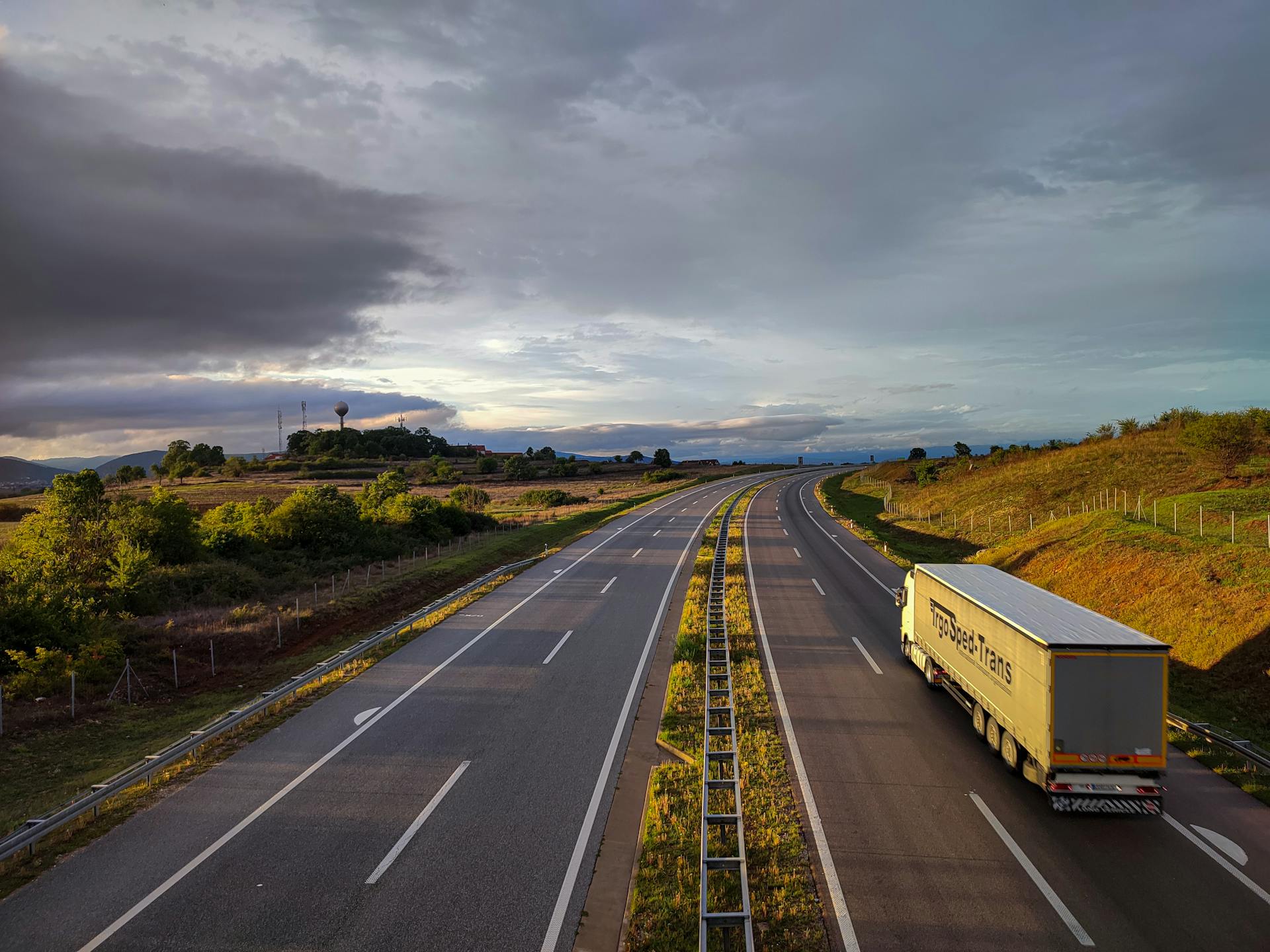
Massachusetts Truck Dispatch | Cambridge Biotech & Port of Boston
Dispatch services for Massachusetts's Cambridge/Kendall Square biotech corridor. The highest concentration of biotech R&D investment per square mile in the world. The Route 128 tech corridor, and the Port of Boston.
How much do truck dispatch rates run in Massachusetts?
Massachusetts-origin freight currently pays about $2.30-$2.75/mi for dry van, more for reefer and flatbed. Demand is driven by Biotech & Pharmaceuticals, Technology & Defense Electronics and Higher Education. Grow Trucking dispatches Massachusetts owner-operators and small fleets across 15 tracked lanes on a transparent percentage-of-gross fee, disclosed upfront.
- Tracked lanes
- 15
- Major freight hubs
- Boston, Worcester and Cambridge
- Top industries
- Biotech & Pharmaceuticals and Technology & Defense Electronics
Massachusetts rate and market data reviewed September 2026. See our dispatch fee structure.
Massachusetts Truck Dispatch Services
Massachusetts punches far above its size in freight value. Kendall Square in Cambridge has the highest concentration of biotech and pharma R&D investment per square mile in the world. Within a half-mile of MIT's campus, dozens of pharmaceutical companies (Moderna, Pfizer, Vertex, Biogen) run research campuses. They create inbound laboratory equipment, reagent, and controlled substance deliveries. They also ship out clinical trial materials. This needs GDP-compliant carriers and specialized cold-chain management (often 2-8C or frozen). The Route 128/I-495 corridor is the state's tech and life sciences belt. It creates demand for high-value, serialized inventory (servers, networking equipment, Raytheon defense electronics). The Port of Boston handles containerized freight and LNG imports. Massachusetts's 80+ colleges and universities create constant, seasonal move-in/move-out freight surges each August-September and May-June. New Bedford anchors a major fishing/seafood processing port. Boston's Big Dig legacy tunnels ban hazmat and over-height freight entirely. I-90 (Mass Pike) limits heavy commercial vehicles to the right-hand lane between Weston and Sturbridge.
Massachusetts offers freight opportunities anchored by the world's densest biotech R&D cluster in Cambridge, the Route 128/I-495 tech corridor, and the Port of Boston. Demand is strong for GDP-compliant pharma, cold-chain, and high-value tech freight.
The Cambridge biotech cluster is the densest in the world by R&D investment per square mile. It creates dependable, high-value GDP-compliant freight
One-day delivery reach to roughly 15 million+ New England consumers from a single Massachusetts-based distribution point
The Route 128/I-495 tech corridor gives you steady, high-value serialized freight demand that differs from standard consumer distribution
80+ colleges create predictable seasonal freight spikes. Experienced carriers can plan capacity around them in advance
What is the Massachusetts freight market like?
As of 2026, Massachusetts still anchors the northeastern end of the I-95 corridor. It has one-day delivery reach to roughly 15 million+ people across New England. Boston is the biotech/pharmaceutical capital of the U.S., and the Route 128/I-495 tech corridor is close by. Together they keep the state's freight profile tilted toward high-value, specialized categories rather than pure volume.
Average Rates
Massachusetts-origin rates (mid-2026): dry van roughly $2.30-$2.75/mile (Boston metro distribution). Reefer/cold-chain runs $2.70-$3.30/mile+ for GDP-compliant pharmaceutical freight (Cambridge biotech, often the highest premiums in the Northeast). Flatbed runs $2.50-$2.90/mile (defense electronics, construction). Seasonal college move-in/move-out (Aug-Sep, May-Jun) creates sharp, predictable freight spikes.
Market Trends
- •
Kendall Square (Cambridge) is still the highest concentration of biotech/pharma R&D investment per square mile in the world. It needs GDP-compliant, cold-chain-capable carriers for lab equipment and clinical trial materials
- •
The Route 128/I-495 tech corridor keeps creating high-value, serialized freight demand for servers, networking equipment, and Raytheon defense electronics
- •
Massachusetts's 80+ colleges and universities create predictable, sharp seasonal freight surges each August-September and May-June for move-in/move-out logistics
- •
The Big Dig tunnels ban hazmat and over-height freight entirely. Plan routes with care for specialized loads through downtown Boston
- •
I-90 (Mass Pike) limits heavy commercial vehicles to the right-hand lane, except when passing, between Weston and Sturbridge. Carriers new to the corridor often miss this
What are the busiest freight lanes out of Massachusetts?
Price these lanes with our free Trip Pre-Cost Calculator, Should I Take This Load? Calculator and Lane Profitability Analyzer.
Boston to New York
Freight route connecting Boston, MA to New York, NY (215 miles). It reaches the Northeast's largest consumer market via I-95, one of the most heavily traveled corridors in the country.
Rate: $559 - $645
Distance: 215 miles
Boston to Hartford
Freight route connecting Boston, MA to Hartford, CT (100 miles). Connects Boston's biotech/tech freight to Hartford's aerospace/insurance corridor via I-84/I-90.
Rate: $270 - $310
Distance: 100 miles
Boston to Providence
Freight route connecting Boston, MA to Providence, RI (50 miles). Very short, high-frequency corridor connecting Boston to Rhode Island via I-95.
Rate: $140 - $160
Distance: 50 miles
Boston to Philadelphia
Freight route connecting Boston, MA to Philadelphia, PA (305 miles). Philadelphia's pharma corridor and port pair naturally with Boston's own biotech freight base via I-95.
Rate: $762 - $884
Distance: 305 miles
Boston to Washington
Freight route connecting Boston, MA to Washington, DC (440 miles). The DC metro's government and consumer freight base via I-95.
Rate: $1,056 - $1,232
Distance: 440 miles
Boston to Albany
Freight route connecting Boston, MA to Albany, NY (170 miles). Connects Boston to Upstate New York via I-90 (Mass Pike).
Rate: $433 - $502
Distance: 170 miles
Boston to Portland
Freight route connecting Boston, MA to Portland, ME (105 miles). Connects Boston to Maine via I-95, serving New England's northern reach.
Rate: $284 - $326
Distance: 105 miles
Boston to Springfield
Freight route connecting Boston, MA to Springfield, MA (90 miles). Connects Boston to Western Massachusetts's distribution hub via I-90.
Rate: $248 - $284
Distance: 90 miles
Boston to Chicago
Freight route connecting Boston, MA to Chicago, IL (985 miles). Chicago's intermodal hub status extends Boston's Midwest reach via I-90.
Rate: $2,118 - $2,512
Distance: 985 miles
Boston to Baltimore
Freight route connecting Boston, MA to Baltimore, MD (400 miles). The Port of Baltimore and Mid-Atlantic distribution network via I-95.
Rate: $980 - $1,140
Distance: 400 miles
Boston to Charlotte
Freight route connecting Boston, MA to Charlotte, NC (845 miles). Charlotte's banking and distribution sector connects well via I-95.
Rate: $1,859 - $2,197
Distance: 845 miles
Boston to New Haven
Freight route connecting Boston, MA to New Haven, CT (135 miles). Connects Boston to Connecticut's biomedical corridor via I-95.
Rate: $358 - $412
Distance: 135 miles
Boston to Burlington
Freight route connecting Boston, MA to Burlington, VT (220 miles). Connects Boston to Vermont via I-93/I-89.
Rate: $561 - $649
Distance: 220 miles
Boston to Rochester
Freight route connecting Boston, MA to Rochester, NY (392 miles). Rochester's Corning optics/manufacturing base via I-90.
Rate: $941 - $1,098
Distance: 392 miles
Boston to Richmond
Freight route connecting Boston, MA to Richmond, VA (555 miles). Richmond's distribution position connects Boston to the Mid-Atlantic via I-95.
Rate: $1,304 - $1,526
Distance: 555 miles
Search brokers & carriers in Massachusetts
Browse active freight brokers and for-hire carriers based in Massachusetts. The list comes live from FMCSA and updates weekly. Check bond, authority, and fleet size before you haul.
Freight Brokers
Active, FMCSA-bonded freight brokers based in Massachusetts.
Browse directoryDry Van Carriers
For-hire dry van carriers operating out of Massachusetts.
Browse directoryFlatbed Carriers
For-hire flatbed carriers operating out of Massachusetts.
Browse directoryReefer Carriers
For-hire reefer carriers operating out of Massachusetts.
Browse directoryTruck Parking
Official NHS rest stops and truck parking capacity across Massachusetts.
Browse directoryWhich industries drive freight demand in Massachusetts?
Biotech & Pharmaceuticals (Cambridge/Kendall Square: Moderna, Pfizer, Vertex, Biogen)
Technology & Defense Electronics (Route 128/I-495: Raytheon and tech corridor)
Higher Education (80+ colleges/universities, seasonal move-in/move-out freight)
Healthcare (Mass General, Dana-Farber, Boston Children's: medical devices, hospital supply)
Port & Container Logistics (Port of Boston: containerized cargo, LNG imports)
Seafood Processing (New Bedford - major U.S. fishing port)
How does Massachusetts freight change by season?
Rates and weather change with the seasons. Here is a quarter-by-quarter look at rates, weather, and what to do in Massachusetts.
Q1 (Jan-Mar)
Rate Movement
Rates ease after the Q4 holiday surge, though biotech/pharma freight holds steady
Weather Impact
Nor'easters can greatly disrupt I-90/I-95/I-93 freight
Strategy
Position near Boston's I-90/I-93/I-95 grid early in the week for the best rates, and build in weather buffer
Q2 (Apr-Jun)
Rate Movement
Rates spike sharply in May-June as college move-out season begins
Weather Impact
Generally improving
Strategy
Plan capacity around the predictable May-June college move-out surge
Q3 (Jul-Sep)
Rate Movement
Rates spike again in August-September as college move-in season begins
Weather Impact
Generally favorable. Occasional hurricane remnants can bring heavy rain
Strategy
Plan capacity around the predictable August-September college move-in surge
Q4 (Oct-Dec)
Rate Movement
Highest rates of the year, peaking in November-December on holiday retail freight
Weather Impact
Winter weather (nor'easters) starts hitting the region by late November
Strategy
Book capacity early. The holiday surge stacks with any late nor'easter disruption
Additional Seasonal Considerations
- •
College move-in/move-out (Aug-Sep, May-Jun) creates sharp, predictable freight surges tied to the state's 80+ colleges and universities
- •
The Q4 holiday freight surge (Nov-Dec) hits Boston's distribution network
- •
Biotech/pharma freight runs steady year-round, mostly apart from season
- •
Winter weather (nor'easters) can badly disrupt I-90/I-95/I-93 freight Dec-Mar
Where are the major freight hubs in Massachusetts?
The ports, inland ports, intermodal terminals, and distribution cities that move freight across Massachusetts. See where most of the freight is.
Distribution Cities
- Boston
- Worcester
- Cambridge
- Springfield
- New Bedford
Ports & Intermodal Terminals
Port of Boston
Handles containerized freight and LNG imports, serving Massachusetts's port-adjacent distribution needs.
Cambridge/Kendall Square Biotech Corridor
The highest concentration of biotech and pharma R&D investment per square mile in the world, next to MIT.
Route 128/I-495 Tech Corridor
A major distribution center and tech/defense electronics cluster ringing the Boston metro.
Where can trucks park and fuel in Massachusetts?
Truck parking and fuel info to help you plan your routes through Massachusetts.
Estimate fuel, tolls, and fuel tax with our free Fuel Cost Calculator, IFTA Tax Calculator and Toll Cost Estimator with Route Comparison.
Major Truck Stops
Mass Pike Service Plaza — Charlton (I-90 Westbound, Mile 78)
📍 Massachusetts Turnpike Westbound, Charlton, MA 01507
150 truck parking spaces ($15/day fee), Dunkin'/McDonald's, fuel, CAT scale, and convenience store. A full-service plaza on I-90 Mass Pike serving Central Massachusetts and the Worcester-Boston corridor
Mass Pike Service Plaza — Natick (I-90 Eastbound, Mile 117)
📍 Massachusetts Turnpike Eastbound, Natick, MA 01760
120 truck parking spaces ($16/day fee), Dunkin'/Burger King, fuel, CAT scale, and convenience store. Positioned near Boston serving the Route 128 tech corridor and Cambridge biotech access
TA Travel Center — Sturbridge (I-84, Exit 3B)
📍 408 Main Street, Sturbridge, MA 01566
200 truck parking spaces ($14/day fee), Country Pride Restaurant, CAT scale, tire shop, diesel, and truck amenities. It serves the I-84/I-90 junction connecting Massachusetts to Connecticut and the Hartford corridor
Pilot Travel Center — Wilbraham (I-90, Exit 7)
📍 2716 Boston Road, Wilbraham, MA 01095
140 truck parking spaces ($12/day fee), Subway/Wendy's, CAT scale, tire service, diesel, and showers. On Mass Pike near Springfield, serving the Western Massachusetts distribution corridor
Mass Pike Service Plaza — Lee (I-90 Eastbound, Mile 10)
📍 Massachusetts Turnpike Eastbound, Lee, MA 01238
100 truck parking spaces ($12/day fee), Dunkin'/Subway, fuel, CAT scale, and convenience store. Serves Western Massachusetts near the New York border and the Berkshires
TA Travel Center — Plainville (I-495, Exit 15)
📍 260 Taunton Street, Plainville, MA 02762
180 truck parking spaces ($14/day fee), Country Pride Restaurant, CAT scale, tire shop, diesel, and driver amenities. On the I-495 tech/logistics belt, serving the Route 128 outer ring
Pilot Travel Center — Auburn (I-290, Exit 10)
📍 104 Southbridge Street, Auburn, MA 01501
130 truck parking spaces ($12/day fee), Subway, CAT scale, tire service, diesel, and showers. Serves Worcester and Central Massachusetts distribution corridor
Mass Pike Service Plaza — Ludlow (I-90 Westbound, Mile 54)
📍 Massachusetts Turnpike Westbound, Ludlow, MA 01056
110 truck parking spaces ($12/day fee), Dunkin'/Auntie Anne's, fuel, CAT scale, and convenience store. Serves the Springfield metro area and I-91 Connecticut River Valley corridor
Parking Difficulty
High. Boston metro sees severe demand and congestion (150,000+ vehicles a day on I-95 sections). Parking is scarcest during weekday business hours and college move-in/move-out seasons (Aug-Sep, May-Jun). Big Dig tunnel limits make routing harder for specialized freight that needs other routes. Mass Pike service plazas fill fast at peak times. Best availability: late evening (8pm-midnight) and very early morning (4am-6am) outside of major college calendar dates. Worcester and Springfield offer more availability than Boston metro.
- •Plan ahead for parking in metro areas
- •Use rest areas as a backup
- •Use parking apps to find available spots
Strategic Positioning Advice
Park where you can find loads fast and cut deadhead miles:
- •
Major Distribution Centers: Position near major distribution hubs in Boston for quick access to outbound loads.
- •
Busy Freight Routes: Stay near busy freight corridors to catch backhaul loads.
- •
Timing: Arrive when booking is busiest (usually early morning) to get the best rates.
Fuel price trend
How has the diesel price changed in Massachusetts?
EIA does not publish a separate diesel price for Massachusetts, so this is the weekly average for the New England region that Massachusetts is part of, over the last 12 months.
- Price this week
- $6.47/gal
- Since last week
- Up 3 cents
- Versus a year ago
- Up 64%
- Versus the U.S. average
- 19 cents above
Week of October 19, 2026
+$2.53 a gallon
U.S. average $6.28
Source: U.S. Energy Information Administration weekly retail on-highway diesel prices. Averages, not the price at one pump.
What are Massachusetts's truck weight limits and regulations?
Weight limits, permits, and emission rules. Know these rules to stay legal. Also see what to expect at a DOT roadside inspection, the federal size and weight limits, and the full federal trucking regulations reference.
Check weights and permits with our free Scale / Weigh Station Guide, Weight & Axle Load Calculator and Oversize / Overweight Permit Estimator.
Weight Limits
Federal limits on the Interstate System (23 CFR 658.17):
- Single Axle: 20,000 lbs
- Tandem Axle: 34,000 lbs
- Gross Vehicle Weight: 80,000 lbs, or less where the bridge formula sets a lower total
Other highways follow Massachusetts law, and some states allow more on non-Interstate roads. Check with the state's size and weight office before you load.
Size Limits
Width is a federal limit. Height and trailer length depend on the state:
- Width: 8.5 feet (102 inches) on the National Network (23 CFR 658.15)
- Height: 13 ft 6 in legal height in Massachusetts. There is no federal height limit.
- Length: 53 ft semitrailers are common, but a state can apply its own kingpin-to-rear-axle rule
State-Specific Rules
- •
Massachusetts State Police and MassDOT jointly enforce commercial vehicle safety. They check trucks at weigh stations and with roving patrols
- •
Federal weight limits on the Interstate System: 80,000 lbs gross vehicle weight, 20,000 lbs single axle, 34,000 lbs tandem axle. Other highways follow state law, so check the state's size and weight office
- •
Size limits: 8.5 ft (102 in) width, 13 ft 6 in legal height, and a 53 ft semitrailer (state kingpin-to-rear-axle rules apply). The Big Dig tunnels exclude hazmat and over-height vehicles entirely
- •
Oversize/overweight permits come from MassDOT
- •
Heavy commercial vehicles on the Mass Pike (I-90) between Weston and Sturbridge must stay in the right-hand lane, except when passing
- •
Massachusetts has a moderate flat state income tax with an added surtax on very high incomes (not usually relevant for driver pay)
- •
Massachusetts's diesel fuel tax is about $0.24/gallon (verify the current rate with the Massachusetts Department of Revenue)
Permits
Massachusetts may require special permits for:
- •Oversized/overweight loads
- •Hazardous materials
- •Special route rules
Massachusetts: freight facts a driver should know
Massachusetts caps combination length shorter than many states
Massachusetts matches the standard federal baseline on width (8 feet 6 inches) and height (13 feet 6 inches), with a 53-foot semi-trailer allowed in a tractor-trailer combination. But overall combination length caps at 60 feet (65 feet for house-trailer combinations) — shorter than the longer combined lengths some states allow.
Source: Massachusetts General Laws, Chapter 90, Section 19. Checked 30 Sep 2026.
The state can restrict when oversize loads move
Massachusetts's own regulation, 700 CMR 8.00, gives MassDOT authority to limit oversize and overweight permits to specific days and hours, on top of the standard weight and size limits — so a permit approved for your load doesn't guarantee you can run it whenever you want.
Source: Massachusetts Department of Transportation, 700 CMR 8.00. Checked 30 Sep 2026.
How have Massachusetts freight rates moved, and what's next?
How Massachusetts freight rates have moved through recent market cycles, and what owner-operators and fleets should expect next. Use this to time lane commitments and rate negotiations. Before you accept a load, check it against our free rate benchmarker.
Recent Rate Cycles
Rate cycles that shaped the current Massachusetts freight market:
2018-2019
Strong market. Rates hit their peak because trucks were in short supply
2020
Rates swung at first because of the pandemic. Freight demand then bounced back hard
2021-2022
Record-high rates. E-commerce demand surged and trucks were in short supply
2023-2024
Rates fell sharply as truck supply passed demand. Smaller carriers left the market
2025-2026
The national market is recovering. Massachusetts's biotech/pharma cluster and Route 128 tech corridor have kept freight demand tilted toward high-value, less-cyclical categories
Market Correction Periods
Knowing when corrections hit Massachusetts helps with strategic planning:
- •
Q1 2023: Rates fell hard as trucks were added faster than freight grew
- •
Mid-2024: The market is settling, with supply and demand more in balance
- •
Pattern: Rate drops usually last 6–12 months before rates recover
Massachusetts Market Outlook
As of mid-2026, Massachusetts's freight market gains from being the biotech/pharmaceutical capital of the U.S. GDP-compliant, cold-chain freight earns real premiums over standard dry van. Predictable seasonal spikes tied to the state's dense mix of colleges and universities add to it.
What Drives Rates in Massachusetts
- •Freight volume and demand (biotech/pharma, tech/defense electronics, higher education, port cargo)
- •Truck supply, which tightened a lot from last year across the nation
- •Fuel costs and Massachusetts's diesel fuel tax (~$0.24/gallon)
- •College academic calendar timing and Cambridge biotech R&D investment cycles
How do I cut deadhead miles running freight in Massachusetts?
How to cut empty miles when you haul in and out of Massachusetts. See the outbound and inbound freight balance, the best return lanes, and where to park your truck. Run your own numbers with our free deadhead miles calculator.
Outbound Freight
50%
Roughly 50% of Massachusetts freight moves outbound. Outbound loads from Massachusetts's production and distribution centers typically book fastest early in the week.
Inbound Freight
50%
About 50% of the freight balance is inbound. Book your return load before you deliver. It is the biggest way to raise your rate-per-mile on these lanes.
Best Backhaul Lanes into Massachusetts
The strongest return lanes for repositioning back toward Massachusetts:
New York to Boston
I-95 corridor connecting two major Northeast consumer markets
Rate: $2.55 - $2.95/mile
Hartford to Boston
Short I-84/I-90 corridor with steady aerospace/pharma freight
Rate: $2.60 - $3.00/mile
Providence to Boston
A very short I-95 corridor with dependable regional freight
Rate: $2.70 - $3.10/mile
Positioning Strategies for Massachusetts
Where and when to stage to keep your next load close and your deadhead low:
- •
Position near Boston's I-90/I-93/I-95 grid for fastest access to outbound loads
- •
Track college academic calendars to predict the Aug-Sep and May-Jun move-in/move-out surges
- •
Use load boards to pre-book backhaul before longer cross-country hauls
What do experienced dispatchers know about running Massachusetts?
Hands-on tips from years of dispatching in Massachusetts.
Cambridge's Kendall Square biotech freight earns real premiums ($2.90-$3.50/mile) for GDP-compliant, cold-chain-capable carriers. It's a distinct, higher-value category apart from standard Boston distribution freight. Moderna, Pfizer, Vertex, and Biogen all run research campuses within a half-mile of MIT. They create inbound laboratory equipment, reagent, and controlled substance deliveries, plus outbound clinical trial material shipments.
College move-in/move-out season (Aug-Sep, May-Jun) is predictable and massive. Plan capacity around Massachusetts's 80+ colleges rather than getting caught off guard. Boston University, Northeastern, Harvard, MIT, UMass, and dozens of smaller schools create overlapping demand spikes that overwhelm regional capacity. Pre-book 3-4 weeks ahead to catch premium rates.
The Big Dig tunnels ban hazmat and over-height freight entirely. Always plan another route for specialized loads through downtown Boston. The Ted Williams Tunnel, Sumner Tunnel, and Callahan Tunnel all prohibit hazmat. Height clearances range from 12'10" to 13'6", depending on lane. Route via the I-495 outer belt or I-93 north/south to avoid tunnel limits.
Tuesday morning is statistically the best window for premium rate quotes in the Boston market. Cambridge biotech and Route 128 tech freight pays 12-18% above Friday afternoon averages.
Raytheon and defense-electronics freight along Route 128/I-495 is a real, less-competitive high-value niche. It is worth exploring beyond standard tech distribution. Raytheon's missile defense systems, radar equipment, and aerospace electronics need specialized handling, serialized tracking, and security steps like Kendall Square biotech freight.
I-90 has a right-lane rule for heavy vehicles between Weston and Sturbridge (Mile 117 to Mile 78, a 39-mile stretch). Carriers new to Massachusetts often miss it. Know it before you get a $200 ticket from Mass State Police. Passing is allowed, but you must return to the right lane right away.
Port of Boston containerized freight gives short-haul carriers steady drayage chances if they will coordinate import/export schedules. Conley Terminal handles container ships serving Mediterranean, Northern Europe, and transatlantic routes. That creates steady demand for chassis-equipped carriers serving Boston-area warehouses.
New Bedford's fishing port is the largest-value commercial fishing port in the U.S. by dollar volume. It creates reefer freight for seafood distribution alongside Maine's lobster corridor. Scallops, groundfish, and squid move mostly to New York, Philadelphia, and Baltimore seafood markets.
Springfield's I-90/I-91 junction makes it a real Central/Western Massachusetts distribution hub with lower real estate costs than Boston metro. Industrial space runs 40-50% below Route 128 rates. That attracts Amazon, Home Depot, and FedEx regional DCs.
Massachusetts' cost of living (and driver wage expectations to match) is among the highest in the country. Plan on $65,000-$85,000 annual driver pay versus $55,000-$70,000 in most other states. This affects both company driver hiring and owner-operator partner expectations.
Remember: These tips come from real dispatching work in Massachusetts. Markets change, but these basics still help you earn more and cut deadhead miles.
How have drivers near Massachusetts grown with Grow Trucking?
Massachusetts Freight FAQs
Comprehensive answers to common questions about trucking and dispatch in Massachusetts. State-specific regulations, costs, and operating strategies.
Yes. You need a USDOT number and an MC number for interstate for-hire carriage. You also need Massachusetts-specific IRP (International Registration Plan) and IFTA (International Fuel Tax Agreement) registration through the Massachusetts Registry of Motor Vehicles. Massachusetts does not require a separate intrastate motor carrier permit for interstate-authorized carriers. IRP/IFTA registration usually takes 7-10 business days once your federal authority is active.
Federal minimum liability coverage is $750,000 for general freight and $1,000,000 for hazardous materials. You also need cargo insurance (usually $100,000 minimum) and physical damage coverage for financed equipment. Massachusetts adds no state insurance rules beyond federal minimums. But many shippers and brokers require $1,000,000 liability as standard. GDP-compliant pharmaceutical freight from Cambridge usually needs cargo coverage of $500,000-$1,000,000 and specialized cold-chain equipment breakdown insurance. Defense electronics freight (Raytheon) may need higher liability limits and security-related coverage. Confirm current rules with your insurance provider. Check broker-specific rules before you accept loads.
As of mid-2026, GDP-compliant cold-chain pharmaceutical freight out of Cambridge earns the highest premiums. It pays $2.90-$3.50/mile for temperature-critical clinical trial materials and controlled substances that need 2-8°C or frozen storage. Defense electronics freight along Route 128/I-495 runs $2.70-$3.20/mile with specialized handling rules. College move-in/move-out season creates sharp temporary spikes. Rates can rise 25-40% during Aug-Sep and May-Jun peaks. Reefer tied to seafood (New Bedford) runs $2.60-$3.00/mile. Standard dry van out of Boston runs $2.30-$2.75/mile.
Yes, especially for carriers who can handle GDP-compliant pharma freight or plan around the predictable college-calendar freight spikes. Massachusetts' biotech/pharma cluster and Route 128 tech corridor give you high-value freight with less cyclicality than standard consumer distribution. New operators should learn three things. First, the Big Dig tunnel rules (hazmat and over-height vehicles banned). Second, the Mass Pike lane rules (right lane only Weston-Sturbridge, except when passing). Third, the higher driver wage expectations ($65,000-$85,000 a year versus $55,000-$70,000 nationally). One-day delivery reach to 15 million+ New England consumers from Boston gives excellent coverage for building lane networks.
Massachusetts diesel fuel tax is about $0.24 per gallon as of 2026, among the lower state rates in the Northeast. Add the federal tax ($0.244/gallon), and total diesel fuel tax is about $0.484 per gallon. Retail diesel in the New England region, which includes Massachusetts, averages $6.47/gallon as of October 19, 2026 (EIA weekly average), about 19 cents above the national average of $6.28. That price is up 3 cents from last week and 64% above a year ago. Fuel tax is lower than in neighboring states (Connecticut $0.489-$0.499/gal, New York ~$0.442/gal). But Massachusetts Pike (I-90) tolls are large ($20-$30 for a full state crossing). Strict urban delivery and weight limits in the Boston metro area need careful planning. Port of Boston and Northeast corridor freight create volume. Source: IFTA matrix, Massachusetts Department of Revenue, AAA, verified September 2026.
Cambridge's Kendall Square biotech corridor needs GDP (Good Distribution Practice) compliance and specialized cold-chain capabilities. Start by getting GDP certification through industry training providers. It shows you understand pharmaceutical supply chain standards, temperature monitoring, chain-of-custody records, and regulatory compliance (FDA 21 CFR Part 11). Reefer equipment must hold precise temperature ranges (usually 2-8°C for refrigerated products, -20°C to -80°C for frozen clinical trial materials) with continuous monitoring and alarms. Build relationships with pharma logistics providers. DB Schenker, Kuehne + Nagel, and Marken (UPS Healthcare) specialize in Moderna, Pfizer, Vertex, and Biogen contracts. Cargo insurance rules are usually $500,000-$1,000,000 minimum. Rates earn premiums ($2.90-$3.50/mile) because of specialized rules and high-value loads. This freight runs steady year-round, apart from consumer retail seasonality.
Massachusetts' 80+ colleges create massive, predictable freight surges each August-September (move-in) and May-June (move-out). Major universities include Boston University (18,000 students), Northeastern (18,000), Harvard (23,000), and MIT (11,000). UMass Amherst (32,000), Boston College (15,000), Tufts (12,000), and dozens of smaller schools add to it. Move-in usually runs late August through early September, with peak demand on Labor Day weekend. Move-out runs mid-May through mid-June, with peak demand around Memorial Day weekend and final exam weeks. Freight types include furniture, dorm supplies, student belongings, and university equipment. Rates can spike 25-40% above baseline in peak weeks ($2.80-$3.40/mile dry van). Pre-book capacity with college logistics providers (UniGroup, SIRVA, North American Van Lines) 3-4 weeks ahead to catch premium rates. Boston traffic congestion is severe in these periods. Add a 25-50% transit time buffer for local deliveries.
The Big Dig tunnel system in downtown Boston (Ted Williams Tunnel, Sumner Tunnel, Callahan Tunnel) EXCLUDES all hazmat freight. It also has strict height clearances (12'10" to 13'6", depending on lane). That means hazmat loads cannot use the fastest routes through downtown Boston. Here are the other routes. (1) For hazmat or over-height freight, use the I-495 outer belt to bypass Boston entirely. It adds 40-60 miles but avoids tunnel limits. (2) Use I-93 north or south to skirt downtown rather than going through it. (3) For non-hazmat freight under 13'5", Mass Pike (I-90) through downtown is allowed but extremely congested. Plan routes carefully before you accept Boston-area loads. Last-minute re-routing because of tunnel limits can cause delivery delays and citations. MassDOT provides detailed tunnel maps at mass.gov/massdot.
Heavy commercial vehicles on the Massachusetts Turnpike (I-90) must stay in the right-hand lane, except when passing, between Weston (Mile 117) and Sturbridge (Mile 78). That is a 39-mile stretch through Central/Eastern Massachusetts. The rule applies to vehicles over 10,000 lbs GVW. Passing is allowed, but you must return to the right lane right away after you pass. Mass State Police enforce this actively. Violations bring $200-$500 fines. The rule exists to manage traffic flow on this heavily congested toll corridor (100,000+ vehicles a day in sections). Know this rule before you run Boston-area freight. It's a common citation for out-of-state carriers who don't know Massachusetts rules.
Boston and New York City are the two dominant Northeast freight hubs, and they differ a lot. NYC has 5x the population (8.3M city, 20M metro versus Boston's 680K city, 4.9M metro). It has correspondingly higher freight volume across all categories. Boston has the densest biotech/pharma cluster in the world (Kendall Square), the Route 128 tech corridor, and 80+ colleges. They create specialized high-value freight NYC cannot match. NYC has severe congestion, parking scarcity, and delivery time limits. Many receivers only accept deliveries 6am-10am, which means overnight staging. Boston has similar congestion but slightly more flexible delivery windows. NYC's cost structure (tolls, parking, citations, driver wages) runs 20-30% higher than Boston. For pharmaceutical/biotech and defense electronics freight, Boston is the smarter pick. For pure consumer distribution volume and retail density, NYC wins. Both markets reward carriers who specialize and know local operating realities. Don't treat them as generic Northeast stops.
Keep exploring dispatch options
Tools, equipment guides and nearby states relevant to running freight in and out of Massachusetts.
By equipment
Free tools
- Trip Pre-Cost Calculator
- Toll Cost Estimator with Route Comparison
- Load Board Rate Benchmarker
- Deadhead Miles Calculator
- Fuel Cost Calculator
- IFTA Tax Calculator
- Scale / Weigh Station Guide
- Cost Per Mile Calculator
- Diesel prices today
- Diesel tax by state
- Truck idling laws by state
- Truck speed limits by state
- Truck chain laws by state
- Truck lane laws by state
- Truck height and length limits by state
- Rest area parking limits by state
- New England diesel prices
- Tire Cost Analyzer
- Accident Documentation Kit
- All Free Tools
Nearby states
Services
More from Grow Trucking
Ready to Move Freight in Massachusetts?
Secure Your Strategy:
Apply for your FREE Custom 90-Day Growth Plan (a $1,500 value). It starts with a Business Audit that finds where you lose money and sets your profit goals.
Guarantee Your GROWTH:
Start your 90-day partnership to implement the plan. We back it with our "Growth or Your Money Back" Guarantee.