
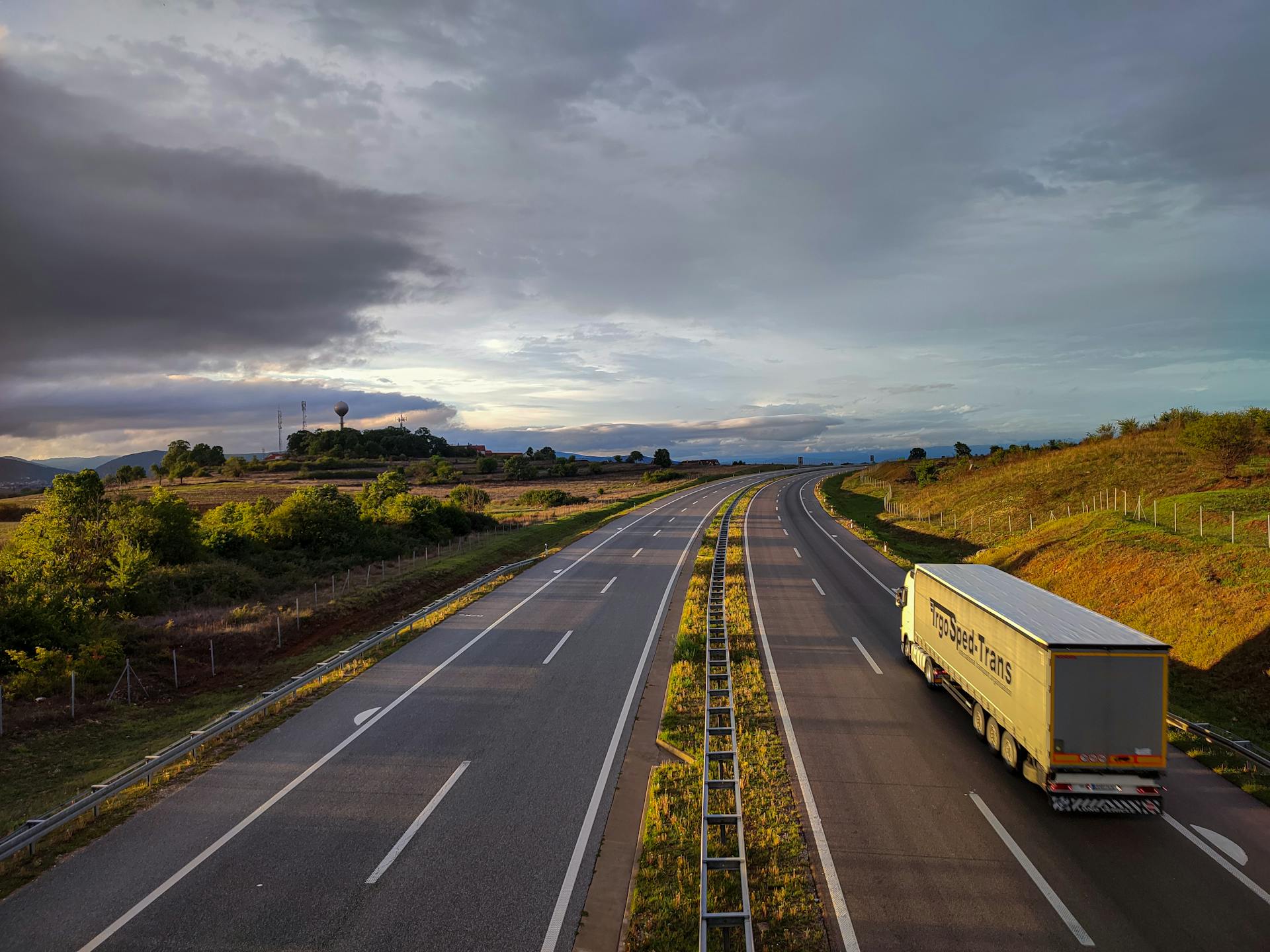
Iowa Truck Dispatch | Pork Capital & John Deere Manufacturing
We dispatch trucks for Iowa's #1-in-the-nation pork processing industry, John Deere farm equipment manufacturing, and the state's huge ethanol/biofuels corridor.
How much do truck dispatch rates run in Iowa?
Iowa-origin freight currently pays about $2.25-$2.70/mi for dry van, more for reefer and flatbed. Demand is driven by Pork Processing & Meatpacking, Agricultural Equipment Manufacturing and Agriculture & Grain. Grow Trucking dispatches Iowa owner-operators and small fleets across 15 tracked lanes on a transparent percentage-of-gross fee, disclosed upfront.
- Tracked lanes
- 15
- Major freight hubs
- Des Moines, Cedar Rapids and Davenport
- Top industries
- Pork Processing & Meatpacking and Agricultural Equipment Manufacturing
Iowa rate and market data reviewed September 2026. See our dispatch fee structure.
Iowa Truck Dispatch Services
Iowa is the pork capital of the U.S. and one of the nation's top farm states. Iowa produces roughly 30% of all U.S. pork. Processing plants in Waterloo (Tyson), Tama (Iowa Premium), Storm Lake (Tyson), and Sioux City sit close together to cut live-haul distance from farm to plant. The state's abundant corn gives cheap, nearby feed grain, the main input cost for hog farming. That has built a self-reinforcing cluster over decades. John Deere makes farm equipment at several Iowa facilities, which creates large flatbed and specialized freight. Iowa's ethanol industry is a major biofuels producer. It adds year-round tanker freight alongside the state's huge corn and soybean harvest. Des Moines is the main distribution crossroads on I-80/I-35. Cedar Rapids and Davenport (Quad Cities) add manufacturing and food-processing freight. Winter is severe in Iowa. Prairie wind, drifting snow, and black ice on I-80 make route timing matter from December through March. Drifting snow can shut down I-80/I-35 with little warning.
Iowa offers freight opportunities anchored by its #1-in-the-nation pork processing industry, John Deere farm equipment manufacturing, and a major ethanol/biofuels corridor. Demand is strong for reefer, flatbed, and hopper/tanker.
Iowa's #1-in-the-nation pork processing industry creates dependable, high-volume reefer and livestock-hauler freight
John Deere's manufacturing presence gives you real flatbed/specialized freight beyond standard farm commodities
Iowa's ethanol industry creates year-round tanker freight apart from the harvest-season farm cycle
The state's central I-80/I-35 position makes Des Moines a natural Midwest distribution crossroads
What is the Iowa freight market like?
As of 2026, Iowa's freight market is shaped by its farm output (corn, soybeans, ethanol, pork). It moves on the I-80 east-west and I-35 north-south corridors. Des Moines is the main distribution crossroads. Cedar Rapids and Davenport add manufacturing and food-processing freight.
Average Rates
Iowa-origin rates (mid-2026): dry van roughly $2.25-$2.70/mile (Des Moines distribution, John Deere-adjacent manufacturing). Reefer runs $2.55-$3.00/mile (pork products, Iowa's signature freight). Hopper/bulk rates spike at harvest (Sep-Nov) as corn/soybean hauling swamps capacity. Ethanol tanker and live-hog transport also pay well.
Market Trends
- •
Iowa produces roughly 30% of all U.S. pork. Processing plants in Waterloo, Tama, Storm Lake, and Sioux City sit close together to cut live-haul distance from farm to plant
- •
John Deere's Iowa manufacturing facilities keep creating large flatbed and specialized farm equipment freight
- •
Iowa's ethanol industry stays a major year-round tanker freight source, apart from the harvest-season hopper/bulk cycle
- •
Harvest-season planning (September-November) drives big grain and corn freight spikes across all Iowa corridors. Plan capacity ahead
- •
Iowa issues over-dimensional load permits through the IADOT Permits unit, most on the same day. Harvest-season exemptions affect HOS rules for grain haulers in late summer and fall
What are the busiest freight lanes out of Iowa?
Price these lanes with our free Trip Pre-Cost Calculator, Should I Take This Load? Calculator and Lane Profitability Analyzer.
Des Moines to Chicago
Freight route connecting Des Moines, IA to Chicago, IL (330 miles). Chicago's intermodal hub status extends Des Moines's Midwest reach via I-80.
Rate: $809 - $940
Distance: 330 miles
Des Moines to Minneapolis
Freight route connecting Des Moines, IA to Minneapolis, MN (245 miles). It reaches Minneapolis's food-processing and medical device manufacturing base via I-35.
Rate: $625 - $723
Distance: 245 miles
Des Moines to Kansas City
Freight route connecting Des Moines, IA to Kansas City, MO (195 miles). Kansas City's rail hub status and agricultural freight base connect via I-35.
Rate: $507 - $585
Distance: 195 miles
Des Moines to St. Louis
Freight route connecting Des Moines, IA to St. Louis, MO (340 miles). St. Louis's tri-modal hub status provides a dependable mid-distance lane via I-35/I-70.
Rate: $833 - $969
Distance: 340 miles
Des Moines to Omaha
Freight route connecting Des Moines, IA to Omaha, NE (135 miles). Connects Des Moines to Nebraska's beef/rail hub via I-80/I-29.
Rate: $351 - $405
Distance: 135 miles
Des Moines to Milwaukee
Freight route connecting Des Moines, IA to Milwaukee, WI (376 miles). Connects Des Moines to Wisconsin's manufacturing/dairy base via I-80/I-90.
Rate: $940 - $1,090
Distance: 376 miles
Des Moines to Indianapolis
Freight route connecting Des Moines, IA to Indianapolis, IN (475 miles). Indianapolis's crossroads position makes it a strong Midwest reload point via I-80.
Rate: $1,140 - $1,330
Distance: 475 miles
Des Moines to Denver
Freight route connecting Des Moines, IA to Denver, CO (665 miles). Denver's Mountain West distribution hub connects via I-80.
Rate: $1,529 - $1,796
Distance: 665 miles
Des Moines to Sioux City
Freight route connecting Des Moines, IA to Sioux City, IA (195 miles). Connects Des Moines to northwest Iowa's pork processing corridor via I-29.
Rate: $507 - $585
Distance: 195 miles
Des Moines to Waterloo
Freight route connecting Des Moines, IA to Waterloo, IA (115 miles). Connects Des Moines to John Deere's manufacturing base and Tyson pork processing via US-20.
Rate: $305 - $351
Distance: 115 miles
Des Moines to Davenport
Freight route connecting Des Moines, IA to Davenport, IA (165 miles). Connects Des Moines to the Quad Cities manufacturing corridor via I-80.
Rate: $429 - $495
Distance: 165 miles
Des Moines to Cedar Rapids
Freight route connecting Des Moines, IA to Cedar Rapids, IA (130 miles). Connects Des Moines to Cedar Rapids's manufacturing/food-processing base via I-80.
Rate: $344 - $396
Distance: 130 miles
Des Moines to Dallas
Freight route connecting Des Moines, IA to Dallas, TX (660 miles). Cross-country freight connecting Iowa's agricultural base to the Texas Triangle via I-35.
Rate: $1,518 - $1,782
Distance: 660 miles
Des Moines to Detroit
Freight route connecting Des Moines, IA to Detroit, MI (555 miles). Detroit's auto-supplier base rounds out Des Moines's eastern manufacturing reach via I-80/I-94.
Rate: $1,304 - $1,526
Distance: 555 miles
Des Moines to Rockford
Freight route connecting Des Moines, IA to Rockford, IL (289 miles). Connects Des Moines to Northern Illinois's manufacturing base via I-80/I-88.
Rate: $737 - $853
Distance: 289 miles
Search brokers & carriers in Iowa
Browse active freight brokers and for-hire carriers based in Iowa. The list comes live from FMCSA and updates weekly. Check bond, authority, and fleet size before you haul.
Freight Brokers
Active, FMCSA-bonded freight brokers based in Iowa.
Browse directoryDry Van Carriers
For-hire dry van carriers operating out of Iowa.
Browse directoryFlatbed Carriers
For-hire flatbed carriers operating out of Iowa.
Browse directoryReefer Carriers
For-hire reefer carriers operating out of Iowa.
Browse directoryTruck Parking
Official NHS rest stops and truck parking capacity across Iowa.
Browse directoryWhich industries drive freight demand in Iowa?
Pork Processing & Meatpacking (Waterloo, Tama, Storm Lake, Sioux City - 30% of U.S. pork)
Agricultural Equipment Manufacturing (John Deere)
Agriculture & Grain (corn, soybeans)
Ethanol & Biofuels
Food & Beverage Manufacturing (Cedar Rapids, Davenport/Quad Cities)
Insurance & Financial Services (Des Moines)
How does Iowa freight change by season?
Rates and weather change with the seasons. Here is a quarter-by-quarter look at rates, weather, and what to do in Iowa.
Q1 (Jan-Mar)
Rate Movement
Rates hold steady on pork processing and ethanol freight through winter
Weather Impact
Severe winter weather (prairie wind, drifting snow, black ice) is the top risk on I-80/I-35
Strategy
Position near Des Moines's I-80/I-35 interchange early in the week, and build in a big weather buffer
Q2 (Apr-Jun)
Rate Movement
Rates get stronger as construction and John Deere manufacturing freight ramp up ahead of harvest
Weather Impact
Improving as winter conditions ease
Strategy
Focus on John Deere-adjacent flatbed freight and get ready for the coming harvest season
Q3 (Jul-Sep)
Rate Movement
Rates hold steady, building toward the September harvest surge
Weather Impact
Generally favorable statewide
Strategy
Get hopper/bulk capacity ready in advance for the coming corn/soybean harvest
Q4 (Oct-Dec)
Rate Movement
Rates spike sharply September-November as harvest season lifts hopper demand
Weather Impact
Winter weather begins affecting I-80/I-35 by late November
Strategy
Book capacity early. The harvest surge overlaps with early winter, which makes this the tightest window of the year
Additional Seasonal Considerations
- •
Harvest season (Sep-Nov) sharply raises corn/soybean hopper demand across all Iowa corridors
- •
Winter weather (Dec-Mar) is a serious, recurring factor because of prairie wind and drifting snow
- •
Pork processing and ethanol freight run steady year-round, mostly apart from the harvest calendar
- •
John Deere manufacturing freight runs steady year-round, tied to production and shipping schedules
Where are the major freight hubs in Iowa?
The ports, inland ports, intermodal terminals, and distribution cities that move freight across Iowa. See where most of the freight is.
Distribution Cities
- Des Moines
- Cedar Rapids
- Davenport
- Sioux City
- Waterloo
Ports & Intermodal Terminals
Des Moines I-80/I-35 Distribution Crossroads
Iowa's main distribution hub, at the intersection of the state's two major interstates.
Quad Cities Manufacturing Corridor (Davenport)
Adds big manufacturing and food-processing freight alongside Cedar Rapids.
Sioux City Pork Processing Complex
One of several pork processing centers that cut live-haul distance from farm to plant.
Where can trucks park and fuel in Iowa?
Truck parking and fuel info to help you plan your routes through Iowa.
Estimate fuel, tolls, and fuel tax with our free Fuel Cost Calculator, IFTA Tax Calculator and Toll Cost Estimator with Route Comparison.
Major Truck Stops
Love's Travel Stop — Des Moines/Altoona (I-80, Exit 142)
📍 3000 Adventureland Drive, Altoona, IA 50009
195 truck parking spaces ($14/day fee), Arby's restaurant, 24/7 fuel, WiFi, showers, and tire services. A prime I-80/I-35 crossroads spot for central Iowa distribution freight.
Flying J Travel Plaza — Iowa City (I-80, Exit 244)
📍 200 Heartland Drive, Coralville, IA 52241
180 truck parking spaces ($15/day fee), Denny's restaurant, full truck maintenance shop, CAT scales. An east Iowa spot serving the University of Iowa market and the I-80 corridor.
TA Travel Center — Walcott (I-80, Exit 284)
📍 755 West Iowa 80 Road, Walcott, IA 52773
900 truck parking spaces ($15/day fee), multiple restaurants, truck museum, full services. World's Largest Truck Stop. Iowa's most iconic truck stop at the Iowa-Illinois border.
Pilot Travel Center — Des Moines/Grimes (I-80, Exit 125)
📍 1810 Northwest 118th Street, Grimes, IA 50111
175 truck parking spaces ($14/day fee), Subway restaurant, full fuel services. Northwest Des Moines metro access serving I-80/I-35 distribution freight.
Love's Travel Stop — Davenport/Walcott (I-80, Exit 280)
📍 1000 West Davenport Road, Walcott, IA 52773
165 truck parking spaces ($14/day fee), McDonald's, 24/7 fuel, showers. Quad Cities positioning for eastern Iowa John Deere and manufacturing freight.
Petro Stopping Center — Walcott (I-80, Exit 284)
📍 776 West Iowa 80 Road, Walcott, IA 52773
300 truck parking spaces ($15/day fee), Iron Skillet restaurant, full truck service center. Next to the Iowa 80 Truckstop complex, serving I-80 transcontinental freight.
TA Express — Ames (I-35, Exit 111)
📍 3119 South Duff Avenue, Ames, IA 50010
140 truck parking spaces ($13/day fee), Popeyes restaurant, repair services. On the central I-35 corridor, serving Des Moines-Minneapolis freight and the Iowa State University market.
Love's Travel Stop — Sioux City (I-29, Exit 143)
📍 200 Tribute Parkway, Sioux City, IA 51111
150 truck parking spaces ($13/day fee), Carl's Jr. restaurant, 24/7 fuel. Northwest Iowa position serving pork processing corridor and Sioux City meat-packing freight.
Parking Difficulty
Moderate. Des Moines and the Quad Cities (Davenport) see steady parking demand because of distribution/manufacturing volume. Walcott (I-80, Exit 284) is home to the World's Largest Truck Stop (Iowa 80). It is Iowa's main parking hub, with 1,200+ total spaces across adjacent facilities. Peak demand is weekday evenings 6-9 PM, when cross-country I-80 drivers park after long hauls. Rural Iowa is generally less crowded outside harvest season (Sep-Nov). Arrive before 6 PM during harvest season or severe winter weather (Dec-Mar), or use reservation apps.
- •Plan ahead for parking in metro areas
- •Use rest areas as a backup
- •Use parking apps to find available spots
Strategic Positioning Advice
Park where you can find loads fast and cut deadhead miles:
- •
Major Distribution Centers: Position near major distribution hubs in Des Moines for quick access to outbound loads.
- •
Busy Freight Routes: Stay near busy freight corridors to catch backhaul loads.
- •
Timing: Arrive when booking is busiest (usually early morning) to get the best rates.
Fuel price trend
How has the diesel price changed in Iowa?
EIA does not publish a separate diesel price for Iowa, so this is the weekly average for the Midwest region that Iowa is part of, over the last 12 months.
- Price this week
- $6.35/gal
- Since last week
- Up 9 cents
- Versus a year ago
- Up 78%
- Versus the U.S. average
- 8 cents above
Week of October 19, 2026
+$2.79 a gallon
U.S. average $6.28
Source: U.S. Energy Information Administration weekly retail on-highway diesel prices. Averages, not the price at one pump.
What are Iowa's truck weight limits and regulations?
Weight limits, permits, and emission rules. Know these rules to stay legal. Also see what to expect at a DOT roadside inspection, the federal size and weight limits, and the full federal trucking regulations reference.
Check weights and permits with our free Scale / Weigh Station Guide, Weight & Axle Load Calculator and Oversize / Overweight Permit Estimator.
Weight Limits
Federal limits on the Interstate System (23 CFR 658.17):
- Single Axle: 20,000 lbs
- Tandem Axle: 34,000 lbs
- Gross Vehicle Weight: 80,000 lbs, or less where the bridge formula sets a lower total
Other highways follow Iowa law, and some states allow more on non-Interstate roads. Check with the state's size and weight office before you load.
Size Limits
Width is a federal limit. Height and trailer length depend on the state:
- Width: 8.5 feet (102 inches) on the National Network (23 CFR 658.15)
- Height: Set by each state. There is no federal height limit, and FHWA says most states are between 13 ft 6 in and 14 ft. Check Iowa's limit for your route.
- Length: 53 ft semitrailers are common, but a state can apply its own kingpin-to-rear-axle rule
State-Specific Rules
- •
Iowa State Patrol and Iowa DOT jointly enforce commercial vehicle safety. They check trucks at weigh stations and with roving patrols
- •
Federal weight limits on the Interstate System: 80,000 lbs gross vehicle weight, 20,000 lbs single axle, 34,000 lbs tandem axle. Other highways follow state law, so check the state's size and weight office
- •
Size limits: 8.5 ft (102 in) width. Legal height is set by each state, and FHWA says most are 13 ft 6 in to 14 ft, so check the state's size and weight office. A 53 ft semitrailer is common, but state kingpin-to-rear-axle rules apply
- •
Iowa issues over-dimensional load permits through the IADOT Permits unit, most on the same day
- •
Harvest-season exemptions affect HOS rules for grain haulers in late summer and fall. Verify current exemption terms with Iowa DOT
- •
Iowa's diesel fuel tax is about $0.325/gallon (verify the current rate with the Iowa Department of Revenue)
Permits
Iowa may require special permits for:
- •Oversized/overweight loads
- •Hazardous materials
- •Special route rules
Iowa: freight facts a driver should know
Iowa allows longer lowboy trailers for construction equipment
Iowa's standard trailer length limit is 53 feet, but a lowboy trailer hauling construction equipment can run up to 57 feet — a specific exception beyond the usual federal baseline. Legal weight otherwise caps at 80,000 pounds gross and 20,000 pounds on a single axle.
Source: Iowa Department of Transportation, oversize/overweight permit types. Checked 30 Sep 2026.
A $500 annual permit adds 12% to Iowa's axle weight limits
Iowa's Annual All-Systems Overweight Permit costs $500 a year and lets a truck run up to 12% over the standard axle weight limits on state roads and some city/county roads. In practice that means a 5-axle truck can gross up to 89,600 pounds, a 6-axle up to 100,800 pounds, and a 7-axle up to 107,520 pounds.
Source: Iowa Department of Transportation, Annual All-Systems Overweight Permit fact sheet. Checked 30 Sep 2026.
How have Iowa freight rates moved, and what's next?
How Iowa freight rates have moved through recent market cycles, and what owner-operators and fleets should expect next. Use this to time lane commitments and rate negotiations. Before you accept a load, check it against our free rate benchmarker.
Recent Rate Cycles
Rate cycles that shaped the current Iowa freight market:
2018-2019
Strong market. Rates hit their peak because trucks were in short supply
2020
Rates swung at first because of the pandemic. Freight demand then bounced back hard
2021-2022
Record-high rates. E-commerce demand surged and trucks were in short supply
2023-2024
Rates fell sharply as truck supply passed demand. Smaller carriers left the market
2025-2026
The national market is recovering. Iowa's dominant pork processing industry and John Deere manufacturing base have kept freight demand strong
Market Correction Periods
Knowing when corrections hit Iowa helps with strategic planning:
- •
Q1 2023: Rates fell hard as trucks were added faster than freight grew
- •
Mid-2024: The market is settling, with supply and demand more in balance
- •
Pattern: Rate drops usually last 6–12 months before rates recover
Iowa Market Outlook
As of mid-2026, Iowa's freight market gains from being the nation's #1 pork producer. It also gains from John Deere's continued manufacturing investment and the ethanol industry's year-round tanker demand. The fall harvest is still the biggest yearly freight event.
What Drives Rates in Iowa
- •Freight volume and demand (pork processing, farm equipment manufacturing, grain harvest, ethanol)
- •Truck supply, which tightened a lot from last year across the nation
- •Fuel costs and Iowa's diesel fuel tax (~$0.325/gallon)
- •Harvest-season timing (Sep-Nov) and John Deere production schedules
How do I cut deadhead miles running freight in Iowa?
How to cut empty miles when you haul in and out of Iowa. See the outbound and inbound freight balance, the best return lanes, and where to park your truck. Run your own numbers with our free deadhead miles calculator.
Outbound Freight
50%
Roughly 50% of Iowa freight moves outbound. Outbound loads from Iowa's production and distribution centers typically book fastest early in the week.
Inbound Freight
50%
About 50% of the freight balance is inbound. Book your return load before you deliver. It is the biggest way to raise your rate-per-mile on these lanes.
Best Backhaul Lanes into Iowa
The strongest return lanes for repositioning back toward Iowa:
Chicago to Des Moines
I-80 corridor connecting two major Midwest freight markets
Rate: $2.40 - $2.80/mile
Minneapolis to Des Moines
I-35 corridor connecting two major Midwest farm/distribution hubs
Rate: $2.45 - $2.85/mile
Kansas City to Des Moines
I-35 corridor with steady farm and rail-adjacent freight
Rate: $2.40 - $2.80/mile
Positioning Strategies for Iowa
Where and when to stage to keep your next load close and your deadhead low:
- •
Position near Des Moines's I-80/I-35 interchange for the fastest access to outbound loads
- •
Track harvest timing (Sep-Nov) closely if you run hopper/bulk freight
- •
Use load boards to pre-book backhaul before longer cross-country hauls
What do experienced dispatchers know about running Iowa?
Hands-on tips from years of dispatching in Iowa.
Iowa's #1-in-the-nation pork industry is the state's signature freight category. Reefer/livestock carriers who build relationships with Tyson/Iowa Premium-adjacent brokers get dependable, high-volume work. Waterloo, Tama, Storm Lake, and Sioux City plants handle millions of hogs each year.
John Deere's Iowa manufacturing is a real, less-competitive flatbed niche beyond standard farm commodity freight. John Deere facilities in Waterloo (tractors), Ankeny (electronic systems), and Davenport (heavy equipment) create year-round specialized flatbed demand.
Harvest season (Sep-Nov) swamps hopper capacity across all Iowa corridors. Book ahead, or expect real premium rates if you can move into it. Fall corn/soybean harvest can command 30-50% rate premiums in peak weeks.
Des Moines positioning and corn/soybean harvest cycles (Sep-Nov) create Tuesday-Wednesday rate spikes. Grain elevators rush weekly movements before weekend capacity limits.
Iowa's winter weather is severe. Drifting snow can shut down I-80/I-35 with little warning, so build real schedule buffer Dec-Mar. Prairie wind creates whiteout conditions even when snowfall is moderate. Visibility drops to zero within minutes.
Iowa's ethanol tanker freight runs year-round, apart from the harvest cycle. It is a dependable option to seasonal hopper freight. Iowa has 40+ ethanol plants producing 4+ billion gallons a year, which creates constant tanker demand.
Walcott's Iowa 80 Truckstop complex (I-80, Exit 284) is the world's largest truck stop, with 900+ parking spaces. Adjacent facilities bring the total to 1,200+ spaces. It is Iowa's main parking hub and a real truck-culture landmark.
Live-hog transport needs specialized equipment (pot-belly trailers with ventilation) and biosecurity rules that differ from standard reefer freight. Most live-hog haulers work within a 100-mile radius of processing plants to cut transport stress.
Iowa's diesel fuel tax (~$0.325/gallon) is among the higher state rates. Factor it into IFTA calculations on multi-state runs. But Iowa's low land and labor costs often offset higher fuel taxes in total cost.
The Quad Cities (Davenport-Bettendorf-Rock Island-Moline) straddle the Iowa-Illinois border, which creates unique freight patterns. Knowing both states' rules helps you run this manufacturing corridor better.
Remember: These tips come from real dispatching work in Iowa. Markets change, but these basics still help you earn more and cut deadhead miles.
How have drivers near Iowa grown with Grow Trucking?
+$1,950/week after moving to $2.65/mi on produce / auto parts freight. Route optimization cut empty miles by 86%.
Read the case study+$3,745/week after moving to N/A/mi on midwest regional freight freight. From $4–5K/week to $9,250 with a Midwest lane strategy.
Read the case study+$3,170/week after moving to $2.90/mi on automotive parts / manufacturing freight. New authority veteran driver fast-tracked to premium rates.
Read the case studyIowa Freight FAQs
Comprehensive answers to common questions about trucking and dispatch in Iowa. State-specific regulations, costs, and operating strategies.
Yes. You need a USDOT number, an MC number for interstate for-hire carriage, and Iowa-specific IRP/IFTA registration through the Iowa DOT Motor Vehicle Division. Iowa does not require separate intrastate authority for carriers that already hold federal interstate authority. Live-hog haulers should verify their authority covers livestock transport. They should also confirm biosecurity compliance with processing plants before the first haul.
Federal minimum liability coverage usually runs $750,000 for general freight and $1,000,000 for hazmat/livestock cargo. You also need cargo insurance ($100,000+ depending on commodity) and physical damage coverage. Live-hog transport needs livestock endorsements and biosecurity liability coverage ($250,000+ recommended because of disease risks). John Deere specialized equipment freight often needs $500,000+ cargo coverage with named insured status. Confirm current minimums with your insurance provider. Verify coverage meets specific customer rules before you haul farm equipment or livestock.
As of mid-2026, reefer/livestock freight tied to pork processing (Waterloo, Tama, Storm Lake, Sioux City) runs $2.55-$3.00/mile for reefer, with specialized rates for live-hog transport. Hopper/bulk rates spike 30-50% above baseline during the Sep-Nov harvest, reaching $2.80-$3.40/mile for tight-window corn/soybean moves. Flatbed tied to John Deere farm equipment runs $2.60-$3.10/mile. Ethanol tanker freight runs $2.50-$2.95/mile year-round. Standard dry van tied to Des Moines distribution runs $2.25-$2.70/mile.
Yes. Iowa's dominant pork processing industry, John Deere manufacturing base, and year-round ethanol tanker freight give new operators real stability. But new carriers should do five things. (1) Prepare seriously for the Sep-Nov harvest capacity crunch. Hopper/bulk carriers can earn 30-40% of annual revenue in this tight window. (2) Build financial reserves for severe winter weather Dec-Mar, when I-80/I-35 shutdowns can last 24-48 hours. (3) Know that live-hog transport needs specialized equipment (pot-belly trailers) and biosecurity rules. (4) Factor Iowa's diesel fuel tax (~$0.325/gallon) into IFTA calculations. (5) Build relationships with pork processing or John Deere freight brokers for dependable repeat business.
Iowa diesel fuel tax is about $0.325 per gallon as of 2026, among the higher state rates in the Midwest. Add the federal tax ($0.244/gallon), and total diesel fuel tax is about $0.569 per gallon. Retail diesel in the Midwest region, which includes Iowa, averages $6.35/gallon as of October 19, 2026 (EIA weekly average), about 8 cents above the national average of $6.28. That price is up 9 cents from last week and 78% above a year ago. Iowa's farm economy creates seasonal freight peaks (spring planting, fall harvest). Des Moines is a regional distribution hub. Fuel stops in neighboring lower-tax states (Nebraska $0.318/gal, Missouri $0.295/gal) can help IFTA tax planning on multi-state runs. Source: IFTA matrix, Iowa Department of Revenue, AAA, verified September 2026.
To haul Iowa pork processing freight (live-hog inbound, boxed pork outbound), you need six things. (1) Specialized equipment for live-hog transport (pot-belly trailers with temperature control and ventilation) or reefer trailers for processed pork. (2) A livestock endorsement on your CDL and authority for live-hog transport. (3) Biosecurity training. Processing plants require strict cleaning between loads to prevent disease spread. (4) Cargo insurance with $250,000+ livestock coverage or $100,000+ food-grade reefer coverage. (5) A spot on the approved carrier lists of Tyson Foods, Iowa Premium Beef, or other Iowa processors. Contact their logistics departments to get onboarded. (6) Knowledge of USDA Food Safety and Inspection Service (FSIS) rules for food-grade freight. Most live-hog haulers work within a 100-mile radius of processing plants to cut transport stress. Contact pork processing freight brokers who specialize in Midwest livestock (examples: Livestock Transportation Services, Midwest Livestock Systems) to get carrier-approved freight.
Iowa gives harvest-season HOS exemptions to grain haulers moving farm commodities during harvest. That is usually late August through November. Exact dates vary by crop maturity and weather. The exemptions allow three things. (1) Driving beyond the standard 11-hour daily limit. (2) Flexibility in the 14-hour on-duty window. (3) Relief from the 30-minute break rule. But they apply ONLY to grain haulers moving commodities directly from field to storage or processing within a 150-air-mile radius. They do NOT apply to long-haul interstate grain moves. Verify current exemption terms with Iowa DOT Motor Carrier Services before you rely on extended hours. Violations carry standard FMCSA penalties even during harvest if you don't meet the exemption criteria.
Book outbound loads Monday-Wednesday, when Iowa spot rates usually run 10-15% higher than Friday/weekend postings. Des Moines distribution freight pays the most Tuesday-Thursday (15-20% premium over Friday rates), as shippers clear inventory before weekend closures. John Deere manufacturing freight pays best Monday-Wednesday for same-week delivery. Avoid Friday afternoon loads unless the rate covers weekend deadhead risk. Harvest season (September-November) disrupts normal weekly patterns. Book 5-7 days ahead during harvest, as capacity tightens sharply and rates spike 30-50% above baseline. Winter weather (December-March) can spike rates 20-30% when blizzards shut down I-80/I-35. Watch weather forecasts and book early before major storms arrive.
Iowa's winter weather (December-March) needs daily planning because of prairie wind, drifting snow, and black ice on I-80/I-35. Here are six key steps. (1) Check Iowa DOT 511 travel info every morning before you leave. It gives real-time road closure updates and tow-ban notices. (2) Watch National Weather Service warnings for blizzard and ice storm conditions. (3) Build a 4-8 hour buffer into delivery commitments in winter. Even light snowfall creates whiteout conditions with prairie wind. (4) Carry emergency supplies (food, water, blankets, flashlight, phone charger, extra fuel). Highway closures can strand trucks for 24-48 hours. (5) Tell dispatchers and shippers about weather delays early. Most Iowa-based shippers understand winter delays. (6) Never try to outrun a blizzard. Park safely at the nearest truck stop when conditions get worse. Drifting snow can shut down I-80/I-35 with little warning, even when snowfall is moderate. Prairie wind creates zero visibility within minutes. The Iowa State Patrol enforces tow bans (no truck movement allowed) in severe weather. Violations carry heavy fines.
Iowa truck parking is moderately hard. Des Moines and the Quad Cities (Davenport) see steady demand because of distribution/manufacturing volume. Walcott (I-80, Exit 284) is Iowa's main parking hub. It is home to the world's largest truck stop (Iowa 80 Truckstop), with 900+ parking spaces. Adjacent Petro and Love's facilities bring the total to 1,200+ spaces. Peak demand is 6-9 PM, when cross-country drivers park after long I-80 hauls. Rural Iowa is generally less crowded outside harvest season (Sep-Nov). To secure parking, do four things. (1) Arrive before 6 PM, especially at Walcott on peak travel weekends (Thanksgiving, Christmas). (2) Use truck stop reservation apps (TruckSmart, Trucker Path Pro) during harvest and winter weather events. (3) Have backup parking spots picked out. Iowa rest areas have free truck parking (10-hour max stay) but fill fast during blizzards. (4) Plan fuel stops with care. Iowa has generous truck stop spacing on I-80 (every 30-50 miles), but I-35 has longer gaps north of Des Moines. It is less crowded than coastal markets. But advance planning during harvest (Sep-Nov) and winter storms (Dec-Mar) is key.
Keep exploring dispatch options
Tools, equipment guides and nearby states relevant to running freight in and out of Iowa.
By equipment
Free tools
- Trip Pre-Cost Calculator
- Toll Cost Estimator with Route Comparison
- Load Board Rate Benchmarker
- Deadhead Miles Calculator
- Fuel Cost Calculator
- IFTA Tax Calculator
- Scale / Weigh Station Guide
- Cost Per Mile Calculator
- Diesel prices today
- Diesel tax by state
- Truck idling laws by state
- Truck speed limits by state
- Truck chain laws by state
- Truck lane laws by state
- Truck height and length limits by state
- Rest area parking limits by state
- Midwest diesel prices
- Freight Class Calculator
- Truck Payment Calculator
- All Free Tools
Services
More from Grow Trucking
Ready to Move Freight in Iowa?
Secure Your Strategy:
Apply for your FREE Custom 90-Day Growth Plan (a $1,500 value). It starts with a Business Audit that finds where you lose money and sets your profit goals.
Guarantee Your GROWTH:
Start your 90-day partnership to implement the plan. We back it with our "Growth or Your Money Back" Guarantee.