
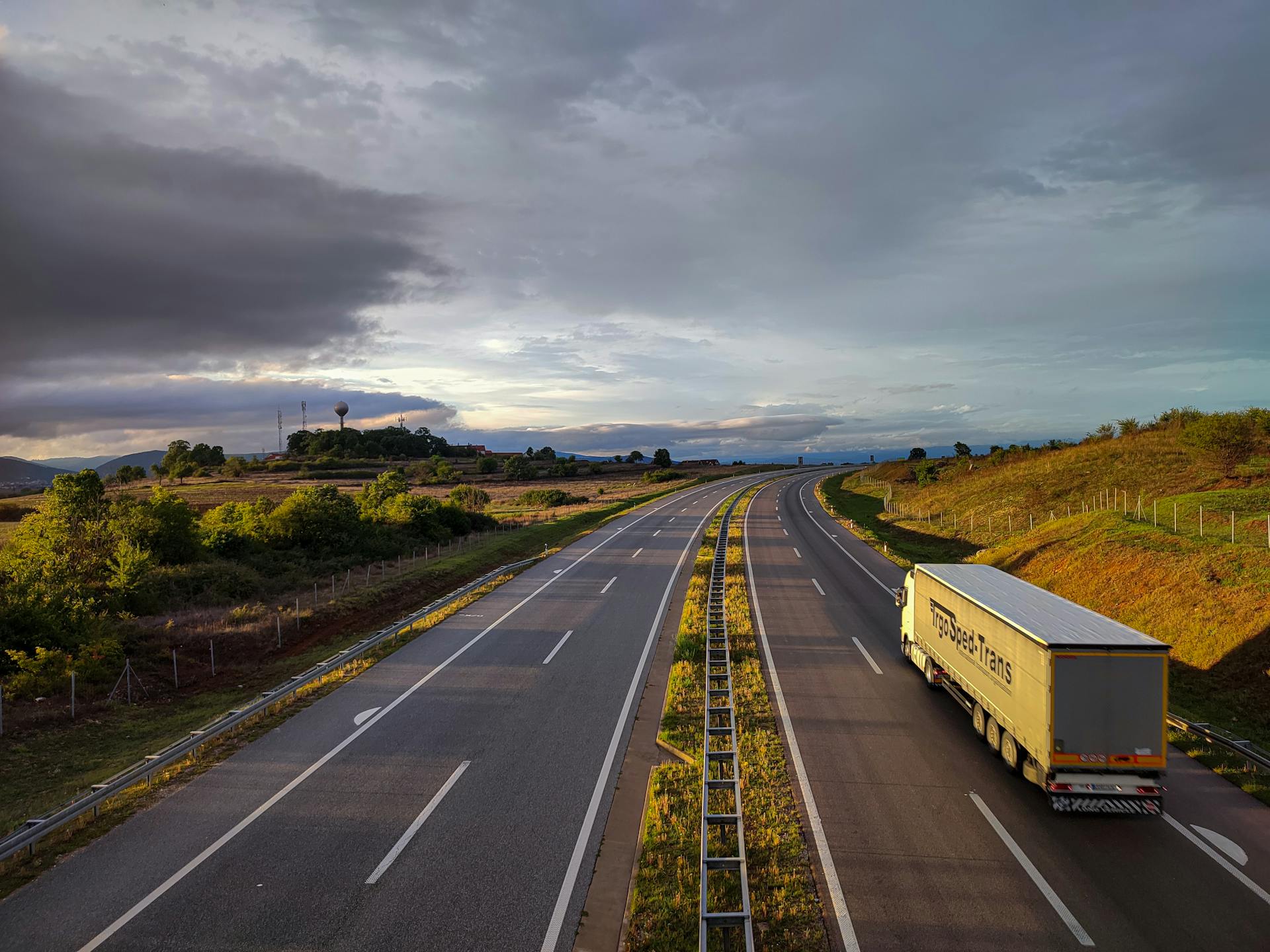
Seattle to Los Angeles Truck Dispatch
Freight route connecting Seattle, WA to Los Angeles, CA (1135 miles). Connects Seattle's port complex to Southern California's massive consumer market via I-5.
What do truck dispatch rates run from Seattle to Los Angeles?
Seattle to Los Angeles is a 1,135-mile lane paying about $2,384 - $2,838 per load, near $2.10 - $2.50 a mile. Freight is mostly retail distribution, consumer goods and import cargo.
- Distance
- 1135 miles
- Avg. rate / load
- $2,384 - $2,838
- Rate per mile
- $2.10 - $2.50
- Transit time
- 2 days
- Deadhead risk
- 30-35%
Lane rates reviewed September 2026. These numbers follow 2026 spot-market pricing and shift with fuel prices and port volume at both ends. See our dispatch fee structure.
Seattle to Los Angeles
Seattle to Los Angeles is a 1,135-mile, 2-day run south on I-5 the whole way, connecting the Northwest Seaport Alliance to the two busiest container ports in the country. The Northwest Seaport Alliance handled 3.16 million TEU with 631,230 intermodal lifts in 2025, while the Port of Long Beach moved a record 9.9 million TEU and the Port of Los Angeles was pacing near 10 million TEU the same year.
Origin
Seattle, WA
Destination
Los Angeles, CA
Distance
1135 miles
Transit Time
2 days
Average Rate
$2,384 - $2,838
Rate per Mile
$2.10 - $2.50
1,135-mile lane, typically a 2-day run entirely on I-5
Connects two of the country's largest port complexes
The Northwest Seaport Alliance handled 3.16 million TEU in 2025
Seattle to Los Angeles: route facts a driver should know
California's Clean Truck Check applies to out-of-state trucks too
California's Clean Truck Check program requires most diesel trucks over 14,000 pounds to pass emissions testing twice a year, with deadlines tied to DMV registration, applying to out-of-state trucks operating in California too.
Source: California Air Resources Board, Clean Truck Check overview. Checked 30 Sep 2026.
Washington's freight system moves over 500 million tons of goods a year
Washington's freight system moves more than 500 million tons of goods annually, valued at over $600 billion, with I-5 serving as the primary north-south trucking corridor from Canada to California.
Source: Washington Trucking Associations, freight corridors overview. Checked 30 Sep 2026.
Diesel for this lane
How much is the diesel for Seattle to Los Angeles?
About $1365.14 this week. The lane is 1,135 miles. A truck that gets 6.5 miles per gallon uses about 175 gallons, and diesel is averaging $7.82 a gallon on this lane (week of October 19, 2026). The U.S. average diesel price is up 10 cents this week.
An estimate. It uses EIA's weekly average for the two regions this lane connects, not the price at each pump. Your mpg and fuel card discounts change it.
- Distance
- 1,135 mi
- Diesel needed
- 175 gal
- Price used
- $7.82/gal
- Fuel cost
- $1365.14
Common Freight Types
Retail distribution, consumer goods and import cargo fill the trailers heading south.
- Retail Distribution
- Consumer Goods
- Import Cargo
What makes the Seattle to Los Angeles lane difficult?
The Siskiyou Pass near the California-Oregon border can see snow or ice in winter
The Siskiyou Pass near the California-Oregon border can see snow or ice in winter.
A 2-day haul needs a proper rest period built in
Understanding and preparing for this challenge helps optimize your operations and maximize profitability on this lane.
Port volume at both ends has swung with tariff policy through 2025
Port volume at both ends has swung with tariff policy through 2025.
What freight moves on the Seattle to Los Angeles lane?
What travels between Seattle and Los Angeles, and when the busy weeks fall.
Primary Commodities
- •Retail Distribution
- •Consumer Goods
- •Import Cargo
Secondary Commodities
- •Port drayage and transload freight (both ends)
- •Technology equipment
- •Retail distribution
Seasonal Cargo
Peak seasons for this lane:
- •Consumer goods (holiday surge)
- •Technology equipment (steady)
- •Retail distribution (steady)
When is the Seattle to Los Angeles lane busiest?
Retail timing and port import volume both shape this lane.
Q1 (Jan-Mar): Slow Period?
A modest dip after the holidays, cushioned by steady technology-sector freight.
Q4 (Oct-Dec): Peak Period?
Consumer goods and port import volume both climb from October through December.
Produce Season?
Not a major factor on this lane.
- •Q4 holiday import surge
- •Steady technology-equipment freight
- •Port import surges
Hurricane Risk?
None; this is a Pacific coastal route. Winter storms over the Siskiyou Pass are the real weather risk.
Seasonal Strategy Summary
This lane runs steady year-round, without a major seasonal swing to plan around.
How do I negotiate the best rate on the Seattle to Los Angeles lane?
When to book, who pays extra, and which loads need a weather plan.
When to Book
Suggested booking window:
3-4 days out is typical for this 2-day haul.
What Brokers Pay More
Loads that command more:
Time-critical technology-sector and priority port drayage freight tend to pay a premium.
When to Avoid
Loads to price carefully:
Be careful pricing a winter Siskiyou Pass crossing without a weather plan.
Rate Negotiation Tips for Seattle to Los Angeles
- •
This is a very long haul at 1,135 miles, so plan for multiple days and rest stops.
- •
Check your truck's Clean Truck Check compliance before entering California, since it applies to out-of-state trucks too.
- •
This lane runs mostly on I-5, the full-length West Coast corridor.
How do I find a backhaul load on the Seattle to Los Angeles lane?
The LA Basin's record port volume makes a northbound load realistic.
Best Return Cities
Where to look for the northbound load:
- •Los Angeles, CA
- •Regional distribution hubs near Los Angeles
Deadhead Risk %
Deadhead risk on this lane: 30-35%
Both ends of this lane have major container ports, so drayage freight is available in either direction.
Alternative Routes
If the first load falls through, try these:
- •The huge volume of freight on the full I-5 West Coast corridor keeps deadhead risk fairly low, despite the distance. Two-way demand between LA and the Pacific Northwest stays steady.
Backhaul Optimization Tips
- •
Los Angeles's massive port and distribution volume gives you strong backhaul odds in almost any direction.
- •
Seattle's massive freight volume keeps northbound loads flowing too.
- •
Give yourself real recovery time after this long run before your next dispatch.
What do experienced dispatchers know about the Seattle to Los Angeles lane?
Three notes before this two-day coastal run.
Check Siskiyou Pass conditions before a winter run.
Plan your required rest period into the 2-day schedule.
Check current port volume at both ends before committing to a tight pickup window.
Check conditions in all three states you cross (Washington, Oregon, California) before a winter departure.
This is one of the longest lanes we track, the full length of I-5. Make sure your Clean Truck Check compliance is current before you cross into California.
Seattle to Los Angeles Lane FAQs
Answers on driving time, the Siskiyou Pass, and port volume.
The lane data shows about $2,384 - $2,838 per load, or $2.10 - $2.50 a mile, across 1,135 miles.
Very. The Northwest Seaport Alliance handled 3.16 million TEU in 2025, and the LA-area ports moved a combined near-record volume the same year.
Typically 2 days for the 1,135 miles.
Yes, generally, given the record port volume at both ends of this lane.
Other Washington freight lanes we dispatch
- Seattle to Boise
- Seattle to Sacramento
- Seattle to Denver
- Seattle to Chicago
- Seattle to Salt Lake City
- Seattle to Yakima
Local resources
Also serving the other end of this lane
Dry Van owner-operator, West Coast: +$2,010/week after moving to $2.62/mi on general freight / consumer goods freight.
Read the case studyNeed help running Seattle, WA to Los Angeles, CA consistently?
Running Seattle to Los Angeles often? Ask about a free custom growth plan.