
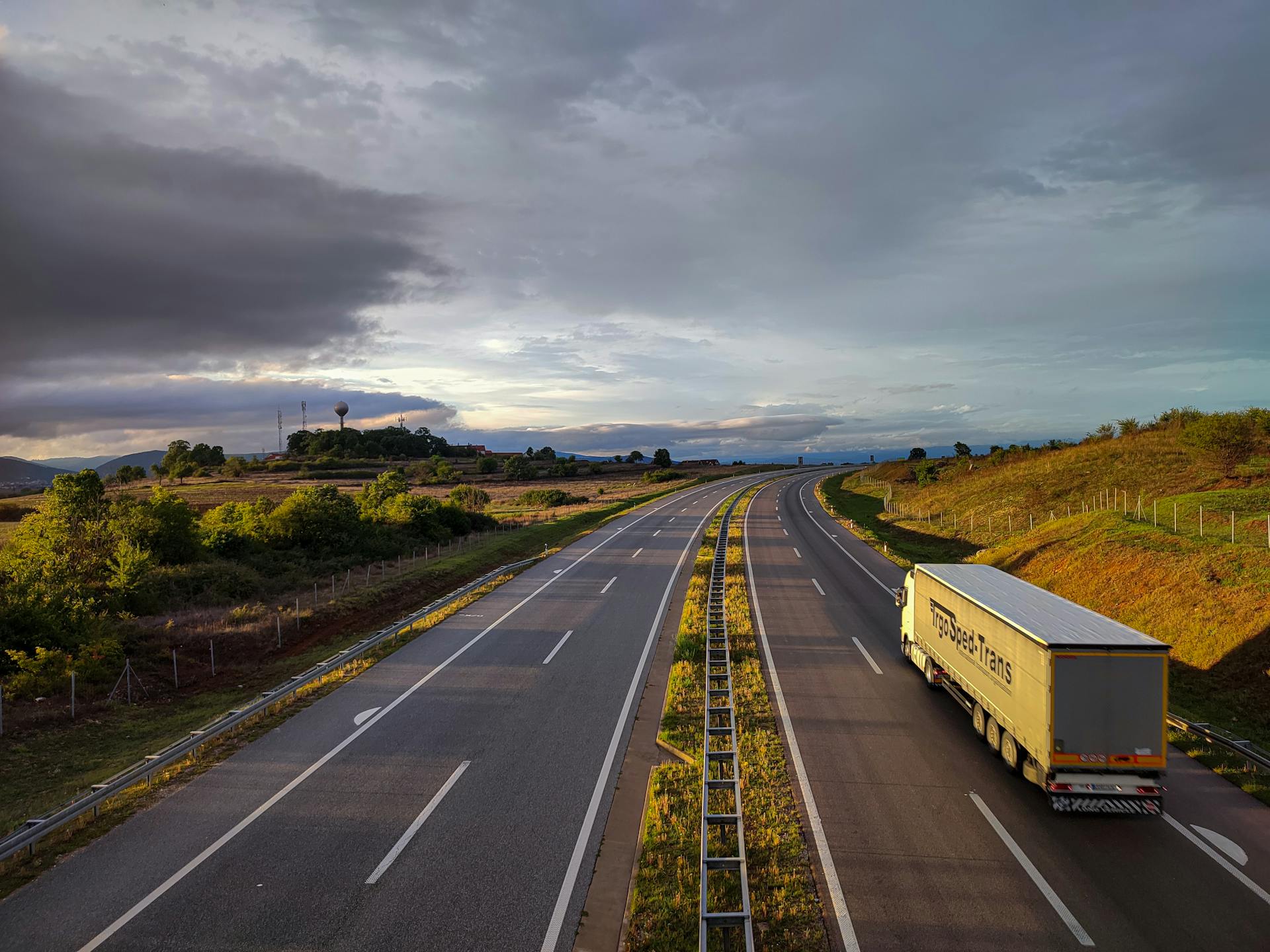
Los Angeles to Sacramento Truck Dispatch
Freight route connecting Los Angeles, CA to Sacramento, CA (385 miles). Connects LA to Northern California's growing distribution market via I-5.
What do truck dispatch rates run from Los Angeles to Sacramento?
Los Angeles to Sacramento is a 385-mile lane paying about $885 - $1,040 per load, near $2.30 - $2.70 a mile. The lane data lists transit as same-day, 6 hours. Freight is mostly consumer goods, retail distribution and agricultural products.
- Distance
- 385 miles
- Avg. rate / load
- $885 - $1,040
- Rate per mile
- $2.30 - $2.70
- Transit time
- Same day / 6 hrs
- Deadhead risk
- 20-25%
Lane rates reviewed September 2026. These numbers follow 2026 spot-market pricing and shift with fuel prices and Sacramento's growing distribution volume. See our dispatch fee structure.
Los Angeles to Sacramento
Los Angeles to Sacramento is a 385-mile run north on I-5, about 6 hours of driving. Sacramento sits where I-5, I-80 and Highway 99 converge, three Class A freight corridors on one metro, with Union Pacific's Roseville yard, one of the largest rail facilities west of the Mississippi, and intermodal access to the Port of Oakland less than 90 minutes away. Sacramento's freight market has been described as a Tier 1 logistics geography priced like a Tier 2 market: industrial rents run roughly $0.79-$0.80 per square foot, well under Bay Area or LA rates, which has drawn about 10 million square feet of warehouse and distribution space to the region.
Origin
Los Angeles, CA
Destination
Sacramento, CA
Distance
385 miles
Transit Time
Same day / 6 hrs
Average Rate
$885 - $1,040
Rate per Mile
$2.30 - $2.70
385-mile lane, typically a same-day run on I-5
Sacramento sits at the junction of I-5, I-80 and Highway 99
Union Pacific's Roseville rail yard, near Sacramento, is one of the largest rail facilities west of the Mississippi
Los Angeles to Sacramento: route facts a driver should know
Fresno County leads the nation in agricultural production
Fresno County produces more than $9 billion in annual agricultural output, and Central Valley freight along this corridor's Highway 99 route includes grapes, almonds, pistachios, tomatoes and dairy products.
Source: MET CO USA, Central Valley agricultural logistics overview. Checked 29 Sep 2026.
CARB's Clean Truck Check now runs twice a year
California's Clean Truck Check program requires most diesel trucks over 14,000 pounds to pass emissions testing twice a year, with deadlines tied to DMV registration, applying to out-of-state trucks operating in California too.
Source: California Air Resources Board, Clean Truck Check overview. Checked 29 Sep 2026.
A medium lane: plan for a real HOS break
FMCSA requires a 30-minute break after 8 cumulative hours of driving without one. This 385-mile lane runs close to 6 hours, so plan your break into the schedule.
Source: FMCSA, Summary of Hours of Service Regulations. Checked 29 Sep 2026.
Diesel for this lane
How much is the diesel for Los Angeles to Sacramento?
About $488.18 this week. The lane is 385 miles. A truck that gets 6.5 miles per gallon uses about 59 gallons, and diesel is averaging $8.24 a gallon on this lane (week of October 19, 2026). The U.S. average diesel price is up 10 cents this week.
An estimate. It uses EIA's weekly average for this region, not the price at each pump. Your mpg and fuel card discounts change it.
- Distance
- 385 mi
- Diesel needed
- 59 gal
- Price used
- $8.24/gal
- Fuel cost
- $488.18
Common Freight Types
Consumer goods, retail distribution and agricultural products fill the trailers heading north.
- Consumer Goods
- Retail Distribution
- Agricultural Products
What makes the Los Angeles to Sacramento lane difficult?
Central Valley summer heat can affect equipment on the long I-5 stretch
Central Valley summer heat can affect equipment on the long I-5 stretch.
Sacramento's growth means more competition for dock appointments than a few years ago
Sacramento's growth means more competition for dock appointments than a few years ago.
Fog on I-5 in the Central Valley during winter months can slow travel
Fog on I-5 in the Central Valley during winter months can slow travel.
What freight moves on the Los Angeles to Sacramento lane?
What travels between Los Angeles and Sacramento, and when the busy weeks fall.
Primary Commodities
- •Consumer Goods
- •Retail Distribution
- •Agricultural Products
Secondary Commodities
- •Rail-connected intermodal freight via Roseville
- •Port of Oakland transload freight
- •Government freight (state capital)
Seasonal Cargo
Peak seasons for this lane:
- •Consumer goods (holiday surge)
- •Retail distribution (steady)
- •Agricultural products (spring/summer harvest)
When is the Los Angeles to Sacramento lane busiest?
Retail timing and the Central Valley growing season both shape this lane.
Q1 (Jan-Mar): Slow Period?
A modest dip after the holiday rush, cushioned by Sacramento's growing steady distribution base.
Q4 (Oct-Dec): Peak Period?
Consumer goods and retail distribution climb from October through December.
Produce Season?
A real factor from spring through fall, as Central Valley agricultural freight moves through the region.
- •Q4 holiday retail season
- •Spring/summer agricultural season
- •Steady distribution growth
Hurricane Risk?
None. This is an inland California route; winter tule fog and rare atmospheric-river flooding are the real weather risks.
Seasonal Strategy Summary
Agricultural freight along this corridor peaks with Central Valley harvest cycles through summer and fall, with general distribution freight running steadier year-round.
How do I negotiate the best rate on the Los Angeles to Sacramento lane?
When to book, who pays extra, and which loads need weather buffer.
When to Book
Suggested booking window:
2-3 days out is typical for this steady lane.
What Brokers Pay More
Loads that command more:
Time-critical rail-connected intermodal freight tends to pay a premium.
When to Avoid
Loads to price carefully:
Be careful pricing a winter early-morning run through Central Valley fog without a schedule buffer.
Rate Negotiation Tips for Los Angeles to Sacramento
- •
This corridor runs through the Central Valley's agricultural heartland, so ask brokers about reefer produce freight along Highway 99.
- •
Confirm your truck's Clean Truck Check status before dispatching.
- •
This lane runs close to 6 hours, so plan your required HOS break into the schedule.
How do I find a backhaul load on the Los Angeles to Sacramento lane?
Sacramento's three-corridor position and rail connections give good odds on a southbound load.
Best Return Cities
Where to look for the southbound load:
- •Sacramento, CA
- •Regional distribution hubs near Sacramento
Deadhead Risk %
Deadhead risk on this lane: 20-25%
Sacramento's growing warehouse base and rail intermodal traffic through Roseville both add backhaul options.
Alternative Routes
If the first load falls through, try these:
- •Central Valley farm freight (rice, almonds, processed foods) moving south gives solid backhaul chances, especially during fall harvest months.
Backhaul Optimization Tips
- •
Sacramento's state-government and distribution economy gives this lane real backhaul options.
- •
Central Valley agricultural freight along the route offers reload opportunities beyond a straight point-to-point run.
- •
Confirm Clean Truck Check compliance for the full round trip.
What do experienced dispatchers know about the Los Angeles to Sacramento lane?
Three notes before the Central Valley run.
Watch for tule fog on I-5 in the Central Valley during winter mornings; visibility can drop fast.
Confirm your dock appointment ahead of arrival given Sacramento's growing warehouse volume.
Roseville's rail yard traffic can affect nearby road congestion; build in buffer if delivering close to it.
Confirm the exact dock and building number ahead of time; Sacramento's warehouse campuses have grown fast.
Before you book Los Angeles to Sacramento, ask whether your freight connects to Central Valley agricultural production along the Highway 99 corridor.
Los Angeles to Sacramento Lane FAQs
Answers on driving time, Sacramento's freight position, and fog season.
The lane data shows about $885 - $1,040 per load, or $2.30 - $2.70 a mile, across 385 miles.
It sits where I-5, I-80 and Highway 99 meet, has Union Pacific's Roseville yard nearby, one of the largest rail facilities west of the Mississippi, and offers industrial rents well under Bay Area or LA levels, which has drawn steady new warehouse space.
Yes, tule fog forms in the Central Valley on winter mornings and can cut visibility fast. Check conditions before an early winter departure.
Reasonably, given Sacramento's growing distribution base and its rail connections through Roseville and to the Port of Oakland.
Other California freight lanes we dispatch
- Los Angeles to Fresno
- Los Angeles to San Diego
- Los Angeles to Dallas
- Los Angeles to Houston
- Los Angeles to Seattle
- Los Angeles to Denver
Local resources
Dry Van owner-operator, West Coast: +$2,010/week after moving to $2.62/mi on general freight / consumer goods freight.
Read the case studyNeed help running Los Angeles, CA to Sacramento, CA consistently?
Running Los Angeles to Sacramento often? Ask about a free custom growth plan.