
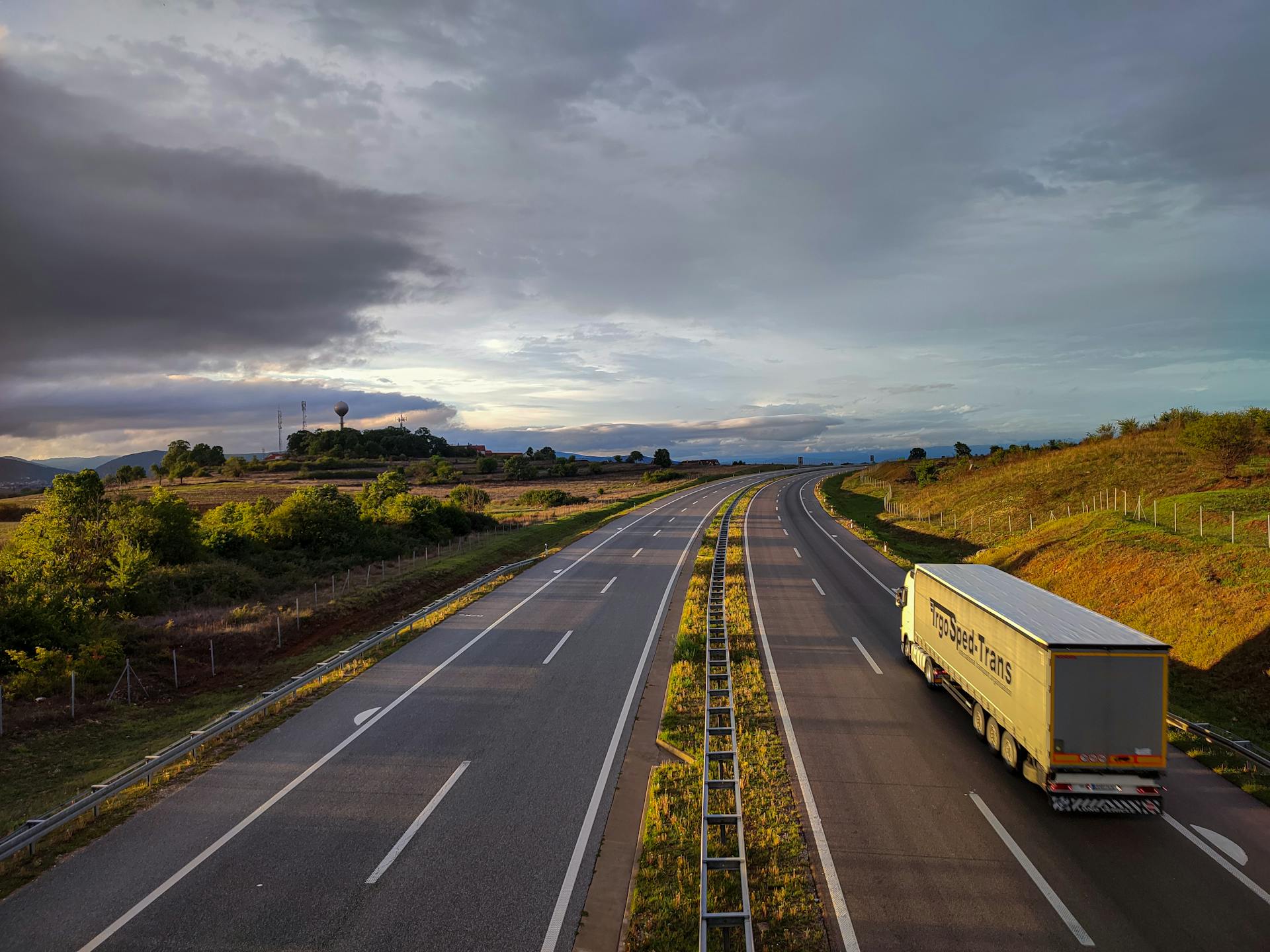
Phoenix to Tucson Truck Dispatch
Freight route connecting Phoenix, AZ to Tucson, AZ (115 miles). Connects Phoenix's semiconductor corridor to Tucson's aerospace/defense freight base via I-10.
What do truck dispatch rates run from Phoenix to Tucson?
Phoenix to Tucson is a 115-mile lane paying about $305 - $351 per load, near $2.65 - $3.05 a mile. Freight is mostly aerospace components, manufacturing equipment and consumer goods.
- Distance
- 115 miles
- Avg. rate / load
- $305 - $351
- Rate per mile
- $2.65 - $3.05
- Transit time
- Same day / 2 hrs
- Deadhead risk
- 10-15%
Lane rates reviewed September 2026. These numbers follow 2026 spot-market pricing and shift with fuel prices and Tucson's aerospace-sector activity. See our dispatch fee structure.
Phoenix to Tucson
Phoenix to Tucson is a short, 115-mile run south on I-10, about 2 hours of driving. Tucson has built a real aerospace and defense freight base: Lincoln Property Company's $80 million I-10 International Phase I, a 373,811-square-foot industrial development two miles from the I-10/Valencia Road interchange, sits within a Foreign Trade Zone alongside tenants like Amazon, FedEx, DHL and Raytheon. More than 150 logistics providers in the region serve aerospace, bioscience and environmental-technology industries.
Origin
Phoenix, AZ
Destination
Tucson, AZ
Distance
115 miles
Transit Time
Same day / 2 hrs
Average Rate
$305 - $351
Rate per Mile
$2.65 - $3.05
115-mile lane, typically a 2-hour run on I-10
Tucson's I-10 International logistics campus sits in a Foreign Trade Zone near Raytheon
More than 150 logistics providers serve Tucson's aerospace and bioscience industries
Phoenix to Tucson: route facts a driver should know
Tucson just added a new $80 million logistics campus near I-10
Lincoln Property Company completed a $80 million, 373,811-square-foot industrial development called I-10 International in Tucson, sitting inside a Foreign Trade Zone near a full-diamond I-10 interchange. The submarket is already home to Amazon, FedEx, DHL and Raytheon.
Source: AJOT, Lincoln I-10 International logistics campus coverage. Checked 29 Sep 2026.
Tucson moves 87% of its freight by truck, well above the national rate
Tucson moves 87 percent of its freight tonnage by truck, compared with about 70 percent nationally, reflecting the region's heavy reliance on trucking over rail or other modes.
Source: Federal Highway Administration, Freight Economy Roundtable, Tucson. Checked 29 Sep 2026.
A short lane: you likely won't need the 30-minute break
FMCSA requires a 30-minute break after 8 cumulative hours of driving without one. This 115-mile lane runs under 2 hours, so most drivers can finish it without a required break.
Source: FMCSA, Summary of Hours of Service Regulations. Checked 29 Sep 2026.
Diesel for this lane
How much is the diesel for Phoenix to Tucson?
About $130.82 this week. The lane is 115 miles. A truck that gets 6.5 miles per gallon uses about 18 gallons, and diesel is averaging $7.39 a gallon on this lane (week of October 19, 2026). The U.S. average diesel price is up 10 cents this week.
An estimate. It uses EIA's weekly average for this region, not the price at each pump. Your mpg and fuel card discounts change it.
- Distance
- 115 mi
- Diesel needed
- 18 gal
- Price used
- $7.39/gal
- Fuel cost
- $130.82
Common Freight Types
Aerospace components, manufacturing equipment and consumer goods fill the trailers heading south.
- Aerospace Components
- Manufacturing Equipment
- Consumer Goods
What makes the Phoenix to Tucson lane difficult?
A short, competitive lane keeps per-load rates modest
A short, competitive lane keeps per-load rates modest.
Aerospace and defense freight can come with strict security or handling requirements
Aerospace and defense freight can come with strict security or handling requirements.
Summer desert heat affects both ends
Understanding and preparing for this challenge helps optimize your operations and maximize profitability on this lane.
What freight moves on the Phoenix to Tucson lane?
What travels between Phoenix and Tucson, and when the busy weeks fall.
Primary Commodities
- •Aerospace Components
- •Manufacturing Equipment
- •Consumer Goods
Secondary Commodities
- •Aerospace components
- •Manufacturing equipment
- •Foreign Trade Zone freight
Seasonal Cargo
Peak seasons for this lane:
- •Aerospace components (steady)
- •Manufacturing equipment (steady)
- •Consumer goods (holiday surge)
When is the Phoenix to Tucson lane busiest?
Steady aerospace freight softens the usual retail seasonality here.
Q1 (Jan-Mar): Slow Period?
A modest dip after the holidays, cushioned by steady aerospace and defense freight, which does not follow the retail calendar.
Q4 (Oct-Dec): Peak Period?
Consumer goods climb from October through December.
Produce Season?
Not a major factor on this lane.
- •Q4 holiday retail season
- •Steady aerospace/defense freight
- •Spring/summer construction season
Hurricane Risk?
None. Summer heat on both ends is the real seasonal risk.
Seasonal Strategy Summary
Distribution and cross-border-connected freight in Tucson runs steady year-round, with a produce-season bump each winter tied to Nogales border traffic.
How do I negotiate the best rate on the Phoenix to Tucson lane?
When to book, who pays extra, and which loads need special handling.
When to Book
Suggested booking window:
Same-day to 1-2 days out is typical for this short, fast-turning lane.
What Brokers Pay More
Loads that command more:
Time-critical aerospace component freight tends to pay a premium.
When to Avoid
Loads to price carefully:
Be careful pricing a summer daytime run without a heat plan.
Rate Negotiation Tips for Phoenix to Tucson
- •
Ask brokers about freight tied to Tucson's new I-10 International logistics campus, a genuinely fresh reload source.
- •
Tucson's heavy reliance on trucking (87% of tonnage) means steady demand relative to other modes.
- •
This short lane pairs well with a same-day return if the Tucson-side dock window cooperates.
How do I find a backhaul load on the Phoenix to Tucson lane?
A short lane like this often pairs well with a same-day return load.
Best Return Cities
Where to look for the return load:
- •Tucson, AZ
- •Regional distribution hubs near Tucson
Deadhead Risk %
Deadhead risk on this lane: 10-15%
With tenants like Raytheon, Amazon, FedEx and DHL near the I-10/I-19 interchange, there is real backhaul variety here.
Alternative Routes
If the first load falls through, try these:
- •The short round trip makes this lane naturally low-deadhead if you schedule it as a same-day turn.
Backhaul Optimization Tips
- •
Tucson's new Foreign Trade Zone logistics campus and its Amazon, FedEx and DHL tenants give this lane real, growing backhaul variety.
- •
I-19 connects Tucson directly to the Nogales-Mariposa border crossing, so ask about produce and cross-border freight too.
- •
With under 2 hours of driving each way, a same-day round trip is realistic.
What do experienced dispatchers know about the Phoenix to Tucson lane?
Three notes before this short run.
This short lane pairs well with a same-day return load; line one up before you leave Phoenix.
Confirm any special handling requirements before hauling aerospace or defense-linked freight.
Check tires and coolant before a summer run.
Before you book Phoenix to Tucson, ask brokers whether your freight connects to the new I-10 International logistics campus or general Tucson distribution.
Phoenix to Tucson Lane FAQs
Answers on driving time, Tucson's aerospace base, and traffic.
The lane data shows about $305 - $351 per load, or $2.65 - $3.05 a mile, across 115 miles.
The region hosts over 150 logistics providers serving aerospace, bioscience and environmental-technology industries, with a Foreign Trade Zone campus near I-10 and I-19 that includes tenants like Raytheon.
About 2 hours for the 115 miles on I-10, an easy same-day run.
Often, yes, given the short distance, if freight lines up on both ends.
Other Arizona freight lanes we dispatch
- Phoenix to Dallas
- Phoenix to San Diego
- Phoenix to Denver
- Phoenix to Salt Lake City
- Phoenix to Nogales
- Phoenix to Albuquerque
Local resources
Dry Van owner-operator, West Coast: +$2,010/week after moving to $2.62/mi on general freight / consumer goods freight.
Read the case studyNeed help running Phoenix, AZ to Tucson, AZ consistently?
Running Phoenix to Tucson often? Ask about a free custom growth plan.