
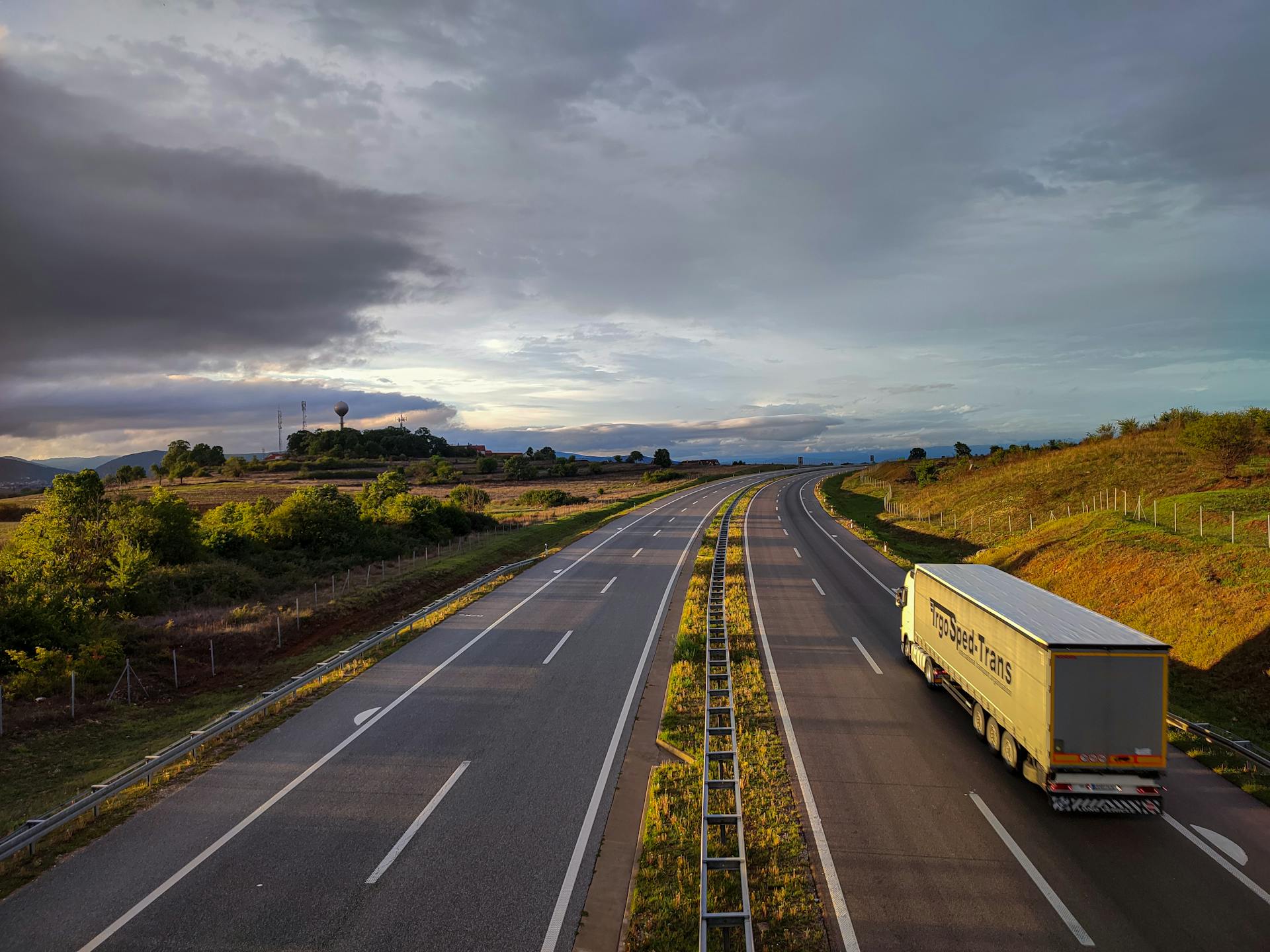
Anchorage to Juneau Truck Dispatch
Freight route connecting Anchorage, AK to Juneau, AK. Southeast Alaska's capital, reachable only by air or sea given no road connection to the Railbelt.
What do truck dispatch rates run from Anchorage to Juneau?
Anchorage to Juneau is a marine/barge lane (no fixed road distance) running near $2.90 - $3.60 a mile-equivalent for the trucking and consolidation portion; carriers price the full move by shipment given the barge component. Freight is mostly government/institutional freight, consumer goods and seafood.
- Transit time
- Barge / 2-3 days
- Deadhead risk
- 20-25%
Lane rates reviewed September 2026. Pricing on this lane depends on barge or Alaska Marine Highway sailing schedules and capacity, not a fixed road distance. See our dispatch fee structure.
Anchorage to Juneau
Anchorage to Juneau is a marine/barge lane with no road connection, since Southeast Alaska's capital has no highway link to the Railbelt and is reachable only by air or sea. Southeast Alaska typically receives its barge service directly from the Puget Sound region, but Anchorage-based carriers still consolidate and forward freight for Juneau via the Alaska Marine Highway and regional barge lines, with transit typically running 2-3 days.
Origin
Anchorage, AK
Destination
Juneau, AK
Transit Time
Barge / 2-3 days
Marine/barge lane with no road miles; typical transit is 2-3 days
Juneau has no road connection to the rest of Alaska's highway system
Southeast Alaska is more commonly served by direct barge from Puget Sound than through Anchorage
Anchorage to Juneau: route facts a driver should know
There is no road to Juneau. This lane runs by ferry
Juneau has no road connection to the rest of Alaska. Freight moves by the Alaska Marine Highway System or private barge and container service. The 2025-2026 winter ferry schedule runs October 1, 2025 through April 30, 2026, and the 2026 summer schedule covers May 1 through September 30, 2026.
Source: Alaska Department of Transportation and Public Facilities, Alaska Marine Highway System. Checked 29 Sep 2026.
About half of Alaska's inbound cargo crosses Anchorage docks first
About half of all Alaska's inbound cargo crosses the Port of Alaska in Anchorage, and about half of that then moves on to final destinations elsewhere in the state, including Southeast Alaska communities like Juneau.
Source: Port of Alaska (Don Young Port of Alaska). Checked 29 Sep 2026.
Common Freight Types
Government/institutional freight, consumer goods and seafood fill the containers moving to Juneau.
- Government/Institutional Freight
- Consumer Goods
- Seafood
What makes the Anchorage to Juneau lane difficult?
No road exists between Anchorage and Juneau, so all freight must transfer to barge or the Alaska Marine Highway
No road exists between Anchorage and Juneau, so all freight must transfer to barge or the Alaska Marine Highway.
Sailing schedules and barge capacity are limited and require advance booking
Sailing schedules and barge capacity are limited and require advance booking.
Winter weather can affect Gulf of Alaska sailing conditions and schedules
Winter weather can affect Gulf of Alaska sailing conditions and schedules.
What freight moves on the Anchorage to Juneau lane?
What moves between Anchorage and Juneau, and why this is a marine lane, not a road lane.
Primary Commodities
- •Government/Institutional Freight
- •Consumer Goods
- •Seafood
Secondary Commodities
- •Government/institutional freight
- •Consumer goods
- •Seafood
Seasonal Cargo
Peak seasons for this lane:
- •Government/institutional freight (steady)
- •Consumer goods (holiday and back-to-school surges)
- •Seafood (summer season)
When is the Anchorage to Juneau lane busiest?
Government and holiday-timed freight both shape this lane's demand.
Q1 (Jan-Mar): Slow Period?
A modest dip after the holidays, cushioned by steady government and institutional freight.
Q4 (Oct-Dec): Peak Period?
Consumer goods and government freight both climb ahead of the holidays.
Produce Season?
Not directly applicable; seafood freight follows Southeast Alaska's summer fishing season instead.
- •Q4 holiday season
- •Spring resupply (March-May)
- •Back-to-school season (July-August)
Hurricane Risk?
None, though Gulf of Alaska winter storms can affect barge and ferry schedules.
Seasonal Strategy Summary
Freight to Juneau runs on the Alaska Marine Highway's seasonal schedule, with more frequent sailings in summer and a reduced winter schedule from October through April.
How do I negotiate the best rate on the Anchorage to Juneau lane?
When to book, who pays extra, and which loads need barge scheduling.
When to Book
Suggested booking window:
Book barge or ferry capacity as far ahead as possible given limited sailing schedules.
What Brokers Pay More
Loads that command more:
Time-critical government and institutional freight tends to pay a premium given the limited multimodal options.
When to Avoid
Loads to price carefully:
Be careful committing to a fixed delivery window without confirming current barge or ferry sailing schedules first.
Rate Negotiation Tips for Anchorage to Juneau
- •
Confirm current Alaska Marine Highway sailing dates before you commit to a delivery timeline. There's no road backup if a sailing is delayed.
- •
This lane runs on ferry or barge schedules, not driving hours, so price and plan around sailing frequency, not distance.
- •
Ask whether your freight is better suited to AMHS or a private container-barge service, since schedules and capacity differ.
How do I find a backhaul load on the Anchorage to Juneau lane?
Juneau's isolation and role as Alaska's capital make return freight realistic for multimodal carriers.
Best Return Cities
Where to look for the return load:
- •Juneau, AK
- •Regional distribution hubs near Juneau
Deadhead Risk %
Deadhead risk on this lane: 20-25%
Government and institutional freight tied to the state capital gives multimodal carriers real backhaul options.
Alternative Routes
If the first load falls through, try these:
- •Use Anchorage as the main return point. Seattle/Tacoma can support marine consolidation for larger moves. Fairbanks is a domestic option if the truck returns north.
Backhaul Optimization Tips
- •
Juneau's role as Alaska's state capital gives this lane steady government and general-freight demand.
- •
Check the current ferry or barge schedule for your return sailing before you commit to a tight turnaround.
- •
Southeast Alaska's fishing and tourism economy adds seasonal freight variety beyond general cargo.
What do experienced dispatchers know about the Anchorage to Juneau lane?
Three notes before this marine lane.
Book barge or Alaska Marine Highway capacity well in advance given limited sailings.
Confirm current sailing schedules before committing to a delivery window.
Plan for winter weather delays on Gulf of Alaska crossings.
Before you book Anchorage to Juneau, confirm the current Alaska Marine Highway or barge sailing schedule, since there is no road connection to fall back on.
Anchorage to Juneau Lane FAQs
Answers on why this is a barge lane, transit time, and booking.
Juneau has no highway connection to the rest of Alaska's road system; it's reachable only by air or sea.
Via the Alaska Marine Highway or regional barge lines, typically a 2-3 day transit, often consolidated through Anchorage.
Pricing runs near $2.90 - $3.60 a mile-equivalent for the trucking and consolidation portion; the full move is quoted by shipment since there's no fixed road distance.
Reasonably, given Juneau's steady government and institutional freight as the state capital.
Other Alaska freight lanes we dispatch
- Anchorage to Kodiak
- Anchorage to Valdez
- Anchorage to Dutch Harbor
- Anchorage to Seattle
- Anchorage to Tacoma
- Anchorage to Los Angeles
Local resources
Dry Van owner-operator, West Coast: +$2,010/week after moving to $2.62/mi on general freight / consumer goods freight.
Read the case studyNeed help running Anchorage, AK to Juneau, AK consistently?
Running Anchorage to Juneau often? Ask about a free custom growth plan.