
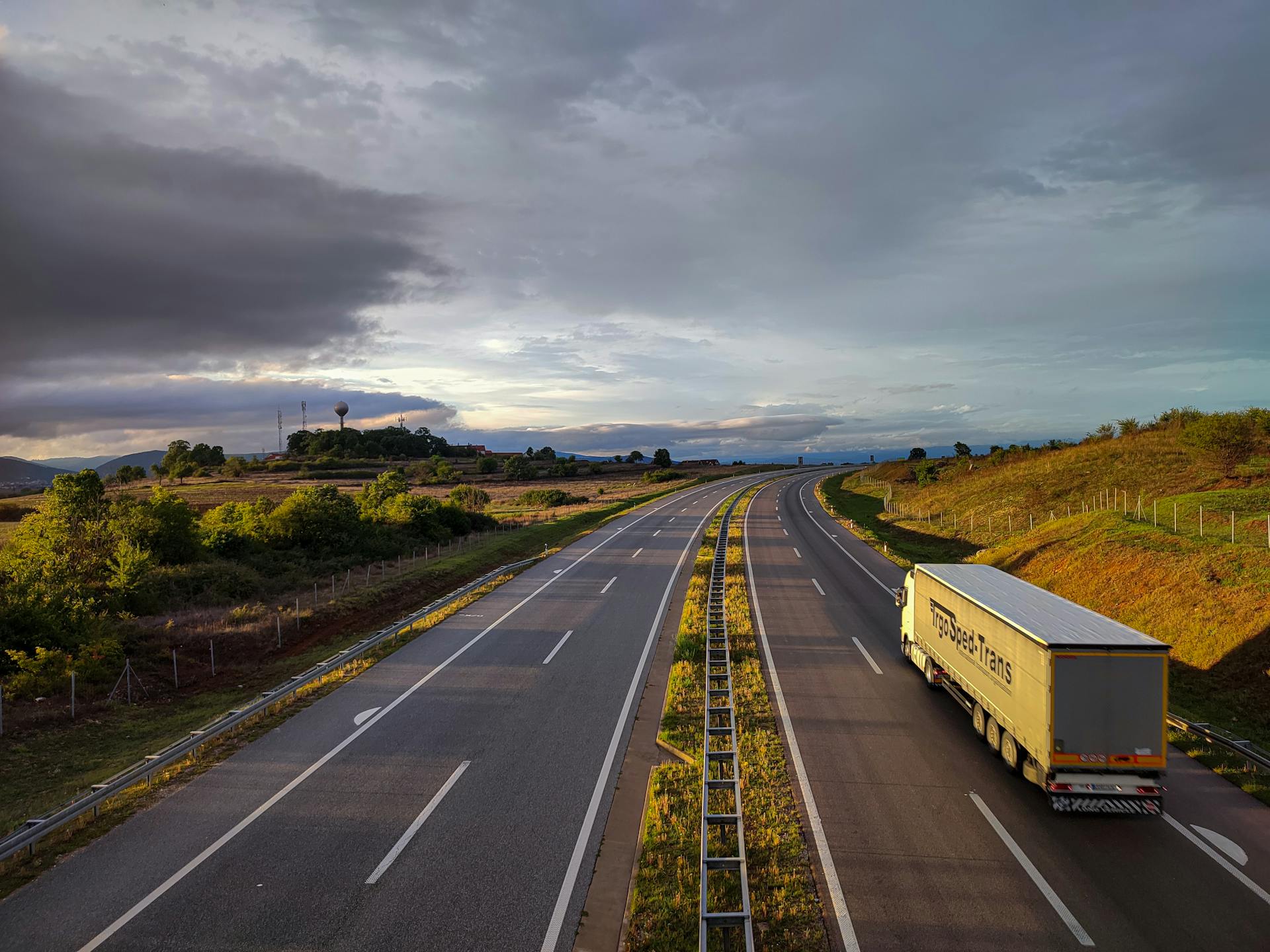
Anchorage to Seattle Truck Dispatch
Freight route from Anchorage, AK to Seattle, WA (1450 miles). The main mainland supply channel for Alaska, run by TOTE Maritime Alaska, Lynden, and Samson Tug and Barge.
What do truck dispatch rates run from Anchorage to Seattle?
Anchorage to Seattle is a 1,450-mile lane paying about $3,190 - $3,915 per load, near $2.15 - $2.65 a mile. Freight is mostly consumer goods, port-connected freight and military/government freight.
- Distance
- 1450 miles
- Avg. rate / load
- $3,190 - $3,915
- Rate per mile
- $2.20 - $2.70
- Transit time
- Barge / 2-4 days
- Deadhead risk
- 10-15%
Lane rates reviewed September 2026. These numbers follow 2026 spot-market pricing and shift with fuel prices over this long international haul. See our dispatch fee structure.
Anchorage to Seattle
Anchorage to Seattle is a 1,450-mile, multi-day run southeast via the Alaska Highway through Canada, connecting the state's main freight gateway to the Pacific Northwest's biggest port complex. Anchorage's Don Young Port of Alaska handled 5.5 million tons of fuel and freight in 2025 and serves as an intermodal hub linking air, marine, rail, pipeline and roadway freight for the whole state.
Origin
Anchorage, AK
Destination
Seattle, WA
Distance
1450 miles
Transit Time
Barge / 2-4 days
Average Rate
$3,190 - $3,915
Rate per Mile
$2.20 - $2.70
1,450-mile lane via the Alaska Highway through Canada
The Don Young Port of Alaska handled 5.5 million tons of fuel and freight in 2025
The Port of Alaska serves as an intermodal hub connecting air, marine, rail, pipeline and roadway freight
Anchorage to Seattle: route facts a driver should know
A new border crossing is being built for the only year-round route south
The federal government is building a new $180 million port of entry at the Alcan-Beaver Creek border crossing south of Tok, the only 24/7, year-round border crossing into Alaska's Interior. Commercial truck traffic through this crossing has grown from about 1,000 trucks a year before 2014 to more than 6,000 a year recently.
Source: GSA, Alcan Land Port of Entry modernization project. Checked 29 Sep 2026.
Matson also runs a direct ocean route to the Lower 48
Matson's Tacoma-Anchorage-Kodiak container service offers a marine alternative to the roughly 1,450-mile overland ALCAN route, worth comparing on cost and transit time depending on your freight's urgency.
Source: Matson, Alaska shipping services overview. Checked 29 Sep 2026.
Diesel for this lane
How much is the diesel for Anchorage to Seattle?
About $1649.43 this week. The lane is 1,450 miles. A truck that gets 6.5 miles per gallon uses about 223 gallons, and diesel is averaging $7.39 a gallon on this lane (week of October 19, 2026). The U.S. average diesel price is up 10 cents this week.
An estimate. It uses EIA's weekly average for this region, not the price at each pump. Your mpg and fuel card discounts change it.
- Distance
- 1,450 mi
- Diesel needed
- 223 gal
- Price used
- $7.39/gal
- Fuel cost
- $1649.43
Common Freight Types
Consumer goods, port-connected freight and military/government freight fill the trailers heading southeast.
- General Consumer Goods
- Building Materials
- Seafood (southbound)
What makes the Anchorage to Seattle lane difficult?
The route crosses Canada, requiring customs documentation and compliance
The route crosses Canada, requiring customs documentation and compliance.
The length requires a full multi-day trip plan with border-crossing time built in
The length requires a full multi-day trip plan with border-crossing time built in.
Winter weather along the Alaska Highway through the Yukon can be severe
Winter weather along the Alaska Highway through the Yukon can be severe.
What freight moves on the Anchorage to Seattle lane?
What travels between Anchorage and Seattle, and why the Port of Alaska matters here.
Primary Commodities
- •General Consumer Goods
- •Building Materials
- •Seafood (southbound)
Secondary Commodities
- •Port of Alaska import/export cargo
- •Military and government-connected freight
- •Consumer goods
Seasonal Cargo
Peak seasons for this lane:
- •Consumer goods (holiday surge)
- •Port-connected freight (steady)
- •Military/government freight (steady)
When is the Anchorage to Seattle lane busiest?
Retail timing and steady port-connected freight both shape this lane.
Q1 (Jan-Mar): Slow Period?
A modest dip after the holidays, cushioned by steady port and military-connected freight.
Q4 (Oct-Dec): Peak Period?
Consumer goods and port import volume both climb from October through December.
Produce Season?
Not a major factor on this lane.
- •Summer construction and resupply season
- •Q4 holiday retail season
- •Steady military and government freight
Hurricane Risk?
None. Winter weather along the Alaska Highway through the Yukon is this corridor's real seasonal risk.
Seasonal Strategy Summary
This overland route runs steady in summer, with winter conditions along the ALCAN and Alaska Highway adding real time and risk from October through April.
How do I negotiate the best rate on the Anchorage to Seattle lane?
When to book, who pays extra, and which loads need border-time buffer.
When to Book
Suggested booking window:
4-6 days out is typical for a haul this long and remote.
What Brokers Pay More
Loads that command more:
Time-critical Port of Alaska-connected freight tends to pay a premium.
When to Avoid
Loads to price carefully:
Be careful committing to a fast delivery through the Yukon during a winter storm without a weather contingency.
Rate Negotiation Tips for Anchorage to Seattle
- •
Confirm current Alcan-Beaver Creek border crossing wait times before you dispatch, especially with new construction underway at the port of entry.
- •
Compare the overland ALCAN route against Matson's ocean service on cost and timing. One may fit your freight better than the other.
- •
This is a very long haul through remote territory, so plan fuel, rest stops and Canadian customs documentation well in advance.
How do I find a backhaul load on the Anchorage to Seattle lane?
Seattle-Tacoma's port scale makes a northbound load realistic.
Best Return Cities
Where to look for the return load:
- •Seattle, WA
- •Regional distribution hubs near Seattle
Deadhead Risk %
Deadhead risk on this lane: 10-15%
With one of the largest West Coast container gateways at the destination, there is real backhaul variety.
Alternative Routes
If the first load falls through, try these:
- •Tacoma is a major alternative Pacific Northwest gateway. Portland offers another regional market. Anchorage is still the main Alaska recovery point.
Backhaul Optimization Tips
- •
Seattle's massive distribution network gives this lane real backhaul options once you're in the Lower 48.
- •
Confirm your carrier's Canadian customs documentation (CUSMA/eManifest) is current before the return crossing.
- •
Check the Alcan-Beaver Creek crossing's current construction status for your return trip too.
What do experienced dispatchers know about the Anchorage to Seattle lane?
Three notes before this international run.
Confirm customs documentation requirements before crossing into and out of Canada.
Plan your rest stops and border-crossing time before this multi-day run.
Check Alaska Highway winter conditions through the Yukon.
Before you book Anchorage to Seattle, confirm current conditions and wait times at the Alcan-Beaver Creek border crossing, the only year-round route south.
Anchorage to Seattle Lane FAQs
Answers on drive time, the Port of Alaska, and border crossing.
The lane data shows about $3,190 - $3,915 per load, or $2.15 - $2.65 a mile, across 1,450 miles.
It handled 5.5 million tons of fuel and freight in 2025 and serves as an intermodal hub for the whole state.
Yes, the Alaska Highway runs through the Yukon, requiring customs documentation for the crossing.
Yes, generally, given the scale of the Seattle-Tacoma port complex.
Other Alaska freight lanes we dispatch
- Anchorage to Tacoma
- Anchorage to Dutch Harbor
- Anchorage to Los Angeles
- Anchorage to Whittier
- Anchorage to Wasilla
- Anchorage to Homer
Local resources
Also serving the other end of this lane
Dry Van owner-operator, West Coast: +$2,010/week after moving to $2.62/mi on general freight / consumer goods freight.
Read the case studyNeed help running Anchorage, AK to Seattle, WA consistently?
Running Anchorage to Seattle often? Ask about a free custom growth plan.