
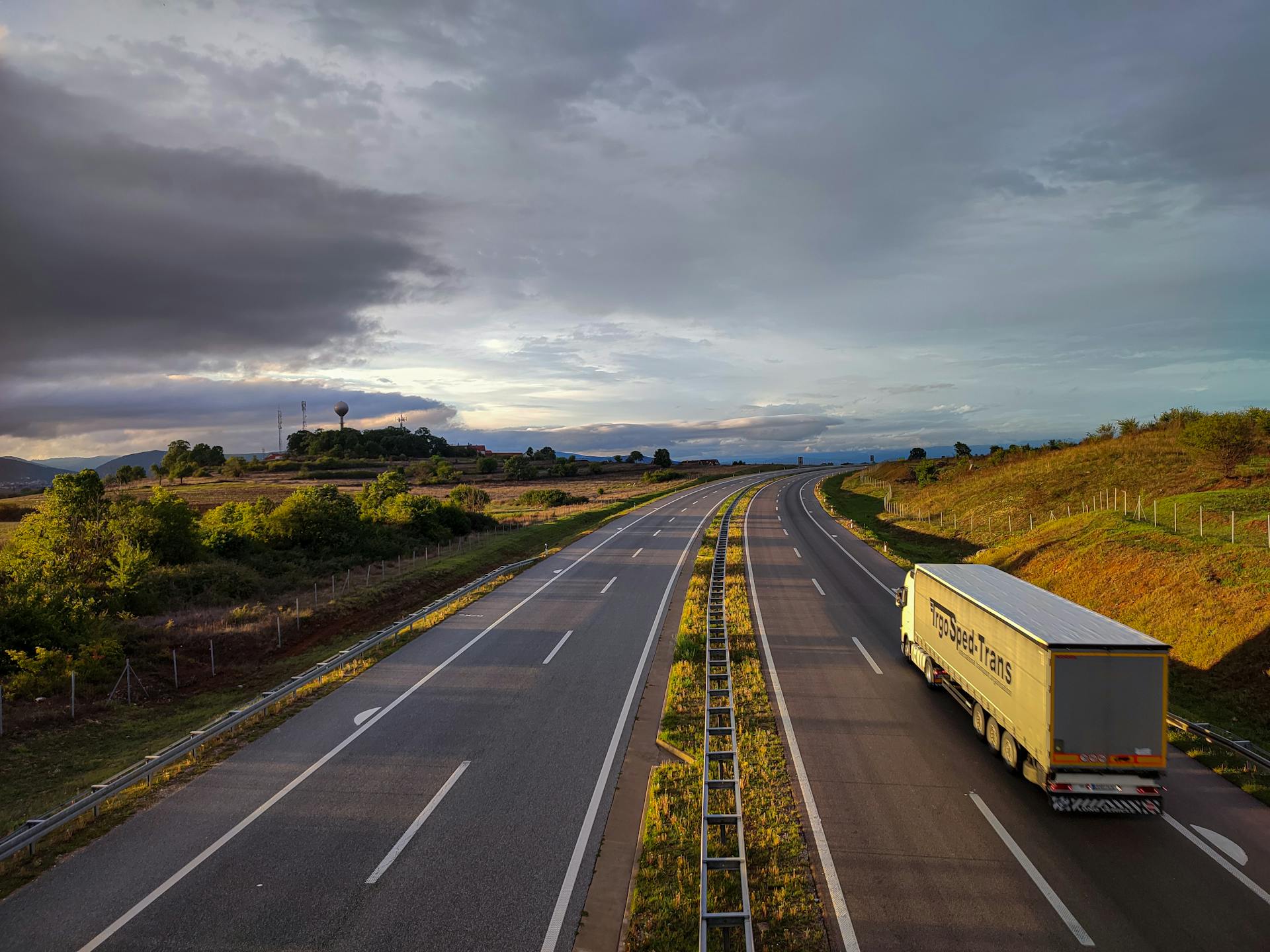
Baltimore to Washington Truck Dispatch
Freight route connecting Baltimore, MD to Washington, DC (40 miles). An extremely short, high-frequency corridor connecting Baltimore's port to the DC metro's government freight base.
What do truck dispatch rates run from Baltimore to Washington?
Baltimore to Washington, DC is a 40-mile lane paying about $114 - $132 per load, near $2.85 - $3.30 a mile. Freight is mostly retail distribution, federal-contract freight and consumer goods.
- Distance
- 40 miles
- Avg. rate / load
- $114 - $132
- Rate per mile
- $2.85 - $3.30
- Transit time
- Same day / 1 hr
- Deadhead risk
- 5-10%
Lane rates reviewed September 2026. These numbers follow 2026 spot-market pricing for a short, high-rate-per-mile lane. See our dispatch fee structure.
Baltimore to Washington
Baltimore to Washington, DC is a short, 40-mile run south on I-95, about 45 minutes of driving between two of the busiest freight markets on the East Coast. DC-area warehouses can reach more than 10 million consumers within a two-hour drive, and BWI Thurgood Marshall Airport, sitting almost exactly between the two cities, runs a Foreign Trade Zone with more than 400,000 square feet of dedicated cargo space.
Origin
Baltimore, MD
Destination
Washington, DC
Distance
40 miles
Transit Time
Same day / 1 hr
Average Rate
$114 - $132
Rate per Mile
$2.85 - $3.30
40-mile lane, about 45 minutes on I-95
DC-area warehouses reach 10 million consumers within a two-hour drive
BWI Airport's Foreign Trade Zone has over 400,000 square feet of cargo space
Baltimore to Washington: route facts a driver should know
DC won't let you drive through on just any street
Washington, DC bans through-truck traffic on most streets outside its designated truck route network. A truck may only leave that network to reach a specific delivery address by the shortest path, not as a shortcut. Plan your DC-side stop on or near the posted truck route before you leave Baltimore.
Source: District Department of Transportation, Commercial Vehicle Routing. Checked 29 Sep 2026.
No trucks on the Roosevelt Bridge or inner I-66
Trucks are barred from the Theodore Roosevelt Bridge between DC and Virginia, and from I-66 east of I-495. If your GPS tries to route you across the Roosevelt Bridge into downtown DC, take the alternate route over the 14th Street Bridge or the Wilson Bridge instead.
Source: District Department of Transportation, Commercial Vehicle Routing. Checked 29 Sep 2026.
A short lane: you likely won't need the 30-minute break
FMCSA requires a 30-minute break after 8 cumulative hours of driving without one. This lane is under an hour of driving at highway speed, so most drivers can finish it without a required break, leaving nearly all 11 driving hours open for a second load.
Source: FMCSA, Summary of Hours of Service Regulations. Checked 29 Sep 2026.
Diesel for this lane
How much is the diesel for Baltimore to Washington?
About $40.05 this week. The lane is 40 miles. A truck that gets 6.5 miles per gallon uses about 6 gallons, and diesel is averaging $6.51 a gallon on this lane (week of October 19, 2026). The U.S. average diesel price is up 10 cents this week.
An estimate. It uses EIA's weekly average for this region, not the price at each pump. Your mpg and fuel card discounts change it.
- Distance
- 40 mi
- Diesel needed
- 6 gal
- Price used
- $6.51/gal
- Fuel cost
- $40.05
Common Freight Types
Retail distribution, federal-contract freight and consumer goods fill the trailers on this short run.
- Government/Institutional Freight
- Consumer Goods
- Pharmaceuticals
What makes the Baltimore to Washington lane difficult?
I-95 through the Baltimore-Washington corridor carries heavy commuter traffic most of the day
I-95 through the Baltimore-Washington corridor carries heavy commuter traffic most of the day.
A short lane like this keeps per-load rates in a tighter range
A short lane like this keeps per-load rates in a tighter range.
Federal-building deliveries often require security clearance or advance scheduling
Federal-building deliveries often require security clearance or advance scheduling.
What freight moves on the Baltimore to Washington lane?
What travels between Baltimore and Washington, and why federal freight matters here.
Primary Commodities
- •Government/Institutional Freight
- •Consumer Goods
- •Pharmaceuticals
Secondary Commodities
- •Federal government and GSA-contract freight
- •BWI air-cargo-connected freight
- •Retail distribution
Seasonal Cargo
Peak seasons for this lane:
- •Retail distribution (holiday surge)
- •Federal-contract freight (steady)
- •Consumer goods (steady)
When is the Baltimore to Washington lane busiest?
Steady federal-contract freight keeps this lane busier year-round than most.
Q1 (Jan-Mar): Slow Period?
Little seasonal dip; steady federal-contract freight keeps this corridor busy year-round.
Q4 (Oct-Dec): Peak Period?
Retail distribution climbs from October through December alongside the usual federal fiscal year-end contract push in September.
Produce Season?
Not a major factor on this lane.
- •Q4 holiday retail season
- •Steady federal-contract freight year-round
- •Cherry blossom season tourism surge (regional retail)
Seasonal Strategy Summary
Government and healthcare-distribution freight keep this lane steady most of the year. The only real swings are federal fiscal year-end in September and the Q4 holiday retail push.
How do I negotiate the best rate on the Baltimore to Washington lane?
When to book, who pays extra, and which loads need extra time.
When to Book
Suggested booking window:
Same-day to 1-2 days out is typical for this short, fast-turning lane.
What Brokers Pay More
Loads that command more:
Time-critical BWI air-cargo connector freight tends to pay a premium.
When to Avoid
Loads to price carefully:
Be careful committing to a tight window through this corridor during weekday rush hour.
Rate Negotiation Tips for Baltimore to Washington
- •
This is a short run, so price it by the load, not just the mile. A 40-mile haul still costs a full stop, a check-in and a chance at detention.
- •
Federal-contracting and government-agency freight moves through DC all year. That steady demand is worth asking a broker about directly.
- •
Keep to the posted truck routes on the DC side. A ticket for an illegal street eats any rate advantage this short lane gives you.
How do I find a backhaul load on the Baltimore to Washington lane?
A short lane like this often pairs well with a same-day return load.
Best Return Cities
Where to look for the return load:
- •Washington, DC
- •Regional distribution hubs near Washington
Deadhead Risk %
Deadhead risk on this lane: 5-10%
BWI's cargo capacity and the region's federal-contract freight base give real backhaul options.
Alternative Routes
If the first load falls through, try these:
- •This is one of the densest short-haul corridors on the East Coast. Empty backhauls are rare for active carriers.
Backhaul Optimization Tips
- •
DC itself has few dock doors for a big rig, so look for return freight staged just outside the District, in Maryland or Northern Virginia.
- •
This lane runs both ways often enough that a same-day round trip is realistic if you line up the return load first.
- •
Federal and healthcare distribution freight out of the DC area gives you a return option beyond retail.
What do experienced dispatchers know about the Baltimore to Washington lane?
Three notes before this short corridor run.
Avoid I-95 through this corridor during weekday rush hours if you can; delays here are common.
This short lane pairs well with a same-day return load; line one up before you leave Baltimore.
Confirm any security or scheduling requirements before a federal-facility delivery.
Before you book Baltimore to Washington, confirm your DC-side stop sits on a posted truck route. A wrong turn onto a restricted street costs more than the short haul pays.
Baltimore to Washington Lane FAQs
Answers on drive time, traffic, and federal-facility deliveries.
The lane data shows about $114 - $132 per load, or $2.85 - $3.30 a mile, across 40 miles.
About 45 minutes for the 40 miles on I-95, though rush-hour traffic can add real time.
Washington's federal government and GSA-contract activity generates steady, recession-resistant freight demand year-round.
Yes, this short lane pairs well with a same-day return load given the density of freight in the corridor.
Other Maryland freight lanes we dispatch
- Baltimore to Philadelphia
- Baltimore to Charlottesville
- Baltimore to New York
- Baltimore to Pittsburgh
- Baltimore to Richmond
- Baltimore to Norfolk
Local resources
Dry Van owner-operator, Midwest: +$1,950/week after moving to $2.65/mi on produce / auto parts freight.
Read the case studyNeed help running Baltimore, MD to Washington, DC consistently?
Running Baltimore to Washington often? Ask about a free custom growth plan.