
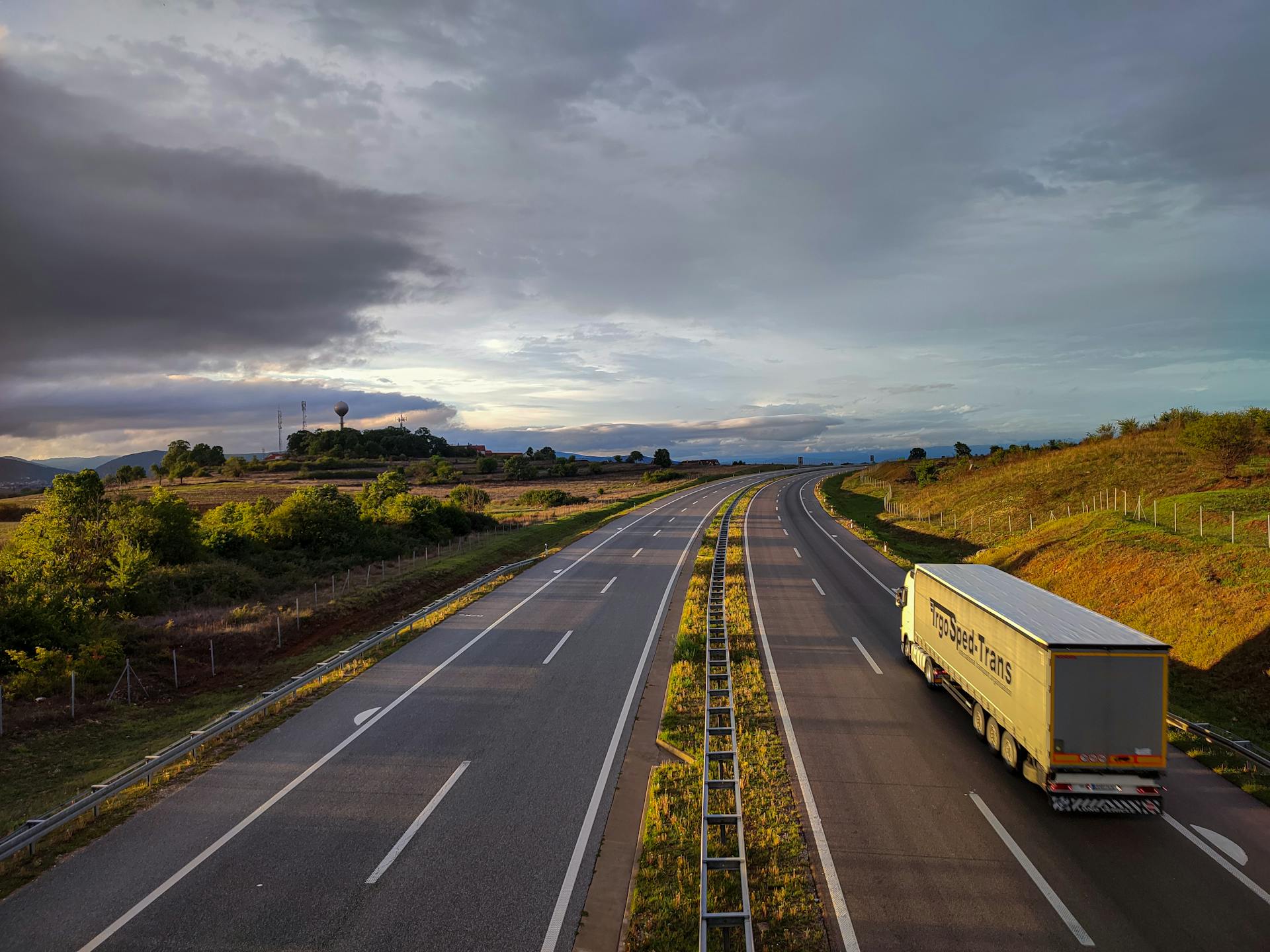
Denver to Kansas City Truck Dispatch
Freight route connecting Denver, CO to Kansas City, MO (600 miles). KC's rail hub status and agricultural freight base connect via I-70.
What do truck dispatch rates run from Denver to Kansas City?
Denver to Kansas City is a 600-mile lane paying about $1,380 - $1,620 per load, near $2.30 - $2.70 a mile. Freight is mostly agricultural products, food products and industrial equipment.
- Distance
- 600 miles
- Avg. rate / load
- $1,380 - $1,620
- Rate per mile
- $2.30 - $2.70
- Transit time
- 1 day
- Deadhead risk
- 25-30%
Lane rates reviewed September 2026. These numbers follow 2026 spot-market pricing and shift with fuel prices and winter plains conditions. See our dispatch fee structure.
Denver to Kansas City
Denver to Kansas City is a 600-mile, roughly 9-hour run east on I-70, connecting the Mountain West's logistics hub to one of the country's top intermodal hubs. Logistics Park Kansas City, BNSF's 2,352-acre master-planned distribution complex in Edgerton, Kansas, has an intermodal terminal with six 8,000-foot tracks and room to grow to 1.5 million container lifts, anchored by tenants like Amazon, Target and Walmart. Denver itself sits where I-25, I-70 and I-76 meet, with more than $320 billion in freight flowing through the metro each year.
Origin
Denver, CO
Destination
Kansas City, MO
Distance
600 miles
Transit Time
1 day
Average Rate
$1,380 - $1,620
Rate per Mile
$2.30 - $2.70
600-mile lane, roughly 9 hours on I-70
Kansas City's Logistics Park KC is a 2,352-acre BNSF-anchored distribution complex
Denver's own freight base tops $320 billion a year
Denver to Kansas City: route facts a driver should know
Kansas City runs four separate intermodal terminals
Kansas City hosts four intermodal terminals, including BNSF's Logistics Park and Union Pacific's newer Armourdale facility, which opened in July 2025 with 24/7 gates, giving carriers a wide choice of rail-to-truck reload points.
Source: Unisco, Kansas City freight rail hub overview. Checked 29 Sep 2026.
A long lane: plan for a real HOS break
FMCSA requires a 30-minute break after 8 cumulative hours of driving without one. This 600-mile lane runs close to 9 hours, so plan your break into the schedule.
Source: FMCSA, Summary of Hours of Service Regulations. Checked 29 Sep 2026.
Diesel for this lane
How much is the diesel for Denver to Kansas City?
About $589.57 this week. The lane is 600 miles. A truck that gets 6.5 miles per gallon uses about 92 gallons, and diesel is averaging $6.39 a gallon on this lane (week of October 19, 2026). The U.S. average diesel price is up 10 cents this week.
An estimate. It uses EIA's weekly average for the two regions this lane connects, not the price at each pump. Your mpg and fuel card discounts change it.
- Distance
- 600 mi
- Diesel needed
- 92 gal
- Price used
- $6.39/gal
- Fuel cost
- $589.57
Common Freight Types
Agricultural products, food products and industrial equipment fill the trailers heading east.
- Agricultural Products
- Food Products
- Industrial Equipment
What makes the Denver to Kansas City lane difficult?
Eastern Colorado and western Kansas stretches of I-70 are long and can see winter wind or ice
Eastern Colorado and western Kansas stretches of I-70 are long and can see winter wind or ice.
The length requires a realistic HOS plan
Understanding and preparing for this challenge helps optimize your operations and maximize profitability on this lane.
Agricultural freight timelines can be tight around harvest
Agricultural freight timelines can be tight around harvest.
What freight moves on the Denver to Kansas City lane?
What travels between Denver and Kansas City, and when the busy weeks fall.
Primary Commodities
- •Agricultural Products
- •Food Products
- •Industrial Equipment
Secondary Commodities
- •BNSF intermodal freight (Logistics Park KC)
- •Industrial equipment
- •Food products
Seasonal Cargo
Peak seasons for this lane:
- •Agricultural products (fall harvest)
- •Food products (steady)
- •Consumer goods (holiday surge)
When is the Denver to Kansas City lane busiest?
Fall harvest and retail timing both shape this lane.
Q1 (Jan-Mar): Slow Period?
A modest dip after the holidays, cushioned by steady intermodal and industrial freight.
Q4 (Oct-Dec): Peak Period?
Consumer goods and agricultural freight both climb into the fall and winter.
Produce Season?
A real factor in fall, as regional harvest freight moves through both ends of the lane.
- •Q4 holiday retail season
- •Fall harvest freight
- •Steady industrial-equipment freight
Hurricane Risk?
None. Winter plains wind and ice across eastern Colorado and Kansas are the real risk.
Seasonal Strategy Summary
Rail-connected and distribution freight both run steady through the year on this eastern-plains lane, with a Q4 retail bump layered on top.
How do I negotiate the best rate on the Denver to Kansas City lane?
When to book, who pays extra, and which loads need a weather plan.
When to Book
Suggested booking window:
3-4 days out is typical for this haul, more in winter.
What Brokers Pay More
Loads that command more:
Time-critical intermodal connector freight through Logistics Park KC tends to pay a premium.
When to Avoid
Loads to price carefully:
Be careful committing to a fixed winter delivery across the plains without a weather contingency.
Rate Negotiation Tips for Denver to Kansas City
- •
Ask which of Kansas City's four intermodal terminals your load connects to, since gate hours and access differ by facility.
- •
This lane runs close to 9 hours, so plan your required HOS break into the schedule.
- •
This lane runs the flat eastern plains, so winter weather risk here is lower than on Denver's mountain-corridor lanes.
How do I find a backhaul load on the Denver to Kansas City lane?
Kansas City's scale as a top-10 intermodal hub makes a westbound load realistic.
Best Return Cities
Where to look for the westbound load:
- •Kansas City, MO
- •Regional distribution hubs near Kansas City
Deadhead Risk %
Deadhead risk on this lane: 25-30%
Logistics Park KC's major tenants (Amazon, Target, Walmart) give real backhaul variety.
Alternative Routes
If the first load falls through, try these:
- •BNSF intermodal rail at Kansas City offers a non-truck repositioning option.
Backhaul Optimization Tips
- •
Kansas City's four intermodal terminals give this lane unusually deep backhaul variety for a market this size.
- •
The newer Armourdale terminal's 24/7 gates are worth checking if you need flexible return-load pickup timing.
- •
Book your Kansas City-area return load with some lead time given the length of this haul.
What do experienced dispatchers know about the Denver to Kansas City lane?
Three notes before crossing the plains.
Check CDOT and KDOT conditions for I-70 across the plains in winter.
Plan your rest period into this longer haul.
If reloading through Logistics Park KC, confirm which tenant's dock you need; Amazon, Target and Walmart all operate there.
Before you book Denver to Kansas City, confirm which intermodal terminal your load is tied to, since gate hours and access differ by facility.
Denver to Kansas City Lane FAQs
Answers on driving time, Kansas City's rail hub, and winter conditions.
The lane data shows about $1,380 - $1,620 per load, or $2.30 - $2.70 a mile, across 600 miles.
A 2,352-acre BNSF-anchored distribution complex in Edgerton, Kansas, with an intermodal terminal that can grow to 1.5 million container lifts, surrounded by tenants like Amazon, Target and Walmart.
It can see wind and ice across eastern Colorado and western Kansas. Check CDOT and KDOT conditions before a winter run.
Yes, generally, given the scale of Logistics Park KC and Kansas City's status as a top-10 US intermodal hub.
Other Colorado freight lanes we dispatch
- Denver to Salt Lake City
- Denver to Minneapolis
- Denver to Albuquerque
- Denver to Phoenix
- Denver to Omaha
- Denver to Dallas
Local resources
Also serving the other end of this lane
Dry Van owner-operator, West Coast: +$2,010/week after moving to $2.62/mi on general freight / consumer goods freight.
Read the case studyNeed help running Denver, CO to Kansas City, MO consistently?
Running Denver to Kansas City often? Ask about a free custom growth plan.